
iTechGuides is reader-supported. When you buy through links on our site, we may earn an affiliate commission. As an Amazon Associate I earn from qualifying purchases. Learn more
There is no universal upload limit for browser PDF tools. The real ceiling depends on where the file goes: a file that stays on the user’s device is limited by that device’s memory and CPU, a remote PDF is limited by what the server supports, and an uploaded file is limited by every layer between the browser and the conversion worker. OCR adds a separate cost that follows page image size rather than file size, so a small-looking scan can be the most expensive job a tool runs.
Three jobs that get lumped together as “PDF processing”
Most confusion about PDF tools comes from treating three different jobs as one. Rendering draws pages on screen. Text extraction reads text that already exists in the file’s text layer, which is why a digitally produced PDF can be searched or copied without recognizing anything from pixels. OCR turns page images into recognized text, usually adding a searchable layer. Only the third job has to interpret pixels, and that is where cost diverges most sharply from what the file size suggests.
How large a PDF can I upload?
The honest answer is per processing path, and many tools use more than one path at once.
What’s actually slowing this PC down?
Pick the symptom - the matching free tool is one click away.
Locally selected files
When a user picks a file and a script on the page processes it, nothing has to be uploaded, but the browser still has finite memory and CPU. The parser may allocate large image and canvas buffers while rendering a single detailed page, and a tab that runs out of memory can stop responding. The practical ceiling therefore depends on the user’s device, the browser, and what else is open. Calling this an “upload limit” is misleading. The number that matters is the file size and page complexity at which your tool still works on the weakest device you support.
#1 Best Overall

- PORTABLE SCANNER FOR USE ON-THE-GO — The fastest and lightest mobile single-sheet-fed compact document scanner in its class¹
- QUICK DOCUMENT SCANNING ― This Epson ultra-fast scanner scans a single page as quickly as 5.5 seconds²; Windows and Mac compatible
- VERSATILE PAPER HANDLING ― Portable scanner scans documents up to 8.5 x 72 in; Also easily digitizes receipts and ID cards to make accounting, bookkeeping, and organizing simpler
- INTUITIVE, HIGH-SPEED SOFTWARE — Epson ScanSmart Software³ is a smart tool allowing you to easily scan, review, and save; Stay organized easily with the help of this Epson scanner
- EASY SETUP — USB-powered connect to your computer for quick and simple scanning; No batteries or external power supply required to operate portable document scanner; Standard Connectivity: USB 2.0
Remote PDFs fetched over HTTP
When the document lives at a URL, the server determines what is possible. A viewer can request byte ranges only if the server supports partial-content responses. MDN’s description of HTTP range requests notes that a server which does not support them may ignore the range and return the complete resource. Even when ranges work, the internal layout of the file determines how much a viewer can skip. The range-loading section below covers this in more detail.
Files uploaded to a server
An upload is constrained by every layer between the browser and the conversion worker: the application’s request-body limit, any reverse proxy in front of it, temporary storage, the job queue, and the CPU, memory and time budget of the worker itself. The effective ceiling is the strictest of these. A file can pass the application’s check and still be cut off by a proxy, and the user will see a generic network error unless each layer maps to a specific message.
Can I OCR a scanned PDF in the browser?
A browser can run OCR, but whether it should depends on the scan, the device, and whether the OCR engine and its language data can be downloaded and cached acceptably. The main thing to plan for is that OCR cost follows image dimensions, not the PDF’s byte count.
Quick wins for a faster PC:
Clear out junk files and repair common Windows errorsFree Scan →Scan for outdated or missing drivers - takes under a minuteDriver Scan →Rank #2

- FAST SPEEDS - Scans color and black and white documents a blazing speed up to 16ppm (1). Color scanning won’t slow you down as the color scan speed is the same as the black and white scan speed.
- ULTRA COMPACT – At less than 1 foot in length and only about 1. 5lbs in weight you can fit this device virtually anywhere (a bag, a purse, even a pocket).
- READY WHENEVER YOU ARE – The DS-640 mobile scanner is powered via an included micro USB 3. 0 cable allowing you to use it even where there is no outlet available. Plug it into you PC or laptop and you are ready to scan.
- WORKS YOUR WAY – Use the Brother free iPrint&Scan desktop app for scanning to multiple “Scan-to” destinations like PC, Network, cloud services, Email and OCR. (2) Supports Windows, Mac and Linux and TWAIN/WIA for PC/ICA for Mac/SANE drivers. (3)
- OPTIMIZE IMAGES AND TEXT – Automatic color detection/adjustment, image rotation (PC only), bleed through prevention/background removal, text enhancement, color drop to enhance scans. Software suite includes document management and OCR software. (4)
Why file size predicts OCR cost poorly
A heavily compressed scan can be small on disk and still contain page images with very high pixel counts, and those images dominate memory use. Cost rises with pixel dimensions, page count, image quality (skew and noise matter), language, and how many pages are processed in parallel. Measure the image dimensions of your real inputs before deciding where OCR should run.
A worked example from OCRmyPDF
OCRmyPDF’s Performance documentation, in its 17.13.0 stable release, gives a concrete figure: an input at 34 megapixels and 600 dpi can peak at roughly 500 MB with one worker and roughly 2 GB with four workers. The project attributes the peak to OCR and to page raster and image handling, and notes that worker count multiplies peak demand. Treat this as one project’s example rather than a benchmark for every engine, language or scanner.
Controls that bound OCR work
OCRmyPDF exposes controls that work as a model for server-side limits. Its guidance on resolution is the reference point in the table below, and the figures belong to that project rather than being guarantees for every engine.
Rank #3

- ❀Excellent Imaging: Features a 16MP clear camera, this portable document scanner produces crisp and accurate images of your documents, keeping important content intact. Ideal for scanning agreements, receipts, and books with impressive quality.
- ❀Quick Document Processing: proposals automatic scanning at 1 page per second, significantly boosting productivity. Perfect for workplaces, schools, and legal/financial fields that need large capacity document handling.
- ❀Text Conversion OCR capability works with over 200 languages, changing scanned files into editable text for easy storage and editing. Improve your workflow with seamless digital transformation of paper documents.
- ❀Lightweight Foldable Build: collapsing design (30x6x8cm when folded) and light weight (1000g) make it convenient to transport for trips or home use. The compact form fits well on work surfaces without occupying much room.
- ❀Simple Connectivity: Works via USB connection without requiring additional programs, providing fast installation. The straightforward controls allow easy action for both beginners and regular users working with normal sized papers.
| Control or guidance | What it does | Documented value |
|---|---|---|
| Tesseract resolution guidance | Indicates the input resolution the engine is tuned for | About 300 dpi; little gain above 400 dpi (OCRmyPDF Performance guidance) |
| Maximum OCR image megapixels | Downsamples the OCR input to bound memory, with a possible accuracy cost for unusually small print | Default not stated in OCRmyPDF’s documentation |
| Per-page Tesseract timeout | Stops OCR on a page that takes too long | 180 seconds by default, adjustable (OCRmyPDF Advanced documentation) |
| Skip pages above an image size | Leaves oversized pages without OCR instead of processing them | Threshold chosen by the operator; default not stated in OCRmyPDF’s documentation |
What browser-side OCR adds
Running the engine in the page moves CPU and memory onto the user’s device, and multiple OCR workers multiply that load in the same way they do on a server. Engine and language data may need to be downloaded before the first run, so the first use can be slow even when processing itself is fast.
The Tool Desk
Outbyte Driver Updater FREEScan for outdated or missing drivers - takes under a minuteDriver Scan →Outbyte PC Repair FREERepair Windows errors before they cause bigger problemsFix Now →Does this PDF tool upload my file?
A tool that runs entirely in the page does not need to send the document anywhere, but “runs in the browser” describes one path, not the whole product. Check the behavior, then describe it precisely.
Check the network path yourself
- Open the browser’s developer tools and select the Network tab.
- Clear the request log, then choose a PDF in the tool.
- Run the operation and inspect every request. A POST or PUT whose body contains the file means the document left the device.
- Note the other requests, such as the application script, fonts, and OCR engine or language data. These are not document uploads, but a privacy description should name them.
What local processing does not prove
Client-side execution alone does not prove that no document data or derived content leaves the device. Analytics, error reporting and feature flags can transmit metadata, and a page can fetch resources at any point. The browser is also not automatically a secure place for sensitive files, because security depends on the page’s code, its dependencies and the device. Avoid “100% private” as a headline unless you have checked the full data flow and can list every network destination.
Rank #4

- Digitize on the Go - Connect to your computer via BUS powered, eliminating the need for batteries or external power sources
- Button Free Scanning Experience - The S410 Plus is an automatic scanning device, no need to push any buttons or click any screens, and automatically processes images and saves them to the designated folders
- Versatile Paper Handling - Easily scan documents ranging from Letter and Legal sizes to business cards, plastic ID cards, invoices and receipts
- Ultra compact & Lightweight - Weighing less than 1 lb, lighter than a bottle of mineral water, and its slim design is perfect for portability
- Work smarter with Plustek Docaction - Built-in OCR allows you convert the files into editable, such as searchable PDF, excel or word. Seamless save to your local computer, FTP and even shared folder
Disclosing server processing
Server processing is not inherently unsafe; it simply has to be described accurately. Say so before the upload starts. State what is transmitted (the whole file or selected pages), how it is protected in transit, how long it is stored, who can access it, and how deletion works. Describe the same details for derived output such as OCR text. A reader who sees “we don’t keep your files” should be able to find the retention window and the deletion trigger on the same page.
Remote range loading: what it helps and what it cannot do
Mozilla’s PDF.js accepts either a URL or binary PDF data. For binary data, its API documentation recommends typed arrays for more efficient memory use, and it supports worker processing. Those options determine how much memory the viewer uses before any range loading comes into play.
PC Slower Than It Used to Be?
A free scan shows the junk files, broken settings and background clutter dragging Windows down - then fixes them in one click.Free scan · Windows 10 & 11Outdated Drivers Are Slowing You Down
One free scan finds every outdated or missing driver and matches the right update for your exact hardware.Free scan · exact hardware matchWhen range requests help
When the server supports partial-content responses, PDF.js can fetch the byte ranges it needs for the pages being viewed rather than requiring the whole remote file first. This is most useful for reading a large remote document page by page, and it reduces transfer when the file’s layout cooperates.
Best Value
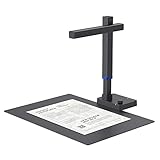
- Design and Speed: Work with Windows XP/7/8/10/11 AND macOS 10.13 or later. Not compatible with Android and iOS. Designed for A3&A4(11.69*16.53 & 8.27*11.75 inch) document, any objects smaller than A3 size can be scanned with Ultra-fast scanning speed, about 1 second per page. Perfect device to scan FLAT papers
- USB Document Camera & Scanner: Work as both a document camera for remote teaching&learning compatible with ZOOM; Goole Meet and a document scanner to scan papers and convert/OCR files. OCR supports 180+ languages for text recognition. Please note that Thai, Hebrew, and Arabic are currently not supported. If you need the complete OCR language support list, please feel free to contact us for more details
- Patented Flattening Curved Book Page Technology: Shine Ultra applies CZUR’s patented technology to flatten the curved surface after pixel transformation to flattening of the book page (Only suitable for thinner books, ET series is recommended for thicker books)
- High Resolution & AI Tech: CMOS 13MP (4160*3120, A4≈340 AND A3≈245 DPI) camera. Smart Paging and Auto Cropping; Combine Sides; Stamp Mode; and Multiple Color Modes
- Height Adjustable & Portable: 2-level height adjustable neck. 90 degree foldable and lightweight 4 lbs with foot pedal for convenient operation
What range loading does not solve
Range loading does not make editing, merging or OCR cheap. Operations that touch every page still read the entire file, and OCR of a complete document still processes every page image, so neither avoids reading all pages or retaining substantial data. Do not assume a small PDF is cheap to render, either: a single densely detailed page can be demanding on the device. Range loading also depends on both PDF.js configuration and server support, so verify both in the environment you deploy.
Independent reader supportYour contribution helps us test, update, and keep practical guides available for everyone.Browser-only or server-assisted: the tradeoffs
Neither design wins across the board. The table compares tendencies rather than guarantees for a particular product, so name the target browsers, scan profile, language set and workload before claiming that one is better.
| Concern | Browser-only | Server-assisted |
|---|---|---|
| Document transfer | Not needed if the workflow truly stays local | The document or the relevant pages must be sent to the service |
| Resource ceiling | Set by each user’s device, browser and open tabs | Set by the provisioned worker, which can be sized and bounded centrally |
| OCR engine | Runs on the user’s CPU and memory and may need downloaded engine or model data | Managed and scaled centrally, but requires isolation and abuse controls |
| Privacy disclosure | Must describe every network request and the boundary of local processing | Must explain transmission, storage, access and deletion |
| Failure modes | Browser support gaps, low-memory devices, tabs being discarded | Network interruptions, queue backlogs, server resource rejections |
| User experience | No upload wait, but a poorly managed heavy job can freeze the tab | Handles device-heavy work, but needs upload progress and job status |
A workable hybrid
Many products should keep parsing, viewing and light operations local, and offer server OCR as an explicit choice for large or demanding scans. Say which operations transmit the file before the user chooses, and make the default the option that matches your privacy promise. Do not describe range-loading a remote PDF as equivalent to local-only processing, because the file still comes across the network.
Recommended Free Tools
Setting limits you can enforce
Do not copy a competitor’s advertised file cap without matching its workload. Limits belong to each operation, because viewing one page, merging documents, rendering every page and running OCR have different peak patterns. For each operation, define:
- maximum input bytes and maximum page count;
- maximum page dimensions or pixel count, and the OCR downsampling policy;
- simultaneous jobs per user and worker concurrency;
- wall-clock time limits and what cancellation does to partial output;
- how encrypted and password-protected files are detected and reported;
- the failure boundary you have measured on low-memory devices with your worst-case documents.
Browser-side enforcement
- Show a progress indicator for each stage, and let the user cancel without reloading the page.
- Release canvases, workers and object URLs when a job finishes or fails.
- Check byte size before parsing, then check page count and dimensions once the document loads. Explain the reason whenever a file is rejected.
Server-side enforcement
- Reject oversized requests at the outermost layer, such as a proxy or gateway, before the file is written to storage, and have the application enforce the same limit.
- Run conversion in an isolated worker, such as a container or virtual machine, with CPU, memory and wall-clock caps.
- Apply the OCR controls described above: downsampling above your chosen megapixel ceiling, a per-page timeout, and skip thresholds.
- Limit concurrent workers so peak memory stays within the instance. The OCRmyPDF figures above show why this matters.
- When OCR skips or times out on a page, return the result with those pages marked, rather than reporting a clean success.
- Return an actionable error that names the limit that was hit, such as file size, page count or timeout.
Public OCR endpoints
The OCRmyPDF project’s Online deployments documentation, in its 17.13.0 stable release, states: “OCRmyPDF is not designed for use as a public web service where a malicious user could upload a chosen PDF.” The same page notes that the software can be used in a web service and discusses isolation such as containers or virtual machines, along with resource bounds. Read this as a warning against exposing a parser and OCR stack directly to anonymous uploads. It is not evidence that every PDF is malicious, or that any particular deployment is secure. Before opening such an endpoint, put it behind authentication or quotas, limit per-user concurrency, and monitor for jobs that repeatedly hit their limits.
Quick Recap
Product prices and availability are accurate as of the date/time indicated and are subject to change. Any price and availability information displayed on Amazon at the time of purchase will apply.

