
Quick wins for a faster PC:
Scan for outdated or missing drivers - takes under a minuteDriver Scan →Clear out junk files and repair common Windows errorsFree Scan →Fix the driver behind crashes, sound loss and screen glitchesFind Drivers →iTechGuides is reader-supported. When you buy through links on our site, we may earn an affiliate commission. As an Amazon Associate I earn from qualifying purchases. Learn more
Choose a rideshare when a shared launch already reaches an orbit your mission can use, on a schedule you can tolerate. Choose a dedicated rocket when orbit, timing, trajectory or environment cannot be met by a shared ride. Choose a hosted payload when you want your instrument flown on a provider’s spacecraft and are willing to give up some control in exchange for the provider handling integration, launch support, operations and data return.
These are not interchangeable options, and a lower launch price per kilogram can still be the wrong choice if the orbit it delivers you to is unusable.
The three models at a glance
Each model solves a different problem. The table compares them on the factors that usually decide the choice. Where the published sources give no value for a factor, the cell says so rather than estimating one.
| Factor | Rideshare | Dedicated rocket | Hosted payload |
|---|---|---|---|
| What you buy | A place on a launch carrying other payloads | A launch vehicle flown for your spacecraft | Accommodation on a provider-operated spacecraft, with a service scope that can include integration, launch, operations and data return |
| Orbit | Limited to the orbit the shared mission reaches; a transfer may be needed | Set by your mission requirement within vehicle performance | Set by the host spacecraft; not stated in the sources for any specific host |
| Schedule control | Tied to the carrier’s scheduled flights | Greater control, according to NASA, though the benefit depends on vehicle, launch site, licensing and contract | Set by the host’s mission plan; not stated in the sources |
| Integration work | Your spacecraft is integrated to the deployer and launch interfaces | Set by the launch contract; not stated in the sources | Can shift integration and test, and routine operations, to the provider |
| Control of the spacecraft | Your team owns and operates the spacecraft | Your team owns and operates the spacecraft | Less control and customization than a team that procures and operates its own spacecraft bus |
| Published price reference | $350,000 starting example for about 50 kg on SpaceX Transporter (NASA overview, 2026; a dated example, not a quote) | Not stated in the sources | Not stated in the sources |
| Main constraint | Orbit and schedule must fit | Total mission price and vehicle configuration | Host mass, power, data and pointing limits |
Rideshare: access to scheduled flights
A rideshare places your spacecraft alongside other payloads on a launch vehicle, often using spare capacity on a larger vehicle or on a scheduled multi-customer mission. NASA’s Small Spacecraft Systems Virtual Institute lists the available mechanisms as commercial rideshare programs, dispenser platforms attached to larger vehicles, and government launch opportunities.
#1 Best Overall

- BEGINNER MODEL-ROCKET LAUNCH SET: The Tandem-X rocket-model launch set offers adults and kids ages 10+ hours of fun during the holidays as they complete and launch our Amazon and Crossfire ISX rocket models. This set includes the easy-to-assemble Amazon model parts, the Crossfire ISX model parts, parachutes, and the launch pad system. It requires rocket engines, Starters, Recovery Wadding, and 4 high-quality 1.5-volt AA alkaline batteries for launch use (sold separately).
- 2 SOARING ALTITUDE HEIGHTS: Our Tandem X set offers a high-performing power duo with our giant 30-inch Amazon model (600-foot projected altitude with a C6-5 rocket engine) and our streamlined 15.6-inch Crossfire ISX model (1,150-foot projected altitude with a C6-7 rocket engine). Other compatible Estes model-rocket engines for Amazon model: B4-2, B4-4, B6-2, B6-4, C5-3, and C6-3. Other compatible engines for Crossfire ISX: A8-3, B4-4, B6-4, and C6-5. All engines sold separately.
- READY TO ASSEMBLE: Our beginner model-rocket launch set comes with 2 build options. The precolored Amazon model features plastic fins and self-stick graphics and can be built in an hour. The Crossfire ISX model comes with laser-cut wood fins, self-stick decals, and aerodynamic parts. Pair the rockets with the included Porta Pad II Launch Pad and Electron Beam Launch Controller for a hands-on educational activity or a unique Christmas gift for a budding scientist or a space aficionado.
- SAFETY FIRST, FUN ALWAYS: Our rockets and rocket launch accessories are designed to be used with the NAR (National Association of Rocketry) model-rocket safety code. Always ensure you have an appropriate launch site, stand back at least 15 ft., insert the safety key, issue a countdown, and then you can let your rocket fly!
- WE IGNITE IMAGINATIONS: Since 1958, Estes has created educational rocket kits and displays designed for an unforgettable aerospace experience. As a family-owned company, we have grown to offer exciting STEM products that engage aspiring rocketeers and the future minds of aerospace.
What must match before you book
A rideshare works when the orbit and deployment profile on offer are the ones your mission needs. Confirm:
- the launch window, target orbit and injection accuracy
- separation and deployer compatibility
- the payload envelope and the launch environment
- the integration schedule
- whether an additional orbital transfer is needed to reach your operational orbit
NASA’s launch and deployment guidance states the core principle:
“Rideshare arrangements provide cost-effective access to space using proven launch vehicles with scheduled flights throughout the year.”
Do these 3 things before closing this tab:
1Clear out junk files and repair common Windows errors2Scan for outdated or missing drivers - takes under a minute3Repair Windows errors before they cause bigger problemsSpecial offer. See more information about Outbyte and uninstall instructions. Please review EULA and Privacy policy.NASA Small Spacecraft Systems Virtual Institute, Integration, Launch, and Deployment, section 10.3.2, “Rideshare Launches” (2026).
Rank #2
 Estes 1427 Alpha III Rocket-Building Kit, Beginner Flying-Rocket Model Kit for Ages 10+, Includes Launch Pad and Controller
- BEGINNER MODEL ROCKET LAUNCH SET: The Estes Alpha III launch set lets kids ages 10+ and hobbyists easily build and launch this iconic model rocket. The model rocket kit includes rocket parts, engine mount, decals, a parachute, a launch pad system, and instructions. For blastoff, you’ll need Estes rocket engines, Starters, Recovery Wadding, and 4 high-quality 1.5-volt AA alkaline batteries (not included).
- SOARS UP TO 1,150 FT.: Our Alpha III model rocket is designed for first-time STEM kit builders and climbs up to a projected altitude of 1,150 ft. (351 m). It’s compatible with 1/2A6-2, A8-3, A8-5, B4-4, B6-4, B6-6, C6-5, or C6-7 Estes rocket engines (sold separately).
- READY TO ASSEMBLE: Rocket building sparks creativity and a love for science and outer space! This beginner Alpha III model kit is easily put together with 1 hour of preparation and includes decals. It comes with a Porta-Pad II Launch Pad and Electron Beam Launch Controller for an unforgettable blastoff for first-time rocketeers.
- SAFETY FIRST, FUN ALWAYS: Our rockets are designed to be used with the NAR (National Association of Rocketry) model-rocket safety code. Always ensure you have an appropriate launch site, stand back at least 15 ft., insert the safety key, issue a countdown, and then you can let your rocket fly!
- ESTES EDUCATION: Since 1958, Estes has created educational rocket kits designed for an unforgettable launch experience. As a family-owned, US-based company, we offer exciting and engaging STEM products for all interests, skills, and power levels.
Published price and cadence figures
NASA’s 2026 overview gives a starting price of $350,000 for a ride of approximately 50 kg on SpaceX Transporter missions. Treat this as a dated starting example. It is not a quote for a particular orbit, payload mass, integration package or contract date, and your total mission cost will include the items covered later in this guide.
The same overview reports that Rocket Lab completed 10 Electron rideshare missions in 2025, with launches planned in 2026. That is a historical count and a planning statement, not a guarantee of future availability.
Dedicated rocket: buy the orbit and the timing
A dedicated launch puts your spacecraft on a vehicle flown for your mission. NASA identifies five situations that justify flying as a dedicated payload: a specific orbit; near-full utilization of vehicle performance; interplanetary trajectories; precisely timed rendezvous; and special environmental considerations.
Free tools Windows power users keep installed
One-click scans. No signup required.
Why dedicated is not automatically the expensive option
NASA’s 2026 overview notes that a dedicated launch is not automatically the inferior economic choice. Its value can come from mission control and trajectory fit. If an unsuitable shared orbit would require a costly transfer, or would fail the mission requirement outright, the dedicated ride can cost less overall. Making that call requires a complete, like-for-like quote, so avoid assuming a dedicated launch is always more expensive or slower.
Rank #3
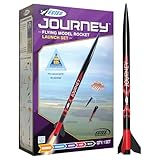
- BEGINNER MODEL ROCKET LAUNCH SET: The Estes Journey Launch Set gives kids ages 10+ and beginner model rocket fans the excitement of an outer-space-like adventure. This kit includes rocket parts, decals, a launch pad, a launch controller, and a parachute. For launch, you’ll need rocket engines, Starters, Recovery Wadding, and 4 high-quality 1.5-volt AA alkaline batteries (sold separately).
- SOARS UP TO 1,100 FT.: The included Estes Porta-Pad II Launch Pad and Electron Beam Launch Controller make it easy for kids and beginners to aim for the stars. The Journey rocket model reaches up to 1,100 ft. (335 m) with a C6-7 Estes rocket engine (sold separately). It’s also compatible with the Estes A8-3, B4-4, B6-4, and C6-5 rocket engines.
- READY TO ASSEMBLE: Rocket building inspires creativity and a passion for science and outer space! Each of our beginner rocket kits can be completed in approximately 1 hour. It comes with a Porta-Pad II Launch Pad and Electron Beam Launch Controller for an unforgettable blastoff for first-time rocketeers.
- SAFETY FIRST, FUN ALWAYS: Our rockets and rocket launch accessories are designed to be used with the NAR (National Association of Rocketry) model-rocket safety code. Always ensure you have an appropriate launch site, stand back at least 15 ft., insert the safety key, issue a countdown, and then you can let your rocket fly!
- WE IGNITE IMAGINATIONS: Since 1958, Estes has created educational rocket kits and displays designed for an unforgettable aerospace experience. As a family-owned company, we have grown to offer exciting STEM products that engage aspiring rocketeers and the future minds of aerospace.
Small-launcher performance snapshot
NASA’s 2026 page includes a snapshot of dedicated small launchers, their indicative low Earth orbit (LEO) payload performance and recent flight status. These are indicative figures, not interchangeable guarantees or payload limits for your mission.
| Vehicle | Indicative LEO payload (NASA 2026 snapshot) | Recent flight shown in the snapshot |
|---|---|---|
| Rocket Lab Electron | 200 kg | February 2026 |
| Galactic Energy Ceres-1 | 420 kg | January 2026 |
| ISRO SSLV | 500 kg | August 2024 |
| Firefly Alpha | 630 kg | Not stated; the snapshot lists its status as still to be determined |
The snapshot also lists several development-stage vehicles. Do not treat them as bookable options until a provider confirms their status directly.
Pitfalls when comparing dedicated options
- Vehicle capability is not the same as what you can fly. Compare total mission price, not payload mass alone.
- Greater control over the ascent profile and schedule depends on the vehicle, launch site, licensing, mission integration and contract.
- Confirm the specific vehicle configuration, target orbit, launch site, schedule and contractual status with the provider.
Hosted payload: fly your instrument on a provider’s spacecraft
A hosted payload is a service, not just a launch. Your instrument is carried on a spacecraft operated by a service provider. NASA defines hosted orbital services as end-to-end support that can include integration and test, launch accommodation, commissioning, on-orbit operations and data return. NASA’s 2026 spacecraft platforms guidance describes its hosted-service offerings as a snapshot dated January 2026 that changes rapidly.
Four hosting patterns
- A dedicated spacecraft for one customer’s payload.
- Capacity on a provider’s internally funded mission, shared from unused mass, power and data.
- Multiple customers sharing one spacecraft bus.
- Virtual or software-only hosting on an existing spacecraft.
What you gain and what you give up
Hosting can reduce non-recurring engineering and program overhead, and it lets your team focus on the payload and the downstream data processing. In return, the provider takes on more integration and routine operations work, and you may have less control and customization than a team that buys and operates its own spacecraft bus. A hosted payload is therefore a different mission architecture with a different service scope, not a cheaper launch.
Rank #4

- AUTHENTIC HIMARS DESIGN – Build a detailed M142 HIMARS military vehicle with 443 precision-fit building pieces. Featuring a realistic 6×6 tactical truck, rotating launcher pod, and authentic exterior details, this model is designed for military enthusiasts and collectors.
- REALISTIC FEATURES – The rotating launcher pod and rolling wheels recreate the appearance of the original tactical vehicle. Precision-fit bricks provide a sturdy build, making the finished model ideal for display and collection.
- DISPLAY-READY SIZE – Measuring approximately 8.0 × 3.4 × 4.6 inches, the completed model fits perfectly on desks, bookshelves, display cabinets, offices, or collector showcases without taking up too much space.
- COMPATIBLE BUILDING BRICKS – Compatible with most major building brick brands, allowing collectors to expand military vehicle collections or create custom display scenes with other compatible brick-built models.
- PREMIUM QUALITY – Manufactured with durable ABS building bricks for reliable fit and long-lasting display. Includes illustrated assembly instructions and replacement parts support for a smooth building experience.
Payload fit checklist
NASA advises defining the payload envelope and mission needs first, then confirming current provider specifications, because offerings change. Check:
- mass, volume, mounting constraints and keep-out zones
- average and peak power, duty cycle and electrical interface
- temperature and heat rejection
- data protocols, throughput, onboard storage and downlink schedule
- attitude knowledge, pointing accuracy and stability
- mission duration, operational control, data ownership and access, and service continuity
Getting to the right orbit: integration hardware and transfer
A launch contract does not by itself settle how a spacecraft is physically mounted and released. NASA identifies primary structural interfaces, dispensers and separation systems as the hardware that mounts, protects, connects and releases a spacecraft.
Integration hardware
CubeSats benefit from standardized deployer designs. Spacecraft outside canisterized formats commonly use other integration hardware or mount directly to the launch vehicle. Fit and qualification depend on your spacecraft’s form factor, loads, interfaces and selected service, so the hardware is mission-specific. Generic retail parts are not a substitute for flight-qualified integration equipment.
Orbital transfer
If a rideshare drops you into an orbit other than the one you need, check whether a transfer vehicle or propulsion system can deliver the payload to its operational orbit. NASA explains that orbital transfer vehicles and orbital maneuvering vehicles can provide “last mile” delivery. Account for added cost, deployment delay, extra interfaces and additional risk.
Best Value

- MODEL-ROCKET LAUNCH PAD: Estes rocket model kits require the right launch pad system for any show-stopping launch powered by an E rocket engine, so the quick-to-assemble 2238 Porta Pad E Launch Pad comes ready for the job. It includes a 1/4-inch (6-millimeter) launch rod but can accommodate a 3/16-inch (5-millimeter) Maxi Launch Rod (sold separately) for larger models.
- MADE FOR E-ENGINE ROCKETS: The E Launch Pad sports a more robust blast deflector and stand to handle E rocket engines. The durable design absorbs the extra force, protects the launch pad from heat damage, and enables you to launch rockets using any of the Estes model-rocket engines.
- IMPORTANT LAUNCH ACCESSORY: Whether you’re working with a beginner model rocket or an advanced-level replica, this launch pad belongs in your launch system setup. Designed for quick assembly without glue or tools, this launch pad pairs with an Estes E Controller (sold separately) for a full launch system setup.
- SAFETY FIRST, FUN ALWAYS: Our rockets and rocket launch accessories are designed to be used with the NAR (National Association of Rocketry) model-rocket safety code. Always ensure you have an appropriate launch site, stand back at least 15 ft., insert the safety key, issue a countdown, and then you can let your rocket fly!
- WE IGNITE IMAGINATIONS: Since 1958, Estes has created educational rocket kits and displays designed for an unforgettable aerospace experience. As a family-owned company, we have grown to offer exciting STEM products that engage aspiring rocketeers and the future minds of aerospace.
NASA’s 2026 overview discusses vehicles including Photon, Vigoride and Mira. Some of their capabilities and planned missions remain status-sensitive, so treat them as plans rather than confirmed services until a provider confirms them directly.
Independent reader supportYour contribution helps us test, update, and keep practical guides available for everyone.Government and educational access routes
NASA VADR
VADR (Venture-Class Acquisition of Dedicated and Rideshare) is a NASA contract vehicle for FAA-licensed commercial launch services for risk-tolerant NASA and NASA-sponsored payloads. It covers CubeSats through Class D missions and orders work through task orders. NASA describes the program as intentionally using less oversight and more flexibility than other NASA launch procurement. Its listed scope includes both dedicated launches and rideshares. It is relevant to eligible NASA-sponsored work, not to general public bookings.
NASA gives the contract a five-year ordering period and a maximum aggregate value of $300 million across contracts. That figure is a contract ceiling, not a launch price or an amount available to any single mission, and the cited passage does not state the date of that description. NASA’s July 2025 contractor list includes Arrow Science and Technology, Astra, Blue Origin, Firefly, Impulse Space, SEOPS, Momentus, Northrop Grumman, Phantom Space, Relativity Space, Rocket Lab, SpaceX and United Launch Services. That list is dated and is not a complete market survey.
What’s actually slowing this PC down?
Pick the symptom - the matching free tool is one click away.
CubeSat Launch Initiative and Fly Your Satellite
NASA’s CubeSat Launch Initiative and ESA’s Fly Your Satellite are educational access routes for eligible teams. Application rules and eligibility change, so confirm them with the program administrators before planning around either one.
Flight Opportunities hosted platform roster
NASA’s Flight Opportunities provider page lists hosted orbital platform providers for government program use: Astro Digital, Loft Federal, Momentus, Rocket Lab, SpaceX, Spire, Tyvak and Varda. The roster shows program participation and provider category. It does not establish a public commercial offer, or current availability, for every provider listed.
Regulatory responsibility for U.S. commercial launches
The FAA’s frequently asked questions, last updated May 2, 2025, state that a license or permit is required for commercial launches within U.S. borders and for launches abroad by U.S. entities. The FAA generally does not license launches by and for U.S. government organizations. The agency distinguishes orbital from suborbital flight by whether the vehicle reaches the velocity needed to put a spacecraft into Earth orbit. A suborbital flight does not achieve orbit, so it cannot deliver a satellite meant to stay in orbit. Requirements depend on jurisdiction and mission details, so check with the applicable authority and current rules.
A practical decision sequence
- Fix the mission outcome. Record the required orbit, inclination, altitude, launch window, deployment accuracy, lifetime, and any rendezvous or interplanetary needs.
- Define the payload envelope. Work through the power, thermal, data, pointing and mechanical items in the hosting checklist above, whether or not you plan to host.
- Decide what your team must own and control. Choose among launch alone, a complete spacecraft bus, or hosting with provider-managed operations and data delivery.
- Screen service types. Start with a rideshare if an offered orbit and schedule meet your requirements. Move to a dedicated launch when trajectory, timing, environment or performance utilization warrants it. Evaluate hosting when your payload can use a provider spacecraft’s resources and you value provider-managed integration and operations.
- Compare the complete mission cost. Use the list below rather than the launch price alone.
- Request current written terms. Put the provider questions below to each candidate before committing.
This sequence synthesizes NASA’s launch and hosted-platform guidance. It does not replace mission-specific systems engineering, provider proposal review or jurisdiction-specific regulatory advice.
Quick Recap
What belongs in a total-cost comparison
- launch price
- integration and testing
- adapter or deployer hardware
- transport to the launch site
- insurance, where applicable
- orbital transfer
- licensing
- spectrum
- ground segment
- operations and data return
- end-of-life obligations
Questions to put to every provider
- Will you accept my payload at this mass, volume and interface, and in what written form?
- What is the scheduled launch window, and what are the launch-delay provisions?
- What orbit accuracy do you guarantee, and under what conditions?
- Which integration tasks are yours and which are mine?
- What mission assurance, data and operational interfaces do you provide?
- Who holds the regulatory responsibilities and licenses?
- What are the remedy and termination provisions?
Product prices and availability are accurate as of the date/time indicated and are subject to change. Any price and availability information displayed on Amazon at the time of purchase will apply.

