
iTechGuides is reader-supported. When you buy through links on our site, we may earn an affiliate commission. As an Amazon Associate I earn from qualifying purchases. Learn more
AI data lakes can increase storage demand in two different ways: organizations may need more capacity to keep growing datasets, replicas, and checkpoints, and they may need faster, more predictable data access to keep active training workloads supplied. Those needs are related but not interchangeable. The right storage design depends on the workload, retention policy, and where data must live—not on a single storage figure for “AI.”
Why AI data lakes can consume more storage
AI projects can add new datasets, preserve more versions of existing data, and reuse the same information for training and analytics. Training may also produce checkpoints—saved states that let a job resume after interruption—and organizations can retain replicas for availability or operational reasons. Each decision affects capacity and the length of time storage remains occupied.
In a November 2024 survey commissioned by Seagate, 61% of infrastructure buyers who predominantly used cloud storage for AI data management expected their storage requirements to at least double by 2028. Recon Analytics surveyed 1,062 storage infrastructure buyers and decision-makers at companies with more than $10 million in annual revenue and more than 50 TB of storage; respondents had adopted AI or planned to do so within three years. This is a projection from that specific sample, not a forecast for every company or AI project.
Storage needs also vary by AI stage. Gartner’s February 2024 public abstract distinguishes ingestion, training, inference, and archiving as stages with different storage and management requirements. It also notes that many enterprises fine-tune existing models rather than build new ones. A fine-tuning project should therefore be sized from its actual data and I/O requirements, rather than assumed to need the infrastructure of a large model-building cluster.
#1 Best Overall

- Easily store and access 2TB to content on the go with the Seagate Portable Drive, a USB external hard drive
- Designed to work with Windows or Mac computers, this external hard drive makes backup a snap just drag and drop
- To get set up, connect the portable hard drive to a computer for automatic recognition no software required
- This USB drive provides plug and play simplicity with the included 18 inch USB 3.0 cable
- The available storage capacity may vary.
Why capacity is not the same as training performance
Deep-learning training processes data over iterative epochs, so it can reread the same dataset many times. NVIDIA’s DGX B200 reference architecture explains that large or multimodal datasets may not fit in local cache. When reads cannot be served from cache, the storage system and the path to the training cluster must sustain the required data flow across repeated reads and concurrent work.
Checkpoint writes create a different pressure. A checkpoint can be synchronous, meaning the job waits for the write to finish before proceeding. If checkpoint storage cannot keep up, saving state can interrupt training. A system with ample total capacity may still be a poor fit if its read throughput, write speed, concurrency, or cache strategy does not match the workload.
Rank #2
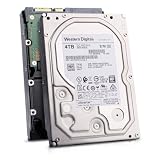
- Massive 4TB Capacity — Ideal for enterprise storage, data centers, NAS/SAN arrays, and backup solutions requiring reliable high-density storage per drive bay.
- SATA 6Gb/s Interface — Delivers fast, reliable data transfer with broad compatibility across enterprise servers, storage arrays, and RAID controllers.
- CMR Recording Technology — Utilizes Conventional Magnetic Recording for consistent write performance, well-suited for demanding, write-intensive workloads.
- 7200 RPM Performance with 256MB Cache — Delivers strong sustained transfer rates and low latency for high-throughput applications, backed by Non-Volatile Cache (NVC) for improved write performance and data protection.
- Enterprise-Grade Reliability — Rated for 24/7 operation with a 2 million hour MTBF and 550TB/year workload rating, backed by a dual-stage micro actuator for enhanced positioning accuracy.
- Capacity: How much source data, derived data, checkpoints, and retained history must be stored?
- Read performance: How much data must each job reread, and how many jobs may read at once?
- Write performance: How frequently are checkpoints written, how large are they, and how much pause can a job tolerate?
- Cache fit: Can frequently reused data stay in memory or local storage, or must the system repeatedly fetch it from shared storage?
These are workload-design questions. One capacity number cannot answer them all.
How a tiered storage design can help
A common pattern separates persistent capacity from the fast path used by active jobs. Object storage or another capacity-oriented layer can hold persistent datasets and retained data. Shared high-speed storage can serve active cluster workloads, while memory and local NVMe can cache or stage data when the platform and workload support it. The tiers must be coordinated: staging data locally does not remove the need to manage the authoritative copy, replicas, or updates in shared storage.
Rank #3
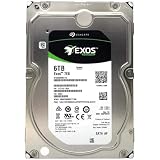
- [ Enterprise-Class Reliability ] Designed for 24/7 operation with enterprise-grade components, making it ideal for servers, NAS systems, RAID arrays, and data-intensive environments.
- [ High-Capacity 6TB Storage ] Store large amounts of business data, backups, media libraries, surveillance footage, and critical files on a single drive.
- [ 7200 RPM Performance ] Fast spindle speed combined with a large 256MB cache delivers responsive performance and efficient data transfers for demanding workloads.
- [ SATA 6Gb/s Interface ] Provides broad compatibility with desktops, workstations, NAS devices, servers, and storage arrays while delivering reliable high-speed connectivity.
- [ Optimized for Multi-Drive Systems ] Built for enterprise and RAID environments with enhanced vibration tolerance and workload capabilities for dependable long-term operation.
NVIDIA publishes illustrative throughput guidance for its DGX B200 architecture. The figures below describe that reference design, not general-purpose sizing targets for other systems.
| DGX B200 guidance configuration | Aggregate read rate | Aggregate write rate |
|---|---|---|
| Standard, one SU | 40 GBps | 20 GBps |
| Standard, four SUs | 160 GBps | 80 GBps |
| Enhanced, one SU | 125 GBps | 62 GBps |
| Enhanced, four SUs | 500 GBps | 250 GBps |
These aggregate rates are tied to NVIDIA’s described DGX B200 SuperPOD configurations; they should not be treated as minimums or promises for an unrelated cluster. Use them as examples of how architecture-specific storage guidance can distinguish read and write needs at different scales.
Rank #4

- SCALABLE: Run big data applications to meet hyperscale demands
- EFFICIENT: Get consistent performance with low latency and repeatable response times with enhanced caching
- HIGH CAPACITY: Support data analytics capabilities and other dense architectures for highest rack-space efficiency
- COST EFFECTIVE: Optimize TCO with the lowest cost per terabyte
- RELIABLE: Enjoy extended reliability with 2.5M-hour MTBF and 5-year limited warranty
Physical media also serves different roles. Seagate describes hard drives as mass-capacity media used by cloud providers, while NVIDIA identifies local NVMe as a caching or staging option. Those broad roles do not establish that any particular retail drive or SSD is appropriate for an enterprise deployment; system design, reliability, networking, software, and support requirements matter too.
Quick wins for a faster PC:
Repair Windows errors before they cause bigger problemsFix Now →Scan for outdated or missing drivers - takes under a minuteDriver Scan →Clear out junk files and repair common Windows errorsFree Scan →Where object storage and lakehouses fit—and what surveys say
Object storage is part of many organizations’ AI data strategies, but survey results should be read with their publisher and sample in view. In a December 2024 announcement, storage vendor MinIO reported results from a survey of 656 IT leaders: respondents said 70% of enterprise data was in object storage and expected that share to rise to 75% over two years. The same vendor-published survey said 92% of respondents had a modern data lake or lakehouse in place or planned one. These are reported survey responses, not universal measurements of enterprise storage.
Best Value
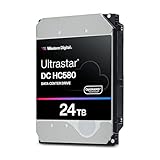
- Store vast amounts of data with a class-leading 24TB capacity, perfect for hyperscale environments, data centers, and big data applications.
- 7200 RPM, SATA 6Gb/s interface, and large 512MB cache, delivering fast, predictable performance for demanding server workloads.
- Designed for 24/7 operation with a high 2.5 million hours MTBF (Mean Time Between Failures) rating, ensuring enterprise-class durability and data dependability.
- Conventional Magnetic Recording (CMR): Employs proven CMR technology for consistent and reliable performance across various workloads.
- Engineered for massive scale-out (MSO), high-density data centers, and cloud storage applications.
MinIO’s announcement also reported that respondents cited security and privacy (44%), data governance (27%), and cloud-native storage (25%) among leading AI challenges; 68% expressed concern about the cost of AI workloads. These percentages describe responses in that survey, not a general ranking of every organization’s concerns.
A lakehouse or object store can help organize and retain data, but choosing one does not by itself solve active-training performance. Teams still need to establish which data is authoritative, how it is accessed by jobs, whether it must be copied or staged, and how updates and permissions are managed.
Independent reader supportYour contribution helps us test, update, and keep practical guides available for everyone.How to choose cloud, private, or hybrid placement
Storage placement is a trade-off among access patterns, governance, portability, and operating cost. A cloud service may suit some data and workloads; private infrastructure may be appropriate for others; a hybrid design can place persistent and active data in different environments. The right choice depends on where data originates, who may use it, how it moves between environments, and what the workload requires.
Windows Errors? Fix Them Before They Spread
Repair common Windows errors and clear accumulated junk for a smoother, more stable PC - no reinstall needed.Free scan · no reinstallOutdated Drivers Are Slowing You Down
One free scan finds every outdated or missing driver and matches the right update for your exact hardware.Free scan · exact hardware match- Security and privacy: Identify sensitive datasets, access controls, and requirements that constrain where data can be stored or processed.
- Governance: Define ownership, retention, lineage, and deletion rules for original data, derived datasets, checkpoints, and replicas.
- Portability: Assess the effort and cost of moving data between environments and whether tools and formats support the planned workflow.
- Operating cost: Include storage, data movement, performance tiers, replicas, and the cost of keeping retained data—not only the headline capacity price.
MinIO CTO Ugur Tigli said in the vendor’s December 2024 survey announcement: “When you look at the networking and the data challenges of AI, it’s all about the scale and performance. The data infrastructure will tremendously change when you go to those higher speeds over the next one to two years.” This is a vendor executive’s view of expected change, rather than a neutral standard or a guarantee that every organization needs higher-speed infrastructure.
Quick Recap
A practical checklist for sizing AI storage
- Characterize the data: Record dataset size, modality, growth, and which portions each training, inference, or analytics workload uses.
- Map I/O behavior: Estimate repeated reads, concurrent jobs, cache fit, and the expected size and frequency of checkpoint writes.
- Set retention and replication rules: Decide how long to retain original data, derived data, checkpoints, and replicas, and who approves exceptions.
- Choose placement and tiers: Assign persistent datasets, active workloads, and cache or staging data to appropriate storage based on access, governance, portability, and cost.
- Benchmark the target workload: Test representative data and job concurrency on the intended architecture, including checkpoint behavior and recovery, rather than relying on capacity specifications alone.
- Size after the workload is understood: Use measured throughput and retention needs to plan capacity and performance separately, then revisit the plan as datasets, job concurrency, or policies change.
Product prices and availability are accurate as of the date/time indicated and are subject to change. Any price and availability information displayed on Amazon at the time of purchase will apply.

