
The Tool Desk
Outbyte Driver Updater FREEScan for outdated or missing drivers - takes under a minuteDriver Scan →Outbyte PC Repair FREEClear out junk files and repair common Windows errorsFree Scan →iTechGuides is reader-supported. When you buy through links on our site, we may earn an affiliate commission. As an Amazon Associate I earn from qualifying purchases. Learn more
Persistent operational memory is an emergency organization’s ability to keep what it learned from a real incident or exercise and act on it later. It exists only when an observation moves through a chain: it is recorded, analyzed, turned into a lesson, assigned to a named owner, and built into plans and training. “CrisisOps” is the label this article uses for that practice. It is an editorial framing, not a FEMA product, a federal program, or a software package. Federal guidance describes the underlying steps, and the useful question for any agency is whether a lesson from last season’s flood response changes what the next team does.
Why experience fades without a deliberate loop
Most response organizations already collect something after an event: a debrief, a timeline, an after-action report, a folder of situation reports. The gap is between collecting and changing. FEMA’s review and update guidance describes organizations gathering lessons from real-world events and exercises, developing improvement plans, and tracking corrective actions to close gaps. The U.S. Fire Administration’s Operational Lessons Learned in Disaster Response makes a similar point from the after-action side: a report documents activities and identifies problems and successes, but its value depends on defined lessons and plans for improvement. A document that is filed and never read does not change anything.


The five-stage cycle
Treat persistent operational memory as a loop with five stages. Each stage produces an output the next one depends on, so a gap at any point breaks the chain.
What’s actually slowing this PC down?
Pick the symptom - the matching free tool is one click away.
1. Capture
Capture preserves decision-relevant observations from real events and exercises. Record what happened, when it happened, the conditions under which it happened, and which participating functions were involved. Capture is most reliable when it happens during or immediately after the operation, while people still remember the reasoning behind decisions. A timeline that says a resource arrived at 14:30 is far less useful than one that also explains why it was sent there and what was known at the time.
2. Analyze
Analysis asks what worked, what did not, and how each participating component performed. This is the stage most often skipped. A raw timeline or a well-organized document repository is evidence, not a review. Analysis needs the people who ran the response in the room, and it should separate a problem caused by a plan gap from one caused by a training gap, a communication failure, or a resource shortfall, because each points to a different fix.
3. Convert
Conversion turns analysis into lessons and improvement actions. A useful lesson is specific enough to act on. “Coordination was poor” is an observation. “Two agencies requested the same staging area because no shared resource board existed at the first operational period” is a lesson, because it names a gap and suggests an action. Each lesson should map to one or more actions that address the gap directly.
Rank #2
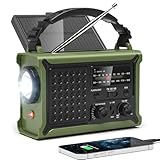
- RELIABLE NOAA/AM/FM RECEPTION: This NOAA weather radio receives 7 NOAA weather channels plus AM/FM broadcasts. A high-sensitivity signal chip and noise-reduction circuitry help provide stable reception and clear, easy-to-hear sound at home or outdoors. 𝗡𝗢𝗔𝗔 𝗮𝗹𝗲𝗿𝘁𝘀 𝗿𝗲𝗾𝘂𝗶𝗿𝗲 𝘁𝗵𝗲 𝗿𝗮𝗱𝗶𝗼 𝘁𝗼 𝗯𝗲 𝗼𝗻 𝗮𝗻𝗱 𝘁𝘂𝗻𝗲𝗱 𝘁𝗼 𝗪𝗕.
- REAL 12000MAH EMERGENCY POWER SUPPLY: Built with a true 12000mAh rechargeable battery, this emergency radio delivers dependable backup power for the radio, lights, and emergency phone charging during blackouts, storms, and outages. Enjoy up to 60 hours of FM listening at 50% volume. No inflated numbers—just tested, verified capacity you can trust. 𝗙𝗼𝗿 𝗯𝗲𝘀𝘁 𝗽𝗲𝗿𝗳𝗼𝗿𝗺𝗮𝗻𝗰𝗲, 𝗳𝘂𝗹𝗹𝘆 𝗰𝗵𝗮𝗿𝗴𝗲 𝘁𝗵𝗲 𝗿𝗮𝗱𝗶𝗼 𝗯𝗲𝗳𝗼𝗿𝗲 𝗳𝗶𝗿𝘀𝘁 𝘂𝘀𝗲.
- UPGRADED SOLAR PANEL & HAND CRANK BACKUP: The 8500mm² solar panel captures more sunlight, while the extended hand crank makes manual charging easier during power outages. Built as both a solar radio and hand crank radio, it gives you two additional backup power options when electricity is unavailable.
- 4 WAYS TO STAY POWERED: Keep this weather radio ready with four power options—USB-C, solar, hand crank, or 3 AAA batteries. Whether you’re facing a blackout, storm, camping trip, or outdoor emergency, multiple backup options help you stay powered when you need it most. USB-C charging cable included; 𝘄𝗮𝗹𝗹 𝗮𝗱𝗮𝗽𝘁𝗲𝗿 𝗻𝗼𝘁 𝗶𝗻𝗰𝗹𝘂𝗱𝗲𝗱.
- FLASHLIGHT, READING LIGHT & SOS: The 300-lumen flashlight shines up to 70 meters, while the 250-lumen reading light provides wide-area illumination for rooms, tents, or campsites. A 115dB SOS siren helps attract attention in an emergency, making this a practical all-in-one radio for blackouts, camping.
4. Assign and track
Every corrective action needs an owner, a due point, and a way to check status. FEMA’s review guidance explicitly describes tracking corrective actions as part of addressing gaps and deficiencies. Without that step, lessons stay in the report and the same problem reappears at the next incident. Tracking does not need special software to start: a shared list with an owner, a status, and a review date is enough to establish the habit, though larger organizations will eventually need something more durable.
Windows Errors? Fix Them Before They Spread
Repair common Windows errors and clear accumulated junk for a smoother, more stable PC - no reinstall needed.Free scan · no reinstallOutdated Drivers Are Slowing You Down
One free scan finds every outdated or missing driver and matches the right update for your exact hardware.Free scan · exact hardware match5. Re-use
Re-use is where memory becomes operational. Validated lessons feed into plans, training courses, preparedness activities, and the next operation’s briefing. FEMA describes review and updating as a regular process because risks, resources, and organizations change. Re-use is also the stage that proves the loop works: if the next exercise repeats a problem that a closed corrective action was supposed to fix, the closure was not real.
Shared language: NIMS and ICS as the coordination layer
Lessons transfer between teams and agencies only when they use terms everyone understands. FEMA describes the National Incident Management System (NIMS) as a comprehensive, nationwide approach to incident management, covering coordination, resource management, and information management across organizations and jurisdictions. In FEMA’s NIMS Toolkit, the institutional wording is: “The National Incident Management System (NIMS) defines this comprehensive approach.” The Incident Command System (ICS) sits within that framework and gives responders a common structure for roles, span of control, and resource tracking.
This shared vocabulary matters for memory because a lesson written in one agency’s internal shorthand may be misread by a partner. When an analysis names functions using NIMS and ICS terms, the resulting lesson can be carried into another jurisdiction’s plan without translation. FEMA’s ICS Resource Center describes the NIMS training program and ICS courses, which is the natural starting point for teams that have not used the common terms in practice.
Rank #4

- Reliable NOAA Weather Radio: A must-have emergency supply! Emergency weather radio delivers real-time information for tornadoes, hurricanes, floods, thunderstorms, and blizzards, etc(NOAA Band). Giving you precious time to protect your family, evacuate safely, or seek shelter. Portable radio can also switch to AM/FM bands easily for daily music, news and broadcasts, perfect for daily use and crisis preparedness
- Never Lose Signal or Struggle with Noisy Audio Again: Weather radio is equipped with an adjustable high-gain antenna for ultra-strong signal reception. Whether you stay indoors, travel outdoors or head to remote locations, emergency radio will provide crisp, loud and clear sound for all radio channels
- Continuous Power Supply: Equipped with solar panel, hand crank and USB charging port to keep the hand crank emergency radio running anytime. No more panic during sudden blackouts at home or outdoor trips when you forget to pre-charge the weather radio
- Portable Emergency Energy Savior: With 4000mAh/14800mWh rechargeable battery inside, the emergency radio can provide emergency power to USB devices like dead smartphones, allowing you to make vital calls when disaster strikes. The small size of the weather alert radio is portable and can be easily placed in luggage, suitcases
- Awesome Multifunctional Emergency Radio: Multifunction weather radio with an ultra-bright LED flashlight and retractable 180-degree rotating reading lamp keeps you out of the dark during emergency power outages or at night. Loud SOS alarm and eye-catching flashing light to call for help in emergency and escape from any danger. 3.5mm headphone jack for you to enjoy the portable radio
NIMS is not reserved for catastrophic events. The U.S. Fire Administration’s NIMS material describes its scope across organizations and incident phases, so the same capture-to-re-use loop applies to a routine multi-agency incident as well as a large disaster. Note that this article draws on U.S. federal guidance. State, tribal, territorial, and local procedures may differ, and agencies should check their own plans.
Where information systems fit
FEMA’s response and recovery material lists crisis information-management software and information-sharing systems among the communication tools used in response. These systems are infrastructure for moving operational information between people and organizations. They can make capture faster, make records searchable, and make shared status visible.
Best Value

- Reliable NOAA Weather Radio: A must-have emergency supply! Weather radio delivers real-time information for tornadoes, hurricanes, floods, thunderstorms, and blizzards, etc(NOAA Band). Giving you precious time to protect your family, evacuate safely, or seek shelter. NOAA weather radio can also switch to AM/FM bands easily for daily music, news and broadcasts, perfect for daily use and crisis preparedness
- 10000mAh Large Battery Capacity: Unlike ordinary emergency radios with tiny batteries that die quickly, this emergency radio is built with a massive 10000mAh high-density battery, delivering ultra-long standby and working time. The weather radio help you be fully prepared for unexpected power failures and extreme weather before danger comes
- Never Lose Signal or Struggle with Noisy Audio Again: Emergency radio is equipped with an adjustable high-gain antenna for ultra-strong signal reception. Whether you stay indoors, travel outdoors or head to remote locations, weather radio will provide crisp, loud and clear sound for all radio channels
- Continuous Power Supply: Equipped with solar panel, hand crank and USB charging port to keep the hand crank radio running anytime. No more panic during sudden blackouts at home or outdoor trips when you forget to pre-charge the radios portable am fm
- Portable Emergency Energy Savior: The emergency radio can provide emergency power to USB devices like dead smartphones, allowing you to make vital calls when disaster strikes. The small size of the weather alert radio is portable and can be easily placed in luggage, suitcases
What the federal material does not establish is that any particular tool creates learning or guarantees that a lesson is retained. A platform can store an after-action report perfectly and still leave the corrective action unowned. Software is therefore a support for the cycle, not a replacement for analysis, ownership, or the decision to change a plan. Any tool used for this purpose should be judged against the questions below rather than against vendor claims about outcomes.
Independent reader supportYour contribution helps us test, update, and keep practical guides available for everyone.Six questions for evaluating any approach
Whether you are comparing a shared document workflow, a dedicated incident platform, or a process a team has built internally, these six questions separate a working memory system from a filing system. They are evaluation questions drawn from FEMA’s coordination, information-management, review, and improvement themes. They are not a formal FEMA scorecard.
| Evaluation question | What a working answer looks like |
|---|---|
| 1. Can it capture incident and exercise observations in a usable structure? | Entries record time, conditions, and participating function, not only free-text narrative, so records can be compared across events. |
| 2. Is there traceability from observation to lesson to action? | Each corrective action links back to the lesson and observation that produced it, so a reviewer can follow the reasoning. |
| 3. Are owners and status tracked for corrective actions? | Every action has a named owner, a status, and a review date, and overdue items are visible to someone with authority to act. |
| 4. Does it fit existing NIMS and ICS language and support cross-jurisdiction sharing? | Categories and terms match NIMS and ICS usage, and partner agencies can receive records without manual translation. |
| 5. Can records be updated or exported into plans and training? | Validated lessons can be exported or referenced in plan revisions and course materials, not only kept in the platform. |
| 6. Are access controls and data-handling requirements defined? | Permissions, retention rules, and sharing limits are documented before records from multiple agencies are combined. |
Failure modes to watch for
- Timeline mistaken for review. A complete chronology with no analysis produces a record but no lessons.
- Lessons without owners. A lesson that no one is assigned to act on will not survive the next staffing change.
- Actions closed but plans unchanged. A corrective action can be marked complete while the operational plan or training still describes the old practice.
- A repository nobody searches. Records that are stored but not referenced during planning or briefings are effectively lost.
- Tool-first adoption. Buying or configuring a platform before agreeing on the cycle often produces well-organized data that no one acts on.
- Undefined sharing rules. Combining records from several agencies without agreed access and handling rules creates legal and trust problems that stall the whole effort.
Starting small
An organization does not need a new system to begin. The following sequence works with existing documents and meetings.
- Choose one recent event or exercise that produced visible problems, and assemble the existing timeline, reports, and participant notes.
- Record observations in a common structure: what happened, when, under what conditions, and which function was involved.
- Hold one analysis session with the people who ran the response. Ask what worked, what did not, and why, and keep plan gaps, training gaps, and communication failures separate.
- Write each lesson as a specific statement, then attach at least one corrective action with a named owner and a review date.
- Put the validated lessons into one concrete change: a plan revision, a training module, or a briefing note for the next operation.
- Check the next exercise for whether the same problem recurs, and treat any recurrence as evidence that the original action did not close the gap.
Once this sequence runs once from start to finish, the remaining work is repetition, and that is where persistent memory is built.
The federal sources cited here support the cycle, the shared NIMS and ICS context, and the importance of tracking corrective actions. Program availability and specific tools change over time, so verify current guidance on FEMA’s and the U.S. Fire Administration’s websites before adopting any procedure.
Quick Recap
Product prices and availability are accurate as of the date/time indicated and are subject to change. Any price and availability information displayed on Amazon at the time of purchase will apply.

