
iTechGuides is reader-supported. When you buy through links on our site, we may earn an affiliate commission. As an Amazon Associate I earn from qualifying purchases. Learn more
A 2026 laboratory study reports a way to freeze human red blood cells without glycerol, the cryoprotectant used in most conventional methods. The approach pairs trehalose with a short peptide motif derived from tardigrade CAHS proteins. In the study, the cells came out of freezing with higher reported recovery than glycerol-based freezing, and the thawed cells functioned in tests, including transfusion into anemic mice. The result is promising, but it is not yet a method that hospitals or blood banks can use on patients.
What the study actually froze
The headline says “human blood,” but the experiments concern red blood cells, the oxygen-carrying cells that make up most of blood’s volume. That is a narrower subject than blood as a whole, and the narrower wording is the accurate one. The work is an experimental cryopreservation formulation, tested in laboratory conditions, and it has not been presented as a finished blood product.
The tardigrade ingredient
Tardigrades, often called water bears, survive extreme drying and freezing. Part of that tolerance has been linked to a family of proteins called CAHS proteins. The researchers did not use full-length CAHS proteins. They used a shorter, conserved peptide motif derived from them, which is easier to make and to work with in a cell-preservation setting.
The sugar partner
The motif is used together with trehalose, a sugar that some organisms accumulate to tolerate drying and cold. The authors propose that the combination increases the amount of trehalose inside the cells and reduces ice-associated damage. These are proposed mechanisms reported by the study, not independently confirmed effects.
#1 Best Overall

- Intended Use: The 120 microscope slides with specimens suitable for science class, homeschool & biology curriculum, various samples covering different topics like biology, botany, zoology, histology, microbiology, cells.
- Microscope Slide Kit Preparation: The Lab-Grade microscope slides with case made with high-quality glass materials and techniques. Well-prepared slides provide clearer images and durable enough for repeated use, complement STEM biology science education
- Labeling & Identification Guide: Microscope glass slides Color labels classified by course to facilitate use, clearly labeled with specimen details like name, magnification, include an identification chart guide which made this microscope accessories kit easy to dig deeper than just knowing the name of the specimen
- Glass Slides Storage & Protection: Comes with a sturdy, organized case to protect the slides for microscope from damage and dust, compatible with most microscope's stage size and objectives, such as compound, stereo, digital, and pocket microscopes
- Prepared Slides Age Appropriateness: The childrens microscope slides contain a variety of samples such as plant, animal, microbiology, tissues, cells, bacteria, fungi, histology, for teaching, studying various biological specimens, ideal microscope slides for kids ages 11+ and adults
How the workflow differs from glycerol freezing
Standard high-concentration glycerol cryopreservation protects cells well, but glycerol must be removed before transfusion. According to the journal abstract, that removal step, called deglycerolization, is laborious and can cause hemolysis, meaning red blood cells rupture. The proposed workflow is intended to avoid glycerol altogether. It is described as an experimental approach, not as a validated clinical protocol.
- Co-incubate the red blood cells with the CAHS-derived motif and trehalose at 4 °C before freezing.
- Freeze the treated cells without glycerol.
- Thaw the cells.
- Wash the cells by centrifugation to remove the motif and trehalose after thawing.
- Assess the cells for morphology, volume, and functional activity.
The washing step matters because it determines whether the additives can be removed as easily as glycerol is intended to be. The American Chemical Society (ACS) release says the motif and trehalose can be washed away by centrifugation. Whether that step performs as well in clinical settings has not been shown.
Rank #2

- Microscope slide showing a human blood smear from a person with sickle cell anemia
- Stained with Wright's stain.
- When you shop with Carolina, you're not alone! All of our products are backed by unparalleled technical support, available from 8am to 6:30pm, ET, Monday through Friday. Live chat is available from 8am to 5:30pm ET, Monday-Friday. Contact information (Live Chat, email, and phone) is provided after placing your order at Amazon.
Results, with the qualifiers that matter
The figures below come from the study and from the ACS research release dated October 8, 2026. Each one applies only to the conditions in which it was measured.
Do these 3 things before closing this tab:
1Clear out junk files and repair common Windows errors2Scan for outdated or missing drivers - takes under a minute3Repair Windows errors before they cause bigger problems| Measure | Reported value | Source and date | What the source does not establish |
|---|---|---|---|
| Post-thaw red blood cell recovery, glycerol-free formulation | 89.0 ± 0.6% | Study authors, 2026 | Performance in routine blood-bank use or over long storage periods: not stated |
| Reported blood compatibility, glycerol-free formulation | 99.0 ± 0.7% | Study authors, 2026 | How this measure translates to transfusion safety in people: not stated |
| Post-thaw recovery, glycerol-based comparison | About 82% | ACS research release, October 8, 2026 | Full comparison protocol details: not stated in the release |
| Transfusion into anemic mice | Blood cell counts and hemoglobin improved | ACS research release, October 8, 2026 | Human outcomes: not established |
| Inflammatory response after transfusion in mice | None detected, per the release | ACS research release, October 8, 2026 | Animal numbers and human immune response: not stated |
| Cost compared with glycerol methods | Not stated | No source gives a figure | Operational or financial feasibility: not established |
What the evidence does and does not establish
- Established in the study: in vitro measurements of red blood cells after thawing, including morphology, volume, and functional activities.
- Established in animal work: after transfusion of the frozen, thawed, and washed cells into anemic mice, blood cell counts and hemoglobin improved, and no inflammatory response was reported.
- Not established: clinical safety or effectiveness in people, any human trial, readiness for routine blood-bank use, comparative cost, or long-term storage performance at scale.
Where the tardigrade connection comes from
The biological inspiration is real but indirect. The National Science Foundation’s 2022 explainer describes research into trehalose and tardigrade proteins in desiccation tolerance. That work explains why scientists looked at these molecules, but it does not test whether they protect human blood during freezing. The blood-storage results come only from the 2026 study.
Rank #3
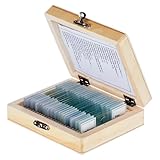
- Set of 25 prepared slides, including plants, insects, and animal tissues, for use in biological education
- Samples preserved in cedar wood oil and sealed with a coverslip to preserve specimens and prevent contamination
- Labeling provides specimen identification
- Slides are composed of optical glass for clear viewing
- Set comes in fitted wooden storage box to prevent breakage and ease handling
What the lead researcher said
Leming Sun, a corresponding author, described the work this way in the ACS release: “This study was our first attempt to translate a lesson from an extraordinarily resilient organism into a practical cell-preservation strategy.” The phrase “first attempt” is a useful signal of how early this stage is.
What would have to happen before hospitals could use it
The study does not describe these steps, but any method moving from the laboratory toward transfusion practice would normally need to clear them:
Rank #4

- When you shop with Carolina, you're not alone! All of our products are backed by unparalleled technical support, available from 8:00am to 6:00pm, ET, Monday through Friday. Live chat is available from 8am to 5:30pm ET, Monday-Friday. Contact information (Live Chat, email, and phone) is provided after placing your order at Amazon.
- From our beginnings in 1927, Carolina Biological Supply Company has grown to become a leading supplier of science teaching materials for all levels of education. Today, from our headquarters in Burlington, North Carolina, we serve customers worldwide, including teachers, professors, homeschool educators, hobbyists, and professionals in health and science-related fields.
- Human studies that test safety and function in recipients, not only in mice.
- Validation of the post-thaw washing step under clinical handling conditions.
- Evidence of how the frozen cells hold up over storage periods that blood services actually use.
- Production of the peptide motif at the quality and volume a clinical supply chain would need.
- Review by the regulators responsible for blood products in each country.
Until those steps are addressed, the study is best read as a proof of concept for glycerol-free red blood cell freezing rather than a change to transfusion practice.
Crashes, No Sound, or Screen Glitches?
Random freezes, missing sound and display glitches usually trace back to one bad driver. Find and replace yours safely.Free scan · under a minutePC Slower Than It Used to Be?
A free scan shows the junk files, broken settings and background clutter dragging Windows down - then fixes them in one click.Free scan · Windows 10 & 11The Bottom Line
The study shows that a tardigrade-derived peptide motif combined with trehalose can preserve red blood cells through freezing in laboratory tests and in an animal transfusion model, without glycerol. It does not show that the method is safe or effective in people, and it does not show that blood banks can adopt it now.
Quick Recap
Best Value
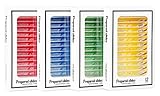
- Safety Material: The high transparency plastic microscope slide is cleaned in advance so that it’s non-toxic, no stains, scratches and any bacteria. there is no danger of sharp corners on the fingers because the microscope slides have smooth edges
- Classification Label: The microscope slides with specimens is well prepared, well labeled, it’s easy to classify and collect for permanent storage&moisture-proof
- Clear Observation: Stereo microscopy with top and bottom lights can provide the best microscopic image which is clean , clear, and well-dyed. cell tissue slides will stimulate young children and slides with insect parts will be more interesting for them
- Amazing Quantity: 48pcs prepared microscope slide of plant ins_ect animal tissue for basic biology education, the kid's specimen can provide students or family educator interesting educational scientific tool and provid excellent teaching aids for biology
- Perfect Science Gift: A good collection of microscope slides, gift wrapping, is a great microscope accessory gift for close-up biology course for a young family member who is just beginning to do biological research
Product prices and availability are accurate as of the date/time indicated and are subject to change. Any price and availability information displayed on Amazon at the time of purchase will apply.

