
Quick wins for a faster PC:
Repair Windows errors before they cause bigger problemsFix Now →Fix the driver behind crashes, sound loss and screen glitchesFind Drivers →Clear out junk files and repair common Windows errorsFree Scan →iTechGuides is reader-supported. When you buy through links on our site, we may earn an affiliate commission. As an Amazon Associate I earn from qualifying purchases. Learn more
A permit scraper is only useful if it can tell you, for every run, whether it actually read permit data. The reliable pattern has five parts: confirm authorization before writing code, choose the transport based on how the portal delivers its rows, validate every response against what permit data should look like, write with a stable source-scoped key so reruns cannot duplicate records, and stop when the portal presents a challenge instead of working around it.
“Adversarial” here describes the portal’s behavior, not a goal of defeating it. Layouts change, sessions expire, requests get throttled, and challenge pages appear. The aim is a pipeline that handles those events, classifies them, and reports them honestly, and that never treats a broken run as an empty one.


Confirm authorization before the first request
Start with an inventory entry for each jurisdiction. Record the portal owner, the canonical source URL, whether an official API or bulk export exists, the published terms, the robots.txt policy, whether login is required, the contact or authorization route, any stated request limits, and which data fields may be collected. Most of the later engineering decisions depend on these entries.
Madrid shows why authorization needs its own field. The Madrid City Council’s guidance on automated access to its electronic office says:
#1 Best Overall
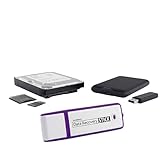
- The Data Recovery Stick requires no technical skills — simply plug it into your Windows computer, click Start, and the software automatically begins scanning and recovering lost files within minutes. Compatible with Windows Vista, 7, 8, 10, & 11, it's designed to be a reliable first step when accidental deletion occurs.
- Recover photos (JPG, BMP, PNG, TIFF), Microsoft Office documents (Word, Excel, PowerPoint, Publisher, Access), Open Office files, MP3 music files, PDFs, RTF documents, AutoCAD files, and HTML web pages. Whether it's personal memories or critical business files, the Data Recovery Stick covers the file types that matter most.
- Works with hard drives, USB drives, SD cards, memory sticks, and other common storage formats that use FAT or NTFS file systems — making it a single solution for hard drive recovery, USB drive recovery, SD card recovery, and more. Note: a media reader is required for micro SD cards and some mass storage devices.
- No Installation Required - The Data Recovery Stick runs entirely from the USB drive with no software installation on your computer — helping prevent new data from overwriting the files you're trying to recover. This also makes it ideal for use across multiple computers or in emergency situations where installation isn't practical.
- Use the Data Recovery Stick on as many computers as often as needed — simply clear the recovered data between uses to free up storage space. Software updates keep the tool compatible with newer systems and devices, backed by 25+ years of data software expertise from Paraben Consumer Software.
“Los accesos masivos o robotizados detectados que no hayan sido comunicados y autorizados tendrán la consideración de uso abusivo y serán bloqueados.”
Translation (ours): Detected mass or automated accesses that have not been communicated and authorized will be considered abusive use and will be blocked.
That is one city’s rule, not a template for every municipality. Other portals may have different terms, a formal API, or no published policy at all. Check each one individually.
Recommended Free Tools
A robots.txt file is part of the picture but not the whole of it. RFC 9309 defines the Robots Exclusion Protocol as a way for sites to ask crawlers to avoid certain paths. It is a crawler protocol, not an access control, and a permissive robots file does not establish that automated collection is allowed. Treat a disallow rule as a request you should honor, even when the terms say nothing.
Whether a particular collection is lawful depends on the jurisdiction, the portal’s terms, and the personal data involved. This guide does not give legal advice. For a production system, get that answer from the portal owner or from counsel.
Rank #2
![Express Schedule Free Employee Scheduling Software [PC/Mac Download]](https://m.media-amazon.com/images/I/41yvuCFIVfS._SL160_.jpg)
- Simple shift planning via an easy drag & drop interface
- Add time-off, sick leave, break entries and holidays
- Email schedules directly to your employees
What adversarial conditions look like in practice
Most failures fall into a small set of signals. The table below pairs each signal with what it usually indicates and the response the pipeline should take. The “usually” matters: the same signal can have more than one cause, which is why the validation and run-state rules later in this guide exist.
| Observed signal | What it usually indicates | Pipeline response |
|---|---|---|
| HTTP 200, but the expected result container is missing | Login page, challenge, maintenance notice, or layout change | Mark the run failed, quarantine the raw response, write nothing |
| HTTP 401 | Session expired or token no longer valid | Re-authenticate once through the authorized flow; if that fails, halt the source |
| HTTP 403 | Access denied for this client or account | Halt the source and verify authorization with the portal owner |
| HTTP 429 or 503 | Throttling or overload | Bounded retries with increasing waits; honor a Retry-After header if sent; reduce concurrency |
| CAPTCHA or interstitial challenge page | An anti-automation control has been engaged | Stop that source and follow the escalation steps below |
| Rows present, but a required column is missing or renamed | Schema or template change | Quarantine the page and fail the run |
| Zero rows with an explicit empty-state message | A genuine empty result for that query | Record a validated empty run |
| Row count far below the source’s own baseline | Partial crawl, pagination failure, or parser regression | Mark the run partial and alert |
Choose the transport after inspecting the portal
The transport decision should follow from how the portal delivers results, not from habit. A specialist municipal-permitting implementation guide (MunicipalPermit) recommends a direct HTTP client with an HTML parser when rows arrive in the initial response, and a browser when client-side code loads the grid afterward. That guide is useful implementation material, not an official municipal standard.
Free tools Windows power users keep installed
One-click scans. No signup required.
Fingerprint the delivery model
- Run one representative query that you are authorized to make, in an ordinary browser, with developer tools open.
- In the Network tab, filter to Fetch/XHR, then reload the page and run the query again. Note which requests return the permit rows.
- Fetch the same results URL with a plain HTTP GET and inspect the raw response body, not the rendered page. If the permit rows are present in that body, a direct HTTP client and parser is enough.
- If the rows arrive only from a later request that returns JSON, check whether the portal’s terms cover calling that endpoint directly. That is an authorization question, not just a technical one, and it belongs back in the inventory.
- If the rows are assembled by JavaScript after the page loads, use a browser for that source.
Direct HTTP versus browser automation
| Factor | Direct HTTP client and HTML parser | Browser automation (for example, Playwright) |
|---|---|---|
| Where the rows appear | In the initial HTML response | Built by client-side code after the page loads |
| Execution cost | Low: one request per page | Higher: full page execution for each session |
| Host load | Generally lower | Generally higher, because scripts, assets, and background requests are also fetched |
| Session handling | Explicit cookies and tokens that you manage | Browser context holds cookies; you still need expiry checks |
| Maintenance | Breaks when markup changes | Breaks when markup or script behavior changes, and has more moving parts |
| Choose when | The authorized response contains the records | The page genuinely needs browser execution to produce the records |
Playwright is a supported option for the browser case. Its official Python library offers synchronous and asynchronous APIs and drives Chromium, Firefox, and WebKit.
Wait for the content, not for the load event
Playwright’s navigation documentation notes that modern pages may keep fetching data after the ordinary load event. Waiting for load therefore does not mean the permit grid is populated. Wait for a locator tied to what you need: the first permit row, a result-count element, or the explicit “no results” message. Then run the same validation checks you would run on an HTTP response.
Acquire pages politely and classify every outcome
Politeness here means keeping your load predictable and identifiable. In practice, that comes down to five settings:
Rank #3

- FOR Small Facility, Complex, Housing, Arcade
- ONE-TIME-PURCHASE; Small Investment
- TOTAL 63 Features (Modules, 22 Reports)
- Unit, Staff; Member Maintenance & Reporting
- Request Trial, Try Features & Decide !
- A user-agent string that names your integration and gives a contact route.
- A reusable session, but only where the authorized workflow needs one.
- Per-host pacing taken from the portal’s stated limits or from an agreement with the owner, not from a generic number copied from another site.
- Bounded concurrency. Start with one connection per host and increase only with the owner’s agreement.
- Explicit connect and read timeouts, so a stalled server cannot hang the run.
The MunicipalPermit guide gives examples of session reuse, token refresh, a request interval, and bounded retries. Treat them as starting points to adapt. No retry interval or request delay is safe across all jurisdictions, and the examples have not been validated against any particular portal.
Do these 3 things before closing this tab:
1Repair Windows errors before they cause bigger problems2Fix the driver behind crashes, sound loss and screen glitches3Clear out junk files and repair common Windows errorsThe sketch below shows one way to order the checks. It is illustrative and has not been run against a live portal.
def classify_response(status, body, markers, challenge_hints):
    if status == 401:
        return "reauthenticate_once"   # via the authorized flow only
    if status == 403:
        return "access_denied"         # halt; verify authorization
    if status in (429, 503):
        return "retry"                 # bounded attempts, then fail
    lowered = body.lower()
    if any(hint in lowered for hint in challenge_hints):
        return "challenge"             # stop this source and escalate
    if not all(marker in body for marker in markers):
        return "unexpected_shape"      # quarantine; do not parse
    return "ok"
Session expiry
When a session expires mid-crawl, re-authenticate once through the flow your authorization covers. Log the event as an authentication event, not as a generic error. If the second attempt fails, halt the source. Do not loop on login, and do not replay captured credentials or tokens outside the workflow they were issued for.
Retries
Retry only faults that look transient: throttling, overload, and timeouts. Use a small attempt count that you set per source, with increasing waits between attempts. When the budget runs out, mark the page failed and move on. Retrying indefinitely increases load on a server that is already signaling trouble, and it hides the problem from anyone reading the run log.
A 200 response is not a successful extraction
A login form, a challenge page, or an empty shell can all return a successful status. Playwright’s request documentation also notes that HTTP error responses such as 404 and 503 can still complete as browser requests. Record the HTTP status and whether the request finished as two separate facts, and do not treat “the request completed” as “the data is valid.”
What’s actually slowing this PC down?
Pick the symptom - the matching free tool is one click away.
Validate each response against invariants you define for that portal before any parsing result is trusted:
- The expected page title or result container is present.
- Each row contains its required identifiers.
- Status values belong to an allowed vocabulary for that portal.
- Dates parse in the format the portal uses, and fall inside the requested window.
- Pagination behaves as observed: the expected next-page control or page count is present, and the last page is reached.
- The row count falls within a plausible range for the source’s baseline.
- There is no login form, challenge, redirect to an unexpected host, or change in content type.
Ontario’s security standard recommends validating input early on the server side against a positive specification, which means defining what is allowed and rejecting everything else, and handling errors in a structured way. The same discipline fits a scraper: define what a valid permit record looks like and quarantine anything outside it. The standard is a provincial document and is not binding outside Ontario, but the principle transfers.
Run states: failed, partial, or genuinely empty
Every run should end in one of four states. Assign a state only after the validation checks have run.
| Run state | Required conditions | What the pipeline does |
|---|---|---|
| Succeeded | Fetch completed, all validation checks pass, counts within baseline | Write normalized records and advance the source’s watermark |
| Validated empty | Expected page and explicit empty-state message present, zero rows | Write nothing and log a healthy empty run; advance the watermark only if the whole date window was covered |
| Partial | Some pages or date windows validated; a later page or window failed | Keep validated records, do not advance the watermark past the gap, and re-run the gap |
| Failed | Challenge, login page, authentication or access error, unexpected shape, or missing required fields | Write nothing, quarantine the raw response, and alert |
Normalize, keep provenance, and make writes replay-safe
Convert each validated row into a normalized record before anything downstream sees it. Keep the raw reference alongside the normalized fields so that a disputed value can be traced back to the page it came from.
Choose a permit key that does not change between runs
Use a key made from the source system and the portal’s own permit number. Avoid anything that changes between runs: a status, a “last updated” timestamp, a row’s position on the page, or a session identifier. If the portal reformats or reissues permit numbers, keep an explicit mapping table rather than letting the pipeline create a second record without telling anyone.
A conditional upsert then makes overlapping date windows harmless. The example below uses PostgreSQL syntax; other databases have equivalent constructs such as MERGE.
INSERT INTO permits (source_system, permit_number, status, source_url, retrieved_at_utc)
VALUES (:source_system, :permit_number, :status, :source_url, :retrieved_at_utc)
ON CONFLICT (source_system, permit_number)
DO UPDATE SET status = EXCLUDED.status,
              source_url = EXCLUDED.source_url,
              retrieved_at_utc = EXCLUDED.retrieved_at_utc;
Rerunning a window that overlaps the previous one updates the same rows instead of inserting new ones. Keep status changes in a separate history table as well, because overwriting the status column alone destroys the audit trail.
Provenance fields to store
- Source system and jurisdiction.
- The source URL of the page or endpoint that produced the row.
- Retrieval time in UTC.
- The run identifier and the version of the validation rule set applied.
- A pointer to the raw response, kept for a retention period that matches the portal’s terms. Raw permit pages can contain personal data such as applicant names and addresses, so limit both what you store and how long you keep it.
Make pipeline health visible
Track these measures per source:
- Last successful fetch and last validated page.
- Distribution of HTTP status codes.
- Row counts, and validation failures broken down by rule.
- Authentication and challenge events.
- Retry counts and their outcomes.
- Age of the oldest unprocessed record.
Alert when a source returns successful HTTP responses but zero or implausibly few validated rows. A run that returns zero rows can mean several different things, so check them in order:
The Tool Desk
Outbyte PC Repair FREEClear out junk files and repair common Windows errorsFree Scan →Outbyte Driver Updater FREEScan for outdated or missing drivers - takes under a minuteDriver Scan →- Did the expected empty-state message appear?
- Did pagination reach its last page, or did the crawl stop after page one?
- Does the date window plausibly contain filings? A window covering a holiday or weekend may legitimately be empty.
- How does the same window compare with previous runs?
No public dataset measures how often municipal permit portals change layout, expire sessions, or block automated clients, so this guide gives no failure rates. Set alert thresholds from each source’s own cadence and baseline. A portal that publishes permits weekly and one that publishes hourly need very different limits.
When a portal challenges automated access
A challenge is a control signal, not a glitch to be routed around. GOV.UK’s guidance on CAPTCHA says: “You must not use them unless you both:” It then sets two conditions, which in paraphrase are that use is limited to detected suspicious activity and that there is evidence alternative solutions will not work. The same guidance lists accessibility, privacy, usability, and security drawbacks. It is written for government services deciding when to deploy a CAPTCHA, not for automated clients, but it explains why a portal owner treats a challenge as a deliberate decision.
When your pipeline meets a challenge, follow this sequence:
- Stop requests to that source only. Other sources keep running.
- Keep the challenge response and the run context for diagnosis, with cookies and tokens removed.
- Compare your traffic with your inventory: request rate, concurrency, integration identifier, and the account or credentials used.
- Contact the owner through the route recorded in your inventory, and ask for an official API, a bulk export, or an agreed access window.
- Resume only when the owner confirms access, or when the source returns validated responses under your authorized configuration. If access is not granted, leave the source off and record it as unavailable in the run log, so downstream users do not mistake the gap for an empty result.
A pipeline that knows when it failed is one that can say, in every run record, exactly what it read, what it rejected, and why it stopped.
Windows Errors? Fix Them Before They Spread
Repair common Windows errors and clear accumulated junk for a smoother, more stable PC - no reinstall needed.Free scan · no reinstallCrashes, No Sound, or Screen Glitches?
Random freezes, missing sound and display glitches usually trace back to one bad driver. Find and replace yours safely.Free scan · under a minuteQuick Recap
Product prices and availability are accurate as of the date/time indicated and are subject to change. Any price and availability information displayed on Amazon at the time of purchase will apply.

