
iTechGuides is reader-supported. When you buy through links on our site, we may earn an affiliate commission. As an Amazon Associate I earn from qualifying purchases. Learn more
For gaming, neither a USB Wi-Fi adapter nor a PCIe Wi-Fi card has a proven general advantage. The format you choose mainly changes installation, portability, and where the antennas can go. Wi-Fi generation, antenna design, the router, and distance from the router determine most of the speed and latency you will see. The headline’s claim of a landslide win is not backed by a documented head-to-head test with recorded conditions, so this article explains what the manufacturer guidance does establish and how to run a fair comparison on your own network.
How USB and PCIe adapters differ in practice
A USB adapter plugs into an external port and avoids opening the computer. A PCIe card is installed inside a desktop and needs an open slot. TP-Link’s comparison guide (published September 16, 2026) and its PC and laptop guide (published September 21, 2026) both frame USB as the practical route for laptops.
| Factor | USB Wi-Fi adapter | PCIe Wi-Fi card |
|---|---|---|
| Installation | Plugs into an external USB port; no case opening | Installed inside a desktop; requires an open PCIe slot |
| Laptop use | Practical option | Not applicable; desktops only |
| Portability | Can move between computers | Stays in the desktop it is installed in |
| Antenna placement | Model-dependent; check whether antennas can be repositioned | Model-dependent; check antenna and bracket layout against your case |
| USB bandwidth | Shares the USB connection with other active devices | Can avoid competition with active USB devices, per TP-Link, which says this may matter in some setups |
| Physical requirements | A free USB-C or USB-A port, depending on the model | A free PCIe slot and enough case clearance; check bracket height (standard or low-profile) |
The USB bandwidth row is the only technical difference that TP-Link ties to performance, and it describes a possible situation rather than a measured advantage. Everything else in the table is about setup.
Windows Errors? Fix Them Before They Spread
Repair common Windows errors and clear accumulated junk for a smoother, more stable PC - no reinstall needed.Free scan · no reinstallCrashes, No Sound, or Screen Glitches?
Random freezes, missing sound and display glitches usually trace back to one bad driver. Find and replace yours safely.Free scan · under a minuteWhat the landslide claim can and cannot support
A decisive result needs matched conditions: the same computer, router, Wi-Fi band, location, distance, and workload, with repeat runs. The guidance cited here does not report that kind of measurement for a USB adapter against a PCIe card. It also does not give a comparative latency, throughput, packet-loss, or range figure for the two formats. Advertised maximum link rates are not a substitute, because they describe ideal conditions rather than what a game session will receive. Any claim that one format won by a wide margin should be backed by recorded test notes that name the hardware and conditions.
#1 Best Overall
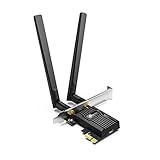
- 𝐍𝐞𝐱𝐭 𝐆𝐞𝐧 𝐖𝐢𝐅𝐈 𝟔 - Reach incredible speeds up to 2.4 Gbps (2402 Mbps in 5 GHz or 574 Mbps on 2.4 GHz) with ultra-low latency and uninterrupted connectivity using Wi-Fi 6 technologies¹
- 𝐌𝐢𝐧𝐢𝐦𝐢𝐳𝐞𝐝 𝐋𝐚𝐠 𝐟𝐨𝐫 𝐘𝐨𝐮𝐫 𝐏𝐂 - The networking card is equipped with OFDMA and MU-MIMO technology to reduce lag so you can enjoy ultra-responsive real-time gaming, or an immersive VR experience on even the busiest networks
- 𝐁𝐫𝐨𝐚𝐝𝐞𝐫 𝐑𝐚𝐧𝐠𝐞 - 2 powerful signal-boost, high-gain antennas greatly inrease range for a smoother online gaming experience in further away distances
- 𝐁𝐥𝐮𝐞𝐭𝐨𝐨𝐭𝐡 𝟓.𝟐 𝐟𝐨𝐫 𝐆𝐫𝐞𝐚𝐭𝐞𝐫 𝐒𝐩𝐞𝐞𝐝 𝐚𝐧𝐝 𝐑𝐚𝐧𝐠𝐞 - Equipped with the latest Bluetooth technology, Archer TX55E achieves 2x faster speeds and 4x broader coverage compared to Bluetooth 4.2 so you can connect your favorite devices such as game controllers, headphones, and keyboards for the ultimate setup.²
- 𝐂𝐮𝐭𝐭𝐢𝐧𝐠 𝐄𝐝𝐠𝐞 𝐖𝐏𝐀𝟑 - Protector your network with the latest WPA3 security protocol so your information transmitted via the wireless adapter is secure from hackers³
What decides gaming speed and latency
TP-Link states that generation and antenna design matter more to speed than adapter format. Its guidance on gaming latency is more direct:
“Most gaming latency comes from distance to the router, interference, or the router itself, not from whether your adapter is USB or PCIe.”
Rank #2

- 𝐖𝐢-𝐅𝐢 𝟔 𝐓𝐞𝐜𝐡𝐧𝐨𝐥𝐨𝐠𝐲 Powered by Intel: The latest Wi-Fi 6 standard gives you incredible speed ultra-low latency and uninterrupted connectivity with OFDMA and MU-MIMO technology Utilizing next-generation Wi-Fi 6 technology Archer TX3000E is designed to excel in even the busiest of networks for next-level entertainment
- 𝐍𝐞𝐱𝐭-𝐠𝐞𝐧 𝐬𝐩𝐞𝐞𝐝𝐬 up to 2.4Gbps: Reach incredible speeds up to 2.4 Gbps (2402 Mbps on 5 GHz or 574 Mbps on 2 4 GHz) - Supports Windows 11, 10 (64bit) - Driver installation required via Website or included CD
- 𝐌𝐢𝐧𝐢𝐦𝐢𝐳𝐞𝐝 𝐥𝐚𝐠 for your PC: Revolutionary OFDMA reduces lag so you can enjoy ultra-responsive real-time gaming or an immersive VR experience
- 𝐁𝐫𝐨𝐚𝐝𝐞𝐫 𝐂𝐨𝐯𝐞𝐫𝐚𝐠𝐞: Two multi-directional and high-performance antennas with a magnetized base extends your existing Wi-Fi reception capabilities. Place the magnetized antenna base anywhere on your desktop to find the optimal location for signal reception. Easily install with low profile bracket.
- 𝐁𝐥𝐮𝐞𝐭𝐨𝐨𝐭𝐡 𝟓.𝟑 𝐟𝐨𝐫 𝐆𝐫𝐞𝐚𝐭𝐞𝐫 𝐒𝐩𝐞𝐞𝐝𝐬 𝐚𝐧𝐝 𝐂𝐨𝐯𝐞𝐫𝐚𝐠𝐞: Archer TX3000E is equipped with the latest Bluetooth 5.3 Technology achieving 2x faster speeds and 4x broader coverage than Bluetooth 4.2. Connect as many devices as you want including game controllers headphones and keyboards for the ultimate setup
That is TP-Link’s editorial guidance, not an independent benchmark, but it matches the factors that the same guides list:
- Distance from the router and obstacles between the adapter and the router.
- Interference from other networks and nearby devices.
- The router’s own configuration and capability.
- Wi-Fi generation supported by both the adapter and the router.
- Antenna design of the specific adapter.
- The USB interface, for USB models, since port type and conditions affect results.
A newer wireless generation can outperform an older device whether it connects by USB or PCIe. Diagnose placement and network conditions before blaming the adapter format.
Rank #3

- NCM865 Wi-Fi 7 Module
- Blazing Fast 5.8 Gbps Transfer Speeds
- 320 MHz Channel Widths (on 6GHz)
- Improve the Modulation Scheme from 1024-QAM to 4096-QAM
- Supports Bluetooth 5.4
Does a PCIe card have better range than USB?
No comparison in the cited guidance establishes that. Range depends on the antenna design, how the antennas are positioned, walls and other obstacles, and the router. Because antenna layout differs by model, two adapters of the same format can perform differently at the same distance. If range is your concern, test at the spot where you actually play, and compare two models in that spot rather than comparing formats in general.
Check Wi-Fi 6E and 6 GHz support before you buy
If you want the 6 GHz band, which Wi-Fi 6E and later standards can use, confirm each link in this order:
Rank #4

- Intel WI-FI 6E AX210 module built-in
- Dedicated spectrum in 6GHz band for maximum speed and ultra-low latencies
- Support dual-stream Wireless in the 2.4GHz, 5GHz and 6GHz bands
- IEEE 802.11.acR2plusax compliant
- High speed wireless connection up to 2400Mbps
- Confirm the router supports the 6 GHz band and that it is enabled in the router’s settings.
- Confirm the adapter’s product specifications list Wi-Fi 6E or a later generation with 6 GHz support.
- Confirm the operating system and the adapter driver support that band. Install the manufacturer’s current driver.
- Confirm your location allows the band and that the device sees it. In Windows, check the adapter’s properties in Device Manager; on macOS, check the Wi-Fi details in System Settings.
Interface and form factor are separate details. Intel’s AX210 product brief describes Wi-Fi 6E and 6 GHz support and lists an M.2 interface supporting PCIe and USB. A module’s interface options do not tell you what a finished adapter or card on the shelf implements, so check the exact product.
Free tools Windows power users keep installed
One-click scans. No signup required.
Which adapter fits each setup
Laptop or a desktop you move often
A USB adapter is the practical choice. It needs no tools, and it moves with you. Choose a model that matches your port type and that keeps its antenna placement practical on your desk.
Best Value

- 𝐔𝐧𝐫𝐢𝐯𝐚𝐥𝐞𝐝 𝐖𝐢-𝐅𝐢 𝟕 𝐓𝐞𝐜𝐡𝐧𝐨𝐥𝐨𝐠𝐲:Equipped with Wi-Fi 7, the card unlocks the full potential of the 6 GHz band, providing exceptional bandwidth and congestion-free channels exclusive to your desktop. Enhanced by 4096-QAM and 320MHz, TBE550E delivers astonishing wireless speeds, facilitating instant multi-stream media playback.
- 𝐔𝐧𝐩𝐚𝐫𝐚𝐥𝐥𝐞𝐥𝐞𝐝 𝐓𝐫𝐢-𝐁𝐚𝐧𝐝 𝐒𝐩𝐞𝐞𝐝: Expand to the clearer, broader 6 GHz band for more bandwidth and faster speeds; Boost your overall speeds up to 5760 Mbps on 6 GHz, 2880 Mbps on 5 GHz, and 688 Mbps on 2.4 GHz. 𝐏𝐥𝐞𝐚𝐬𝐞 𝐧𝐨𝐭𝐞 𝐭𝐡𝐚𝐭 𝐀𝐫𝐜𝐡𝐞𝐫 𝐓𝐁𝐄𝟓𝟓𝟎𝐄 𝐨𝐧𝐥𝐲 𝐬𝐮𝐩𝐩𝐨𝐫𝐭𝐬 𝐖𝐢𝐧𝐝𝐨𝐰𝐬 𝟏𝟏
- 𝐌𝐢𝐧𝐢𝐦𝐢𝐳𝐞𝐝 𝐋𝐚𝐠 𝐟𝐨𝐫 𝐘𝐨𝐮𝐫 𝐏𝐂: The Wi-Fi card is equipped with OFDMA, MU-MIMO and Multi-RU technology to reduce lag so you can enjoy ultra-responsive real-time gaming, or an immersive VR experience on even the busiest networks
- 𝐌𝐚𝐱𝐢𝐦𝐢𝐳𝐞𝐝 𝐒𝐢𝐠𝐧𝐚𝐥 𝐂𝐨𝐯𝐞𝐫𝐚𝐠𝐞: Two multi-directional and high-performance antennas with a magnetized base extends your existing Wi-Fi reception capabilities, allowing you to stream throughout your home. Place the antenna base anywhere on your desktop to find the optimal location for signal reception.
- 𝐋𝐨𝐰𝐞𝐫 𝐋𝐚𝐭𝐞𝐧𝐜𝐲 & 𝐈𝐦𝐩𝐫𝐨𝐯𝐞𝐝 𝐑𝐞𝐥𝐢𝐚𝐛𝐢𝐥𝐢𝐭𝐲 𝐰𝐢𝐭𝐡 𝐌𝐋𝐎 - Enjoy faster gaming, smoother 4K streaming, and stable video calls on busy networks. Multi-Link Operation (MLO) transmits data across multiple Wi-Fi bands to cut lag and interference.
Desktop with a free PCIe slot
A PCIe card avoids using a USB port and stays with the machine. Confirm the slot is free, that your case has room for the card and antennas, and that you have the right bracket height.
Desktop with no free slot or a tight case
A USB adapter is the simpler route. Plug it into a port that is not shared with a busy device, and keep the antenna clear of metal and other obstructions.
Model examples from TP-Link
TP-Link names two Wi-Fi 7 examples in its comparison guide. The Archer TBE400U is a USB adapter offered with USB-C and USB-A connectors. The Archer TBE400E is a PCIe card with Bluetooth 5.4 and standard and low-profile brackets. These are manufacturer specifications. The guide does not report test results for either model, and this article does not either. Confirm current availability and pricing with the seller.
The Tool Desk
Outbyte Driver Updater FREEScan for outdated or missing drivers - takes under a minuteDriver Scan →Outbyte PC Repair FREEClear out junk files and repair common Windows errorsFree Scan →How to run a fair comparison on your own network
If you want to measure the difference yourself, change one variable at a time:
- Record the computer, operating system, adapter model, driver version, router model, and the Wi-Fi band in use.
- Keep the router, band, position, distance, and background activity the same for every run.
- Find your router’s address. On Windows, run
ipconfigand note the Default Gateway. On macOS, check the Wi-Fi details in System Settings. - Measure latency with 100 pings to that address. On Windows, run
ping -n 100 [gateway address]. On macOS or Linux, runping -c 100 [gateway address]. - Repeat each test several times, at different times of day if your network is shared, and record packet loss along with average and worst-case latency.
- Compare observed results between adapters, not the advertised link rates on the packaging.
Pinging the router measures the local Wi-Fi link. It does not measure latency to a game server, so use it to compare adapters and placements, not to predict in-game ping.
Quick Recap
Product prices and availability are accurate as of the date/time indicated and are subject to change. Any price and availability information displayed on Amazon at the time of purchase will apply.

