
Outdated Drivers Are Slowing You Down
One free scan finds every outdated or missing driver and matches the right update for your exact hardware.Free scan · exact hardware matchWindows Errors? Fix Them Before They Spread
Repair common Windows errors and clear accumulated junk for a smoother, more stable PC - no reinstall needed.Free scan · no reinstalliTechGuides is reader-supported. When you buy through links on our site, we may earn an affiliate commission. As an Amazon Associate I earn from qualifying purchases. Learn more
Polaroid photos usually come out dark because the scene needs more light, the subject is backlit or beyond flash range, or the scene’s contrast exceeds what the film can capture. Indoors, turn on flash when available; outdoors, put light on the subject rather than behind them. If dark results continue across well-lit scenes after sensible adjustments, the camera’s light meter may need diagnosis.
Why Polaroid photos come out dark
In dim rooms, the camera may not receive enough light for a properly exposed picture. Polaroid Support’s guidance is straightforward: “If you’re running into an issue where your photos are developing dark and without detail in shadowy areas, you likely just need more light!” The advice is from Corey at Polaroid Support, in an article updated October 29, 2024: Why are my photos coming out dark?
Other common causes are a subject in shadow against a bright background, a subject too far away for the flash, or a high-contrast scene where the film cannot retain detail in both bright highlights and deep shadows. Polaroid film has a relatively narrow dynamic range, so a bright sky and a shaded foreground may not both appear detailed in one exposure.
How to fix dark Polaroid photos
Indoors: add light and use flash nearby
- Turn on the camera’s flash for indoor pictures when it has one. If you prefer not to use flash, increase the room’s ambient light; longer exposures in dim conditions can blur if the camera moves.
- Keep the subject within the flash range for your specific camera. Polaroid gives 1–2.5 meters (3.3–8.2 feet) as a typical range for built-in Polaroid flashes, not a guarantee for every model. The 2025 Polaroid Flip manual, for example, specifies a 4.5-meter flash reach for the Flip and warns that more distant subjects may be too dark: Polaroid Flip User Manual.
- If you want the background to appear brighter, place the subject near a wall or backdrop that can reflect some flash light.
- An SX-70 has no built-in flash. In darker settings, use a flash bar compatible with your camera; verify compatibility for the exact SX-70 model before buying. Polaroid’s guidance is at Exposure compensation on Polaroid SX-70.
Outdoors: light the subject, not the background
If the sun or another bright source is behind your subject, the subject may appear dark. Change your position so the light falls on the subject, or use flash for a nearby subject. When a subject is beyond flash range, Polaroid advises turning flash off outdoors so the camera does not choose an exposure that leaves the image underexposed. Avoid expecting one frame to show full detail in both a bright sky and a deeply shadowed foreground.
#1 Best Overall
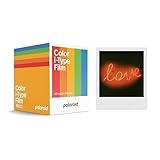
- 48 Photo Bulk Pack- Our classic Polaroid film is back with a new formula exclusively for I-Type cameras with 48 classic iconic white framed photos.
- New Classic- I-Type film uses Polaroid's latest chemistry to provide richer colors, tones, and contrast. I-Type film is not compatible with vintage Polaroid cameras.
- Light it up- Polaroid instant film loves light. The more light in your shot, the better your photo will turn out. Always shoot in bright light or use the camera flash.
- Develop- Photos will appear blank at first. Photos develop within 15 minutes. Shield photos from the light and place them face down as they develop.
- Create- Every photo you create is rich, textured, and unique. Unpredictable, imperfect, and impossible to reproduce, just like you.
Check the exposure setting for your camera and film
Do not automatically move the exposure control toward “lighten.” The appropriate setting depends on the camera, film, and lighting. Polaroid says i-Type, 600, and 8×10 film generally need no exposure compensation. For current-generation SX-70 film, which is approximately ISO 160 in cameras calibrated for ISO 100, Polaroid recommends moving the exposure wheel about one-third toward darken in bright, well-lit conditions. It notes that camera behavior varies; with flash, the wheel can stay centered, and folding the camera resets it to neutral.
Polaroid’s vintage-camera guide gives these model-specific starting points. They are examples, not universal guarantees:
Rank #2

- 24 INSTANT PHOTOS IN THE ICONIC WHITE FRAME: triple pack Polaroid Color i-Type Film with Polaroid's signature white border. Capture and create the beautifully imperfect in dreamlike color, nostalgic texture and one-of-a-kind Polaroid style.
- COLOR INSTANT FILM FOR POLAROID I-TYPE CAMERAS: compatible with Polaroid Now, Now+, Flip and I-2 cameras, plus the Polaroid Lab printer. Polaroid i-Type film is made in the last Polaroid film factory in the world.
- 100% POLAROID CHEMISTRY: every photo develops with rich color, unique texture and the iconic Polaroid aesthetic. This Polaroid camera film creates results that are unpredictable, imperfect and impossible to reproduce.
- POLAROID CAMERA FILM LOVES LIGHT: the more light in your shot, the better your photo. Always shoot in bright light or use your camera's flash, your film will thank you for it.
- DEVELOP IN 10-15 MINUTES: photos appear blank at first - that's part of the magic. Shield them from light and place them face down while they develop to reveal the iconic Polaroid image.
| Lighting | 600 camera | SX-70 camera |
|---|---|---|
| Very bright sunlight | About one-quarter toward darken | About two-thirds toward darken |
| Normal daylight | Centered | About one-third toward darken |
| Subject in daylight shade | About one-quarter toward lighten | Centered |
These settings come from Polaroid’s How to use vintage Polaroid cameras. For other cameras or film combinations, follow the camera’s specific guidance and adjust cautiously. Polaroid’s overview of film handling and compensation is How to get the most out of Polaroid film.
When dark photos may indicate a camera problem
If pictures remain unexpectedly dark across different, well-lit scenes with reasonable settings, a light-meter fault is one possibility. That does not prove the camera is defective: Polaroid recommends contacting customer support for diagnosis rather than assuming a particular repair will solve it. Its guidance is in Why are my photos coming out dark?
Rank #3
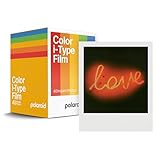
- Updated Classic- The classic Polaroid film is back with a new formula exclusively for I-Type cameras with 40 classic iconic white framed photos.
- New Classic- I-Type film uses Polaroid's latest chemistry to provide richer colors, tones, and contrast. I-Type film is not compatible with vintage Polaroid cameras.
- Light it up- Polaroid instant film loves light. The more light in your shot, the better your photo will turn out. Always shoot in bright light or use the camera flash.
- Develop- Photos will appear blank at first. Photos develop within 15 minutes. Shield photos from the light and place them face down as they develop.
- Create- Every photo you create is rich, textured, and unique. Unpredictable, imperfect, and impossible to reproduce, just like you.
Is cold weather the cause?
Cold is not the main explanation for dark photos in Polaroid’s guidance. Polaroid lists a preferred film operating range of 13–28°C (55–82°F); its support article associates cold conditions with overexposure, low contrast, and a cyan tint instead. See How to get the most out of Polaroid film.
Quick Recap
Best Value

- Designed for use with Fujifilm instax mini series cameras
- Picture size: 62mm x 46mm
- Film size: 86mm x 54mm
- Excellent Sharpness
- 10 Pictures Per Pack
Rank #4

- DOUBLE PACK FILM: Polaroid Instant Color Film for I-Type cameras with two packs of 8 count film for a total of 16 photos.
- LIGHT IT UP: Polaroid Instant Film loves light. The more light in your shot, the better your photo will turn out. Always shoot in bright light or use the camera flash.
- DEVELOP: All photos appear blank at first. Photos develop within 15 minutes. Shield photos from the light and place them face down as they develop.
- CREATE: Every photo you create is rich textured and unique. Unpredictable, imperfect, and impossible to reproduce.
- STORE CHILLED: Temperature affects how the film works so keep it stored chilled in the fridge, do not freeze.
Product prices and availability are accurate as of the date/time indicated and are subject to change. Any price and availability information displayed on Amazon at the time of purchase will apply.

