
iTechGuides is reader-supported. When you buy through links on our site, we may earn an affiliate commission. As an Amazon Associate I earn from qualifying purchases. Learn more
For most businesses, the best expense management software in 2026 is Ramp for integrated cards and spend controls, Expensify for reimbursements and receipt capture, Zoho Expense for low-cost reporting, Brex for startups and global card programs, SAP Concur for complex enterprises, Navan for travel, Airwallex for international finance, and BILL Spend & Expense for BILL-focused SMBs.
The shortlist is use-case based rather than an absolute ranking. Expense reporting, corporate-card management, travel management, accounts payable, and global payments overlap, but they are not the same product category. The right choice depends on whether your priority is reimbursing employees, controlling purchases before authorization, managing travel, connecting accounting systems, or operating across countries.

Key takeaways
- Ramp is the strongest overall fit for growing companies that want cards, expense management, bill pay, travel, and accounting automation in one platform.
- Expensify is the most straightforward reimbursement-first option, while Zoho Expense offers the lowest transparent entry pricing for very small teams and Zoho customers.
- Brex is designed around startup and global corporate-card programs, whereas SAP Concur is better suited to large enterprises with mature travel, ERP, and compliance processes.
- Navan is the best travel-first choice, and Airwallex is the strongest fit when multicurrency accounts, international payments, and global spend matter as much as expenses.
- Free or low-cost software does not necessarily have the lowest total cost because card migration, payment fees, integrations, implementation, and support can matter more than the subscription.
What does expense management software do?
Expense management software records, reviews, approves, reimburses, reconciles, and reports business spending. A complete workflow normally covers policy creation, employee or cardholder purchases, receipt capture, automatic categorization, coding, approval routing, reimbursement or card settlement, accounting synchronization, audit history, reporting, and policy or fraud review.
Outdated Drivers Are Slowing You Down
One free scan finds every outdated or missing driver and matches the right update for your exact hardware.Free scan · exact hardware matchWindows Errors? Fix Them Before They Spread
Repair common Windows errors and clear accumulated junk for a smoother, more stable PC - no reinstall needed.Free scan · no reinstallThe most important distinction is when the software controls spending. A reimbursement application may identify an out-of-policy transaction after an employee submits it. A card-led spend platform may block, decline, limit, or route a purchase before the card transaction is authorized. Those approaches solve different problems.
#1 Best Overall

- Neatly Track & Organize Your Finances: The accounting ledger book is here for you to stay on top of your spendings & income! Clearly & neatly structured, it offers ample space for all crucial information about checks, savings, bills & other expenses or income
- Perfect For Small Business Owners: Keep it simple, yet super effective - the undated income and expense log book is an absolute must-have among small business supplies! Register your financial data and use your debit & credit records to compile a trial balance
- Premium Style With A Sturdy Cover: With the 120-page finance tracker, you can manage your finances conveniently in one place. A solid cover, thick paper and a reliable ring binding ensure maximum durability
- Beautiful Modern Minimalistic Design: A visual highlight just like you can expect from ZICOTO! The sage green cover of the ledger book, look stunning with a modern golden floral on the front - makes bookkeeping simply beautiful!
- Super Handy - Always At Hand: Thanks to its practical size, the 8.6x6.1” ledger book fits into any bag easily and is therefore always by your side. Whether used as a checkbook register or to track other financial flow, with the log book you’ve got it all sorted!
Which expense functions should you expect?
| Function | What it does | Why it matters |
|---|---|---|
| Receipt capture | Collects receipts through a mobile app, email, OCR, or card matching | Reduces manual data entry and missing documentation |
| Expense coding | Assigns categories, departments, projects, clients, locations, tax codes, mileage, or per diem | Produces usable accounting and management data |
| Approval routing | Sends reports or transactions to managers, finance, or project owners | Applies organizational policy consistently |
| Reimbursement | Pays employees for personal-card or out-of-pocket purchases | Supports employees who do not use company cards |
| Card controls | Sets limits and merchant, category, role, location, or budget rules | Can prevent inappropriate spending before purchase |
| Accounting sync | Transfers approved transactions, dimensions, vendors, and journal data | Reduces month-end reconciliation work |
| Audit and reporting | Preserves approval history and produces spend reports | Supports compliance, audits, forecasting, and investigations |
What are the 8 best expense management software options in 2026?
| Software | Best for | Pricing signal | Cards and existing-card support | Travel | Global suitability | Main drawback |
|---|---|---|---|---|---|---|
| Ramp | Integrated spend management | Core card and expense software advertised as free; add-ons and transaction fees may apply | Native corporate cards; less suited to buyers retaining an existing program | Available within the broader platform | Depends on country, entity, eligibility, and plan | More operational change than a simple reimbursement tool |
| Expensify | Reimbursements and receipt capture | Collect: $5 per member/month; Control: custom, advertised from as low as $9 per active member/month in some conditions | Supports third-party card feeds and its own card program | Booking and rules included in Collect | Verify country and plan coverage | Advanced controls and integrations may require Control |
| Zoho Expense | Budget-conscious SMBs and Zoho users | Free for up to three users; Standard $4 monthly/$3 annual; Premium $6 monthly/$5 annual | Corporate-card management and feeds on Standard and above | Travel booking on Premium | Multicountry features advertised on Premium; verify regional limits | Free and lower tiers have meaningful limits |
| Brex | Startup and global card-led spend | Essentials $0/user/month; Premium $12/user/month; Enterprise custom | Native corporate cards and embedded controls | Travel booking included on Essentials | Premium and Enterprise add broader multi-entity and local capabilities | May be more infrastructure than a small business needs |
| SAP Concur | Large, complex enterprises | Generally quote-based | Can work with existing corporate-card programs | Strong travel-and-expense orientation | Designed for complex entities and compliance; verify implementation scope | Heavier setup and potentially slower deployment |
| Navan | Travel-heavy companies | Specific public pricing was not verified | Verify existing-card and nontravel workflows | Native booking and travel workflow | Verify country, inventory, and servicing coverage | Less compelling for businesses with little travel |
| Airwallex | Global accounts, cards, and payments | Specific current plan pricing was not verified | Global and multicurrency card-led positioning | Not the primary differentiator | Strong international focus; availability varies by entity and country | May be broader than a domestic reimbursement need |
| BILL Spend & Expense | SMBs using BILL or seeking payables plus expenses | Specific current pricing was not verified | Business-card and expense functionality | Not the primary differentiator | Verify international and multi-entity requirements | Value is greatest inside the broader BILL ecosystem |
How was this expense management software shortlist evaluated?
The comparison weighs receipt and expense capture, reimbursement, card-feed support, native cards, pre-purchase policy controls, approval flexibility, accounting and ERP connectivity, HRIS provisioning, travel, multicurrency and entity support, pricing transparency, implementation effort, reporting, auditability, and likely fit by company size.
Vendor comparison pages are useful for feature and positioning signals, but vendor-produced rankings are not independent product testing. SAP Concur’s 2026 comparison, Airwallex’s market comparison, and Ramp’s comparison of Ramp, Brex, and Concur should therefore be read as relevant market perspectives rather than neutral verdicts.
Which expense management software is best overall?
Ramp is the best overall choice for growing companies that want a broader finance-operations platform. Ramp combines corporate cards, expense management, bill pay, reporting, travel, spend controls, and accounting automation rather than focusing only on employee reimbursement.
Free tools Windows power users keep installed
One-click scans. No signup required.
Ramp’s pricing documentation says its core card and expense-management software is free, with additional services carrying their own plan-specific or transaction fees. The same documentation lists a standard $0.59 ACH payment fee effective June 1, 2026, subject to the stated grace-period conditions. See the Ramp pricing and fee documentation before treating the free core offer as the total cost.
Ramp is a strong fit when finance wants budgets and controls at the point of purchase. Ramp is less compelling when a business wants to keep an existing card program and only add receipt capture, approvals, and reimbursements. Eligibility, underwriting, country, entity structure, implementation, and optional services can affect the practical offer.
Choose Ramp if: you want cards, controls, bill pay, travel, and accounting automation in one system. Choose Expensify instead if: the primary requirement is reimbursement and existing-card compatibility.
Is Expensify best for straightforward reimbursements?
Expensify is the best straightforward option for small and midsize businesses centered on receipt capture and reimbursement. Expensify supports receipt scanning, reimbursements, approvals, corporate-card management, travel booking and rules, card feeds, and QuickBooks and Xero integrations on its Collect offering.
The Tool Desk
Outbyte Driver Updater FREEFix the driver behind crashes, sound loss and screen glitchesFind Drivers →Outbyte PC Repair FREEClear out junk files and repair common Windows errorsFree Scan →Expensify’s published pricing lists Collect at $5 per member per month. Control uses custom pricing and is advertised as starting as low as $9 per active member per month under certain conditions. Free individual use includes SmartScan receipt capture, but a broader business deployment requires a paid plan.
Control adds multiple approval flows, custom rules, ERP and HR integrations, SAML/SSO, budgeting, and advanced reporting. Expensify is particularly useful when employees use personal cards or when the company has existing corporate cards that should remain in place. Expensify is not automatically a replacement for procurement, treasury, or a full accounts-payable platform.
Is Zoho Expense the best budget option?
Zoho Expense is the best budget option, especially for companies already using Zoho Books or another Zoho application. Zoho Expense covers expense reports, mileage, multicurrency expenses, tax, approvals, accounting connections, and card feeds at comparatively transparent prices.
Rank #2

- Effective Budget Planning - Take control of your finances with the budget account book. This comprehensive planner allows you to plan and track your income, expenses, savings, and financial goals in one convenient place. With its intuitive layout and easy-to-use sections, you can stay organized and make informed decisions to achieve financial success.
- User-Friendly Layout - The budget planner features a user-friendly layout designed for easy navigation and organization. Each month, you'll find dedicated budget pages where you can set financial goals, track your income, and plan your expenses. Additional sections include debt trackers, savings goals, bill payment trackers, and more, making it simple to stay on top of your finances.
- Undated Monthly Calendar & Bonus Stickers - Featuring undated calendar each month, you'll have ample space to mark paydays, bills due, appointments, and important dates. Say goodbye to difficult writing spaces. Plus, we've included 3 cute sticker sheets that allow you to personalize your financial organizer and make budgeting more fun. Dates are not pre-printed and are completed by the user.
- Reliable and Convenient Design - Our monthly budget planner is designed for your convenience and built to last. The elastic band keeps everything securely in place, and the dual-sided pocket provides extra storage. Experience a budget planner that combines practicality and durability.
- Master Budgeting with Ease - Our financial planner includes a complete guidebook that provides valuable insights and instructions for optimal usage. From setting financial goals to tracking expenses, this guidebook offers step-by-step guidance and practical tips. Whether you're new to budgeting or an experienced user, this resource will help you make the most of your budget planner, empowering you to achieve financial success.
Zoho’s U.S. pricing page lists a free plan for up to three users. The same page displays Standard at $4 per user per month when billed monthly or $3 per user per month when billed annually, and Premium at $6 monthly or $5 annually. Prices exclude local taxes.
Standard adds corporate-card management, card feeds, multiple policies, multilevel approvals, ACH and direct-bank reimbursements, and SSO. Premium adds travel booking, GSA-compliant per diem management, live budget tracking, advanced approval customization, and multi-entity and multicountry expense management. Review the Zoho Expense plan comparison for feature boundaries before selecting the free tier.
Zoho Expense is a strong value choice for a small team with straightforward accounting needs. A company requiring deep enterprise ERP orchestration, extensive procurement, or a native card-led spend platform should test alternatives before choosing solely on price.
Is Brex best for startups and global corporate cards?
Brex is best for startups, technology companies, and multinational teams that want corporate cards, budgets, reimbursements, and controls together. Brex’s product is card-led: spending rules and budgets are embedded into the payment program rather than applied only after an employee submits a report.
Brex’s pricing page lists Essentials at $0 per user per month, Premium at $12 per user per month, and Enterprise at custom pricing. Essentials includes cards, accounting integrations, reimbursements, bill pay, real-time reporting, travel booking, and up to two entities. Premium adds customizable policies, dynamic review chains, compliance audit insights, advanced approvals, international multi-entity support, VAT documentation, and live budgets.
Enterprise adds unlimited U.S. or global entities, local issuance and reimbursements, account management, and implementation services. The free Essentials tier should be evaluated with eligibility, card economics, foreign-exchange costs, banking requirements, and the value of advanced controls in mind.
Brex can be excessive for a small business that only needs receipt scanning and reimbursements. Brex is more persuasive when pre-purchase controls, virtual cards, department budgets, global entities, and startup-style spend management are central requirements.
When is SAP Concur the right choice?
SAP Concur is the right choice for large or complex enterprises that need mature travel-and-expense workflows, extensive integrations, and established compliance processes. SAP Concur is strongly associated with structured expense reporting, travel workflows, approvals, enterprise integrations, and support for organizations with multiple entities or established ERP and card environments.
Current comparison coverage positions SAP Concur particularly well for multinational organizations with complex compliance requirements, established ERP workflows, and significant travel operations. SAP Concur generally uses quote-based pricing, so a public per-user figure would not provide a reliable comparison.
Recommended Free Tools
SAP Concur can work with an existing corporate-card program, which matters to organizations that do not want to replace negotiated bank relationships or card infrastructure. The trade-off is implementation and configuration complexity. A buyer should test employee submission, manager approval, finance processing, travel reconciliation, rejected reports, and accounting export—not just the administrator interface.
Is Navan the best travel-and-expense platform?
Navan is the best fit for travel-heavy companies that want booking, travel policy enforcement, itinerary data, and expense workflows connected. Integrated travel data can reduce manual entry when bookings and transactions are captured in one workflow.
Navan is most relevant when flights, hotels, rail, cars, traveler support, group travel, and policy enforcement are major sources of business spending. Current comparisons place Navan alongside SAP Concur and Ramp as a significant travel-and-expense platform.
Specific public Navan pricing was not verified in the supplied research, so buyers should request a current quote and ask about booking, servicing, support, out-of-channel bookings, existing-card feeds, reimbursements, nontravel expenses, and accounting synchronization. Navan may be a poor fit when the main problem is software subscriptions, procurement, equipment, or other nontravel spend.
Do these 3 things before closing this tab:
1Clear out junk files and repair common Windows errors2Fix the driver behind crashes, sound loss and screen glitches3Repair Windows errors before they cause bigger problemsWhy choose Airwallex for expense management?
Airwallex is best for international businesses that need expense management alongside multicurrency accounts, cards, payments, and global financial infrastructure. Airwallex is particularly relevant to distributed teams, digital-first companies, agencies, ecommerce businesses, and organizations paying vendors or employees across borders.
Airwallex’s comparison coverage emphasizes multicurrency support, international accounts, proactive spend controls, payments, and global operations. Because that comparison is vendor-produced, claims about being the best overall or eliminating particular costs should be treated as marketing claims rather than independent conclusions.
Specific current Airwallex plan pricing was not verified in the supplied research. Before buying, confirm country availability, local account details, card issuance, supported currencies, reimbursement rails, foreign-exchange pricing, tax handling, accounting integrations, data hosting, and entity-level controls. Airwallex is likely broader than necessary for a domestic business seeking only simple reimbursement.
When does BILL Spend & Expense make sense?
BILL Spend & Expense makes the most sense for small and midsize businesses already using BILL or seeking cards, expenses, and payables in one SMB-oriented stack. The product sits between a standalone reimbursement application and a broader spend platform by combining expense functionality with business cards and accounts-payable or bill-pay workflows.
Specific current BILL Spend & Expense pricing was not verified in the supplied research. Buyers should confirm card fees, reimbursement features, accounting connections, user rules, bill-pay charges, international support, and implementation requirements directly with BILL.
BILL Spend & Expense is not automatically the best choice for global companies or highly complex travel programs. The product’s value is strongest when the business wants a connected BILL ecosystem rather than a specialized expense application alone.
What is the difference between a dedicated expense tool and a spend platform?
A dedicated expense tool begins with reimbursement and expense reports, while a card-led spend platform begins with corporate cards, budgets, and purchase authorization. The distinction is more useful than comparing brand names in a single undifferentiated ranking.
Rank #4

- PERFECT FOR RECORD KEEPING: The 2 Pack account ledger books are versatile and can be used to track finances, budgets, expenses, and other business or personal records. They are perfect for individuals, entrepreneurs, or small business owners who need a reliable and efficient way to keep track of their finances. With 100 pages, customers can record transactions over an extended period, making it a handy tool for financial planning and organization.
- COMPACT AND LIGHTWEIGHT: The account ledger books are compact and lightweight with each book weighing 7 ounces and measuring 8.5 x 6.25 inch, making them easy to carry around. You can take them with them in a bag or briefcase, making them ideal for on-the-go use. This feature ensures that you can access your records at any time, whether you are at work or on the move.
- DURABLE KRAFT COVER: The kraft cover is a distinguishing feature of these account ledger books. It provides a durable layer of protection that can withstand daily wear and tear, making it suitable for long-term use. Additionally, the classic, rustic appearance of the cover gives it a timeless and professional look that can fit in any setting.
- PREMIUM QUALITY: Elegant style with the words ''Account Tracker'' embossed in fancy Gold Foils. The gold coil ring binding is a practical design feature that enhances the functionality of the account ledger books. It allows pages to turn smoothly and easily, making it effortless to flip through the book while keeping pages in place. The ring binding also ensures that pages won't fall out, preventing the loss of vital information.
| Decision area | Dedicated expense tool | Card-led spend platform |
|---|---|---|
| Main starting point | Employee reimbursement and expense reports | Corporate cards, budgets, and purchase controls |
| Existing cards | Usually easier to retain | Often encourages adoption of native cards |
| Policy timing | Often at submission or approval | Frequently at authorization or transaction time |
| Best use case | Reimbursements and reporting | Company-wide spend control |
| Typical extras | Mileage, per diem, receipt capture, accounting sync | Bill pay, procurement, budgets, AP, travel, virtual cards |
| Main risk | Limited ability to prevent purchases before they occur | More migration, financial-product, underwriting, and operational complexity |
Expensify is representative of a reimbursement-first workflow because it emphasizes receipt scanning, reimbursements, approvals, card feeds, and accounting connections. Ramp and Brex represent card-led platforms that place expense management inside broader corporate-spend systems. The Ramp, Brex, and Concur comparison provides useful context for those category differences.
Quick wins for a faster PC:
Fix the driver behind crashes, sound loss and screen glitchesFind Drivers →Clear out junk files and repair common Windows errorsFree Scan →Which software fits each type of business?
| Business situation | Priorities | Best starting shortlist | Why |
|---|---|---|---|
| Very small business | Low minimums, transparent price, receipt capture, QuickBooks or Xero, reimbursements | Zoho Expense, Expensify, BILL Spend & Expense | These options can address core expense needs without requiring a full finance-platform migration |
| Startup or growing technology company | Virtual and physical cards, budgets, vendor controls, subscriptions, approvals, scalability | Ramp, Brex; Expensify if existing cards must remain | Ramp and Brex put card controls and budgets near the point of purchase |
| Travel-heavy company | Booking, policy enforcement, itinerary matching, traveler support, travel reconciliation | Navan, SAP Concur, Ramp, Zoho Expense Premium | These options offer travel capabilities, but the depth of booking and servicing differs |
| Global or multinational company | Local currency, multiple entities, VAT, international reimbursements, local payment rails | Brex, Airwallex, SAP Concur, Navan, enterprise Ramp | International features vary by country, entity, underwriting, and plan and must be verified |
| Existing corporate-card program | Card feeds, reconciliation, reimbursement without migration | Expensify, SAP Concur, potentially Zoho Expense | Existing-card compatibility can avoid treasury, rewards, and replacement-card disruption |
| Zoho ecosystem customer | Books integration, low cost, unified administration | Zoho Expense | Zoho Expense is designed to fit naturally with other Zoho applications |
Should you keep existing cards or adopt native corporate cards?
Keep existing cards when card relationships, rewards, or treasury constraints matter more than point-of-purchase control; adopt native cards when finance needs budgets, virtual cards, and authorization rules embedded into transactions.
Keep existing cards when:
- The company has negotiated rewards, rebates, or banking terms.
- Employees use several banks or card issuers.
- The business wants better reporting without changing payment infrastructure.
- Treasury, contractual, or regulatory reasons make card migration undesirable.
Expensify explicitly supports third-party card feeds and reconciliation, and SAP Concur is commonly positioned for organizations with existing corporate-card programs. Confirm whether the integration is a live feed, a scheduled import, or a one-way export.
Adopt native cards when:
- Finance needs to block or limit purchases before authorization.
- The company wants virtual cards for vendors, subscriptions, departments, or projects.
- Real-time budget visibility is more important than preserving current card rewards.
- The business wants cards, accounts payable, procurement, and expenses in a single operating model.
Ramp and Brex are representative card-led platforms. Native cards can improve control, but they may require underwriting, new banking relationships, employee card replacement, policy redesign, and a change-management program.
How much does expense management software cost?
Expense management software may be free, a few dollars per user per month, custom-priced, or charged through transactions and financial-product economics; the subscription alone is not a reliable total-cost comparison.
What’s actually slowing this PC down?
Pick the symptom - the matching free tool is one click away.
| Product | Published or observed pricing signal | Important qualifier |
|---|---|---|
| Ramp | Core card and expense-management software advertised as free | Additional services and transaction fees may apply; documentation lists a $0.59 standard ACH payment fee effective June 1, 2026, subject to conditions |
| Expensify | Collect $5/member/month; Control custom, advertised from as low as $9/active member/month in some conditions | Billing mechanics, plan size, active members, and card usage affect the comparison |
| Zoho Expense | Free for up to three users; Standard $4 monthly/$3 annual; Premium $6 monthly/$5 annual | U.S. displayed prices exclude local taxes and features vary by plan |
| Brex | Essentials $0/user/month; Premium $12/user/month; Enterprise custom | Eligibility, card economics, global features, and plan limits matter |
| SAP Concur | Quote-based | Request pricing based on entities, users, travel, integrations, and implementation |
| Navan | Specific public pricing not verified | Request a current quote and separate travel-service charges from software charges |
| Airwallex | Specific current plan pricing not verified | Compare software, payment, card, foreign-exchange, and country-specific costs |
| BILL Spend & Expense | Specific current pricing not verified | Confirm card, user, reimbursement, bill-pay, and integration charges |
For Expensify, use the billing-model documentation alongside the pricing page because member, active-member, and subscription-size mechanics can differ. For Zoho, compare monthly and annual billing on the official U.S. pricing page. For Ramp, include the payment fees and optional services described in its pricing overview.
What hidden costs should you check?
- Minimum user counts, annual commitments, and active-member versus all-member billing.
- Platform, card, payment, reimbursement, travel-booking, or transaction fees.
- Accounting, ERP, HRIS, SSO, premium-support, and implementation charges.
- Foreign-exchange spreads, international payment costs, and local reimbursement fees.
- Card replacement, migration, employee training, policy redesign, and change management.
- Contract renewal increases and discounts tied to native-card adoption.
How should you evaluate accounting integrations?
Test an actual transaction from card swipe or receipt submission through approval, reconciliation, and accounting entry rather than accepting an integration-count claim. “Integrates with QuickBooks” or “supports ERP systems” does not establish whether the connection is two-way, real-time, dimension-aware, or suitable for multiple entities.
Ask whether the integration supports employee and vendor synchronization, department and project dimensions, approval-status updates, automatic journal creation, tax fields, refunds, foreign currencies, rejected reports, and reconciliation feedback. Test a normal expense and difficult cases such as a refund, split transaction, changed cost center, missing receipt, foreign-currency purchase, and rejected report.
What global and reimbursement edge cases matter?
Global expense software must be evaluated at the country, entity, currency, card, reimbursement, tax, and payment-rail level because a global marketing page does not prove that every function is available everywhere.
- Local-currency cards and settlement.
- Supported employee reimbursement countries and currencies.
- VAT and other tax documentation.
- Multiple legal entities and entity-level accounting.
- International ACH or bank-transfer availability.
- Data hosting, retention, and country-specific compliance requirements.
- Local customer support and travel inventory.
Also verify whether the product supports cash advances, mileage, per diem, partial reimbursement, contractor and guest expenses, delegated submission, missing-receipt exceptions, rejected-report resubmission, offline mobile use, and personal-card expenses. Zoho Expense and Expensify advertise several of these capabilities, but exact availability can depend on plan and region.
Best Value
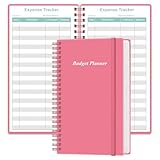
- MANAGE YOUR MONEY & ACHIEVE YOUR FINANCIAL GOALS - This budget tracker will help you keep your money organized, spend well, start saving, set and achieve financial goals. It can help you to manage all your personal finance, savings, debts, daily expense etc.
- UNIQUE DESIGN - This budget sheets expense tracker total 80 sheets/160 pages contains an annual overview (calendar from 2025-2026), yearly goals page, contact pages, important pages, and 10 pages (lined) for notes, lists, goals, etc, that help you manage your money efficiently and reach your finance goals perfectly.
- POCKET SIZE - This budget planner size of 3.75 x 6.75 inch, perfect size to fit in your bag, A6 envelopes pockets & wallet.
- SUPERIOR QUALITY - This expense budget sheets planner with 100gsm thick paper to reduce ink leakage, erase fraying and shade issues. Sturdy and flexible PP cover to protect the inner pages well. Strong metal and lay-flat twin-wire binding, Planner with inner pocket to store loose items, like tickets, cards etc and elastic closure to protect your finance planner.
- EASY TO USE - You can use this card to record your daily expenses. They can help you know where your every cent is going; Our expense tracker sheets can really help you keep track and stay on budget.
What security and compliance evidence should vendors provide?
Ask for specific evidence rather than accepting generic claims that a platform is secure or enterprise-grade. Require documentation covering SSO and SAML availability, role-based permissions, audit logs, approval history, data retention, encryption, SOC reports or certifications, PCI responsibilities for card programs, employee offboarding, fraud monitoring, and export or deletion procedures.
The buyer should identify the scope and date of each certification or attestation. A vendor’s security certification does not automatically certify the customer’s configuration, accounting controls, card program, or internal approval process.
What implementation mistakes should you avoid?
- Copying every old policy into the software. Simplify rules before configuration; excessive exceptions create approval queues and workarounds.
- Choosing based on OCR alone. Receipt accuracy is only one step; accounting synchronization, policy enforcement, and adoption often determine the larger benefit.
- Testing only a clean demo transaction. Include refunds, split expenses, foreign currency, tax, missing receipts, rejected reports, and changed dimensions.
- Changing cards without evaluating treasury and rewards. Native cards can improve controls while reducing existing rewards or creating operational work.
- Assuming free means zero cost. Migration, training, card replacement, support, payment fees, and implementation still require resources.
- Evaluating travel as a checkbox. Booking links, managed travel, traveler support, duty of care, negotiated rates, and itinerary reconciliation are different capabilities.
- Letting only finance administrators test the product. Include employees, managers, travelers, cardholders, and accounting users in the pilot.
How do you choose the right expense management software?
- Define the primary problem. Decide whether the project is mainly reimbursement, receipt capture, card control, travel, bill pay, procurement, or global finance infrastructure.
- Map the current payment model. List personal cards, corporate cards, card issuers, virtual cards, reimbursement methods, and bank relationships.
- Document accounting requirements. Record entities, departments, projects, clients, locations, tax codes, currencies, and the required journal or reconciliation workflow.
- Separate must-have from adjacent features. Do not pay for managed travel or treasury infrastructure when the business only needs employee expense reports.
- Run a realistic proof of concept. Test normal, rejected, split, refunded, foreign-currency, missing-receipt, and out-of-policy transactions.
- Calculate total cost. Include subscriptions, cards, transaction fees, foreign exchange, integrations, implementation, support, migration, and employee time.
- Pilot across user groups. Have finance, managers, travelers, cardholders, and ordinary employees complete real workflows.
- Set a fallback process. Decide how the company will handle outages, rejected reports, lost cards, late receipts, and payroll or reimbursement delays.
- Review after launch. Measure adoption, exception volume, approval time, reconciliation effort, policy violations, and reimbursement turnaround after the first 30 to 60 days.
Which option should you choose?
Choose Ramp for broad, card-led spend management; Expensify for reimbursement-first expense reporting and existing-card compatibility; Zoho Expense for transparent low-cost pricing and Zoho integration; Brex for startup and global corporate cards; SAP Concur for complex enterprise travel and compliance; Navan for travel-first operations; Airwallex for international accounts, payments, and multicurrency spend; and BILL Spend & Expense for SMBs that want expenses connected to BILL payables.
The Tool Desk
Outbyte PC Repair FREEClear out junk files and repair common Windows errorsFree Scan →Outbyte Driver Updater FREEScan for outdated or missing drivers - takes under a minuteDriver Scan →The best expense management software is the platform that matches the company’s control point, payment infrastructure, accounting workflow, geography, and implementation capacity. A low subscription price cannot compensate for unusable approvals, incomplete accounting sync, unsupported countries, or a card migration the organization did not want.
Frequently Asked Questions
Can expense management software work with existing corporate cards?
Yes, some expense platforms can import or reconcile third-party card feeds without replacing the company’s card program. Expensify explicitly supports third-party card feeds, and SAP Concur is commonly used with established corporate-card programs; card-feed depth and synchronization should be tested before purchase.
Do expense management platforms issue corporate cards?
Some platforms issue native physical or virtual corporate cards, while others focus on reimbursements and importing existing-card transactions. Ramp and Brex are card-led examples; Expensify and SAP Concur are more suitable when retaining existing cards is important.
Is free expense management software sufficient for a small business?
Free software can be sufficient for a very small, simple workflow, but free tiers commonly limit users, approvals, integrations, entities, or advanced controls. Zoho Expense lists a free plan for up to three users, while Ramp and Brex advertise free core tiers with different eligibility and feature conditions.
Which expense management software is best for international companies?
Brex, Airwallex, SAP Concur, Navan, and enterprise-tier Ramp are reasonable starting points for international companies, but global availability must be verified by country and entity. Confirm local cards, currencies, reimbursements, VAT, payment rails, tax handling, data hosting, and accounting support rather than relying on a general global claim.
What should be tested before buying expense management software?
Test receipt capture, card feeds, policy rules, approval routing, reimbursements, accounting dimensions, refunds, split transactions, foreign currency, missing receipts, rejected reports, employee offboarding, and multi-entity workflows. A clean vendor demo does not prove that the integration will handle difficult production transactions.
The Bottom Line
Bottom line: Ramp is the strongest all-around choice for integrated spend control, Expensify is the simplest reimbursement-first option, and Zoho Expense is the best budget pick. Brex leads for startup and global card programs, SAP Concur for complex enterprises, Navan for travel, Airwallex for international finance, and BILL Spend & Expense for BILL-oriented SMBs. Compare the complete operating cost and workflow—not just the advertised monthly price.
Quick Recap
Product prices and availability are accurate as of the date/time indicated and are subject to change. Any price and availability information displayed on Amazon at the time of purchase will apply.
Recommended Free Tools

