
Crashes, No Sound, or Screen Glitches?
Random freezes, missing sound and display glitches usually trace back to one bad driver. Find and replace yours safely.Free scan · under a minuteWindows Errors? Fix Them Before They Spread
Repair common Windows errors and clear accumulated junk for a smoother, more stable PC - no reinstall needed.Free scan · no reinstalliTechGuides is reader-supported. When you buy through links on our site, we may earn an affiliate commission. As an Amazon Associate I earn from qualifying purchases. Learn more
AI agents can take a first pass at routine digital chores—gathering information, organizing notes, drafting text, and navigating websites—if they have access to the tools those jobs require. The safest starting point is a result you can inspect, not an agent allowed to act without you. Here are seven practical candidates, with a clear handoff point for each.
What makes a chore a good first job for an AI agent?
An agent can plan a task, use connected tools, observe what happens, and adjust its next step. That is different from a fixed script, but it does not make the agent dependable by default: its reach and behavior depend on its instructions, enabled tools, permissions, and environment. Anthropic explains this distinction in its overview of building effective agents.
Choose work that is repeatable, low-stakes, and easy to review. Start with read-only access or draft-only output. Give write access only when the task needs it, and keep a person in charge of consequential actions. Anthropic’s example captures the distinction: “This means users can, for example, decide it’s always safe for Claude to read their calendar, but still require approval before sending someone an invitation.” The quote is from Anthropic’s Trustworthy agents in practice, published April 9, 2026.
The Tool Desk
Outbyte PC Repair FREERepair Windows errors before they cause bigger problemsFix Now →Outbyte Driver Updater FREEFix the driver behind crashes, sound loss and screen glitchesFind Drivers →1. Collect and summarize material for a recurring question
For a question you revisit—such as what changed in a policy, which options meet a set of criteria, or what several articles say about a topic—an agent can gather relevant material and produce a concise summary. Internet search and research are among the documented agent-work categories described by UK government AI capability guidance.
#1 Best Overall
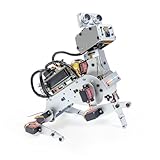
- AI-Powered Raspberry Pi Robot Dog — PiDog: Powered by Raspberry Pi (5/4B/3B+/3B/Zero 2W), OpenClaw, and multi-LLMs like ChatGPT, Gemini, Grok, DeepSeek, Qwen & Ollama. With 12 servos, camera, gyroscope, hearing & touch sensors, PiDog can see, listen, talk, move, and interact intelligently. Supports OpenCV, MediaPipe, TTS & STT, app control, FPV & Python. A great STEM robotics gift for students, makers & tech enthusiasts—perfect for birthdays and holidays. (Raspberry Pi not included)
- Realistic Dog-like Movements: PiDog's 12 powerful servos enable 32 dog-like actions, including walking, sitting, standing, shaking its head, wagging its tail, and performing playful tricks, closely mimicking a real dog and providing an engaging experience. This is an AI development robot product designed for engineers, suitable for ages 15 and above
- Rich Sensor Suite for Interactive Experiences: PiDog features ultrasonic, touch, gyroscope, sound, camera, speaker and microphone. These provide it with advanced hearing, vision, and touch, enabling it to see, detect obstacles, respond to touch, and recognize sounds, making interactions highly engaging
- AI-Powered Interactions with OpenClaw & Multi-LLMs. PiDog combines voice, vision, and gesture recognition for immersive AI experiences. Powered by OpenClaw and multi-LLMs like ChatGPT, Gemini, Grok, DeepSeek, Qwen, Doubao, and Ollama (local LLMs), it can understand questions, respond naturally through TTS & STT, recognize math problems, interpret hand gestures, and hold smart conversations. OpenClaw also enables customizable AI behaviors and personalized robotics development, helping users create their own intelligent robotic companion
- Comprehensive Learning Resources and Support: PiDog offers detailed online documentation, video tutorials, prompt technical support, and an active forum community, ensuring beginners can easily complete all projects and enjoy a great experience
- Bounded prompt: “Find the latest information on [question] from these sources. Summarize the main points, link each claim to its source, and flag anything you cannot verify. Do not sign in, share personal data, or take actions on my behalf.”
- Access needed: Search or browser access to the sources you want it to consult. Begin without account access if public pages are enough.
- Inspect: Open the cited pages; check dates, context, and whether the summary separates evidence from inference.
- Take control: Make your own decision before relying on the summary, especially when the answer affects money, health, legal matters, or security.
2. Turn meeting notes or a transcript into action items
Meeting notes often mix decisions, open questions, and follow-ups. An agent can sort them into a reviewable list rather than making you reconstruct the conversation later. Summarizing calls and handling meeting-related work appear among documented agent capabilities in UK government guidance.
- Bounded prompt: “From these notes, list decisions, action items, owners, and deadlines. Mark missing owners or dates as ‘unclear’; do not infer them.”
- Access needed: The notes or transcript. Only provide material you are permitted to share with the agent.
- Inspect: Check names, commitments, deadlines, and whether a proposal was mistakenly presented as a decision.
- Take control: Confirm the action list with attendees before sending it or creating tasks in a shared system.
3. Draft a routine email for you to review
An agent can turn a few bullet points into a routine reply, status update, or scheduling note. OpenAI describes document drafting and other everyday work as agent use cases in its introduction to ChatGPT agent. Treat the email as a draft, not an instruction to send.
Rank #2
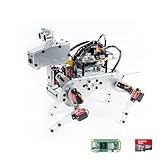
- Raspberry Pi AI Robot: powered by Raspberry Pi (5/4B/3B+/3B/Zero 2W), features 12 servos and sensors for vision, hearing, and touch. Integrated with ChatGPT-4o, it responds to complex queries. With app control and FPV, users can manage and see its view in real-time. It supports Python programming
- Realistic Movements: 12 powerful servos enable 32 actions, including walking, sitting, standing, shaking its head, wagging its tail, and performing playful tricks, closely mimicking a real and providing an engaging experience
- Rich Sensor Suite for Interactive Experiences: features ultrasonic, touch, gyroscope, sound, camera, speaker and microphone. These provide it with advanced hearing, vision, and touch, enabling it to see, detect obstacles, respond to touch, and recognize sounds, making interactions highly engaging
- Engaging Interactions with ChatGPT-4o: with ChatGPT-4o enables voice interactions and visual recognition, making it smarter and more responsive. Users can have natural conversations, solve math problems via the camera, and interpret gestures, creating diverse and fun interactions
- Comprehensive Learning Resources and Support: offers detailed online documentation, video tutorials, prompt technical support, and an active forum community, ensuring beginners can easily complete all projects and enjoy a great experience
- Bounded prompt: “Draft a short, polite email to [recipient] using only these facts: [facts]. Leave out anything uncertain. Do not send it.”
- Access needed: Your notes and, if you want the draft placed in an email app, permission to create a draft. Sending permission is not needed.
- Inspect: Verify the recipient, facts, tone, attachments, and any promise or commitment the draft makes.
- Take control: Edit and send it yourself. Do not let the agent send messages automatically.
4. Find possible meeting times from calendar constraints
An agent with calendar access can look for open slots that satisfy constraints such as duration, working hours, or a date range. Calendar management is among the documented work categories in UK government guidance. This is a useful handoff because the agent can propose options while you retain the decision.
Free tools Windows power users keep installed
One-click scans. No signup required.
- Bounded prompt: “Find three 30-minute openings next week between 10 a.m. and 4 p.m. Do not create an event or invite anyone. Return the dates and times in [time zone].”
- Access needed: Read access to the relevant calendar or calendars, plus the correct time zone and any constraints you choose to share.
- Inspect: Check that the slots are genuinely available, that the time zone is right, and that private event details have not been exposed unnecessarily.
- Take control: Choose a slot yourself. Approve any invitation or calendar change before it is sent or saved.
5. Clean, normalize, or summarize a spreadsheet
For a copy of a spreadsheet, an agent can help standardize inconsistent labels, spot missing values, or summarize a column. Spreadsheet handling is among the work categories described in UK government AI capability guidance; the specific results still need checking.
Rank #3

- AI-Powered Raspberry Pi Smart Car — PiCar-X: PiCar-X brings AI learning to life — powered by Openclaw and multi-LLMs including ChatGPT, Gemini, Grok, DeepSeek, Qwen, Doubao, Ollama (Local LLMs), and compatible with many more AI platforms. Featuring OpenCV, MediaPipe, TTS & STT, PiCar-X enables true AI vision and voice interaction — it can see, listen, talk, drive and think like an intelligent companion. Ideal for students (10+), educators, and engineers, PiCar-X is the perfect gateway to explore AI, robotics, and machine learning on Raspberry Pi 5/4/3B+/3B/Zero 2W (Raspberry Pi not included)
- Engaging Interactions with Multi-LLMs: PiCar-X, powered by Openclaw and multi-LLMs — including ChatGPT, Gemini, Grok, DeepSeek, Qwen, Doubao, and Ollama (Local LLMs) — and compatible with many other AI platforms, supports voice interaction and visual recognition to make the robot smarter and more responsive. Users can enjoy natural AI conversations, solve math problems through the camera, and interpret gestures, unlocking a world of diverse and fun AI-driven interactions
- Feature-rich and Adaptable: PiCar-X offers engaging applications like line following and obstacle avoidance, supports TTS (Text-to-Speech) and STT (Speech-to-Text) for interactive voice control, and includes a camera for video and vision recognition. It also comes with various sensors, while its customizable design enables a wide range of creative AI and robotics projects
- Versatile Programming Options: Catering to users of all skill levels, PiCar-X supports both Python and Scratch programming languages, allowing for flexible learning and skill development
- Simplified Assembly & Support: PiCar-X is perfect for beginners, yet learning with experienced users is recommended for best results. It comes with easy assembly instructions and forum support for smooth project completion
- Bounded prompt: “Review this copy of the sheet. Identify inconsistent date formats and duplicate rows, and suggest normalized values in a separate column. Do not overwrite cells or delete rows.”
- Access needed: The spreadsheet or an exported copy. Use a duplicate if the data is important, sensitive, or difficult to restore.
- Inspect: Compare suggested changes with the original, especially dates, IDs, formulas, and rows that may look similar but are distinct.
- Take control: Apply changes only after review; keep the original unchanged until you have verified the result.
6. Prepare a first draft of a recurring document
Routine documents—such as a weekly update, project brief, or handover note—can be easier to produce when an agent organizes supplied facts into a familiar structure. OpenAI lists document drafting among agent capabilities in its ChatGPT agent overview.
- Bounded prompt: “Create a first draft of this week’s update using the attached template and these notes. Keep the headings, distinguish completed work from planned work, and mark missing information rather than guessing.”
- Access needed: The template and source notes; write access only if you want the agent to place a draft in a document.
- Inspect: Check dates, status, names, figures, and whether the draft implies a commitment not present in the notes.
- Take control: Revise and approve the document before sharing or publishing it.
7. Navigate a simple web form or comparison workflow
A browser-using agent may be able to move through pages, collect information, or interact with an application. OpenAI describes computer use for browser interfaces in its Computer-Using Agent article. Keep the task on the reversible side of the final action: have it prepare or compare, then stop before submitting.
Rank #4

- BUILD, CODE & DRIVE YOUR OWN ROBOT CAR: Turn coding, electronics and engineering into a working programmable robot car you can assemble, program and drive; ideal for weekend family projects, STEM classrooms, coding clubs, robotics lessons and maker challenges
- EXPLORE FPV, LINE TRACKING & OBSTACLE AVOIDANCE: Control the robot with the ELEGOO app or IR remote, view live FPV video through the onboard camera, follow black lines, avoid obstacles with the ultrasonic sensor and explore multiple interactive driving modes
- BEGINNER-FRIENDLY BUILD WITH GUIDED WIRING: Keyed XH2.54 connectors help reduce wiring mistakes, while the illustrated tutorial and example programs guide beginners step by step from chassis assembly and module connection to programming and the first successful run
- GO BEYOND ASSEMBLY WITH CREATIVE CODING: Program with Arduino IDE to explore movement, sensors and control logic, then modify example code to create custom routes, reactions and robotics experiments that develop coding, problem-solving and engineering skills
- COMPLETE RECHARGEABLE STEM ROBOTICS KIT: Includes an ELEGOO UNO R3 controller board, ESP32-WROVER-based camera and Wi-Fi module, line-tracking and ultrasonic sensors, motors, IR remote and a 2000 mAh rechargeable lithium-ion battery; recommended for ages 8+ with adult guidance for first-time builders
- Bounded prompt: “Compare the options on these pages against [criteria]. Fill in the form fields using the information I supplied, but stop before submitting, paying, or accepting terms.”
- Access needed: Browser access to the relevant pages. Avoid granting access to unrelated accounts or personal information.
- Inspect: Check every selected option and entered field against the original pages and your instructions.
- Take control: Submit, purchase, accept, or transmit information yourself only after reviewing the final screen.
Where to draw the line on agent permissions
Browser and computer-use tasks carry a special risk: webpages, emails, documents, or media can contain instructions designed to steer an agent. Google warns that prompt injection can lead to personal information being shared or unintended actions, including clicking the wrong control or making a purchase. Its guidance recommends monitoring important tasks and using confirmation for communications, data changes, forms, and scheduling; see Google’s Project Mariner safety discussion.
What’s actually slowing this PC down?
Pick the symptom - the matching free tool is one click away.
OpenAI also tells developers to verify computer-use results and review saved browser activity in its Computer-Using Agent workflow. In practice, choose permissions according to the task rather than treating access as all-or-nothing:
- Read: Let the agent view only the calendar, file, or page it needs.
- Draft: Allow it to create an unsent message or a separate document when that saves effort.
- Confirm: Require your approval before sending, scheduling, submitting a form, purchasing, changing shared data, or deleting anything.
- Verify: Check the result in the destination app; do not rely on a completion message alone.
These seven workflows are grounded in published capability categories, not independent tests of each exact prompt. One historical benchmark illustrates why that distinction matters: OpenAI reported 38.1% on OSWorld, 58.1% on WebArena, and 87.0% on WebVoyager for its evaluated system in 2025. Those are system- and benchmark-specific results, not current success rates for all agents or a prediction for your task. OpenAI noted that WebVoyager tasks were relatively simple and that performance on more complex WebArena tasks needed improvement; details are in the original article.
Quick Recap
Product prices and availability are accurate as of the date/time indicated and are subject to change. Any price and availability information displayed on Amazon at the time of purchase will apply.

