
iTechGuides is reader-supported. When you buy through links on our site, we may earn an affiliate commission. As an Amazon Associate I earn from qualifying purchases. Learn more
No VPN can guarantee access to every site on a school network. A VPN encrypts the traffic between your device and the VPN server, which protects that connection from anyone watching the Wi-Fi. It does not hide the connection from the network itself, and schools can block VPN traffic by server address, port, or the way the traffic looks. The six services below are the ones that recur most often in 2026 school-network guides from TechRadar, Security.org, VPNAlert, Comparitech, and Cloudwards. Treat them as a shortlist to test, not as a promise that any of them will work on your school’s network.
What a VPN can and cannot do on school Wi-Fi
A VPN changes two things: it encrypts the data leaving your device, and it sends that data through a server run by the provider, so websites see the server’s address rather than yours. Those two effects are useful for privacy on public or shared networks. They are not the same as being unseen by the school.
- The school can still see that a VPN is in use. The network sees an encrypted connection to a particular address, and that is often enough to identify it.
- The school can block the connection. Network administrators can block known VPN server addresses, specific ports, or traffic patterns that look like VPN software. Which of these a school uses is not something a VPN provider can know in advance.
- Working once does not mean working always. A provider that connects on your home network or at a café may fail on a school network, and may stop working later after an administrator updates the filter.
- Some providers offer features aimed at this problem. Surfshark is mentioned in these guides for obfuscation-related features, which are designed to disguise VPN traffic. The guides do not establish how reliably obfuscation works on any particular school network.
Check the school’s policy before you connect
Installing a VPN on a school device, or connecting a personal device to the school network through one, can break the institution’s acceptable-use or internet access policy. Consequences vary by school and by district, and the reviewed guides do not establish a universal rule about legality or discipline in any location. The practical steps are these:
Free tools Windows power users keep installed
One-click scans. No signup required.
- Find the acceptable-use policy. Schools usually publish it on the student portal, the IT department page, or in the device handbook. Search for “acceptable use,” “internet use,” or “VPN” in that document.
- Check whether the policy mentions VPNs, proxies, or circumventing filters. If it does, follow it.
- If a site you need for coursework is blocked, ask the teacher or the network administrator to review it. This is often the fastest route, and it avoids a policy violation.
- If you are using a VPN for privacy, not for filtered content, confirm with the school before you connect on school hardware, since school devices are commonly monitored.
The rest of this article assumes you have checked the policy and that your use is permitted, or that you are using a VPN on a personal device for privacy reasons.
#1 Best Overall

- 【Five Gigabit Ports】1 Gigabit WAN Port plus 2 Gigabit WAN/LAN Ports plus 2 Gigabit LAN Port. Up to 3 WAN ports optimize bandwidth usage through one device.
- 【One USB WAN Port】Mobile broadband via 4G/3G modem is supported for WAN backup by connecting to the USB port. For complete list of compatible 4G/3G modems, please visit TP-Link website.
- 【Abundant Security Features】Advanced firewall policies, DoS defense, IP/MAC/URL filtering, speed test and more security functions protect your network and data.
- 【Highly Secure VPN】Supports up to 20× LAN-to-LAN IPsec, 16× OpenVPN, 16× L2TP, and 16× PPTP VPN connections.
- Security - SPI Firewall, VPN Pass through, FTP/H.323/PPTP/SIP/IPsec ALG, DoS Defence, Ping of Death and Local Management. Standards and Protocols IEEE 802.3, 802.3u, 802.3ab, IEEE 802.3x, IEEE 802.1q
The six services
Each guide ranks services differently, and none of them uses the same testing method. The descriptions below report how each provider is positioned, not an independent test result.
NordVPN
NordVPN appears in several of the reviewed guides. TechRadar lists it first in its 2026 school roundup, and Security.org presents it as its top choice. It is the most consistently recommended name across the group, which makes it a sensible first candidate, but a strong ranking in a publisher’s list does not establish that it will connect on your school’s network.
Rank #2
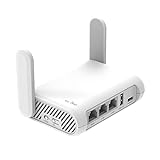
- 【AC1200 Dual-band Wireless Router】Simultaneous dual-band with wireless speed up to 300 Mbps (2.4GHz) + 867 Mbps (5GHz). 2.4GHz band can handles some simple tasks like emails or web browsing while bandwidth intensive tasks such as gaming or 4K video streaming can be handled by the 5GHz band.*Speed tests are conducted on a local network. Real-world speeds may differ depending on your network configuration.*
- 【Easy Setup】Please refer to the User Manual and the Unboxing & Setup video guide on Amazon for detailed setup instructions and methods for connecting to the Internet.
- 【Pocket-friendly】Lightweight design(145g) which designed for your next trip or adventure. Alongside its portable, compact design makes it easy to take with you on the go.
- 【Full Gigabit Ports】Gigabit Wireless Internet Router with 2 Gigabit LAN ports and 1 Gigabit WAN ports, ideal for lots of internet plan and allow you to connect your wired devices directly.
- 【Keep your Internet Safe】IPv6 supported. OpenVPN & WireGuard pre-installed, compatible with 30+ VPN service providers. Cloudflare encryption supported to protect the privacy.
Surfshark
TechRadar and VPNAlert describe Surfshark as a budget option. The guides mention unlimited simultaneous connections and obfuscation features, which matters if you want one subscription to cover a laptop, phone, and tablet. Confirm the current device limit on the plan you are considering, because the guides do not state it for every plan tier.
Do these 3 things before closing this tab:
1Fix the driver behind crashes, sound loss and screen glitches2Clear out junk files and repair common Windows errors3Scan for outdated or missing drivers - takes under a minuteProton VPN
Proton VPN is included in school comparisons, and TechRadar and Security.org both describe a free plan. It is the option most often discussed for privacy-focused use. The free plan has limits, and the guides do not give a consistent picture of exactly what they are, so check the current free-plan terms on the provider’s site before relying on it.
Rank #3

- New-Gen WiFi Standard – WiFi 6(802.11ax) standard supporting MU-MIMO and OFDMA technology for better efficiency and throughput.Antenna : External antenna x 4. Processor : Dual-core (4 VPE). Power Supply : AC Input : 110V~240V(50~60Hz), DC Output : 12 V with max. 1.5A current.
- Ultra-fast WiFi Speed – RT-AX1800S supports 1024-QAM for dramatically faster wireless connections
- Increase Capacity and Efficiency – Supporting not only MU-MIMO but also OFDMA technique to efficiently allocate channels, communicate with multiple devices simultaneously
- 5 Gigabit ports – One Gigabit WAN port and four Gigabit LAN ports, 10X faster than 100–Base T Ethernet.
- Commercial-grade Security Anywhere – Protect your home network with AiProtection Classic, powered by Trend Micro. And when away from home, ASUS Instant Guard gives you a one-click secure VPN.
ExpressVPN
ExpressVPN is included in the TechRadar, VPNAlert, and Comparitech lists. It is the usual choice when ease of use matters more than price. Because it is a premium service, its cost is higher than the budget options, and the price should be checked against the billing term you would actually pay.
PrivadoVPN
TechRadar includes PrivadoVPN for its free offering, and notes limits on the network locations available and on unblocking features. It is a possible low-cost option for light use. Expect the free tier to offer fewer servers and less reliable unblocking than a paid plan, and confirm those limits on the provider’s current page.
Rank #4

- 【DUAL BAND WIFI 7 TRAVEL ROUTER】Products with US, UK, EU, AU Plug; Dual band network with wireless speed 688Mbps (2.4G)+2882Mbps (5G); Dual 2.5G Ethernet Ports (1x WAN and 1x LAN Port); USB 3.0 port.
- 【NETWORK CONTROL WITH TOUCHSCREEN SIMPLICITY】Slate 7’s touchscreen interface lets you scan QR codes for quick Wi-Fi, monitor speed in real time, toggle VPN on/off, and switch providers directly on the display. Color-coded indicators provide instant network status updates for Ethernet, Tethering, Repeater, and Cellular modes, offering a seamless, user-friendly experience.
- 【OpenWrt 23.05 FIRMWARE】The Slate 7 (GL-BE3600) is a high-performance Wi-Fi 7 travel router, built with OpenWrt 23.05 (Kernel 5.4.213) for maximum customization and advanced networking capabilities. With 512MB storage, total customization with open-source freedom and flexible installation of OpenWrt plugins.
- 【VPN CLIENT & SERVER】OpenVPN and WireGuard are pre-installed, compatible with 30+ VPN service providers (active subscription required). Simply log in to your existing VPN account with our portable wifi device, and Slate 7 automatically encrypts all network traffic within the connected network. Max. VPN speed of 100 Mbps (OpenVPN); 540 Mbps (WireGuard). *Speed tests are conducted on a local network. Real-world speeds may differ depending on your network configuration.*
- 【PERFECT PORTABLE WIFI ROUTER FOR TRAVEL】The Slate 7 is an ideal portable internet device perfect for international travel. With its mini size and travel-friendly features, the pocket Wi-Fi router is the perfect companion for travelers in need of a secure internet connectivity on the go in which includes hotels or cruise ships.
Private Internet Access
Private Internet Access is included in one or more of the school-specific guides, but its ranking and strengths vary by publisher. It rounds out the shortlist. Because the guides differ on its position, treat it as a candidate to check against the criteria below rather than as a clear favourite.
| Service | How the 2026 school guides position it | Check before choosing |
|---|---|---|
| NordVPN | Recommended across several guides; first in TechRadar’s list and top pick at Security.org | Current price for your billing term; whether it connects on your network |
| Surfshark | Budget option at TechRadar and VPNAlert; guides mention unlimited connections and obfuscation features | Simultaneous device limit on your plan; current price |
| Proton VPN | Included in school comparisons; free plan described by TechRadar and Security.org | Free-plan limits and current availability; whether the free tier meets your needs |
| ExpressVPN | Included in TechRadar, VPNAlert, and Comparitech lists | Plan cost over the full term; device support for your hardware |
| PrivadoVPN | Free offering noted by TechRadar, with limits on network locations and unblocking | Exact free-tier limits; whether paid tiers are needed |
| Private Internet Access | Included in one or more school-specific guides; rankings vary by publisher | Current price and terms; results on your network |
How to compare them on the criteria that matter
Price is only one of several criteria. Use these to narrow the list before you buy anything:
Best Value

- Next-Gen Gigabit Wi-Fi 6 Speeds: 2402 Mbps on 5 GHz and 574 Mbps on 2.4 GHz bands ensure smoother streaming and faster downloads; support VPN server and VPN client¹
- A More Responsive Experience: Enjoy smooth gaming, video streaming, and live feeds simultaneously. OFDMA makes your Wi-Fi stronger by allowing multiple clients to share one band at the same time, cutting latency and jitter.²
- Expanded Wi-Fi Coverage: 4 high-gain external antennas and Beamforming technology combine to extend strong, reliable, Wi-Fi throughout your home.
- Improved Battery Life: Target Wake Time helps your devices to communicate efficiently while consuming less power.
- Improved Cooling Design: No heat ups, no throttles. A larger heat sink and redefined case design cools the WiFi 6 system and enables your network to stay at top speeds in more versatile environments.
- Privacy and security practices. Look for an independent audit, a published no-logs policy, and clear encryption standards. Read the provider’s own privacy policy rather than relying on a summary.
- Network compatibility. The only real test is whether the service connects on your school’s network. Most providers offer a money-back window, so you can test the service during that window.
- Speed. Speed varies by server location and time of day. Test with the server nearest you and a server in the country you need.
- App and platform support. Check whether the app runs on your device, whether it works on Chromebooks or tablets if those are what you use, and whether it supports the operating system version you have.
- Simultaneous device limits. Count every device you plan to connect, including phones.
- Free-plan limits. If you choose a free tier, confirm the data cap, server list, and feature restrictions.
- Full-term cost. Compare the renewal price, taxes, and any required billing period, not the introductory rate.
Price and currentness
The comparison pages show introductory prices and promotional offers. These change with billing term, region, currency, and purchase date, and they are not a reliable guide to what you will pay after the first term. TechRadar, Security.org, and Cloudwards all show starting-price examples, but none of them should be treated as a guaranteed price. Before you pay, check the provider’s checkout page for:
- The length of the plan and the renewal price after the introductory period
- Taxes and currency conversion for your region
- The money-back terms and how long the refund window lasts
- Whether a student discount exists, and whether you are eligible in your region
The testing claims behind these rankings also differ in scope. Security.org says its reviewers considered over 40 VPN services for its guide, and Cloudwards says it tested over 50 VPNs for its list, according to their 2026 pages. These are the publishers’ own methodology figures, not independent measurements of the whole VPN market, and the guides do not use a shared testing method, so their rankings should not be merged into one score.
When a VPN is the wrong tool
If the goal is to reach a site you need for homework, a VPN is not the most direct solution. Ask the teacher or the IT department to review the site, or to allow access for a specific assignment. Schools can often make exceptions for coursework that they cannot make for a general bypass. A VPN makes sense when your concern is privacy on the network, and when you have confirmed that the school allows it on the devices you are using.
Sources
- TechRadar, “The best VPN for school Wi-Fi: reliable picks from VPN experts” (August 25, 2026)
- Security.org, “Best VPN for School and College in 2026”
- VPNAlert, “6 Best VPNs for School: Unblock Wi-Fi Affordably (2026)” (updated September 16, 2026)
- Comparitech, “Best VPNs for School and College: Unblock Sites on restricted Wi-Fi” (updated March 2, 2026)
- Cloudwards, “Best VPN for School Wi-Fi: Access Restricted Websites for Free With a VPN Unblocked for College 2026” (page updates September 2026)
These are commercial editorial comparisons, and some carry affiliate links. Their rankings are attributed opinions, not independent tests of school networks.
The Bottom Line
Start with the school’s acceptable-use policy, then shortlist two or three of the six services above, test them on your own network during a money-back window, and compare the renewal price rather than the introductory rate. If a site is needed for coursework, ask the school first.
Quick Recap
Product prices and availability are accurate as of the date/time indicated and are subject to change. Any price and availability information displayed on Amazon at the time of purchase will apply.

