
iTechGuides is reader-supported. When you buy through links on our site, we may earn an affiliate commission. As an Amazon Associate I earn from qualifying purchases. Learn more
The best Calvin and Hobbes stories from the 1980s include Calvin’s cardboard-box adventures and dinosaur daydreams, the Yukon Ho! and Weirdos from Another Planet! sequences, and The Revenge of the Baby-Sat. They make a compelling case for Bill Watterson’s genius: each turns an ordinary childhood problem into an imaginative world, while the humor remains rooted in recognizable feelings and conflicts. These are three strong picks, not a definitive or universally agreed ranking.
Why these three story groups stand out
Calvin and Hobbes debuted on November 18, 1985, and ended on December 31, 1995. Its 1980s stories belong to the strip’s formative years; by the end of its run, Andrews McMeel Syndication says it appeared in more than 2,400 newspapers. Watterson also received the National Cartoonists Society’s Reuben Award in 1986 and 1988—evidence of professional recognition, not a measurement of artistic merit. Andrews McMeel Syndication’s profile
| # | Preview | Product | Price | |
|---|---|---|---|---|
| 1 |
|
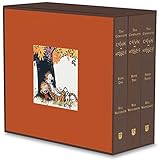
The Complete Calvin and Hobbes | $134.54 | Buy on Amazon |
| 2 |

|
The Calvin and Hobbes Portable Compendium Set 1 (Volume 1) | $9.67 | Buy on Amazon |
| 3 |

|
The Calvin and Hobbes Portable Compendium Set 2 (Volume 2) | $10.18 | Buy on Amazon |
| 4 |

|
The Essential Calvin and Hobbes: A Calvin and Hobbes Treasury (Volume 1) | $10.58 | Buy on Amazon |
| 5 |

|
Calvin and Hobbes | $8.73 | Buy on Amazon |
The selections below reward three related strengths: a clear visual premise, a quick leap from routine into fantasy, and comedy that reveals something about Calvin’s everyday life. They differ in emphasis: the early strips make ordinary objects do extraordinary work, the middle-period stories sustain elaborate adventures, and the later babysitter material draws its energy from a clash of wills.
1. The cardboard box and dinosaur daydreams (1985–1986)
Why it works
A cardboard box is cheap, familiar, and almost limitless in Calvin’s imagination. It becomes a spaceship, a time machine, or an invention lab; meanwhile, dinosaur daydreams interrupt the demands of schoolwork. The contrast does much of the comic work: Calvin’s surroundings may be mundane, but his attention can transform them—or abandon them entirely.
#1 Best Overall
These early ideas show Watterson’s visual economy. The reader can understand the gap between the ordinary object and the fantastic adventure without a long explanation. School is not simply a setting for a joke; it is the everyday pressure that gives Calvin’s escape a recognizable appeal. This is the strongest choice for seeing how a simple premise can generate both physical comedy and imaginative scale.
The first collection covers strips originally published from November 1985 through August 1986, including the box and dinosaur material described on the publisher’s debut collection page.
2. Yukon Ho! and Weirdos from Another Planet! (1987–1988)
Why it works
In these stories, familiar conflicts open into sustained adventures. Bath time becomes a Yukon expedition; avoiding school can become interplanetary travel. The imaginative premise is not just a one-panel escape hatch: it gives an ordinary disagreement enough room to unfold as a complete world.
That scale makes the stories especially satisfying. A child’s resistance to a routine demand is funny on its own, but the fantasy lets the resistance acquire its own geography, dangers, and logic. The reader moves between Calvin’s everyday predicament and the adventure he imagines, with the humor coming from both the grandeur of the fantasy and its very small point of origin.
The Authoritative Calvin and Hobbes collects every strip from Yukon Ho! and Weirdos from Another Planet!, including daily strips, full-color Sunday strips, and a collection-exclusive full-color story. Its coverage runs from May 24, 1987, through December 4, 1988. See the publisher’s collection page.
3. The Revenge of the Baby-Sat (1988–1989)
Why it works
The babysitter conflict offers a different kind of engine from the box and expedition stories: character friction. Calvin’s resistance to being watched creates a familiar setup for a contest of wills. Its appeal lies in the way a domestic conflict can feel enormous from a child’s point of view, without needing to become an entirely separate fantasy world.
Rank #4
This is the late-1980s selection, not a claim that the whole book containing it belongs to the decade. The publisher dates The Revenge of the Baby-Sat material from December 5, 1988, to September 10, 1989. It appears in The Indispensable Calvin and Hobbes alongside strips from Scientific Progress Goes “Boink”, which continues into 1990. The publisher’s page establishes those collection boundaries.
Outdated Drivers Are Slowing You Down
One free scan finds every outdated or missing driver and matches the right update for your exact hardware.Free scan · exact hardware matchWindows Errors? Fix Them Before They Spread
Repair common Windows errors and clear accumulated junk for a smoother, more stable PC - no reinstall needed.Free scan · no reinstallHow to choose a starting point
| Story group | What drives the humor | Best starting point if you want |
|---|---|---|
| Cardboard box and dinosaur daydreams | A simple object or school day opens into make-believe | Compact visual invention and the earliest material |
| Yukon Ho! and Weirdos from Another Planet! | An everyday dispute expands into a sustained adventure | A longer imaginative journey |
| The Revenge of the Baby-Sat | A domestic clash powered by character conflict | Calvin’s resistance to adult authority |
The first two choices make fantasy itself the main source of escalation; the babysitter story is the clearest pick if you prefer conflict grounded in family life. For the complete newspaper run, the publisher describes The Complete Calvin and Hobbes as covering 1985–1995 and including supplemental stories and poems. Editions differ: the publisher lists both a four-volume paperback edition and a three-volume hardcover package. Check the publisher’s complete-edition page for the edition’s format and current availability.
Quick Recap
Best Value
Product prices and availability are accurate as of the date/time indicated and are subject to change. Any price and availability information displayed on Amazon at the time of purchase will apply.

