
Free tools Windows power users keep installed
One-click scans. No signup required.
iTechGuides is reader-supported. When you buy through links on our site, we may earn an affiliate commission. As an Amazon Associate I earn from qualifying purchases. Learn more
For a chiropractic practice website, the best examples are the ones that help a prospective patient quickly understand who provides care, what the practice treats, where it is, and how to book. Colorlib’s September 2026 roundup presents 22 sites as a range of approaches—not a ranked list. Use them as inspiration, then check each design against the patient’s path from first visit to confirmed appointment.
Which chiropractic website examples are worth looking at?
Colorlib’s September 9, 2026 roundup includes these 22 practices. Its ordering is for range, not rank, and its descriptions are observations from the publisher’s review rather than a current independent retest of each site.
- MVP Chiro
- Atlant Health
- Thrive
- ABC Chiropractic
- Peace Haven Chiropractic
- Healing Hands Chiropractic
- Ozark Clinic
- Greystone Chiropractic
- The Chiro Guy
- Bergen Chiropractic
- Chiro London
- SF Chiro
- Airrosti
- Back In Line Chiropractic
- Elevation Chiropractic
- Aligned Modern Health
- Chiropractic First
- Horizon Chiropractic
- Pure Chiropractic
- Kaizen Chiropractic
- Well Adjusted Chiropractic
- Precision Chiropractic
Colorlib’s descriptions point to useful contrasts among the examples:
Do these 3 things before closing this tab:
1Repair Windows errors before they cause bigger problems2Fix the driver behind crashes, sound loss and screen glitches3Clear out junk files and repair common Windows errors- Atlant Health: Colorlib describes appointment-time selection as immediately available.
- Thrive: Colorlib says the site explains its treatment philosophy before presenting the call to action.
- ABC Chiropractic: Colorlib notes that a phone number and condition information are in view, and that the navigation includes animal chiropractic.
- Kaizen Chiropractic: Colorlib says the homepage addresses chiropractors seeking practice space, rather than patients.
- Precision Chiropractic: Colorlib describes it as a routing page for several separate clinics sharing a name.
These are useful ideas to study, not proof that a particular design generates more bookings or better outcomes. Individual sites and features can change. Source: Colorlib’s 2026 roundup.
#1 Best Overall

- 1. 1.5X Enlarged Lumbar Anatomy 1.5X Enlarged Lumbar Disc Model: This anatomical model presents the fourth and fifth lumbar vertebrae, intervertebral discs, spinal nerves and surrounding structures at an enlarged scale for clearer study and demonstration.
- 2. Flexible Disc Herniation Demonstration Flexible Disc Herniation Demonstration: The elastic intervertebral disc structure helps demonstrate how disc shape changes during bending and compression, providing a visual reference for understanding lumbar disc herniation.
- 3. Detailed and Realistic Structure Detailed Lumbar Spine Anatomy: Clearly shows the lumbar vertebrae, spinal nerves and intervertebral disc relationships, making it easier to explain and study the structure of the lower spine.
- 4. Medical Study and Patient Education Designed for Medical Study: Suitable for medical and anatomy students, chiropractors, physical therapists, healthcare instructors and adult learners for anatomy study, professional demonstration and patient education.
- 5. Durable and Portable Durable and Portable Design: Made from durable PVC for repeated study and demonstration while remaining compact enough for desks, clinics, offices and training environments.
What should a chiropractic website include?
Assess a site by how well it answers the practical questions a prospective patient is likely to have—not by whether it resembles a particular example.
- Clear audience and identity: Identify the practice, its location, the practitioner or care team, and the patient groups it serves.
- Services and concerns: Explain services and conditions in plain language that connects to a visitor’s concern. Colorlib reports that the sites in its sample named a median of four conditions, with the most thorough naming twelve. Those figures describe that roundup’s set; they do not establish a search-ranking or patient-volume benefit from adding condition pages.
- Trust evidence: Make practitioner credentials identifiable and present testimonials or other review evidence clearly. Zarla recommends showing a real practitioner or team and visible review evidence as design cues; that is design advice, not evidence of a causal effect on trust or bookings. Source: Zarla’s 2026 chiropractor website design article.
- Booking path: State what happens after a visitor selects the booking control. A request form, a scheduling platform, and a screen where a patient can choose a time are different levels of completion.
- Visit logistics: Make address, hours, phone number, fees, and insurance information easy to find where applicable.
- Mobile hierarchy: Ensure the first screen makes the practice and the next useful action clear on a phone. Zarla recommends clear audience focus and an easy booking path; treat these as design recommendations rather than guaranteed results.
Colorlib reported blue or teal accents as common among the examples it reviewed. That is an observation about the sample, not a finding that those colors create trust or increase bookings.
Rank #2

- Full Cervical Anatomy with Extended Structures - This detailed cervical spine model includes 7 cervical vertebrae, upper thoracic vertebrae, brainstem, spinal nerves, vertebral arteries, and surrounding muscles—providing an all-in-one tool to study the upper spinal region in depth.
- Ideal for Medical Education & Patient Communication - A powerful visual aid for anatomy students, chiropractic trainees, massage therapists, and medical professionals. Perfect for use in classrooms, clinics, rehab centers, or physical therapy offices to demonstrate posture issues, nerve compression, and spinal health concepts.
- Color-Coded for Clear Identification - Anatomical elements are color-coded for fast and easy recognition: red for arteries, yellow for nerves, brown/red for muscles, and orange for the brainstem. The vibrant, medically accurate colors help reinforce learning and improve patient understanding.
- Premium PVC Construction with Stable Base - Crafted from high-quality, durable PVC that resists deformation, this model is built for years of frequent use. The white base keeps the model stable during demonstrations or transport, making it reliable for both tabletop teaching and clinical explanation.
- Realistic Size & Accurate Detailing - Designed to closely mimic the size and texture of actual human cervical anatomy, the model helps users gain a hands-on, spatial understanding of spine structure. Ideal for explaining conditions like herniated discs, cervical spondylosis, and nerve pathway disorders.
Can I book an appointment online?
A visible booking button does not necessarily let a patient choose and confirm an appointment. In Colorlib’s stated 2026 audit of these 22 sites, the publisher reported the following:
Crashes, No Sound, or Screen Glitches?
Random freezes, missing sound and display glitches usually trace back to one bad driver. Find and replace yours safely.Free scan · under a minutePC Slower Than It Used to Be?
A free scan shows the junk files, broken settings and background clutter dragging Windows down - then fixes them in one click.Free scan · Windows 10 & 11| What Colorlib reported | Sites in the 22-site sample | What it means for a visitor |
|---|---|---|
| A booking control | 15 of 22 | A control was present; this alone does not establish that the visitor could select a time. |
| A booking platform behind the control | 10 of 22 | The control led to a scheduling platform, but the reported count does not say every visitor could complete a booking there. |
| Appointment-time selection | 4 of 22 | The visitor could choose an appointment time. |
These are Colorlib’s counts from its review of the first screen and a one-hop follow-through on booking controls. They describe only the roundup’s reviewed sites, not all chiropractic websites. Source: Colorlib’s stated audit and examples.
Rank #3

- Our model of the human lumbar spine clearly shows how the body transforms when it bends and twists. It provides a thorough representation and is made up of two flexible discs, the spinal cord and nerve components.
- When press down you can see a portion of the disc material pop out .It is not easy rupture after thousand times test.
- Vertebra increasingly widespread occurrence of disease, so doctors should use this model to explain the importance of people spine and spinal action.
- This vertebrae model gives a great visual when a chiropractor try to explain to clients how improper usage of their body can potentially lead to lower back trouble.
- This disc protrusion model is internal medicine, physical therapy, surgery and clinical teaching, occupational disease prevention, ergonomics, physical education and a good educational tool aided teaching in other areas.
When reviewing a site—or testing your own—follow the live patient path through to the point where an appointment is confirmed. Check what the visitor must enter, whether the selected time is actually reserved, and what confirmation appears. A button that only opens a contact form should be described as a request, not as completed online scheduling.
How do I make it clear who treats patients and what a first visit involves?
Put the essentials where a prospective patient can find them without searching several menus. The first screen should identify the practice and location, make the main patient group apparent, and offer a clear next action. A practitioner page can then explain who provides care and show credentials. A visit or booking page should explain what the first appointment involves and what information a patient needs before arriving.
Rank #4
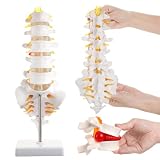
- Complete 2-in-1 Lumbar Spine Teaching Kit: Includes a life-size lumbar vertebrae model (5 vertebrae + sacrum + spinal discs) and a dedicated herniated disc demonstration model to clearly show normal vs. herniated conditions
- Premium Quality: This vertebral column model is made of high-grade PVC material for reliable use. This anatomy model and spine model for teaching offer strong wear resistance and excellent impact durability, making it suitable for frequent classroom teaching and repeated educational handling. The stable structure ensures consistent support for long-term use.
- Accurate and Detailed: 1.5x enlarged design highlights key lumbar regions, especially the L4-L5 structure for better visibility. This scientific lumbar spine model with 5 vertebrae clearly presents intervertebral disc spacing, alignment, and herniation details. A precise flexible human spine model for classroom designed to support anatomy learning and professional demonstration.
- Portable & Easy to Assemble: Lightweight design with detachable components for quick setup, disassembly, and convenient storage. This portable lumbar spine model allows fast assembly without tools, making this anatomical spine model with nerves ideal for classroom teaching, clinic explanation, patient communication, and student hands-on practice in various educational settings.
- Wide Applications: Ideal for medical education, anatomy study, and clinical communication. This lumbar spine model for teaching & learning and model tools supports demonstration of herniated disc relief concepts. Works as a life-size human spine model, human lumbar vertebrae anatomy model, spine models for anatomy for schools, clinics, and training environments.
Colorlib’s sample shows why these details deserve deliberate placement. In its review of 22 sites, it reported a tappable phone number on 17, an address or map on 14, published opening hours on 13, stated practitioner credentials on 8, and insurance information on 6. These are counts from Colorlib’s reviewed set, not an industry-wide benchmark. Source: Colorlib’s 2026 roundup.
What should a practice check before choosing a design?
Use a short review to decide what to adapt from the examples, then test the finished site as a prospective patient would.
Best Value

- Complete 4-Joint Teaching Set: Includes anatomically accurate models of the shoulder, elbow, hip, and knee, presented together to give a clear, comparative view of major human synovial joints.
- Half Life-Size (1:2) for Classroom Use: Each model is scaled to 1:2 (half natural size) - compact enough for tabletop demos yet large enough to show key anatomical landmarks and functional relationships.
- Visible Ligaments & Joint Mechanics: Prominent, color-contrasted ligament and capsule detail highlights major stabilizing structures and common clinical landmarks - excellent for demonstrating joint motion, injuries, and rehabilitation principles.
- Durable, Lightweight Construction with Bases: Molded from sturdy, non-toxic material and mounted on low-profile display bases for stable handling, easy transport, and convenient group demonstration or clinic display.
- Ideal for Education, Therapy & Patient Communication: Perfect for anatomy classes, physical therapy training, chiropractic instruction, sports medicine labs, or explaining conditions (sprains, tears, osteoarthritis) to patients.
- Check the first screen: Can a visitor tell who the practice serves, where it is, and what to do next?
- Follow the booking control: Determine whether it opens a request form, a scheduling platform, or a time-selection flow. Complete the path far enough to verify the confirmation behavior.
- Find visit information: Locate the phone, address, hours, fees, and insurance details that are relevant to the practice.
- Review care information: Check that services and conditions are described clearly and that the practitioner’s identity and credentials are easy to verify.
- Check the phone layout: Make sure navigation, text, and the booking action remain legible and usable on a mobile screen.
Colorlib’s review included first-screen inspection and one-hop booking follow-through; repeating those checks on the current live site matters because clinic websites and booking paths can change.
What tools can help build a chiropractic practice website?
Two vendor options in the available product information are Jane Websites and Wix. Their product pages describe advertised features; they do not establish comparative quality, patient outcomes, or value for money.
- Jane Websites: Jane says its website product can present a clinic’s story, practitioners, hours, fees, and posts, link to Jane online booking, and sync account information to the website. Jane Websites also has a chiropractic-specific portfolio and describes daily account syncing, website editing, and booking prompts for practices. Sources: Jane’s website product page and Jane Websites’ chiropractic portfolio.
- Wix: Wix’s chiropractor template catalog describes templates with service information, testimonials, and booking through Wix Bookings. Source: Wix’s chiropractor website templates.
Whatever builder or booking software a practice chooses, test the live patient journey from the website through to a confirmed appointment. Jane describes online booking as part of its clinic-management tools, but Colorlib’s mentions of other platforms do not independently verify those vendors’ current features or availability. Source: Jane’s chiropractic clinic-management product page.
Recommended Free Tools
Quick Recap
Product prices and availability are accurate as of the date/time indicated and are subject to change. Any price and availability information displayed on Amazon at the time of purchase will apply.

