
Free tools Windows power users keep installed
One-click scans. No signup required.
iTechGuides is reader-supported. When you buy through links on our site, we may earn an affiliate commission. As an Amazon Associate I earn from qualifying purchases. Learn more
The best i5 CPUs for gaming in 2026 are the Intel Core i5-14600K and 14600KF when their prices are close to the Core i5-13600K and 13600KF; the Core i5-12400F remains the budget pick. The right choice depends on resolution, GPU, motherboard, RAM, cooling, integrated graphics, and total platform cost.
This ranking covers desktop Intel Core i5 processors, primarily LGA1700 models from the 12th, 13th, and 14th generations. The ranking is price-sensitive rather than a permanent performance ladder because clearance pricing, CPU-and-motherboard bundles, and used-market availability can change which processor delivers the best value.
Intel Core Ultra 5 processors are newer alternatives, but they are not technically Core i5 products and are therefore discussed separately rather than counted among these 15 CPUs. Intel also cautions that processor numbers are not a direct measure of performance; the 14th-generation Core product brief explains Intel’s processor-numbering approach.
The Tool Desk
Outbyte PC Repair FREERepair Windows errors before they cause bigger problemsFix Now →Outbyte Driver Updater FREEScan for outdated or missing drivers - takes under a minuteDriver Scan →Key takeaways
- The Core i5-14600K is the strongest all-around desktop i5 choice when its price is close to the Core i5-13600K.
- The Core i5-13600K and 13600KF can be better buys than the 14600K when the older chips receive a meaningful discount.
- The Core i5-12400F is the lowest-cost recommendation for a sensible six-core gaming PC, particularly for GPU-limited 1440p systems.
- F and KF processors have no integrated graphics and require a discrete graphics card for display output.
- All principal CPUs in this list use LGA1700, but the motherboard still needs the correct BIOS and must be designed for DDR4 or DDR5 memory.
- A 125 W K-series processor can require substantially more cooling than a 65 W locked model, especially when motherboard power limits are unrestricted.
What are the 15 best i5 CPUs for gaming in 2026?
The following list ranks buyable desktop Core i5 retail SKUs and materially different variants by gaming usefulness, mixed-use performance, and likely value. The order is provisional: a discounted older processor can be a better purchase than a newer model at an inflated price.
#1 Best Overall

- Be everything you want to be, in-game and out with optimized performance and new features. Play harder and work smarter with Intel Core 14th Gen processors
- 14 cores (6 P-cores plus 8 E-cores) and 20 threads. Discrete graphics required
- Up to 5.3 GHz Max Turbo Frequency
- Compatible with Intel 600-series (with potential BIOS update) or 700-series chipset-based motherboards
- DDR4 and DDR5 platform support cuts your load times and gives you the space to run the most demanding games
| Rank | CPU | Best for | Cores/threads | iGPU | Buying verdict |
|---|---|---|---|---|---|
| 1 | Core i5-14600K | Best overall i5 | 14 / 20 | UHD 770 | Buy when close in price to the 13600K; budget for strong cooling. |
| 2 | Core i5-14600KF | High performance with a discrete GPU | 14 / 20 | None | Choose over the 14600K when meaningfully cheaper and an iGPU is unnecessary. |
| 3 | Core i5-13600K | Discounted high-performance build | 14 / 20 | UHD 770 | Often the rational alternative to the 14600K. |
| 4 | Core i5-13600KF | Unlocked value with a GPU | 14 / 20 | None | Similar CPU tier to the 13600K without integrated graphics. |
| 5 | Core i5-14500 | Locked gaming and productivity | 14 / 20 | UHD 770 | Strong all-rounder with lower platform complexity than a K chip. |
| 6 | Core i5-14600 | Fast locked i5 | 14 / 20 | UHD 770 | Buy only when its price does not approach the 14600K too closely. |
| 7 | Core i5-12600K | Older unlocked bargain | 10 / 16 | UHD 770 | Excellent clearance option if CPU and platform costs are low. |
| 8 | Core i5-12600KF | Budget overclocking platform | 10 / 16 | None | Consider when substantially cheaper than newer locked hybrid chips. |
| 9 | Core i5-14400F | Mainstream new build | 10 / 16 | None | Attractive below the higher-end i5 tier, but not automatically better than a cheap 12600K. |
| 10 | Core i5-14400 | Mainstream i5 with graphics | 10 / 16 | UHD 730 | Pay extra for display output and troubleshooting capability. |
| 11 | Core i5-13500 | Gaming with heavier multitasking | 14 / 20 | UHD 770 | Prefer it over the 14500 only when the 13500 is cheaper. |
| 12 | Core i5-13400F | Discounted hybrid budget build | 10 / 16 | None | Good value only when materially cheaper than the 14400F. |
| 13 | Core i5-13400 | 13400-class system with graphics | 10 / 16 | UHD 730 | Useful for troubleshooting or a system that may run without a GPU. |
| 14 | Core i5-12400F | Lowest-cost gaming build | 6 / 12 | None | Buy for an inexpensive discrete-GPU system, especially at 1440p. |
| 15 | Core i5-12400 | Budget i5 with an iGPU | 6 / 12 | UHD 730 | Worth choosing over the F model when integrated graphics has practical value. |
Tom’s Hardware’s 2026 CPU hierarchy places the Core i5-14600K above the Core i5-13600K in gaming, but the difference is small enough that street price and platform cost should guide the decision. Tom’s Hardware also notes that its hierarchy combines current and historical testing platforms, including earlier testing with an RTX 4090, so the results should be used for relative positioning rather than as universal FPS promises.
Which i5 CPU is best for gaming?
The Core i5-14600K is the best overall i5 CPU for gaming when the complete build can support its cooling and motherboard requirements. The Core i5-14600K has six P-cores, eight E-cores, 20 threads, a 24 MB cache, boost clocks up to 5.3 GHz, 125 W base power, and up to 181 W maximum turbo power. The Intel unlocked-processor guide documents the 14600K’s unlocked status and power specifications.
The Core i5-14600KF provides the same broad CPU configuration without integrated graphics. The 14600KF is the better buy when a discrete graphics card is guaranteed and the price difference is large enough to matter. The 14600K is safer for troubleshooting because its integrated GPU can provide display output when the graphics card is removed or faulty.
1. Intel Core i5-14600K
Verdict: Choose the Core i5-14600K for a high-refresh 1080p or 1440p gaming PC that also handles streaming, compiling, editing, or other multithreaded work. The 14-core, 20-thread design gives the 14600K more background-work capacity than the 12400-class and 14400-class chips.
The Core i5-14600K is most appropriate with a powerful graphics card and a 240 Hz-or-faster monitor, or with CPU-heavy games where frame-time consistency matters. At 1440p and especially 4K, the graphics card usually limits performance first, so spending more on the CPU may produce little visible benefit.
Use a capable dual-tower air cooler or liquid cooler rather than assuming that the 125 W base-power figure describes every workload. A motherboard that removes Intel power limits can allow substantially higher sustained consumption and heat. A Z690 or Z790 board is the natural choice for CPU overclocking, although the K processor can also run at stock settings. A good B660 or B760 board can make sense if overclocking is not planned, provided BIOS support and VRM capacity are confirmed.
2. Intel Core i5-14600KF
Verdict: Buy the Core i5-14600KF instead of the 14600K when the processor is meaningfully cheaper and the system will always have a discrete graphics card.
What’s actually slowing this PC down?
Pick the symptom - the matching free tool is one click away.
The 14600KF retains the 14600K’s six P-cores, eight E-cores, 20 threads, 24 MB cache, boost up to 5.3 GHz, and 125 W base-power rating. The missing integrated graphics is a hard limitation rather than a minor specification difference: the 14600KF cannot provide display output by itself.
A KF system should include a known-good graphics card and a motherboard with a current BIOS. Buyers who may troubleshoot GPU problems, run the computer temporarily without a graphics card, or resell the PC to a no-GPU user should choose the 14600K instead.
3. Intel Core i5-13600K
Verdict: The Core i5-13600K is the best alternative to the 14600K when it is clearly cheaper.
The 13600K uses the same six-P-core, eight-E-core, 20-thread layout as the 14600K and remains a strong gaming and productivity processor. Its maximum turbo clock is up to 5.1 GHz, compared with up to 5.3 GHz for the 14600K, while both have a 125 W base-power rating and 24 MB cache according to Intel’s desktop processor comparison chart.
Do these 3 things before closing this tab:
1Repair Windows errors before they cause bigger problems2Fix the driver behind crashes, sound loss and screen glitches3Clear out junk files and repair common Windows errorsChoose the 13600K if the saving can fund a better graphics card, cooler, or larger SSD. Avoid paying nearly 14600K money for the 13600K unless a bundle or existing motherboard makes the older CPU cheaper overall.
4. Intel Core i5-13600KF
Verdict: The 13600KF is the high-performance i5 value pick for a discrete-GPU build.
The 13600KF has the same CPU core and thread configuration as the 13600K but omits integrated graphics. Its lower purchase price can be attractive, but the saving should be compared with the value of having a backup display output. A capable cooler remains necessary because the 13600KF is a 125 W unlocked processor, not a low-power locked chip.
Rank #2

- Beyond Performance: The Intel Core i5-13420H processor goes beyond performance to let your PC do even more at once. With a first-of-its-kind design, you get the performance you need to play, record and stream games with high FPS and effortlessly switch to heavy multitasking workloads like video, music and photo editing.
- AI-Powered Graphics: The state-of-the-art GeForce RTX 4050 graphics (194 AI TOPS) provide stunning visuals and exceptional performance. DLSS 3.5 enhances ray tracing quality using AI, elevating your gaming experience with increased beauty, immersion, and realism.
- Visual Excellence: See your digital conquests unfold in vibrant Full HD on a 15.6" screen, perfectly timed at a quick 165Hz refresh rate and a wide 16:9 aspect ratio providing 82.64% screen-to-body ratio. Now you can land those reflexive shots with pinpoint accuracy and minimal ghosting. It's like having a portal to the gaming universe right on your lap.
- Internal Specifications: 8GB DDR5 Memory (2 DDR5 Slots Total, Maximum 32GB); 512GB PCIe Gen 4 SSD
- Stay Connected: Your gaming sanctuary is wherever you are. On the couch? Settle in with fast and stable Wi-Fi 6. Gaming cafe? Get an edge online with Killer Ethernet E2600 Gigabit Ethernet. No matter your location, Nitro V 15 ensures you're always in the driver's seat. With the powerful Thunderbolt 4 port, you have the trifecta of power charging and data transfer with bidirectional movement and video display in one interface.
5. Intel Core i5-14500
Verdict: Choose the Core i5-14500 for a locked system that combines gaming with productivity, streaming, or substantial background multitasking.
The 14500 has six P-cores, eight E-cores, 20 threads, 24 MB cache, boost clocks up to 5.0 GHz, a 65 W base-power rating, and UHD 770 graphics. The eight E-cores make the 14500 more compelling for concurrent workloads than the 14400F, while the locked design can reduce motherboard and overclocking complexity.
The 14500 is not automatically a better gaming purchase than a discounted 13600K or 14600K. It is also not automatically worth more than a 14400F for a GPU-limited gaming system. A quality tower cooler is advisable for lower noise even though the chip is rated at 65 W base power.
6. Intel Core i5-14600
Verdict: The Core i5-14600 is the fast locked alternative to the 14600K, but its value depends heavily on its price.
The 14600 provides six P-cores, eight E-cores, 20 threads, UHD 770 graphics, up to 5.3 GHz boost according to the exact SKU specification, and a 65 W base-power class. The locked multiplier makes the 14600 less suitable for an overclocking-focused build, but the processor can be a sensible choice when the buyer wants strong performance without tuning.
Outdated Drivers Are Slowing You Down
One free scan finds every outdated or missing driver and matches the right update for your exact hardware.Free scan · exact hardware matchWindows Errors? Fix Them Before They Spread
Repair common Windows errors and clear accumulated junk for a smoother, more stable PC - no reinstall needed.Free scan · no reinstallCompare the complete price against the 14500 and 14600K. If the 14600 costs close to the K model, the K model generally offers more headroom; if the 14600 is substantially cheaper, its simpler power and cooling profile can be an advantage.
7. Intel Core i5-12600K
Verdict: The Core i5-12600K is one of the best older i5 bargains when clearance pricing or an existing LGA1700 platform keeps total cost low.
The 12600K has six P-cores, four E-cores, 16 threads, a 20 MB cache, boost clocks up to 4.9 GHz, 125 W base power, and UHD 770 graphics. The four E-cores give the 12600K more multitasking capacity than the six-core 12400F.
A 12600K can undermine the case for a 13400F or 14400F if the older unlocked processor is cheaper. The K suffix requires neither mandatory overclocking nor a Z-series board when the chip will run at stock, but a capable cooler and a board with suitable VRM capacity are still important.
8. Intel Core i5-12600KF
Verdict: The 12600KF is the budget unlocked-platform choice when it is substantially cheaper than newer hybrid i5 processors and a discrete GPU is guaranteed.
The 12600KF retains the 12600K’s six P-cores, four E-cores, 16 threads, and 125 W base-power class, but it has no integrated graphics. The 12600KF can be particularly attractive in a used or clearance DDR4 build, although marketplace condition, seller reputation, warranty, and return policy require careful checking.
9. Intel Core i5-14400F
Verdict: The Core i5-14400F is a sensible mainstream new-build processor when it is priced below the 14500 and well below the 14600K tier.
The 14400F has six P-cores, four E-cores, 16 threads, a 20 MB cache, boost clocks up to 4.7 GHz, and a 65 W base-power rating. The F suffix removes integrated graphics, so the system requires a discrete GPU for display output. Tom’s Hardware’s Core i5-14400 review identifies the absence of integrated graphics as the principal difference between the 14400F and 14400.
The 14400F is not automatically better than a much cheaper 12600K or 13400F. Buy it when the price gap is small enough to justify its newer refresh-class position and when the complete LGA1700 platform is still economical.
Rank #3

- 10 cores (6 P-cores plus 4 E-cores) and 16 threads
- Performance hybrid architecture integrates two core microarchitectures, prioritizing and distributing workloads to optimize performance
- Up to 4.7 GHz unlocked. 20MB Cache
- Compatible with Intel 600-series (with potential BIOS update) and 700-series chipset-based motherboards
- PCIe 5.0 and 4.0 support. DDR4 and DDR5 Memory support. RM1 thermal solution included. Discrete graphics required.
10. Intel Core i5-14400
Verdict: Choose the Core i5-14400 over the 14400F when integrated graphics, troubleshooting display output, or future operation without a discrete GPU matters.
The 14400 has the same general 6P+4E, 16-thread CPU tier as the 14400F, but the non-F model includes UHD 730 graphics. The iGPU is useful for initial setup, a second display, recovering from a graphics-card fault, and diagnosing a system that will not produce video through the discrete card.
11. Intel Core i5-13500
Verdict: The Core i5-13500 is a strong productivity-heavy gaming choice if its price is below the 14500.
Recommended Free Tools
The 13500 combines six P-cores with eight E-cores for 20 threads and includes integrated graphics. The extra E-cores help with encoding, compiling, background applications, and other concurrent workloads; extra E-cores should not be treated as a guarantee of higher game FPS.
The 13500 makes the most sense in a locked B660 or B760 system where the buyer values multicore capacity but does not need CPU overclocking. Check BIOS support, memory type, and board power behavior before buying.
12. Intel Core i5-13400F
Verdict: The 13400F is a good discounted hybrid budget CPU when it is materially cheaper than the 14400F.
The 13400F has six P-cores, four E-cores, 16 threads, a 20 MB cache, boost clocks up to 4.6 GHz, and 65 W base power. The processor is appropriate for mainstream 1080p and 1440p gaming with a discrete graphics card, but its F suffix eliminates backup display output.
Tom’s Hardware’s Core i5-13400F review provides gaming and platform context. Do not pay a large premium for the 13400F over the 12400F if the graphics card will be the limiting component.
13. Intel Core i5-13400
Verdict: The Core i5-13400 is the 13400F-class option for buyers who want integrated graphics.
The 13400 has six P-cores, four E-cores, 16 threads, up to 4.6 GHz boost, 65 W base power, and UHD 730 graphics. The iGPU adds flexibility for troubleshooting and temporary operation without a graphics card, but it does not replace a gaming GPU for modern demanding games.
14. Intel Core i5-12400F
Verdict: The Core i5-12400F is the best low-cost i5 for a discrete-GPU gaming build when its CPU, motherboard, and memory are substantially cheaper than a newer platform.
Quick wins for a faster PC:
Fix the driver behind crashes, sound loss and screen glitchesFind Drivers →Repair Windows errors before they cause bigger problemsFix Now →Scan for outdated or missing drivers - takes under a minuteDriver Scan →The 12400F has six P-cores, 12 threads, an 18 MB cache, boost clocks up to 4.4 GHz, and a 65 W base-power rating. Six modern P-cores remain sufficient for many GPU-limited 1440p systems. The 12400F is less compelling for high-refresh gaming with a powerful GPU or heavy productivity than the 12600K-class and 13600K-class processors.
The Tom’s Hardware legacy CPU hierarchy is useful for comparing the 12400 with older processors. The F model requires a discrete GPU.
15. Intel Core i5-12400
Verdict: The Core i5-12400 is the budget i5 to choose when integrated graphics is worth more than the F model’s potential discount.
Rank #4

- Game and multitask without compromise powered by Intel’s performance hybrid architecture on an unlocked processor.
- Discrete graphics required
- Compatible with Intel 600 series and 700 series chipset-based motherboards
- Intel and reg; Core and reg; i5 processor offers hyper-threading architecture that delivers high performance for demanding applications with improved onboard graphics and turbo boost
- The processor features Socket LGA-1700 socket for installation on the PCB
The 12400 has the same six P-core, 12-thread CPU configuration as the 12400F, plus UHD 730 graphics. The non-F model is useful for troubleshooting, basic display output, and a build that may temporarily operate without a discrete GPU.
How do the main i5 specifications differ?
Core count alone does not determine gaming performance, but the split between P-cores and E-cores helps explain why the 13500, 14500, and 14600-class processors are better suited to simultaneous gaming and productivity than the 12400-class models.
| CPU family | P-cores | E-cores | Threads | Typical role |
|---|---|---|---|---|
| i5-12400/12400F | 6 | 0 | 12 | Budget gaming |
| i5-12500 | 6 | 0 | 12 | Slightly faster locked option |
| i5-12600K/KF | 6 | 4 | 16 | Older high-value unlocked option |
| i5-13400/13400F | 6 | 4 | 16 | Mainstream hybrid |
| i5-13500 | 6 | 8 | 20 | Gaming plus heavier multitasking |
| i5-13600K/KF | 6 | 8 | 20 | High-performance i5 |
| i5-14400/14400F | 6 | 4 | 16 | Refreshed mainstream tier |
| i5-14500 | 6 | 8 | 20 | Locked productivity and gaming |
| i5-14600/14600K/KF | 6 | 8 | 20 | Fastest mainstream i5 tier |
Intel’s official desktop comparison chart lists the relevant core counts, threads, cache, clocks, power figures, memory support, and graphics capabilities. Exact specifications can vary by SKU, so verify the individual Intel product page before ordering.
Which i5 should you buy at each gaming resolution?
For 1080p high-refresh gaming: choose the 13600K, 13600KF, 14600K, or 14600KF when paired with a powerful GPU and a 240 Hz-or-faster display. These processors are more likely to keep a high-end graphics card busy in CPU-limited games, although the result varies by game and settings.
For 1440p gaming: the 12400F, 13400F, 14400F, 14500, and 14600K can all be sensible choices depending on GPU class and price. The GPU usually matters more at 1440p, but a stronger CPU can improve high-refresh performance and frame-time consistency.
Recommended Free Tools
For 4K gaming: prioritize the graphics card unless the target is an unusually high frame rate or a CPU-heavy simulation game. At 4K, many i5 choices deliver similar practical results because the GPU becomes the main bottleneck.
Do not treat any universal FPS number as a purchase guarantee. Game version, graphics card, memory, BIOS, operating-system scheduling, settings, resolution, and whether the result measures average FPS or 1% lows all affect the result. Tom’s Hardware’s 2026 hierarchy is useful for relative placement, not for promising identical performance in every system.
What is the difference between K, KF, F, and non-suffix i5 processors?
| Suffix | Meaning | Integrated graphics | Best fit |
|---|---|---|---|
| K | Unlocked multiplier | Yes | Overclocking-capable or high-performance builds |
| KF | Unlocked multiplier without integrated graphics | No | High-performance systems with a guaranteed discrete GPU |
| F | No integrated graphics | No | Lower-cost systems that already include a discrete GPU |
| No suffix | Locked multiplier | Generally yes | Simpler gaming and productivity systems |
| T | Lower-power desktop variant | Usually yes | Constrained systems where gaming value is secondary |
K processors are unlocked, but overclocking is optional. A K processor can operate at stock settings. Intel’s unlocked processor guide explains the K and KF distinctions and the relevant clock and power information.
F and KF savings can be misleading. A $10–$30 saving is not worthwhile if the buyer lacks a discrete GPU, needs troubleshooting graphics, or expects to operate the computer temporarily without a graphics card. The iGPU on non-F processors is also useful for initial setup and a second display.
The Tool Desk
Outbyte PC Repair FREERepair Windows errors before they cause bigger problemsFix Now →Outbyte Driver Updater FREEFix the driver behind crashes, sound loss and screen glitchesFind Drivers →Which motherboard and RAM do LGA1700 i5 CPUs need?
All principal processors in this ranking use the LGA1700 socket, but socket compatibility alone does not guarantee that a board will boot the exact CPU.
- Check BIOS support: use the motherboard manufacturer’s CPU-support list for the exact board revision and processor. A B660 or Z690 board may need a BIOS update for a 13th- or 14th-generation CPU.
- Choose the memory type before buying: LGA1700 boards are sold as separate DDR4 and DDR5 versions. DDR4 cannot be installed in a DDR5 board, and DDR5 cannot be installed in a DDR4 board.
- Match VRM capacity to the CPU: a quality B660 or B760 board can suit a locked processor, while a 13600K or 14600K deserves a board with adequate VRM cooling and power delivery.
- Choose Z-series for overclocking: Z690 and Z790 boards are the conventional choices for CPU multiplier overclocking. A K chip can still run at stock on a suitable non-Z board.
- Check cooler mounting: confirm that the cooler includes or supports the LGA1700 mounting hardware.
Relevant Intel desktop generations support DDR4 and DDR5 at the platform level, but the specific motherboard determines which memory standard is usable. Intel’s desktop processor comparison chart and Gaming CPU Reference Sheet provide the processor-side memory information.
Independent reader supportYour contribution helps us test, update, and keep practical guides available for everyone.How much cooling do these i5 processors need?
Locked 65 W processors such as the 12400F, 12400, 13400F, 13400, 14400F, 14400, and 14500 are easier to cool. A stock cooler may be adequate for basic gaming where included, but an inexpensive tower cooler usually provides lower noise and more consistent temperatures.
The 12600K, 12600KF, 13600K, 13600KF, 14600K, and 14600KF need a capable tower cooler or liquid cooler selected for the intended power limits, noise target, case airflow, and workload. Intel lists the 14600K at 125 W base power and up to 181 W maximum turbo power; calling that processor “low power” because of its base rating would be misleading.
Quick wins for a faster PC:
Scan for outdated or missing drivers - takes under a minuteDriver Scan →Clear out junk files and repair common Windows errorsFree Scan →Fix the driver behind crashes, sound loss and screen glitchesFind Drivers →Motherboard defaults matter. Some boards enable unrestricted turbo behavior, which can increase power consumption, temperature, and sustained performance compared with Intel’s default limits. Update the BIOS, select the latest stable Intel-recommended microcode and default power profile where available, and avoid automatic enhancement settings unless their thermal and voltage consequences are understood.
Best Value
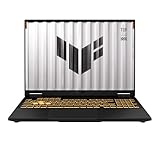
- READY FOR ANYTHING – Dive headfirst into gaming on Windows 11 powered by the Intel Core i5 Processor 13450HX and an NVIDIA GeForce RTX 5050 Laptop GPU with a Max TGP of 115W and NVIDIA Advanced Optimus.
- SUBTLE STYLING – The TUF Gaming F16 maintains its classic design, boasting a subtle embossed TUF logo on its sleek cover.
- IMMERSIVE VISUALS – The TUF Gaming F16’s FHD+ 165Hz display with 100% sRGB color draws you into the action. Adaptive-Sync technology reduces lag, minimizes stuttering, and eliminates visual tearing for ultra-smooth gameplay.
- MILITARY GRADE DURABILITY – As a TUF gaming machine, the F16 has been rigorously tested to meet Military Grade testing standards, MIL-STD-810H. Rest easy knowing this laptop will operate at peak performance in harsh conditions.
- EFFICIENT COOLING – Equipped with 2nd Gen Arc Flow Fans, full-width heatsink, and full-width vent, the TUF Gaming F16 optimizes cooling performance without extra noise.
How should you compare the key i5 alternatives?
| Comparison | Choose the first option when | Choose the second option when |
|---|---|---|
| 14600K vs 13600K | You want the fastest mainstream i5 tier and the price gap is small. | The 13600K discount can fund a better GPU, cooler, or SSD. |
| 14600K vs 14500 | You want high-refresh gaming or plan to overclock. | You prefer a locked, simpler system and value lower cooling demands. |
| 14500 vs 14400F | You stream, encode, compile, or need an iGPU. | You have a discrete GPU and the 14400F is substantially cheaper. |
| 14400F vs 13400F | The price difference is small. | The 13400F is materially cheaper and the system is GPU-limited. |
| 12600K/KF vs 13400F | The 12600K/KF is discounted and you can cool a 125 W unlocked chip. | You want a simpler 65 W-class build or the 13400F bundle is cheaper. |
| 12400F vs 14400F | The goal is the lowest-cost gaming platform. | The 14400F costs only a little more and the extra E-cores suit multitasking. |
| 12400F vs 12600KF | You want lower cooling demands and a basic six-core gaming system. | The 12600KF is close in price and you want four E-cores and an unlocked chip. |
Is upgrading to a 14600K from an existing LGA1700 CPU worthwhile?
Upgrading from a Core i5-12400-class processor to a 14600K can make sense for high-refresh gaming, CPU-heavy games, or multicore workloads, but the motherboard VRM and cooler must be checked first.
Upgrading from a Core i5-13400F or 14400F to a 14600K usually produces a smaller gaming improvement than buyers expect, particularly at 1440p or 4K. The upgrade is more defensible when the current system runs CPU-heavy software, struggles to maintain high frame-time consistency, or already has a suitable board and cooler.
Upgrading from a Core i5-12600K to a 13600K or 14600K is most defensible for CPU-heavy games, high-refresh gaming, and multicore workloads. From an older LGA1200 or earlier platform, add the price of a motherboard, memory, cooler, and CPU; a new platform may be more rational than an LGA1700 upgrade.
Do these 3 things before closing this tab:
1Clear out junk files and repair common Windows errors2Scan for outdated or missing drivers - takes under a minute3Repair Windows errors before they cause bigger problemsWhen should you choose AMD or Intel Core Ultra 5 instead?
Choose an AMD AM5 system when a new motherboard and memory are required and the complete platform offers better upgrade economics than discounted LGA1700. Choose an AMD X3D gaming processor when maximum gaming performance is more important than staying within the Core i5 category.
Consider Intel Core Ultra 5 when you want a newer Intel desktop platform rather than a mature LGA1700 platform. Core Ultra 5 is an alternative category, not an i5 model, so direct comparisons should use complete platform price and tested gaming performance rather than the product name alone.
Used Core i5-12400F, 12600K, and 12600KF processors can offer good value when an existing LGA1700 motherboard and DDR4 memory are available. Verify the seller, return policy, warranty, CPU condition, and whether the processor is boxed retail or tray/OEM. Current US Newegg listings demonstrate that inventory can include marketplace offers with varying conditions; check the seller and listing details rather than assuming every listing has the same warranty.
How should you check price before buying?
Do not use launch MSRP as a 2026 value verdict. Compare the complete CPU-plus-platform cost, including the motherboard, cooler, RAM, and discrete GPU requirement for F and KF models. A discounted 13600K can beat a 14600K, and a cheap 12600K can beat a 14400F.
What’s actually slowing this PC down?
Pick the symptom - the matching free tool is one click away.
Retailer signals are not interchangeable. Tom’s Hardware lists an approximately $300 reference price for the 14600K in its 2026 hierarchy, while TechSpot displayed a $246 price signal dated June 28, 2026; neither figure should be presented as a guaranteed live price. Prices can also reflect bundles, open-box inventory, marketplace sellers, regional promotions, or tray processors. US shoppers can compare CPU-and-motherboard promotions through Micro Center’s Intel processor and build page, but availability depends on store location and date.
| Buying situation | First CPUs to check | What makes the deal good | What should make you skip it |
|---|---|---|---|
| High-refresh gaming and productivity | 14600K/KF, 13600K/KF | CPU, cooler, and board remain reasonably priced. | The CPU premium forces a weaker GPU or insufficient cooler. |
| Mainstream new build | 14500, 14400/F, 13400/F | Locked chip plus board costs less than a high-end platform. | Price approaches a 14600K or newer competing platform. |
| Budget discrete-GPU build | 12400F, 12600KF | Existing DDR4/LGA1700 parts reduce total cost. | A new board and RAM make the platform nearly as expensive as AM5. |
| No discrete GPU or troubleshooting priority | 12400, 13400, 14400, 14500, 14600K | Integrated graphics has real practical value. | The non-F premium is large and a reliable discrete GPU is already available. |
Final recommendations
- Best overall: Core i5-14600K, provided the CPU, cooler, and motherboard fit the budget.
- Best performance without an iGPU: Core i5-14600KF, if a discrete GPU is guaranteed.
- Best unlocked value: Core i5-13600K or 13600KF when discounted below the 14600K.
- Best locked all-rounder: Core i5-14500 for gaming plus streaming and productivity.
- Best mainstream value: Core i5-14400F, but only when its price beats a discounted 12600K or 13400F on total platform cost.
- Best budget gaming CPU: Core i5-12400F for an inexpensive discrete-GPU system.
- Best budget i5 with graphics: Core i5-12400 when troubleshooting and display output matter.
- Best cheap older bargain: Core i5-12600K or 12600KF when clearance or used pricing is substantially lower.
- Best alternative decision: compare the full LGA1700 build against AMD AM5 and Intel Core Ultra 5 whenever a new motherboard and RAM are required.
Frequently Asked Questions
Do F and KF Intel Core i5 processors need a graphics card?
Yes. Intel Core i5 processors with the F or KF suffix have no integrated graphics and require a discrete graphics card for display output. A non-F model is preferable for troubleshooting or temporary operation without a GPU.
Is the Core i5-14600K better than the Core i5-13600K for gaming?
The Core i5-14600K is generally faster in the cited gaming hierarchy, but the difference is small enough that a discounted Core i5-13600K can be the better purchase. Compare the complete CPU, cooler, motherboard, and memory cost.
Can an LGA1700 motherboard use DDR4 and DDR5?
A particular LGA1700 motherboard supports either DDR4 or DDR5, not both. Check the exact motherboard model before buying memory because DDR4 and DDR5 modules are not interchangeable.
Is the Core i5-12400F still good for gaming in 2026?
Yes, the Core i5-12400F remains suitable for many budget gaming systems, particularly GPU-limited 1440p builds. The Core i5-12600K, 13400F, or 14400F becomes more attractive when the price difference is small or when heavier multitasking is important.
Should you buy a Core i5 or Intel Core Ultra 5 in 2026?
Core Ultra 5 is a newer Intel product category, while this list covers desktop Core i5 processors primarily using LGA1700. Compare complete platform cost, motherboard features, memory, upgrade options, and tested gaming performance rather than choosing by the i5 or Ultra 5 name alone.
The Bottom Line
The Core i5-14600K is the safest top recommendation, but the Core i5-13600K, 12600K, 14400F, and 12400F can deliver better value when their total platform cost is lower. Buy the fastest processor your GPU, cooler, motherboard, RAM, and budget can support—not simply the newest model number.
Quick Recap
Product prices and availability are accurate as of the date/time indicated and are subject to change. Any price and availability information displayed on Amazon at the time of purchase will apply.

