
Outdated Drivers Are Slowing You Down
One free scan finds every outdated or missing driver and matches the right update for your exact hardware.Free scan · exact hardware matchPC Slower Than It Used to Be?
A free scan shows the junk files, broken settings and background clutter dragging Windows down - then fixes them in one click.Free scan · Windows 10 & 11iTechGuides is reader-supported. When you buy through links on our site, we may earn an affiliate commission. As an Amazon Associate I earn from qualifying purchases. Learn more
For most small businesses in India, Cashfree Payments is the best cost-sensitive choice in 2026, while Razorpay is the strongest all-round ecosystem. PayU suits broader payment infrastructure, PhonePe suits eligible UPI-led merchants, and Instamojo suits freelancers and simple payment links. The right choice depends on fees, settlement, approval, integrations, recurring billing, and customer geography.
The recommendations below use provider pricing and product information available on August 16–18, 2026. Payment-gateway rates, promotional offers, eligibility rules, settlement cycles, and restricted-business policies can change, so obtain the merchant-specific terms before integrating or switching providers.
Key takeaways
- Cashfree Payments is the strongest current value candidate for many UPI-heavy Indian small businesses, with a provider-advertised 0% promotional domestic offer for eligible merchants up to ₹20 lakh monthly GMV until March 31, 2027.
- Razorpay advertises a standard platform fee of 2% plus GST and is usually the better choice when payment links, subscriptions, APIs, integrations, and broader business tools matter more than the lowest headline rate.
- PayU publicly lists 2% for several domestic payment modes, 3% for listed international, EMI, American Express, and Diners transactions, plus 18% GST, with standard settlement stated as T+2.
- PhonePe Payment Gateway displays 1.99% and promotional signup messaging, but merchants must confirm eligibility, duration, payment-mode coverage, caps, settlement, and post-promotion pricing.
- A payment gateway is not automatically available after signup: approval can depend on business documents, website policies, transaction category, underwriting, and risk review.
- Businesses that cannot tolerate checkout downtime may need a primary and backup gateway, but two providers increase integration, refund, webhook, reporting, and reconciliation work.
Quick comparison: which payment gateway is best for your business?
There is no universal best payment gateway in India. Cashfree is the leading cost-sensitive shortlist option, Razorpay is the strongest general-purpose ecosystem, and PayU is a broader infrastructure choice. The remaining providers become more attractive for particular business models, payment mixes, or scale requirements.
| Provider | Best for | Domestic pricing signal | International pricing signal | Settlement signal | Links and integrations | Main caveat |
|---|---|---|---|---|---|---|
| Cashfree Payments | UPI-heavy small businesses and D2C | 0% promotional offer for eligible merchants up to ₹20 lakh monthly GMV; standard rate shown as 1.95% | 2.99% shown for international cards | T+1 domestic; T+2 INR international stated | Payment links, forms, APIs, plugins, recurring payments, payouts | Offer has caps, conditions, and an expiry date |
| Razorpay | Startups, D2C, SaaS, links, subscriptions | 2% plus GST; 90-day introductory offer shown | Compare separately by eligibility and settlement | Instant settlement available as a product; fee and eligibility require checking | Payment links, pages, buttons, subscriptions, 30+ platform integrations | May cost more than a UPI-focused offer |
| PayU | Broad payment coverage and growing businesses | 2% for listed domestic modes; UPI varies by category and volume | 3% for listed international, EMI, Amex, and Diners transactions | Standard T+2 | APIs, SDKs, plugins, links, subscriptions, split settlements | More breadth and sales-led complexity |
| PhonePe Payment Gateway | Eligible UPI-led merchants | 1.99% displayed with promotional signup messaging | Confirm separately | Confirm in merchant terms | APIs, SDKs, plugins | Do not treat promotion as a permanent universal rate |
| Paytm Payment Gateway | Domestic businesses and familiar Indian payment methods | Quote or onboarding dependent in the available information | Confirm separately | Confirm for business category | 100+ payment methods claimed; APIs, SDKs, Shopify, WooCommerce, Magento plugins | Do not confuse Paytm Payment Gateway with Paytm Payments Bank |
| Easebuzz | MSMEs, education, services, forms, and invoicing | Confirm current category-specific pricing | Confirm separately | Confirm directly | Payment links, forms, collections, payouts | Assisted onboarding and support need verification |
| Instamojo | Freelancers, creators, and lightweight stores | 2% + ₹3 + GST for physical goods; 5% + ₹3 + GST for digital goods | Confirm separately | Faster-payout products may be available | Links, smart pages, buttons, WooCommerce and Magento integrations | Fixed ₹3 fee hurts small orders; digital goods rate is higher |
| CCAvenue | Established and internationally oriented merchants | Current quote required | Broad coverage is a positioning strength; quote required | Confirm current cycle | Long-standing domestic and international coverage | Do not rely on historical pricing |
| Pine Labs Online Payments | Omnichannel and larger retailers | Quote required | Quote required | Confirm directly | Online, offline, POS, and enterprise workflows | May be excessive for a tiny online seller |
| BillDesk | Institutional, billing-heavy, and recurring collections | Quote or enterprise onboarding | Confirm separately | Confirm directly | Billing, education, utilities, insurance, and memberships | Less self-serve than a small D2C gateway |
| Juspay | Multi-gateway orchestration and high-volume technology teams | Commercial negotiation | Depends on underlying providers | Depends on underlying providers | Routing, retries, checkout optimisation, and orchestration | Not usually the first plug-and-play gateway |
| Stripe India | Eligible international SaaS and developer-led businesses | Not the default UPI-first option | International API ecosystem; eligibility and settlement require checking | Confirm currency and export settlement | Developer-first APIs and international tooling | Indian business-model and onboarding eligibility can be restrictive |
What is a payment gateway, and how is it different from an aggregator?
A payment gateway is technology that securely passes payment information between a customer, merchant, bank, card network, UPI system, and payment processor. A payment aggregator is a regulated intermediary that enables merchants to accept payments and receive settlement without each merchant building separate acquiring relationships.
#1 Best Overall

- USB Magnetic Card Reader Credit Card Reader,Memory Chip Card Reader Contactless NFC Chip Card Reader.Attention: it's magnetic carder read only! not encoder!
- Support to read magnetic card(no writting function) all 3 tracks, support to read SLE4442 chip card, Contactless NFC Chip Card,CPU chip card(APDU command is required for deep development).
- 2 lights on when connected, green light flashing when swiping.Work both as keyboard emulator(active mode/auto-reading mode) and support read by software(passive mode/HID mode).
- 3 Reading Modes: Two-way Swipe Magnetic Card Reader.Insertable Chip-reading Card Reader.Left side Contactless NFC Chip Card Reader( Turn on the left switch).
- The card reader is widely used for membership system, check-in checkout system, installed with KIOSK machine to read write card ect. If you have any question, feel free to contact our support team for technical support, we're always ready for you!
The terms are often used interchangeably in marketing, but the product roles differ:
- Payment gateway: the checkout, tokenisation, API, SDK, redirect, and transaction-processing technology.
- Payment aggregator: the intermediary that facilitates merchant acceptance, underwriting, collection, and settlement.
- Payment link or payment page: a no-code collection method. A payment link is often a feature of a gateway or aggregator, not a completely separate payment system.
- Payment orchestration: software that routes transactions across multiple gateways, applies retry logic, and can switch providers when a route fails.
- Merchant or settlement account: the bank account to which approved funds are ultimately paid.
Juspay is therefore not a direct like-for-like replacement for every merchant-facing gateway. A technically mature business may use orchestration above Cashfree, Razorpay, PayU, or another processor, while a new seller may need only a hosted checkout or payment link.
India’s regulatory framework is relevant to this distinction. The Reserve Bank of India’s payment-aggregator and payment-gateway material should be consulted when a business needs to understand the regulated roles and obligations involved.
Which payment methods matter for Indian businesses in 2026?
Most Indian online businesses should compare UPI Intent, domestic cards, net banking, payment links, refunds, and reconciliation first. The right secondary methods depend on customer profile and business model.
| Payment method or capability | Most relevant to | What to verify |
|---|---|---|
| UPI Intent | Mobile-first domestic checkout | Android experience, redirect failures, app compatibility, and fallback flow |
| UPI Collect | Specific collection workflows where still supported | Current support for the use case and regulatory or provider restrictions |
| RuPay credit card on UPI | Merchants whose customers use credit-on-UPI | Activation, pricing, and merchant-category eligibility |
| Domestic debit and credit cards | General e-commerce and services | Visa, Mastercard, RuPay, tokenisation, 3-D Secure, and failure handling |
| International cards | Exporters, SaaS, tourism, and global services | Underwriting, countries, FX, currency settlement, documentation, and risk rules |
| Net banking | High-value domestic orders and some institutional buyers | Bank coverage and payment-mode pricing |
| Wallets | Customers with stored balances | Supported wallets, fees, and refund behaviour |
| EMI and BNPL | Higher-value products and education | Issuer coverage, merchant-category rules, and higher pricing |
| Payment links and QR | Freelancers, WhatsApp sellers, field sales, and services | Expiry, reminders, partial payments, reconciliation, and refund controls |
| Recurring cards and UPI Autopay | SaaS, memberships, subscriptions, and instalments | Mandate creation, notifications, retries, cancellation, pause, and failed-renewal recovery |
| e-NACH | Some recurring and institutional collections | Mandate workflow, approval rates, and business-category eligibility |
| Split settlements and payouts | Marketplaces and platforms | Seller onboarding, KYC, split rules, refunds, reserves, and vendor payouts |
No provider supports every method for every merchant. Payment modes can depend on underwriting, product activation, business category, transaction volume, technical integration, and regulatory requirements.
How much does a payment gateway really cost?
The cheapest payment gateway is the provider with the lowest total cost for the merchant’s actual payment mix, not necessarily the provider with the lowest advertised percentage. A practical calculation is:
Total payment cost = transaction fee
+ GST on provider fee
+ payment-method surcharge
+ international-card fee
+ currency-conversion or FX spread
+ refund fee, if applicable
+ chargeback fee, if applicable
+ instant-settlement fee
+ payment-link or subscription-product fee
+ setup fee or AMC
+ engineering and reconciliation cost
Always ask whether a quoted rate is before GST, whether UPI and cards have different rates, whether international cards are separate, and whether Amex, Diners, EMI, BNPL, or RuPay credit-on-UPI are priced differently. Ask whether refunds return the original gateway fee, whether instant settlement costs extra, and whether custom pricing requires a volume threshold.
Recommended Free Tools
Published pricing signals to compare
| Provider | Published signal | Important qualification |
|---|---|---|
| Cashfree | 0% promotional domestic offer for eligible transactions up to ₹20 lakh monthly GMV until March 31, 2027; standard domestic rate shown as 1.95% | Offer conditions, caps, UPI mix, validity, and post-offer price apply. See Cashfree payment-gateway charges. |
| Razorpay | 2% platform fee plus GST; 0% introductory offer for the first 90 days is shown | Introductory terms and payment-mode or product-specific charges apply. See Razorpay pricing. |
| PayU | 2% for listed domestic Visa, Mastercard, net banking, BNPL, and wallet transactions; 3% for listed international, Amex, Diners, and EMI transactions; 18% GST | PayU states that UPI varies by merchant category and volume. See PayU pricing. |
| PhonePe | 1.99% displayed with free promotional signup messaging | Confirm promotion eligibility, validity, payment-mode coverage, and post-promotion pricing. See PhonePe Payment Gateway. |
| Instamojo | 2% + ₹3 + GST for physical goods; 5% + ₹3 + GST for digital goods | The ₹3 fixed component matters greatly for low-ticket orders. See Instamojo payment-gateway pricing. |
What would ₹1 lakh of domestic volume cost?
The following illustration compares published rates, not a guaranteed merchant invoice. It assumes all transactions qualify for the stated rate and excludes refunds, chargebacks, instant settlement, payment-mode surcharges, and any promotional conditions not shown in the simple calculation.
| Provider or rate | Provider fee on ₹1,00,000 | GST on provider fee | Illustrative total |
|---|---|---|---|
| Cashfree eligible promotional offer | ₹0 | ₹0 | ₹0, subject to offer terms |
| Cashfree standard 1.95% | ₹1,950 | ₹351 | ₹2,301 |
| Razorpay 2% | ₹2,000 | ₹360 | ₹2,360 |
| PayU listed 2% domestic rate | ₹2,000 | ₹360 | ₹2,360 |
| Instamojo physical goods, assuming 100 orders | ₹2,300 including ₹300 fixed fees | ₹414 | ₹2,714 |
| Instamojo digital goods, assuming 100 orders | ₹5,300 including ₹300 fixed fees | ₹954 | ₹6,254 |
The Instamojo examples assume 100 orders because the published ₹3 charge is transaction-linked. A different order count changes the result. The illustration also shows why average order value matters more than percentage alone for small-ticket digital products.
What changes at ₹10 lakh of monthly volume?
At ₹10 lakh, the same simplified assumptions produce ₹23,010 for Cashfree’s 1.95% standard rate and ₹23,600 for a 2% rate such as the published Razorpay headline or listed PayU domestic rate, including 18% GST. Cashfree’s advertised eligible promotional offer could show ₹0 in this simplified comparison because ₹10 lakh is below the stated ₹20 lakh monthly GMV cap, but the merchant must satisfy every offer condition and confirm that the offer applies to the transaction mix.
At higher volume, request a written quote. A small percentage difference, settlement reserve, refund policy, or reconciliation problem can outweigh the nominal MDR difference.
Which payment gateway should each provider type choose?
1. Cashfree Payments: best current value candidate
Choose Cashfree if the business is UPI-heavy, cost-sensitive, wants a stated T+1 domestic settlement cycle, or may later need payment links, forms, recurring payments, payouts, or international collections.
Rank #2

- MSR90 is a USB emulation keyboard interface that not need any driver or software,USB simply plug and play
- Reads up to 3 tracks of information,can reads ISO7811, AAMVA, CA DMV and most other card data formats
- Threaded inserts for mounting. LED indicator, green light is on when connecting,green light blinks when cards swiped
- Bi-directional swipe reading, superior reading of high jitter, scratched, and worn magstripe cards, reliable for over 1,000,000 card swipes
- Configuration software makes configuration changes easy,works with: Windows OS and Mac OS
Cashfree’s current pricing page advertises a limited-period 0% promotional rate for eligible domestic transactions up to ₹20 lakh monthly GMV until March 31, 2027. The same page shows a standard domestic rate of 1.95%, international-card pricing of 2.99%, zero setup fee, zero AMC, and default T+1 domestic settlement. These are provider-reported terms, not a permanent promise to every merchant.
Main caution: the promotion has eligibility conditions, a cap, an expiry date, and UPI-mix requirements. Confirm the exact offer in writing, including the post-promotion rate and treatment of non-UPI payments. International acceptance can also require additional underwriting and documents.
See the official Cashfree pricing page before signing up.
2. Razorpay: best all-round ecosystem
Choose Razorpay if the business wants one mature, general-purpose ecosystem for a startup, D2C store, SaaS product, consultant, payment-link workflow, subscription, or custom API integration.
Razorpay’s pricing page shows a standard platform fee of 2% plus GST and a 0% introductory offer for the first 90 days subject to its conditions. Razorpay also lists payment links, payment pages, payment buttons, subscriptions, instant settlement, international payments, cards, UPI, wallets, EMIs, pay-later methods, and net banking. The pricing page states 30+ platform integrations and links to developer resources.
Main caution: a 2% headline rate is not always the cheapest option for a UPI-heavy merchant. Instant settlement can add cost, and international pricing, approval, and settlement should be assessed separately.
See Razorpay’s current pricing and product page.
3. PayU: best for broad payment infrastructure
Choose PayU if the business needs broad payment-mode coverage, EMI or BNPL options, subscriptions, split settlements, risk tools, or a platform that can support a growing e-commerce or education operation.
Quick wins for a faster PC:
Repair Windows errors before they cause bigger problemsFix Now →Fix the driver behind crashes, sound loss and screen glitchesFind Drivers →Clear out junk files and repair common Windows errorsFree Scan →PayU publicly lists 2% for domestic Visa, Mastercard, net banking, BNPL, and wallet transactions, and 3% for international transactions, American Express, Diners, and EMI. PayU lists 18% GST, no setup fee, APIs, SDKs, plugins, no-code payment links, subscriptions, split settlements, refunds, and payment-risk tools. PayU states standard settlement as T+2 and says priority or same-day settlement may be available for eligible businesses.
Main caution: the 2% domestic headline does not necessarily apply to UPI, because PayU states that UPI pricing varies by merchant category and volume. Custom pricing requires a sales conversation.
Review PayU’s official pricing information.
4. PhonePe Payment Gateway: best UPI-led promotional alternative
Choose PhonePe if the business is strongly domestic and UPI-led, customers recognise the PhonePe brand, and the merchant qualifies for a commercially attractive current offer.
The public PhonePe Payment Gateway page currently displays 1.99%, free promotional signup messaging, zero setup fee, and zero hidden charges, along with developer APIs, SDKs, and plugins. PhonePe’s consumer familiarity can be useful at checkout, but consumer brand recognition does not prove better merchant approval, support, settlement, or dispute performance.
Do these 3 things before closing this tab:
1Repair Windows errors before they cause bigger problems2Fix the driver behind crashes, sound loss and screen glitches3Clear out junk files and repair common Windows errorsMain caution: do not describe the promotion as permanent 0% pricing. Confirm the offer’s eligibility, duration, cap, payment modes, settlement cycle, refund treatment, international-card pricing, and post-promotion rate.
Rank #3

- USB interface, keyboard emulation, no need to install software to read, configuration software for changing settings available.
- Read data from all 3 tracks, high and low coercivity cards, ISO7811, AAMVA, CA DMV and most magnetic card data formats.
- Work on Windows, Mac and other USB capable systems. Work with TXT, notepad, Word, Excel, POS systems and son on.
- Compact size, with 145cm USB cord, two 3mm-diameter screw holes for fixing at the bottom, a LED indicator light
- Perfect for POS, Banking, Loyalty, Access Control, ID verification and other applications.
Check the current PhonePe Payment Gateway terms.
5. Paytm Payment Gateway: best for familiar domestic tooling
Choose Paytm if the business wants broad domestic payment support, Paytm merchant familiarity, and plugins for common commerce platforms.
Paytm advertises more than 100 payment methods, including UPI, cards, net banking, EMI, and Paytm Postpaid. Paytm also advertises digital onboarding for eligible businesses, APIs, SDKs, and plugins for Shopify, WooCommerce, Magento, and other platforms.
Main caution: obtain current merchant pricing through onboarding or sales rather than relying on old comparison articles. Confirm settlement and category eligibility. Paytm Payment Gateway must be kept distinct from Paytm Payments Bank and its separate products or regulatory status. Start with the official Paytm Payment Gateway page.
6. Easebuzz: best for MSME collections and assisted workflows
Choose Easebuzz if the business is a service provider, coach, educator, event organiser, or MSME that needs payment links, forms, invoicing, collections, or payouts more than a deeply customised checkout.
Easebuzz’s positioning fits businesses that collect through links and forms or need a more assisted operational workflow. Review its current pricing by merchant category and payment mode rather than repeating an approximate rate. Confirm support hours, settlement, refunds, onboarding time, and any product-specific charges through the Easebuzz pricing page.
7. Instamojo: best for freelancers, creators, and simple selling
Choose Instamojo if the business sells through payment links, smart pages, buttons, or a lightweight online store and does not need a large enterprise integration.
Instamojo states 2% + ₹3 + GST for physical goods and 5% + ₹3 + GST for digital goods. Instamojo also offers payment links, smart pages, payment buttons, faster-payout products, and integrations including WooCommerce and Magento.
The Tool Desk
Outbyte PC Repair FREEClear out junk files and repair common Windows errorsFree Scan →Outbyte Driver Updater FREEScan for outdated or missing drivers - takes under a minuteDriver Scan →Main caution: the fixed ₹3 component is disproportionately expensive on small orders, while the 5% digital-goods rate can be expensive for courses, downloads, and other digital products. Compare effective cost at the actual average order value on the Instamojo payment-gateway page.
8. CCAvenue: best for established international merchants
Choose CCAvenue if the business is established, needs long-standing domestic and international payment coverage, or values a traditional provider relationship.
CCAvenue is a credible candidate for multiple payment methods and international customers. Current public pricing was not sufficiently verified in the available research, so do not use historical setup fees or rates. Ask for current settlement cycles, annual fees, international-card pricing, refund treatment, and onboarding requirements at CCAvenue’s official site.
9. Pine Labs Online Payments: best for larger omnichannel merchants
Choose Pine Labs if the business operates online and offline, needs enterprise payment acceptance or POS relationships, or expects to build a broader omnichannel commerce operation.
Free tools Windows power users keep installed
One-click scans. No signup required.
Pine Labs Online Payments is more naturally suited to larger retailers and omnichannel merchants than to a freelancer collecting occasional payments. Small-business pricing, onboarding, settlement, and support should be treated as quote-required. Review Pine Labs Online Payments.
Rank #4

- Get your money as soon as the next business day.
- Get set up quickly with no long-term commitments. Download the Square Point of Sale app for free, create an account, and start taking payments anywhere.
- Run your business all in one place with the free Square Point of Sale app. Track your sales, manage inventory, accept tips, send receipts digitally, and more.
- Works with Apple devices with a Lightning connector.
10. BillDesk: best for institutional and billing-heavy collections
Choose BillDesk if the organisation handles education, utilities, insurance, memberships, institutional billing, or complex recurring collections with substantial reconciliation needs.
BillDesk may be a strong enterprise relationship but is not necessarily the simplest first gateway for a small D2C store. Confirm self-serve availability, pricing, plugins, APIs, support model, settlement, and time to go live at BillDesk’s official site.
11. Juspay: best for payment orchestration
Choose Juspay if the company is technically mature, processes meaningful volume, uses multiple gateways, and needs routing, retries, checkout optimisation, or reduced dependence on a single processor.
What’s actually slowing this PC down?
Pick the symptom - the matching free tool is one click away.
Orchestration software can sit above Cashfree, Razorpay, PayU, or other underlying providers. Orchestration can improve routing and resilience, but it adds commercial, engineering, monitoring, webhook, and reconciliation work. A new small business usually should start with a conventional merchant-facing gateway instead of making Juspay its first integration. Learn about the model at Juspay’s official site.
12. Stripe India: best for eligible international and developer-led businesses
Choose Stripe India if the business is an eligible international SaaS, software exporter, or developer-led company that needs Stripe’s API ecosystem and global payment tooling.
Stripe should not automatically outrank Indian providers for a domestic UPI-first store. Verify Indian onboarding eligibility, domestic UPI requirements, supported business models, export documentation, settlement currency, tax treatment, FX costs, country support, and whether the business actually needs a gateway, a cross-border payments provider, or a merchant-of-record service. Start with Stripe India.
Which gateway is best for each small-business model?
| Business type | First providers to compare | Why |
|---|---|---|
| Freelancer or consultant | Instamojo, Razorpay Payment Links, Easebuzz | Links, simple collection, invoices, and low technical overhead |
| Instagram or WhatsApp seller | Instamojo, Cashfree, Razorpay | Payment links, QR or mobile checkout, and basic reconciliation |
| Small UPI-heavy D2C brand | Cashfree, PhonePe, Razorpay | UPI economics, mobile checkout, cards, and settlement |
| Shopify store | Cashfree, Razorpay, PayU, Paytm | Plugin availability, hosted checkout, refunds, and order reconciliation |
| WooCommerce store | Cashfree, Razorpay, PayU, Instamojo | Plugins, webhooks, refunds, and custom checkout options |
| Digital products or courses | Razorpay, Cashfree, Easebuzz; compare Instamojo carefully | Links, subscriptions, refunds, and the higher digital-goods fee risk |
| SaaS or membership business | Razorpay, Cashfree, PayU, Stripe India if eligible | UPI Autopay, card tokenisation, retries, mandates, and international needs |
| Marketplace | PayU, Cashfree, Razorpay, Juspay at scale | Split settlements, seller KYC, payouts, routing, and reconciliation |
| International service provider | Cashfree, Razorpay, PayU, CCAvenue, Stripe India if eligible | International cards, FX, export documents, and currency settlement |
| Retailer with online and offline sales | Pine Labs, Razorpay, Paytm, Cashfree | Omnichannel acceptance, POS, online checkout, and unified reporting |
How fast will payment-gateway settlements arrive?
A settlement cycle describes when approved funds are transferred, not when a customer completes checkout. T+0 usually means same-day or near-real-time settlement subject to cutoffs and eligibility; T+1 generally means the next eligible business day; T+2 means two eligible settlement days; T+7 represents materially slower cash conversion for some international flows.
PC Slower Than It Used to Be?
A free scan shows the junk files, broken settings and background clutter dragging Windows down - then fixes them in one click.Free scan · Windows 10 & 11Outdated Drivers Are Slowing You Down
One free scan finds every outdated or missing driver and matches the right update for your exact hardware.Free scan · exact hardware match| Settlement label | Practical meaning | Questions to ask |
|---|---|---|
| T+0 or instant | Same day or near-real-time when eligible | What is the fee, cutoff, reserve, minimum volume, and payment-mode limitation? |
| T+1 | Next eligible business day | How are weekends, bank holidays, first settlement, refunds, and risk holds handled? |
| T+2 | Two eligible settlement days | Does the cycle differ for UPI, cards, EMI, wallets, and international transactions? |
| T+7 or extended hold | Slower cash conversion, often for selected risk or international flows | What triggers the reserve, how long can it last, and what evidence releases funds? |
Cashfree’s public comparison states T+1 domestic settlement and T+2 INR settlement for international payments. PayU states standard T+2 and says priority or same-day settlement may be available to eligible businesses. Bank holidays, cutoffs, risk review, reserves, first-settlement delays, international-card processing, export documentation, and merchant category can all change the practical date.
What documents are needed for onboarding?
Payment-gateway onboarding commonly asks for a PAN, bank-account details, a cancelled cheque or bank statement, proprietor or company proof, contact information, and a description of the products or services. GST details may apply depending on the business and provider, but GST registration should not be assumed to be universally mandatory for every proprietor, freelancer, company, or nonprofit.
Online merchants should generally prepare:
- PAN and identity or business-ownership documents
- Bank-account proof matching the applying business
- GST details where applicable
- A live website or app, if required for the selected product
- Terms and conditions
- Refund and cancellation policy
- Privacy policy
- Shipping and delivery policy for e-commerce
- Product or service descriptions
- Importer Exporter Code and other export documents where relevant to international payments
Paytm advertises a 100% digital onboarding journey for eligible businesses and plugins for Shopify, WooCommerce, Magento, and other platforms. Eligibility still depends on the merchant’s category and documentation; digital onboarding does not mean automatic approval. Review the Paytm merchant onboarding information.
Independent reader supportYour contribution helps us test, update, and keep practical guides available for everyone.Which integrations should you compare?
Choose the least complex integration that meets the business requirement. A payment link or hosted checkout is often enough for an early freelancer or service business; a custom API, SDK, webhooks, recurring-payment APIs, and reconciliation exports matter more for SaaS, marketplaces, and high-volume e-commerce.
- Platforms: Shopify, WooCommerce, Magento, custom websites, Android, iOS, React Native, and Flutter.
- Checkout: hosted checkout for speed, embedded checkout for control, and API or SDK integration for custom flows.
- Operations: webhooks, refund APIs, settlement exports, reconciliation reports, accounting integrations, and dispute evidence.
- Advanced requirements: recurring-payment APIs, split settlements, seller onboarding, payouts, sandbox quality, and maintained plugins.
PayU advertises APIs, SDKs, plugins, and no-code tools. Razorpay lists 30+ platform integrations and developer documentation. The important question is not merely whether a plugin exists, but whether the plugin is maintained, exposes refund and webhook status, supports partial refunds, and reconciles gateway order IDs with the store’s order IDs.
Best Value
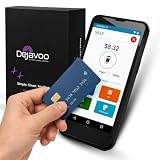
- Honest & Transparent Merchant Accounts: Brought to you by 8 Seconds Processing, a family-owned company dedicated to integrity, proven results, and zero bait-and-switch tactics. We provide seamless merchant onboarding, rapid payouts, and reliable payment infrastructure supported by our dedicated customer service team.
- Compact Payments In The Palm Of Your Hand: Driven by secure Dejavoo hardware and software technology, the P5 is an ergonomic, lightweight mPOS system designed for ultimate handheld portability. Perfect for delivery drivers, curbside pickup, line busting during peak hours, and compact retail setups.
- Integrated Barcode Scanning & Android OS: Run a highly efficient mobile checkout with a fast quad-core 2.0GHz processor running a secure Android operating system. Featuring an integrated barcode scanner, 1GB RAM, and 8GB ROM, this smart terminal allows your staff to manage inventory and transactions simultaneously on the go.
- Universal Tap, Chip, & Digital Wallets: Seamlessly accept all major payment brands and networks. The P5 features an integrated contactless NFC reader with full EMV certification and IC card capability, allowing customers to pay effortlessly via traditional chip cards, Apple Pay, Google Wallet, and Samsung Pay.
- Blazing Fast Hybrid Connectivity: Keep your mobile business moving without interruptions. The P5 is equipped with comprehensive Wi-Fi, 4G cellular network, and Bluetooth capabilities, ensuring an always-on connection to your payment gateway for lightning-fast authorizations anywhere your business takes you.
What happens when payments fail, refund, or become disputed?
Payment succeeds but the order is not created
- Create a pending order before sending the customer to checkout.
- Pass a unique merchant order ID and store the gateway transaction ID.
- Treat the server-side webhook or verified provider response as authoritative, not only the browser redirect.
- Make fulfillment idempotent so a repeated webhook cannot create two orders or shipments.
- Reconcile gateway transaction reports with bank settlement reports.
- Provide a support path for “money debited, order failed” cases.
Refunds
Compare full and partial refunds, refund status versus refund initiation, original-payment-method restrictions, settlement timing, refund failure handling, customer notifications, accounting treatment, and whether the gateway returns its original fee. A refund API that reports only “initiated” is not the same as a completed refund.
Chargebacks and disputes
A failed payment is not a chargeback. A chargeback is a customer or issuer dispute that can require evidence by a deadline. Maintain delivery proof, customer communication, invoice details, refund-policy visibility, fraud signals, and product access logs. Ask whether reserves or holds can apply and what evidence-submission workflow the provider offers.
Onboarding rejection or a later hold
Potential triggers include prohibited or restricted products, financial services, gaming or betting, adult or dating services, pharmaceuticals or supplements, crypto-related products, high-risk digital goods, unclear website policies, a mismatch between declared and actual activity, or missing ownership and bank documents. Read the provider’s restricted-business policy before committing engineering time.
How should recurring payments and international payments be evaluated?
Recurring billing should be compared on operational success, not only on the one-time transaction fee. Evaluate UPI Autopay, card tokenisation, mandate-registration success, renewal retries, customer notifications, failed-payment recovery, cancellation and pause flows, refund handling, and applicable limits or regulatory restrictions.
A gateway with a low one-time MDR can still be a poor SaaS choice if mandate creation or renewal recovery is weak. Razorpay, Cashfree, and PayU are the main shortlist candidates for subscriptions, but the merchant should test the complete mandate lifecycle in its own category.
International-card support also needs a narrower definition. A provider may accept an international card without offering foreign-currency settlement, cross-border payouts, every customer country, or approval for every product. Verify additional KYC, IEC or export documentation, purpose codes, FX spread, currency settlement, tax and invoicing treatment, country restrictions, and reserve rules. Stripe India is a specialist option for eligible international and developer-led businesses, not the default choice for a domestic UPI-first shop.
Should a small business use one gateway or two?
One gateway is simpler and usually sufficient for a new or low-volume business. A primary gateway plus a backup becomes reasonable when checkout downtime would materially harm revenue, international volume is meaningful, one provider has a narrow payment-method mix, the business runs high-sales events, or a risk review could temporarily interrupt collections.
Two gateways add API and plugin maintenance, routing logic, duplicate dashboards, refund complexity, webhook differences, separate settlement reports, and more difficult accounting. Start with one well-tested provider, then add a backup only when the resilience benefit exceeds the operational cost. Juspay can become relevant when a technically mature business needs routing across multiple providers.
How can you choose a gateway in 15 minutes?
- Estimate the payment mix: what percentage will be UPI, cards, net banking, wallets, EMI, BNPL, and international?
- Write down monthly GMV: promotions, caps, and custom pricing depend on volume.
- Calculate average order value: fixed charges matter much more on small orders.
- Identify customer geography: domestic UPI, international cards, foreign currencies, or a combination?
- Decide whether billing recurs: subscriptions need mandates, retries, notifications, and cancellation controls.
- Choose the collection surface: payment link, QR, hosted checkout, plugin, embedded checkout, or custom API.
- Check the platform: Shopify, WooCommerce, Magento, mobile app, or custom stack?
- Set a cash-flow requirement: T+1 may be enough; instant settlement may cost extra.
- Check category approval: read restricted-business terms and prepare policies before applying.
- Plan failure handling: test webhooks, duplicate notifications, refunds, partial refunds, chargebacks, and reconciliation.
- Ask for written commercial terms: include GST, all payment modes, international fees, refunds, chargebacks, settlement, reserves, AMC, and promotion expiry.
For a typical small Indian online business, a useful starting scorecard is 25% actual total cost, 15% UPI and card acceptance, 15% settlement predictability, 15% onboarding likelihood, 10% integrations, 10% refunds, disputes, and reconciliation, 5% recurring capability, and 5% support. Increase recurring capability to 20–25% for SaaS or memberships, and increase cross-border, FX, documentation, and international approval factors to 25–30% for international businesses.
Final recommendations by scenario
- Choose Cashfree if the business is a cost-sensitive, UPI-heavy Indian merchant and qualifies for the current promotional terms, or if T+1 domestic settlement and future payouts matter.
- Choose Razorpay if the business values ease, ecosystem depth, payment links, subscriptions, APIs, platform integrations, and broader startup tools.
- Choose PayU if broad payment infrastructure, EMI, BNPL, subscriptions, split settlements, risk tools, and custom pricing matter more than a simple self-serve setup.
- Choose PhonePe if the business is UPI-led and the merchant confirms that the current promotional offer genuinely applies to its category, volume, modes, and duration.
- Choose Paytm if familiar domestic payment methods, digital onboarding, and common commerce-platform plugins fit the business.
- Choose Easebuzz if assisted collections, payment links, forms, invoicing, education, or service workflows are central.
- Choose Instamojo if the business is a freelancer, creator, or simple seller; calculate the ₹3 fixed charge and the higher digital-goods rate before committing.
- Choose CCAvenue if an established merchant needs broad domestic and international coverage and is comfortable requesting a current quote.
- Choose Pine Labs or BillDesk if the business has omnichannel, institutional, billing-heavy, or enterprise requirements.
- Choose Juspay only when a technically mature business needs orchestration across multiple gateways.
- Choose Stripe India when an eligible international or developer-led business needs its global API ecosystem and has verified Indian settlement and documentation requirements.
Frequently Asked Questions
Is Cashfree cheaper than Razorpay for a small business in India?
Cashfree can be cheaper for an eligible merchant because Cashfree currently advertises a limited-period 0% domestic offer up to ₹20 lakh monthly GMV, while Razorpay shows a 2% platform fee plus GST. Cashfree’s offer has eligibility conditions, caps, a UPI-mix requirement, and an expiry date, so the merchant must compare written terms rather than assume permanent 0% pricing.
Is UPI free for Indian businesses?
Zero network MDR for some UPI transactions does not necessarily mean the payment gateway charges no platform fee. Merchants must ask whether the provider’s rate covers UPI, whether the rate is promotional, and whether GST, settlement, payment links, refunds, or other product charges still apply.
Do these 3 things before closing this tab:
1Fix the driver behind crashes, sound loss and screen glitches2Clear out junk files and repair common Windows errors3Scan for outdated or missing drivers - takes under a minuteWhich payment gateway is best for subscriptions in India?
Razorpay, Cashfree, and PayU are the main providers to compare for subscriptions, but the best choice depends on UPI Autopay, card tokenisation, mandate-registration success, renewal retries, failed-payment recovery, notifications, cancellation, refunds, and regulatory requirements.
Can a freelancer use a payment gateway without a website?
A freelancer can often start with a payment link or payment page rather than a custom website integration, subject to provider approval and documentation. Instamojo, Razorpay Payment Links, and Easebuzz are relevant options to compare for simple collection.
Should a small business integrate two payment gateways?
A small business should generally start with one gateway because two providers increase integration, refund, webhook, reporting, and reconciliation complexity. Add a backup when checkout downtime, international volume, high-sales events, payment-method coverage, or temporary risk holds make resilience worth the operational cost.
The Bottom Line
Bottom line: Start by comparing Cashfree and Razorpay. Pick Cashfree when the current offer, UPI mix, settlement, and total cost work for your business; pick Razorpay when ecosystem, integrations, payment links, subscriptions, and broader tools are more valuable. Add PayU for breadth and scale, PhonePe for a verified UPI-led promotion, Instamojo for lightweight selling, and Stripe, Juspay, BillDesk, Pine Labs, or CCAvenue only when their specialist strengths match the business.
What’s actually slowing this PC down?
Pick the symptom - the matching free tool is one click away.
Quick Recap
Product prices and availability are accurate as of the date/time indicated and are subject to change. Any price and availability information displayed on Amazon at the time of purchase will apply.

