
iTechGuides is reader-supported. When you buy through links on our site, we may earn an affiliate commission. As an Amazon Associate I earn from qualifying purchases. Learn more
An accessibility scanner can quickly flag potential problems in the HTML and rendered page it examines. It cannot tell you, by itself, whether a website is accessible or conforms to WCAG. The checks below are representative examples—not a verified checklist for a particular scanner. Tools differ in their rules, standards tags, exclusions, configuration, and the pages and states they can reach.
What does an accessibility scanner check?
Most automated checks examine a page’s rendered structure and properties for patterns associated with accessibility requirements. They can identify issues such as missing attributes, unnamed controls, or invalid markup. That makes a scan useful for finding potential barriers quickly, but a rule match is evidence to investigate—not a judgment about the page’s meaning or usability.
Playwright’s axe guidance notes that automated testing cannot detect every WCAG violation, and W3C says evaluation tools assist accessibility evaluation but cannot determine accessibility. A clean scan therefore means only that the selected rules found no violations in the content and state that were scanned. It is not proof that the page is accessible or conforms to WCAG. W3C’s guidance on selecting evaluation tools and Playwright’s accessibility testing documentation explain these limits.
Free tools Windows power users keep installed
One-click scans. No signup required.
12 representative checks—and what each one misses
These examples describe common classes of HTML and DOM rules. They are not a claim that every scanner runs all twelve. Check a particular tool’s current documentation before attributing a rule to it.
#1 Best Overall
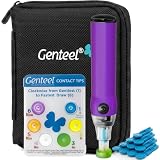
- Vacuum Technology - The Genteel lancing device is the world's only lancing device that uses vacuum technology to draw blood. Diabetes testing doesn't need to be painful.
- Avoid Pain Nerves – Genteel is designed with ultra-precise depth control using 6 levels of patented Contact Tips. Get the consistent amount of blood in seconds while avoiding pain nerves and giving a near painless experience.
- Does Not Include a Meter and Test Strips.
- Give Fingers a Break – Allows your fingers to have a break and test on the thenar area of your palm, which matches the fingers' blood sugar levels, in both steady and dynamic blood flow states for real-time readings.
- No Custom Lancets Required - We recommend our Butterfly Touch Lancets. You can also use widely available square-shaft lancets and any test strips or meter of your choice with our lancing device! Please note: meter and test strips not included. This product includes: lancing device, 6 contact tips, nozzle, pouch, contact card, sticker sheet, instructions, 10 butterfly touch lancets.
-
An image has an alt attribute
A scanner can flag an image with no
altattribute. It cannot determine whether the alternative text conveys the image’s purpose, or whether the image should instead be decorative with empty alternative text. Presence is not adequacy. IAAP’s Web Accessibility Specialist Body of Knowledge describes this distinction. -
A form control has an accessible name
Rules can find many controls with a missing or empty name. They cannot reliably decide whether a name clearly explains what to enter in the context of the task. A technically present label may still be confusing or too vague.
-
A button has an accessible name
An unnamed button can be flagged, but a non-empty name may still be misleading or inconsistent with the action a user sees. Whether “Submit” or “Continue” is informative depends on what happens next.
Do these 3 things before closing this tab:
1Scan for outdated or missing drivers - takes under a minute2Clear out junk files and repair common Windows errors3Fix the driver behind crashes, sound loss and screen glitchesSpecial offer. See more information about Outbyte and uninstall instructions. Please review EULA and Privacy policy.Rank #2
 HPUY ECMPro Universal ECM Motor Tester for Electronically Commutated Motors
- Easy Go/No-Go Testing:The HPUY ECMPRO ECM motor tester HVAC provides a simple, efficient Go/No-Go result for virtually all Electronically Commutated Motors (ECM) in systems, ensuring quick diagnostics without the need for batteries
- 24-Inch Leads for Accessibility: With 24-inch leads, the ECM motor tester allows for easy access in tight spaces, making it convenient for HVAC technicians to use on a variety of ECM motors
- Reliable Short Circuit Protection: Designed with built-in short circuit protection, this ECM tester ensures safe and reliable testing, preventing damage to your equipment and extending the tool's lifespan
- 24VAC Operation & Indicator Light: The ECM motor tester operates at 24VAC and features an indicator light for clear visibility during operation, making it an essential tool for diagnosing ECM motors in HVAC systems
- Durable and Lightweight: Weighing only 5.5 oz., the HPUY ECM tester is lightweight and easy to carry, making it perfect for on-the-job testing without added bulk
-
A link has discernible text
A rule can detect an empty link or one with no accessible name. It cannot always tell whether text such as “read more” identifies the destination, or whether an icon link makes its purpose clear in context.
-
Heading markup looks structurally plausible
A scanner can identify some heading-level patterns. It cannot establish whether a heading accurately describes the section that follows or whether the full outline helps people navigate the content.
-
The page declares a language
A rule can check whether a language attribute is present. It cannot confirm that the declared language matches the page’s content or that changes to another language within the page are marked accurately.
Rank #3
 UL Articulated Test, Bend Test Finger Accessibility Probe, Electric Shock Protection, 3.5mm Hinged Test Probe, UL Test Curved Finger, for Electrical, Industrial, Scientific, Laboratory
- 【Articulated Test Finger】Meets UL60335/UL476/UL1026/UL50762 standards for electrical safety testing. Simulates human finger articulation to verify accessibility to hazardous components during industrial equipment evaluations
- 【Precision Bend Test Probe Design】Total length 234mm with articulated bend sections (30/30/40mm configuration, 97mm effective test length). Features 78mm baffle width for standardized clearance verification
- 【Adjustable Articulated Finger Mechanism】Engineered joints allow 180° articulation to replicate natural finger movement. Locking mechanism maintains preset angles during pressure application (up to 30N force simulations)
- 【Durable Construction】Heat-treated articulated joints maintain structural integrity through repeated bending/straightening cycles. Steel paired with rugged polyethylene handle ensures long-term reliability
- 【Industrial Safety Testing Application】Validates protective barriers on machinery, appliances, and scientific equipment. Prevents accidental contact with live circuits or moving parts under IEC 61032 Clause B requirements
-
The document has a title
A scanner can find a missing or empty document title. It cannot judge whether the title distinguishes this page from others or helps users understand where they are.
Special offer. See more information about Outbyte and uninstall instructions. Please review EULA and Privacy policy. -
Landmarks and semantic regions are available
Rules can flag missing or malformed landmarks. They cannot establish whether those regions are usefully placed, correctly identify the content, or make navigation efficient.
-
Text color contrast meets a threshold
A rule may calculate contrast for foreground and background colors it can detect. Coverage may not account for every rendered state, image, overlay, or meaningful use of color. Verify the selected scanner’s scope rather than assuming it evaluates every visual case.
Rank #4
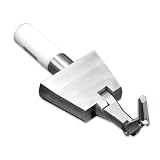 WTRYRN Articulated Test Finger Probe, UL Safety Testing Tool for Electrical Products, Accessibility Inspection Device for Hazardous Component Evaluation
- 【UL TEST FINGER PROBE】: Professional UL test finger probe designed for electrical safety inspection and accessibility testing. It helps check whether hazardous parts inside electrical equipment can be reached through openings.
- 【ARTICULATED BEND TEST FINGER】: Flexible joint structure simulates human finger movement for accurate testing. The articulated test finger probe helps evaluate protection against hazardous parts in electrical products.
- 【ELECTRICAL SAFETY ACCESSIBILITY TOOL】: Designed for household appliances, electronic devices, and electrical equipment safety inspections. Ideal for laboratories, manufacturers, and quality control testing.
- 【UL & IEC COMPLIANCE TESTING TOOL】: Used for UL and IEC related safety testing applications. This UL finger probe helps verify product protection requirements and accessibility performance.
- 【DURABLE DESIGN WITH INSULATED HANDLE】: Made with precision metal components and an insulated handle for stable use. A reliable safety test probe for repeated electrical inspection and compliance testing.
-
ARIA roles and attributes are structurally valid
A scanner can catch some invalid combinations or missing required attributes. Valid syntax does not show that a custom widget behaves correctly or that its chosen semantics are appropriate. W3C’s tool-selection guidance and the IAAP body of knowledge describe why automated checks need human interpretation.
-
Controls expose names, roles, and values
Rules can find some missing programmatic properties. They cannot prove that assistive technologies announce changes usefully or that a control’s accessible name matches what a user expects. Interoperability also depends on supported assistive technologies and user agents, as W3C’s explanation of WCAG conformance makes clear.
Special offer. See more information about Outbyte and uninstall instructions. Please review EULA and Privacy policy. -
IDs and references resolve correctly
A rule can flag duplicate identifiers or references that do not resolve as expected. It cannot determine whether the resulting interaction and reading sequence remain understandable to users.
Best Value
 Auto Clicker Rechargeable Screen Tapper with Adjustable
- CORDLESS RECHARGEABLE Powered by a built in 120mAh battery this auto clicker offers over 8 hours of continuous use. It operates without pairing providing convenience for the go users.
- 107 ADJUSTABLE SPEEDS Customize clicking rates from 99 clicks per second to 1 tap 9 seconds. This versatile screen tapper is for mobile live stream likes and e book page turning.
- SILENT TECHNOLOGY Utilizing optical projection this button pusher operates at zero audible . The non screen scratches making it for quiet environments and discreet use.
- LED DISPLAY The integrated digital counter tracks tap in real . This auto tapper allows you to effortlessly monitor your and keep accurate records of your progress.
- ONE SETUP Featuring standalone adjustment buttons this clicker is incredibly to operate. Just clip it onto your device and press to start making it highly accessible for repetitive screen tasks.
What does an accessibility scan miss?
The main blind spot is the difference between a detectable property and a usable experience. A page can pass a rule while still confusing, blocking, or disorienting people.
- Meaning and context: Whether alternative text is useful, link text explains its destination, headings describe what follows, labels explain expected input, or the content itself is understandable.
- Interaction behavior: Whether all controls work with a keyboard, focus is visible and follows a sensible order, a keyboard trap occurs, or focus returns appropriately after a dialog. GOV.UK includes keyboard and focus checks in its manual audit work. GOV.UK’s accessibility testing approach describes those checks.
- Zoom and narrow screens: Whether content remains available and navigation works when magnified or viewed in a narrow viewport. GOV.UK’s manual checks include zoom and small-screen behavior.
- Media and motion: Whether audio and video have adequate alternatives, text embedded in images can be avoided, or animation can be paused. These require more than checking for a particular HTML attribute.
- Assistive-technology use: Whether the actual page works with the assistive technologies and browsers relevant to its users. A DOM rule alone cannot establish that interoperability.
- Protected pages and changing states: Results depend on whether a scanner can reach authenticated content and exercise the relevant interactions. Dynamic content may change after the scan’s initial view. Section508.gov’s overview of testing methods highlights access to protected content, while IAAP discusses limits with dynamic pages.
How to use a scan without mistaking it for a verdict
Use the report as a work queue: investigate findings, check the experience directly, and repeat the same coverage after making changes. GOV.UK describes a hybrid approach that combines an automated tool with manual testing.
- Choose representative pages and states. Include important templates, key tasks, and interactive states—not only the home page. Note which pages require authentication and which states the scan actually reaches.
- Run the scanner and review each finding. Check the rule, the affected element, the applicable standard tag, and whether the issue is genuinely present. Automated tools can produce false positives, so do not treat every report entry as a confirmed barrier.
- Test key flows manually with a keyboard. Check that controls can be reached and used, focus stays visible and follows a sensible order, and dialogs do not trap or lose focus.
- Inspect zoom, reflow, and media. Check content at high magnification and on a narrow viewport. Review audio and video alternatives, image-based text, and motion controls where relevant.
- Include assistive-technology checks appropriate to the product. A scan cannot establish interoperability. Test the actual combinations of browsers and assistive technologies that matter for the site.
- Fix barriers and rerun the same checks. Repeating the scan on the same pages and states helps verify that detected issues were addressed; it does not replace the manual checks.
How to compare accessibility scanners
There is no basis here for naming a single “best” scanner. Compare tools by how well their coverage and reporting fit the site and testing workflow. W3C identifies standards, file types, scope, tool type, reporting features, and support for ACT Rules as selection factors; Section508.gov also highlights rule-set accuracy, protected content, and content format.
The Tool Desk
Outbyte Driver Updater FREEScan for outdated or missing drivers - takes under a minuteDriver Scan →Outbyte PC Repair FREERepair Windows errors before they cause bigger problemsFix Now →| Comparison area | What to check |
|---|---|
| Standards and rule tags | Which standards and WCAG versions the rules reference, and whether the tags help you interpret results. |
| Content formats | Which kinds of pages and files the tool can evaluate. |
| Scope and authentication | Whether it can scan the relevant site area, including content behind login when needed. |
| Dynamic states | Whether it can reach the interactions and changing content that matter to your user journeys. |
| Manual-review support | Whether the tool helps reviewers investigate checks that cannot be decided automatically. |
| Rule transparency and false positives | Whether rules and findings are explained well enough for a human to confirm or dismiss them. |
| Reports and workflow integration | Whether results can be assigned, tracked, and retested in the team’s existing process. |
| Accessibility of the tool | Whether the scanner’s own interface and reports are usable by the people who need them. |
W3C’s tool-selection guidance and Section508.gov’s testing-methods overview provide additional selection criteria. A tool’s scope and configuration matter as much as its rule list: a rule cannot find an issue on a page or in a state the scan never reaches.
Quick Recap
Product prices and availability are accurate as of the date/time indicated and are subject to change. Any price and availability information displayed on Amazon at the time of purchase will apply.

