
iTechGuides is reader-supported. When you buy through links on our site, we may earn an affiliate commission. As an Amazon Associate I earn from qualifying purchases. Learn more
The best open source LMS tools for online course builder projects depend on your audience, course format, technical capacity, and need to self-host. Moodle is the safest all-purpose choice; Open edX suits MOOCs and scale; Chamilo favors simpler deployments; and ILIAS, Sakai, OpenOlat, and specialist commercial options fit institutional or corporate requirements.
An open-source learning management system (LMS) is not automatically a complete course-production or sales platform. An LMS typically manages courses, learners, assessments, completion, permissions, and reporting. A specialist authoring tool creates richer interactions such as branching scenarios, simulations, animations, and responsive lesson packages. Many organizations need both.
Key takeaways
- Moodle is the strongest default for most schools, universities, nonprofits, training providers, and organizations that value flexibility and a large ecosystem.
- Open edX is better suited to MOOCs, public catalogs, large cohorts, and teams with serious infrastructure and DevOps capacity.
- Chamilo is a practical simplicity-oriented alternative, while ILIAS, Sakai, and OpenOlat are stronger fits for particular institutional and assessment-heavy environments.
- Open-source software can be downloaded without a license fee, but hosting, security, backups, email, upgrades, support, integrations, and staff time still create a total cost of ownership.
- Course selling is usually native only in part; payment gateways, memberships, subscriptions, tax handling, refunds, and enrollment automation may require plugins or external systems.
How should you compare open source LMS tools for online course builder projects?
Compare an LMS on course authoring, learner experience, administration, deployment, integrations, scalability, governance, and operating cost—not on feature count alone.
The phrase “online course builder” covers two different jobs:
#1 Best Overall

- 15.6" FHD Portable Monitor - Featuring a 1920*1080P resolution, 178°FULL viewing angle, HDR, and Low Blue Light Super Clear IPS A-grade screen, this WGK portable screen for laptop enhanced visual experience, reduces eye strain and fatigue.
- Easy-use dual Type-C ports-plug and play. Portable displays come with 2 USB-C ports and 1 Mini HDMI port, and if your device has a Thunderbolt 3/4 or full-featured USB-C port, all you need is a USB-C to USB-C cable.
- Monitor with built-in stand - Weighs only 2.7 pounds, so it's easier to carry. Portable gaming monitor with built-in stand is easy to adjust to your favorite viewing angle. Two built-in speakers provide an amazing viewing and gaming experience.VESA Mountable
- Multiple Display Modes - Copy Mode/Extended Mode/Second Screen Mode. During meetings, it can copy the content of your laptop and share it with others as a second screen; at work, it can be used as a second extended screen to improve work efficiency. In life, adjusting to HDR mode takes images to the next level, and you can switch screen views between horizontal and vertical modes Low blue light technology ensures a comfortable viewing experience
- Wide range of compatibility - Enjoy hassle-free plug-and-play functionality with the portable monitor. it is compatible with all devices equipped with HDMI and USB Type-C ports like laptops, PS, XBOX, SWITCH game consoles, No app or driver installation required.
- LMS course creation: building pages, lessons, modules, quizzes, assignments, discussions, completion rules, and learning paths inside the learning platform.
- Specialist content authoring: producing branching scenarios, interactive exercises, simulations, slide-based lessons, animations, screen recordings, and standards-based packages in a separate authoring application.
Moodle, Open edX, Canvas, Chamilo, ILIAS, Sakai, OpenOlat, Forma LMS, OpenEduCat, and Totara can deliver and administer online learning. They do not all provide the same depth of interactive authoring. Before choosing, decide whether the LMS only needs to deliver existing SCORM or LTI content, or whether instructors must create most lessons directly in the LMS.
Which open-source LMS is best for most organizations?
Moodle is the best overall open-source LMS for most organizations because it combines a broad activity model, extensive customization, multiple deployment routes, and a large ecosystem. Moodle’s official documentation describes its LMS source code as freely downloadable and customizable, while also distinguishing direct download, certified service providers, and managed MoodleCloud options in its open-source and setup guidance.
Moodle is not always the best choice for a solo creator who wants a polished storefront with no server or plugin maintenance. Open edX is a better scale choice, Chamilo may be easier for a smaller deployment, and Totara may be more appropriate when a corporate buyer wants commercial implementation and workforce-learning features.
Do these 3 things before closing this tab:
1Fix the driver behind crashes, sound loss and screen glitches2Clear out junk files and repair common Windows errors3Scan for outdated or missing drivers - takes under a minuteQuick comparison of the 10 platforms
| LMS | Best fit | Open-source model | Self-hosting | Course authoring | Commerce | Technical difficulty | Main drawback |
|---|---|---|---|---|---|---|---|
| Moodle | Broad institutional and training use | Downloadable, customizable open-source LMS | Available; managed options also exist | Native activities, resources, quizzes, assignments, completion, and plugins | Usually plugin or external integration | Moderate | Plugins and configuration increase maintenance |
| Open edX | MOOCs, public catalogs, large-scale delivery | Open platform with an extensible architecture | Available; operations are demanding | Structured courses, grading, cohorts, discussions, and interactive components | Usually external integration or implementation | High | More infrastructure than small teams need |
| Canvas Community Edition | Technically capable Canvas-oriented institutions | AGPLv3 repository | Available; separate from hosted Canvas | Courses, assignments, discussions, and grading model | Requires separate assessment or integration | High | Self-hosting is not a turnkey hosted Canvas subscription |
| Chamilo | Small and mid-sized training deployments | GPLv3 free/open-source LMS | Available | Structured course delivery and administration | Verify plugin or external integration for the required workflow | Low to moderate | Smaller ecosystem than Moodle |
| ILIAS | Compliance-sensitive and permission-heavy institutions | Open-source, license-fee-free institutional LMS | Available; service providers support deployments | Institutional course and assessment workflows | Usually external or customized | Moderate to high | Interface and documentation may require orientation |
| Sakai | Higher education and academic collaboration | Academic open-source project; verify current licensing details | Institutional deployment expected | Academic courses, collaboration, and assessment workflows | Usually external integration | High | Narrower general-market ecosystem |
| OpenOlat | Structured teaching and assessment | Open-source project with community and partner support | Available | Courses, tests, learning resources, groups, and authoring | Verify required commerce integration | Moderate to high | Smaller global ecosystem |
| Forma LMS | Corporate training customization | Open-source status and current terms require verification | Expected, but verify current project documentation | Corporate-training workflows require project-level review | Requires verification or integration | Moderate | Limited current primary-source evidence in this review |
| OpenEduCat Community Edition | LMS plus school-management or ERP workflows | Community edition; compare current edition boundaries | Verify current edition and deployment terms | LMS functions within a broader education suite | Verify community versus paid functionality | Moderate to high | May be excessive for course delivery alone |
| Totara Learn | Corporate compliance and workforce learning | Commercially governed Moodle-based option; verify current terms | Usually partner-led or managed | Workforce learning, certification, and administration | Enterprise integrations or implementation commonly required | Moderate to high | Not simply free community Moodle |
How were these open-source LMS tools evaluated?
The comparison gives the most weight to the functions that determine whether an LMS remains useful after launch:
| Criterion | Suggested weight | What to inspect |
|---|---|---|
| Course-authoring capability | 20% | Lessons, quizzes, assignments, prerequisites, reusable content, standards support |
| Learner experience | 15% | Navigation, responsive design, mobile access, progress, search, accessibility |
| Administration and reporting | 15% | Roles, cohorts, gradebook, analytics, exports, audit trails |
| Ease of deployment | 15% | Installation, hosting, upgrades, documentation, background jobs, recovery |
| Ecosystem and integrations | 10% | Plugins, APIs, LTI, SCORM, SSO, directories, commerce |
| Scalability | 10% | Small cohorts, institutional use, multi-course catalogs, and MOOC-scale delivery |
| Governance and sustainability | 10% | Maintainers, release cadence, security process, community, service providers |
| Total cost of ownership | 5% | Hosting, support, development, maintenance, migration, and staff time |
Independent creators should instead increase the weight of deployment, selling and enrollment, learner experience, and operating cost. Universities should emphasize identity management, assessment, accessibility, data governance, LTI or SIS integration, reporting, and migration. Corporate learning teams should emphasize compliance reporting, certification expiry, multi-tenancy, HRIS integration, SSO, audit trails, and manager dashboards.
1. Moodle: best overall
Moodle is the safest default recommendation when requirements are broad or still evolving. Moodle supports a wide range of resources and activities, including quizzes, assignments, forums, groups, gradebook functions, completion rules, and extensions. The official Moodle community site also reflects the project’s substantial global community and ecosystem, although current homepage figures should be checked again before publication if they are used as statistics.
Why choose Moodle
- It can support schools, universities, nonprofits, independent training providers, and internal learning programs.
- Its plugin ecosystem can add integrations, certificates, reporting, themes, commerce, and interactive content.
- Organizations can download and customize the software, use a service provider, or choose managed hosting.
- Its broad activity model works for ordinary pages and files as well as structured assessment.
What to watch
Flexibility creates administrative work. Plugin compatibility must be checked before upgrades, visual polish depends on theme and configuration, and every extension adds potential security, privacy, maintenance, and migration risk. Moodle is powerful, but a solo creator may find a managed product or hosted service more practical.
Verdict: Choose Moodle when you need the broadest safe ecosystem and can accept configuration and maintenance. Avoid self-hosted Moodle when nobody owns updates, backups, email delivery, monitoring, and recovery.
2. Open edX: best for MOOCs and scale
Open edX is the strongest choice for public courses, MOOCs, large catalogs, and organizations with engineering capacity. The official Open edX platform description lists course publishing, discussions, teams and cohorts, grading, learner dashboards, schedules, collaboration tools, certificate generation, and messaging.
Open edX suits universities with public-course ambitions and large corporate academies more than it suits a solo instructor with a small cohort. The platform’s architecture and operating model demand careful infrastructure planning, monitoring, upgrades, content operations, and likely implementation support.
Open edX can deliver a serious online-course experience, but course commerce is not automatically equivalent to a consumer storefront. Test payment, account creation, enrollment, tax, refunds, access expiry, and certificate workflows as a complete system.
What’s actually slowing this PC down?
Pick the symptom - the matching free tool is one click away.
Verdict: Choose Open edX when scale, cohorts, public catalogs, and structured online delivery justify higher operational complexity.
3. Canvas LMS Community Edition: best for technically capable Canvas institutions
Canvas LMS Community Edition is worth considering when an institution wants Canvas’s learning model and has Ruby/Rails and infrastructure expertise. The Canvas LMS repository identifies Canvas as released under the AGPLv3 license.
Rank #2

- Full HD Portable Monitor - MNN 15.6inch portable laptop monitor with 1920*1080 resolution, advanced IPS glossy screen support 178° full viewing angle, it renders accurate and bright color, draws you into the video or game with lifelike colors and amazing detail.It can effectively reduce blue light radiation damage, no flickering, eye-care, and make it easier to watch for a long time.A second monitor for working from home.
- Double Type-C Port -For Plug & Play, the MNN monitor provides 2 Full Feature Type-C ports. Only One USB Type-C Cable is required to connect to the power supply & display signal transmission. NOTE: Your device should support thunderbolt 3.0 or USB 3.1 Type C DP ALT-MODE.which supports multiple connect ways to your laptops, PC, Phones, Macbooks, PS5/PS4, Xbox, and Switch.
- Lightweight Ultra Slim for Travel - As a portable external monitor,MNN portable laptop monitor easily accommodate to every suitcase and backpack and stress-free when you are holding it for a long time. They are truly portable computer monitors for travelers, students, gamers,engineers, and everyone.
- Give consideration to work and games - through multiple display modes [Copy Mode/Extended Mode/Second Screen Mode/Portrait Mode], we can bring you a clear second screen in the meeting, and expand the screen anytime and anywhere to improve work efficiency and improve the quality of life. Adjusting to HDR mode can upgrade the image to a new level, providing you with brighter highlights,deeper and more realistic colors, more realistic images, and amazing viewing/gaming experience.
- Powerful Smart Cover - MNN portable external monitor can work in both landscape and portrait mode, can be used as a gaming monitor, screen extender for laptop or phone. Comes with a scratch-proof smart cover made of durable PU leather exterior, doubles as a stand, provides comprehensive protection for this portable computer monitor.
The open-source repository and Instructure’s hosted Canvas product are different propositions. Downloading or operating the repository does not mean receiving the hosted product’s infrastructure, support, uptime, commercial integrations, or procurement terms. The AGPL license also deserves legal review when an organization modifies and operates externally accessible software.
Canvas is a better institutional and developer evaluation than a beginner course-builder recommendation. Confirm deployment documentation, supported dependencies, upgrade procedures, integrations, and the exact boundary between community code and commercial services before committing.
Quick wins for a faster PC:
Clear out junk files and repair common Windows errorsFree Scan →Fix the driver behind crashes, sound loss and screen glitchesFind Drivers →Repair Windows errors before they cause bigger problemsFix Now →Verdict: Choose Canvas Community Edition only when the organization has the technical capability and a specific reason to operate Canvas-related open-source code.
4. Chamilo: best for comparatively simple self-hosting
Chamilo is a strong simplicity-oriented alternative to Moodle for smaller organizations and straightforward training delivery. Chamilo’s official site describes Chamilo as a free, open-source e-learning platform, and Chamilo’s documentation identifies the LMS as GPLv3 software.
Chamilo can suit training centers, smaller businesses, and users who find Moodle’s breadth intimidating. The trade-off is a smaller plugin and integration ecosystem and less institutional depth than Moodle in some complex deployments. Verify major-version status, extension compatibility, security procedures, and available support before production use.
Chamilo’s official site uses compliance-oriented language, including a GDPR claim. That wording does not make every installation automatically compliant: hosting geography, contracts, configuration, retention, access controls, and organizational processes still matter.
Crashes, No Sound, or Screen Glitches?
Random freezes, missing sound and display glitches usually trace back to one bad driver. Find and replace yours safely.Free scan · under a minutePC Slower Than It Used to Be?
A free scan shows the junk files, broken settings and background clutter dragging Windows down - then fixes them in one click.Free scan · Windows 10 & 11Verdict: Choose Chamilo when you want open licensing and a comparatively approachable self-hosted LMS without Moodle’s full ecosystem overhead.
5. ILIAS: best for granular permissions and compliance-oriented institutions
ILIAS is a serious choice for universities, public authorities, schools, and businesses that prioritize controlled access, permissions, and institutional governance. The ILIAS official site positions ILIAS as an open-source, license-fee-free LMS for those sectors and points to professional service providers for hosting, training, and customization.
ILIAS is more compelling when the organization needs detailed roles and access control than when a creator simply wants a consumer-style course storefront. The interface may require more orientation for users accustomed to Moodle or commercial creator platforms, and English-speaking buyers should assess documentation and local support.
The official ILIAS repository lists ILIAS 11.1 with a May 26, 2026 release date and GPL-3.0 licensing in the supplied research. Release details are volatile, so verify the repository before publication.
The Tool Desk
Outbyte Driver Updater FREEFix the driver behind crashes, sound loss and screen glitchesFind Drivers →Outbyte PC Repair FREEClear out junk files and repair common Windows errorsFree Scan →Verdict: Choose ILIAS when governance, permissions, compliance processes, and institutional control outweigh beginner familiarity.
6. Sakai: best for higher education collaboration
Sakai is best treated as a higher-education specialist rather than a general-purpose course-selling platform. Sakai’s academic orientation makes it relevant to universities, consortium environments, collaborative learning, discussion, peer assessment, and institutional workflows.
Sakai may be a poor fit for a solo creator or a small business that needs a public storefront, payment automation, and a large commercial integration marketplace. Java-based operations and institutional implementation skills may also be required.
Rank #3

- [ FHD 1080P PORTABLE MONITOR ]: KYY using a 15.6''(8.8"x14.2") advanced IPS screen with 178° wide viewing angle, Delivers 1920*1080 breathtaking viewing quality and HDR technology, KYY portable gaming monitor has excellent color rendering ability, provide you the clearer, smooth, excellent performance in gaming/multimedia. It can effectively reduce blue light radiation damage, no flickering, eye-care, and make it easier to watch for a long time
- [ WIDE COMPATIBILITY ]: KYY portable monitor for laptop equipped with 2 Full Function Type-C ports and Mini-HDMI port, easy access to your favorite devices with 1 cable solution as long as your device support Thunderbolt 3 or 3.1 USB-Type-C, compatible with most laptop, smartphone, PC, PS4, XBOX and more.
- [ ULTRA-SLIM PORTABLE DISPLAY ]: KYY USB C portable monitor features a 0.3inch ultra-slim profile(1.7lb), it is easy to slides into your bag, allows you to carry it everywhere, ideal for a simple on-the-go dual-monitor setup or extend your phone screen for movies or games. No driver needed and equipped with 3.5mm audio inputs and 2 built-in stereo speakers to enhance entertainment experience
- [ DURABLE SMART COVER ]: Comes with a scratch-proof smart cover made of durable PU leather exterior, doubles as a stand, provides comprehensive protection and frameless magnetic design for this portable computer monitor. There are two grooves in the cover base to give at least some choice of viewing angle for your comfort for less cumbersome installation
- [ LIGHTWEIGHT BUT POWERFUL ]: KYY portable external monitor can work in both landscape and portrait mode, can be used as a gaming monitor, screen extender for laptop or phone. It has a unique designed Premium gray metal appearance, 2 built-in speakers to play audio, a friendly menu control wheel for setting, and 24/7 professional support team
The supplied research did not provide a sufficiently detailed current official Sakai release, licensing, pricing, or feature page. Do not use a current version number, license detail, hosting price, or unsupported feature matrix without a primary-source verification pass.
Free tools Windows power users keep installed
One-click scans. No signup required.
Verdict: Choose Sakai when an academic institution already has a Sakai-capable community or implementation partner and collaboration is central to the program.
7. OpenOlat: best for structured teaching and assessment
OpenOlat is a credible option for organizations that need structured courses, tests, learning resources, groups, permissions, and assessment. The official OpenOlat documentation covers courses, tests, groups, learning resources, authoring, administration, roles, rights, APIs, and release notes; the captured documentation identifies version 20.3 as the current documented release at that time.
OpenOlat’s documentation is organized for administrators, authors, learners, and developers, which helps a technical evaluation. The platform has a smaller global ecosystem and may be less familiar outside its core markets. Organizations should investigate language coverage, local partners, commerce integrations, and Java operations before choosing it.
The official OpenOlat repository describes OpenOlat as free and open source while pointing users toward community membership and partner support that help fund development.
Recommended Free Tools
Verdict: Choose OpenOlat when structured assessment and institutional learning workflows matter more than global brand recognition.
8. Forma LMS: best for corporate-training customization, subject to verification
Forma LMS belongs on a corporate-training shortlist, but buyers should verify current project health and licensing before ranking it above better-documented alternatives. Forma LMS is commonly evaluated for internal training, compliance programs, customization, and self-hosted deployments.
The supplied research did not provide enough current primary-source evidence to state a current release, license, feature matrix, security process, or support model confidently. Check release cadence, maintainer activity, documentation quality, vulnerability handling, integration availability, and the cost of maintaining custom changes.
Verdict: Choose Forma LMS only after a hands-on proof of concept and a direct review of current official project evidence. It may fit a focused corporate deployment, but it should not be selected from a generic feature list.
9. OpenEduCat Community Edition: best for LMS-plus-education management
OpenEduCat Community Edition is best for organizations that want learning features alongside school-management, student, admissions, or ERP workflows. The OpenEduCat comparison positions it as an integrated LMS-plus-SIS or education-management approach rather than a conventional LMS-only product.
The broader suite can be useful when administrative records and learning delivery must live together. The same breadth can be unnecessary complexity for a creator who only needs pages, video, quizzes, payments, email, and progress tracking.
Compare the current community edition with paid modules before deciding. Verify which reporting, integrations, user-management, commerce, mobile, and support functions are included, and assess whether the organization can migrate away from custom ERP workflows later.
Verdict: Choose OpenEduCat when education administration is a core requirement; do not treat it as a direct Moodle replacement for every course-building project.
Rank #4
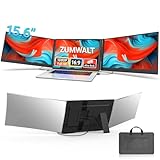
- 【Fewer Cables, Simplify Connections】Our laptop screen extender uses upgraded internals, minimizes cables and simplifies the connection process, making setup easier. Unlike traditional extenders with messy cables and compatibility issues, you only need 2 USB-C to USB-C cables (when your device supports full functionality) to connect effortlessly to your laptop. Say goodbye to compatibility worries, messy wires and complex setups, enjoy a clean desk, save space, quick setup of a triple-screen.
- 【Triple-Screen Boost for 300% Efficiency】Transform your workflow with the ZUMWALT P7 portable monitor for laptop that instantly expands your laptop into a triple-screen setup. Designed for multitasking. Expand your screen space to work on multiple applications simultaneously—Break free from tab switching. Enjoy up to 300% efficiency boost. This triple portable laptop monitor designed for on-the-go professionals who need more space without more clutter. Elevate your efficiency anywhere.
- 【Ultra-Slim Aluminum Shell, Stylish Durable Portable】The laptop screen extender monitor portable features a high-grade aluminum alloy shell that combines lightweight durability with sleek aesthetics. Incredibly lightweight at just 4 lbs (1.8 kg), its ultra-slim profile and included leather carry bag enhance convenience, making it perfect for on-the-go productivity. No top Baffle or clip, easy to remove and install. Designed to reduce stress on your laptop’s hinge.
- 【Widely Compatible】The portable dual screen extender is suitable for 13" to 17.3" laptops. It's compatible with mainstream systems such as Mac, Windows, Chrome, and Switch. Note: If your laptop has no full-featured USB-C port or M1/M2/M3 MacBooks, you need to use an additional H5-T cable. Connect via H5-T + HDMI + USB-A cable ( to external power, driver installation required). If you're not sure the compatibility or need H5 cable, please check with us before placing an order.
- 【15.6" FHD 1080P Larger Screen, Visual Excellence】Our laptop monitor extender featuring two 15.6" 1080P Ultra Slim FHD displays, provides a larger display area and a stylish appearance. Enjoy stunning visuals with 280 nits brightness and a 178° wide viewing angle. Perfect for triple-screen immersive visual in work or entertainment—Experience vibrant, true-to-life colors. This portable laptop monitor is designed for seamless collaboration and professionals multitasking on the go.
10. Totara Learn: best for corporate compliance and workforce development
Totara Learn is relevant to corporate L&D teams that need compliance, certification, workforce development, enterprise administration, and partner implementation. Totara should be evaluated as a commercially governed Moodle-based option, not simply as “free Moodle.”
Totara may suit organizations that want Moodle-family concepts with commercial implementation and support. Smaller creators may find the platform excessive, and buyers should verify current source-availability, distribution terms, editions, partner requirements, reporting functions, and pricing directly with current official documentation.
The supplied research did not provide a sufficiently detailed current official Totara licensing or pricing page. Avoid publishing a numeric price or making a broad claim about community availability without that verification.
Verdict: Choose Totara when enterprise workforce learning justifies commercial implementation; choose community Moodle when the priority is freely downloadable software and broad community control.
Which LMS is best for each use case?
| Use case | Recommended starting point | Why | When to reconsider |
|---|---|---|---|
| Most organizations | Moodle | Broad features, deployment choices, customization, and ecosystem | Choose managed hosting if no team owns operations |
| MOOCs and large public catalogs | Open edX | Strong course, cohort, grading, discussion, dashboard, and certificate model | Use a simpler LMS for small cohorts |
| Simpler self-hosting | Chamilo | Approachable course-management model and GPLv3 licensing | Choose Moodle for a deeper integration marketplace |
| Granular institutional permissions | ILIAS | Strong institutional and controlled-access positioning | Choose a more familiar platform if onboarding is the priority |
| Higher-education collaboration | Sakai | Academic and collaborative orientation | Choose Moodle or Canvas when broader general-market support matters |
| Structured assessment | OpenOlat | Courses, tests, learning resources, groups, and authoring documentation | Check local partner and language availability |
| Corporate compliance | Totara Learn or Moodle | Totara emphasizes workforce learning; Moodle offers broader community deployment | Verify current terms and obtain implementation quotes |
| Integrated school administration | OpenEduCat | LMS-plus-education-management approach | Use a standalone LMS when ERP breadth is unnecessary |
| Canvas-oriented technical institution | Canvas Community Edition | Open repository under AGPLv3 and familiar academic model | Do not confuse community self-hosting with hosted Canvas |
| Focused corporate customization | Forma LMS | Potential fit for self-hosted corporate training | Require current primary-source and security verification first |
Should you self-host an open-source LMS?
Self-hosting is appropriate only when the organization can own infrastructure, security, backups, upgrades, and recovery. Self-hosting may reduce per-user SaaS charges and provide control over the database, domain, files, backups, and infrastructure. Self-hosting does not remove operational cost; it transfers operational responsibility to the buyer or an implementation partner.
Self-hosting responsibilities
- Choose a supported operating system, web server, database, runtime, and hosting architecture for the selected LMS.
- Configure HTTPS, reverse proxying, email delivery, background jobs, object storage, and media delivery.
- Apply security updates and test plugins, themes, and integrations before upgrades.
- Maintain encrypted backups and test restoration rather than merely scheduling backups.
- Monitor uptime, logs, storage, database health, queues, email, and suspicious activity.
- Document data retention, export, deletion, administrator access, and disaster recovery.
Do not apply one generic server-size recommendation to all ten platforms. Moodle and Chamilo are commonly associated with PHP hosting, Canvas uses a Ruby-heavy stack, OpenOlat uses Java, and Open edX has a more involved service architecture. Confirm exact current requirements in each project’s installation documentation before buying infrastructure.
What does a free open-source LMS cost in practice?
A free license does not make a free course business. The software download may carry no license fee while the production service still requires hosting, support, maintenance, integrations, and staff time. Moodle’s official setup guidance explicitly presents direct download, certified providers, and MoodleCloud as separate choices, illustrating the difference between software access and operating responsibility.
| Cost area | Questions to answer before launch |
|---|---|
| Hosting | Who supplies compute, database, storage, bandwidth, uptime, and scaling? |
| Domain and TLS | Who manages the domain, certificates, renewal, and DNS? |
| Video and files | Where are media stored, transcoded, delivered, and backed up? |
| How will enrollment, password, notification, and transactional messages reach inboxes? | |
| Security | Who applies patches, reviews vulnerabilities, enables MFA, and monitors logs? |
| Backups and recovery | How quickly can the service and learner records be restored after failure? |
| Development | Who builds themes, plugins, integrations, migrations, and accessibility fixes? |
| Content operations | Who creates courses, captions video, tests assessments, and manages revisions? |
| Commerce | Who handles payment processing, tax, invoices, refunds, subscriptions, and access revocation? |
| Support | Who answers learner questions and resolves production incidents? |
Can an open-source LMS sell online courses?
An open-source LMS can support paid courses, but selling functionality may be native, plugin-based, partner-provided, or external rather than built into the core platform. Check payment gateways, coupons, bundles, subscriptions, tax and invoicing, refunds, memberships, CRM and email integration, video hosting, rights management, and regional payment requirements.
Test the complete purchase funnel before launch:
- Open the landing page and checkout.
- Complete a test payment in each required currency or payment method.
- Confirm account creation and duplicate-email handling.
- Confirm that successful payment creates the correct enrollment.
- Confirm the welcome email, course access, progress tracking, and certificate.
- Test failed payments, webhook failures, refunds, cancellations, expiration, and access revocation.
- Confirm that finance, support, and administrators can audit the transaction and learner record.
An LMS is not automatically an e-commerce platform. A course business may need a payment processor, membership system, commerce platform, CRM, email service, video host, and custom webhooks alongside the LMS.
Do you need an LMS, an authoring tool, or both?
You need an LMS for learner administration and a separate authoring tool when your courses require interactions beyond pages, files, quizzes, assignments, and discussions. Specialist authoring tools are more likely to provide scenario branching, simulation, animation timelines, responsive slide layouts, screen recording, and dedicated accessibility workflows.
| Requirement | LMS alone may be enough | Consider an authoring tool too |
|---|---|---|
| Text, video, documents, links | Yes | Not usually necessary |
| Quizzes and question banks | Usually | When advanced interaction or branching is required |
| Assignments and file submissions | Usually | Not usually necessary |
| Scenario branching | Sometimes through extensions | Usually preferable |
| Simulations and rich interactions | Depends on plugins or components | Usually preferable |
| Progress, grades, completion, and reporting | Yes | No; these remain LMS responsibilities |
| SCORM, LTI, or xAPI content delivery | Check exact native, plugin, or import support | Authoring tool may produce the package |
Verify standards support precisely. “Supports SCORM” may mean importing a package, tracking completion, supporting only a particular SCORM version, or relying on a plugin. The same caution applies to xAPI and LTI.
How should you handle plugins, security, and privacy?
Every plugin expands capability and increases the maintenance and security surface. A large ecosystem is valuable only when the organization can govern extensions responsibly.
Free tools Windows power users keep installed
One-click scans. No signup required.
- Inventory every plugin, theme, integration, and custom modification.
- Check maintainer activity, compatibility, license, privacy behavior, and security history.
- Assign an owner to every critical extension.
- Test upgrades in a staging environment with representative courses and integrations.
- Back up both files and the database before upgrades.
- Remove unused extensions and accounts.
- Document fallback procedures for payment, email, SSO, reporting, and content delivery failures.
Use least-privilege roles, administrator MFA, SSO protections, encrypted backups, appropriate log retention, vulnerability monitoring, data-export and deletion procedures, and a defined retention policy. GDPR or another privacy framework is a deployment responsibility involving configuration, hosting geography, contracts, third-party plugins, and organizational processes; no software label alone guarantees compliance.
Best Value

- 4-IN-1 ULTIMATE EDC VERSATILITY: Seamlessly converts from a heavy-duty laptop riser to a sturdy tablet easel, magnetic desk phone holder, and handheld vlogging selfie stick. Replaces three bulky accessories with one sleek device to build an instant portable office in coffee shops or hotels.
- N52 MAGNETIC MAGSAFE MOUNT: Features an ultra-strong integrated N52 magnetic core that instantly snaps onto iPhone 15/14/13/12 models and MagSafe cases. Sets up a quick dual-screen productivity hub or hands-free FaceTime station alongside your computer without clumsy clamps.
- AEROSPACE ALUMINUM STABILITY: Built from premium, scratch-resistant aerospace aluminum alloy that easily holds heavy 15.6" to 17" gaming laptops and iPad Pros without wobbling. Custom-tensioned sturdy hinges guarantee zero sagging under load, providing a rock-solid typing experience. Soft, strategically placed silicone pads protect your devices from surface scratches.
- 8-LEVEL ERGONOMIC COOLING BASE: Features eight distinct height adjustment slots that elevate your screen up to 5.5 inches to align with your natural line of sight. Corrects your sitting posture to relieve neck strain, while the open X-frame design maximizes natural airflow to prevent CPU overheating.
- 3-SECOND BATON FOLDING FRAME: Collapses down in just 3 seconds into a flat baton measuring a compact 5.9" x 1.4" x 0.5". Weighing a lightweight 5.29 ounces, it slides effortlessly into briefcases or laptop sleeves; includes a microfiber travel pouch and magnetic ring stickers.
How can you choose an LMS in 30 minutes?
- Identify the audience: public customers, employees, students, members, or mixed audiences.
- Estimate scale: active learners, concurrent users, number of courses, media volume, and peak enrollment periods.
- Define the course format: native pages and quizzes, live learning, SCORM packages, interactive simulations, or blended delivery.
- Decide whether you will sell: list payment methods, subscriptions, coupons, tax, refunds, and access rules.
- Assign operations: name the person or partner responsible for hosting, updates, backups, security, and incidents.
- List integrations: SSO, directory, HRIS, SIS, CRM, email, video, analytics, LTI, SCORM, and APIs.
- Set governance requirements: accessibility, privacy, audit logs, data residency, retention, export, and deletion.
- Define exit requirements: course export, grades, completion records, users, custom code, and hosting-partner portability.
- Run a proof of concept: create one real course, enroll test users, complete assessments, export data, restore a backup, and perform a staged upgrade.
Eliminate any platform that cannot meet a non-negotiable requirement. A smaller platform that reliably handles the real workflow is better than a feature-rich platform that the organization cannot operate.
Open-source LMS deployment checklist
- Confirm the selected project’s current supported operating system, web server, database, runtime, and dependencies.
- Choose self-hosting, managed hosting, or a certified implementation partner.
- Configure HTTPS, domain, DNS, email, background jobs, storage, and monitoring.
- Create administrator, instructor, manager, learner, and support roles using least privilege.
- Enable MFA where available and protect SSO and directory integrations.
- Set up encrypted backups for files and databases and test restoration.
- Build a staging environment for plugin and version upgrades.
- Test enrollment, completion, gradebook, reporting, search, notifications, accessibility, and exports.
- Test purchase, refund, cancellation, certificate, and access-revocation flows if courses are sold.
- Review every plugin, theme, integration, license, privacy behavior, and maintainer status.
- Document incident response, ownership, recovery objectives, data retention, and exit procedures.
Licensing and open-source status need careful reading
“Open source” does not describe one commercial arrangement. A project may be a fully downloadable community project, an open-source core with a paid hosted edition, a community edition with paid modules, or a commercially governed product whose source is available under an open license.
Review the actual license for the LMS, plugins, themes, mobile applications, embedded content, and custom modifications. GPL and AGPL obligations differ, and externally accessible modified services can raise questions that require legal advice. This article does not provide a legal conclusion.
Recommended Free Tools
Also separate code freedom from operational independence. An open-source project can still leave an organization dependent on a hosting provider, certified partner, proprietary integration, paid theme, commercial mobile app, or implementation firm.
Final recommendations
Start with Moodle if you need the most broadly defensible choice. Choose Open edX when public catalogs, cohorts, and scale justify substantial operations. Choose Chamilo for a simpler self-hosted direction. Choose ILIAS, Sakai, or OpenOlat when institutional permissions, academic collaboration, or structured assessment drive the decision. Evaluate Canvas Community Edition only with appropriate technical expertise. Consider Totara for commercially supported corporate learning, OpenEduCat for integrated education administration, and Forma LMS only after current project evidence and a proof of concept.
The best open-source LMS is the platform whose authoring model, integrations, governance, operating responsibilities, and exit path match the organization’s actual capabilities—not the platform with the longest feature list.
Frequently Asked Questions
What is the best open-source LMS for building online courses?
Moodle is the best general-purpose starting point for most organizations because it combines broad course activities, customization, deployment choices, and a large ecosystem. Open edX is a better fit for MOOCs and large-scale delivery, while Chamilo may suit smaller teams seeking a simpler self-hosted platform.
Can you sell courses through an open-source LMS?
Yes, but an open-source LMS does not automatically provide a complete e-commerce system. Payment gateways, subscriptions, coupons, tax, invoices, refunds, memberships, and enrollment automation may require plugins, external commerce tools, or custom integration.
Is self-hosting an open-source LMS free?
The software license may have no download fee, but self-hosting still costs money and staff time for servers, storage, email, backups, security, updates, monitoring, support, and development. Free software is not the same as a free course business.
What is the difference between an LMS and an online course authoring tool?
An LMS manages learners, courses, permissions, assessments, progress, completion, and reporting. An authoring tool creates richer content such as branching scenarios, simulations, animation, and interactive lesson packages; many organizations use an authoring tool together with an LMS.
Is Canvas Community Edition the same as hosted Canvas?
No. Canvas Community Edition refers to the open-source Canvas LMS repository, which the repository identifies as AGPLv3 software. Hosted Canvas is a separate commercial service with its own infrastructure, support, integrations, and terms.
The Bottom Line
Bottom line: Moodle is the best default open-source LMS for most course builders, Open edX is the scale specialist, and Chamilo is the simplicity-oriented alternative. Institutional and corporate buyers should also evaluate ILIAS, Sakai, OpenOlat, Totara, and OpenEduCat according to governance and workflow needs. Choose self-hosting only when someone owns the operational work behind the free license.
Quick Recap
Product prices and availability are accurate as of the date/time indicated and are subject to change. Any price and availability information displayed on Amazon at the time of purchase will apply.

