
Do these 3 things before closing this tab:
1Fix the driver behind crashes, sound loss and screen glitches2Clear out junk files and repair common Windows errors3Scan for outdated or missing drivers - takes under a minuteiTechGuides is reader-supported. When you buy through links on our site, we may earn an affiliate commission. As an Amazon Associate I earn from qualifying purchases. Learn more
Zero trust architecture (ZTA) is an organization-wide cybersecurity plan that protects resources by making explicit, least-privilege access decisions instead of trusting users or devices simply because they are inside a corporate network. It applies zero trust principles across identities, devices, applications, data, infrastructure, and operations. It is not a single product or a synonym for replacing a VPN.
What does zero trust mean?
Zero trust is a security approach built around the idea that trust should not be granted implicitly. NIST describes it as concepts and ideas for reducing uncertainty when making accurate, least-privilege access decisions for each request, with the network treated as potentially compromised. In practice, an organization evaluates the context of access rather than assuming that a request is safe because it came from a familiar location.
“Never trust, always verify” is a useful shorthand, but it is not the whole definition. The important elements are protection centered on resources, access granted only as needed, and evaluation of relevant conditions when access is requested.
What is zero trust architecture?
NIST defines zero trust architecture as an enterprise cybersecurity plan that uses zero trust concepts and encompasses component relationships, workflow planning, and access policies. Put simply, zero trust is the set of principles; ZTA is the coordinated plan for applying them throughout an organization.
NIST’s SP 800-207, Zero Trust Architecture, published in August 2020, is a U.S. government standards publication that sets out the concept, logical components, deployment models, use cases, threats, and migration considerations. It is a reference for organizations, not a claim that one design fits every enterprise or a legally binding universal rule.
How does zero trust architecture work?
When a person, device, or service requests access to an enterprise resource, the organization evaluates the request and applies access policy before establishing a session. NIST treats authentication and authorization for both the subject (such as a person or service) and the device as distinct functions. Access should be limited to the resource and actions needed, with relevant conditions evaluated rather than inherited from network location.
Rank #2

- APPLIANCE ONLY: Hardware unit sold without a service subscription — security services, firmware updates and support are NOT included and must be purchased separately to activate protection.
- PERFORMANCE: Up to 3.5 Gbps firewall inspection, 1.5 Gbps threat prevention and 1.6 Gbps IPSec VPN throughput driven by SonicWall's patented Reassembly-Free Deep Packet Inspection (RFDPI) engine.
- CONNECTIVITY: 8x1GbE + 2x1G SFP in a desktop form factor; zero-touch deploy and manage on-box or via cloud Network Security Manager (NSM).
- THREAT PROTECTION: SonicOS 8 delivers intrusion prevention, gateway anti-malware, application control, TLS/SSL decryption, Capture ATP multi-engine sandboxing (RTDMI) and reputation-based content & DNS filtering with an active service subscription.
- BUILT FOR GROWING SMALL BUSINESS: Secure SD-WAN, IPSec and SSL VPN plus Zero-Trust Network Access through Cloud Secure Edge keep distributed sites and remote workers protected.
- Identify the subject and device: Determine which user, service, or other entity is making the request and what device is involved.
- Evaluate the request: Apply the organization’s access policy to the resource and the available information about the subject and device.
- Grant only necessary access: Authorize the minimum access needed for the task, rather than treating a successful login as unrestricted permission.
- Apply and operate the decision: Use the architecture’s policy and enforcement components to implement access rules across the relevant environment.
Exact components and their placement vary by deployment. NIST SP 800-207 describes logical components and multiple deployment models; it does not prescribe one topology as best for every organization.
What changes compared with a perimeter-based design?
Traditional perimeter designs often use the boundary between an internal network and the outside world as an important security signal. Zero trust shifts the focus toward the resource being requested and the conditions of that request. A user or device does not become trusted merely because it is on a local-area network, uses an enterprise-owned asset, or has crossed a network boundary.
Rank #3
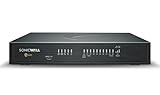
- SECURE UPGRADE PLUS PROGRAM (3-Yr, Advanced Edition): SonicWall upgrade path that bundles a new TZ480 appliance with the Advanced Protection Suite (APSS). REQUIREMENTS: for customers upgrading from an existing SonicWall firewall; a qualifying prior unit may be required at registration. Includes 1 year of Cloud Secure Edge (CSE) Zero-Trust Network Access.
- SERVICE BUNDLE – ADVANCED PROTECTION SUITE (APSS): all Essential services plus Capture ATP cloud sandboxing with patented RTDMI, advanced DNS security, cloud Network Security Manager (NSM) management, reporting & analytics, and 24/7 support — SonicWall's recommended all-in security suite.
- PERFORMANCE: Up to 4 Gbps firewall inspection, 2 Gbps threat prevention and 2 Gbps IPSec VPN throughput driven by SonicWall's patented Reassembly-Free Deep Packet Inspection (RFDPI) engine.
- CONNECTIVITY: 8x1GbE + 2x5G SFP+ in a desktop form factor; zero-touch deploy and manage on-box or via cloud Network Security Manager (NSM).
- BUILT FOR MID-SIZE BUSINESS: Secure SD-WAN, IPSec and SSL VPN plus Zero-Trust Network Access through Cloud Secure Edge keep distributed sites and remote workers protected.
This resource-centered approach can suit organizations with remote workers, personally owned devices, cloud services, and systems that do not sit behind one enterprise-owned perimeter. It does not mean that firewalls, VPNs, network segmentation, or other existing safeguards must be discarded. Those controls may still be part of the design; the defining point is that network position alone does not authorize access.
What does zero trust architecture cover?
ZTA is broader than user login or network access. NIST’s glossary describes an end-to-end approach spanning identity, credentials, access management, operations, endpoints, hosting environments, and interconnecting infrastructure. Depending on the organization, the protected resources include assets, services, workflows, and accounts.
Rank #4
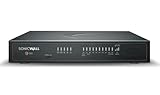
- SECURE UPGRADE PLUS PROGRAM (3-Yr, Advanced Edition): SonicWall upgrade path that bundles a new TZ680 appliance with the Advanced Protection Suite (APSS). REQUIREMENTS: for customers upgrading from an existing SonicWall firewall; a qualifying prior unit may be required at registration. Includes 1 year of Cloud Secure Edge (CSE) Zero-Trust Network Access.
- SERVICE BUNDLE – ADVANCED PROTECTION SUITE (APSS): all Essential services plus Capture ATP cloud sandboxing with patented RTDMI, advanced DNS security, cloud Network Security Manager (NSM) management, reporting & analytics, and 24/7 support — SonicWall's recommended all-in security suite.
- PERFORMANCE: Up to 5 Gbps firewall inspection, 2.5 Gbps threat prevention and 2.5 Gbps IPSec VPN throughput driven by SonicWall's patented Reassembly-Free Deep Packet Inspection (RFDPI) engine.
- CONNECTIVITY: 8x1GbE + 2x5G SFP+ + 2x10G SFP in a desktop form factor; zero-touch deploy and manage on-box or via cloud Network Security Manager (NSM).
- BUILT FOR DISTRIBUTED & HIGH-END SMB: Secure SD-WAN, IPSec and SSL VPN plus Zero-Trust Network Access through Cloud Secure Edge keep distributed sites and remote workers protected.
- People and non-person entities, such as services
- Credentials and access-management processes
- Endpoints and the environments that host applications or workloads
- Applications, services, workflows, and accounts
- Network and other infrastructure connecting those resources
- Policies, operations, and the information used to make and enforce access decisions
Is zero trust a product?
No. Zero trust is a set of security principles, and ZTA is the enterprise plan that coordinates how those principles are applied. Products can support parts of the plan—for example, identity, device posture, policy enforcement, application security, network controls, or monitoring—but buying one product does not by itself establish that an organization has implemented a complete architecture.
Quick wins for a faster PC:
Fix the driver behind crashes, sound loss and screen glitchesFind Drivers →Clear out junk files and repair common Windows errorsFree Scan →Implementation therefore involves planning how capabilities fit together, which resources and systems are covered, how access rules are enforced, and how the environment will be operated and migrated. NIST’s SP 800-207 provides architecture and migration context. For federal administrators, NIST also publishes a planning guide for implementing a zero trust architecture. CISA’s Zero Trust Maturity Model, Version 2 (2023) frames adoption as a program with capabilities and stages. Organizations should check the issuing agencies for current guidance before using these materials for present-day federal requirements or maturity planning.
Quick Recap
What to remember about zero trust
- Zero trust describes security principles; ZTA is the organization’s plan for applying them.
- Internal network location and asset ownership do not, by themselves, establish trust or authorization.
- The aim is resource protection through explicit, least-privilege access decisions for requests.
- The approach spans identities, devices, applications, hosting environments, operations, and connecting infrastructure.
- Products can contribute capabilities, but the architecture depends on coordinated planning and implementation.
Product prices and availability are accurate as of the date/time indicated and are subject to change. Any price and availability information displayed on Amazon at the time of purchase will apply.

