
What’s actually slowing this PC down?
Pick the symptom - the matching free tool is one click away.
iTechGuides is reader-supported. When you buy through links on our site, we may earn an affiliate commission. As an Amazon Associate I earn from qualifying purchases. Learn more
The fastest way to understand Xenoblade Chronicles 2 is to treat Drivers and Blades as one combat system. Drivers are the playable characters who use Driver Arts and build the Party Gauge. Blades provide weapon classes, elemental attacks, Blade Specials, and Field Skills. Core Crystals bond new Blades to Drivers, Affinity Charts develop each Blade over time, and Field Skills determine whether your current party can interact with many obstacles, chests, paths, and quest objects.
Use common Core Crystals to cover missing roles, inspect every new Blade’s Affinity Chart, and keep a Blade with useful Field Skills available even if it is not your strongest fighter. When an exploration check fails, it usually means you need a different party setup or more progression—not that the route is permanently closed.

![Xenoblade Chronicles 2 - Nintendo Switch [Digital Code]](https://m.media-amazon.com/images/I/51qjFyeyUOL._SL160_.jpg)
What is the difference between a Driver and a Blade in Xenoblade Chronicles 2?
A Driver is a playable character. Drivers move through the world, use Driver Arts in battle, and contribute to the Party Gauge used for major combat abilities. A Blade is a resonated partner who gives that Driver a weapon class, elemental identity, Blade Specials, and Field Skills.
Free tools Windows power users keep installed
One-click scans. No signup required.
Drivers and Blades are connected, but they are not interchangeable. A Driver is the character you control; a Blade is the combat and exploration package attached to that character. Changing Blades changes the weapon, Arts available to the Driver, element used for Specials, and Field Skills the party can provide.
#1 Best Overall

- Lead Rex, Pyra, and the world to refuge in an adventure that has been enhanced for the Nintendo Switch 2 system
- Experience a journey across Titans in 4K resolution in TV mode, and full HD in handheld mode, at 60 frames per second
- Discover a new rare Blade, MOMO, with two modes to swap between and a quest for you to take on
- Directly control the Blades you send on mercenary missions in the Merc Assault action battle mode
- Unlock new outfit designs for Pyra and Mythra that appear both while adventuring and in cutscenes
Only one Blade per Driver is active in battle at a time. You can switch among equipped Blades during combat, so your setup is not a permanent choice. Switching is part of normal play: one Blade may provide the right element for a combo, another may have a better weapon for the situation, and a third may supply a Field Skill needed after the fight.
Think of the relationship this way:
| System | What it contributes | What you should manage |
|---|---|---|
| Driver | Playable character, Driver Arts, Party Gauge contribution | Positioning, Art timing, role in combos |
| Blade | Weapon class, element, Blade Specials, Field Skills | Equipment, Affinity Chart, Trust, role coverage |
| Party | Combined combat and exploration capability | Element coverage, healing or damage needs, Field Skill totals |
Nintendo’s official overview presents Blades as partners that empower Drivers. In practical terms, do not build a party by looking only at character levels. A well-developed Blade setup can matter just as much as the Driver carrying it.
How to build a useful beginner party
Cover roles before chasing a perfect roster
Early in the game, prioritize a party that can survive ordinary fights and handle different situations. You do not need every weapon or element immediately. You do need enough variety that one missing role does not make every encounter difficult.
- Keep at least one dependable source of recovery or defensive support.
- Use damage-oriented Blades when fights are taking too long, but do not remove all utility from the party.
- Maintain more than one element when possible so you can work toward Blade Combos as the game teaches them.
- Retain Blades with useful Field Skills instead of dismissing them simply because their damage is modest.
Role coverage is a planning tool, not a demand for one fixed build. If your current team already handles healing, defense, and damage comfortably, a new Blade can fill a missing element or provide an exploration skill instead.
Learn the combat loop rather than relying on levels
Driver Arts and Blade Specials work together. Regular attacks and Driver Arts help you build the Party Gauge, while Blade Specials and the timing of your attacks determine how effectively you can create combos. Chain Attacks become much stronger when you have prepared the party and used the available combat systems instead of simply trading basic hits.
The beginner mistake is to treat combat as a straightforward level comparison. A party that ignores Driver Combos, Chain Attacks, or Blade development can struggle even when its characters appear appropriately leveled. Follow the tutorials as they appear, practice switching Blades, and notice which actions fill the Party Gauge most reliably for your current setup.
Core Crystals: what they do and when to use them
Core Crystals are the items used to bond Blades to Drivers. Opening one creates a new Blade bond; it does not let you select a guaranteed weapon, element, or particular rare Blade. The result is determined by the game’s bonding system, so treat each opening as an opportunity to improve your roster rather than a promise of a specific pull.
Recommended Free Tools
Should I save Core Crystals early on?
Use common crystals when your party has an obvious gap. Saving every crystal can leave you without a needed role, weapon class, element, or Field Skill during the part of the game when experimentation is most useful. Common crystals are appropriate for filling those practical holes.
Be more deliberate with rare or premium crystals. A new player may not yet know whether the team needs another attacker, a defensive option, a different element, or a particular exploration skill. Holding some higher-value crystals until you understand the current roster gives you more flexibility. This is a planning approach, not a probability trick: saving a crystal does not guarantee a particular Blade later.
| Situation | Practical choice | Reason |
|---|---|---|
| Your party lacks a basic role or element | Use an available common Core Crystal | Immediate coverage is more useful than an unused item |
| You already cover the main roles | Consider holding rare or premium crystals | You can decide after seeing what the roster actually lacks |
| You want a named rare Blade | Do not open crystals assuming a guaranteed result | Crystal openings do not promise a specific Blade |
| A new Blade offers a needed Field Skill | Keep and develop that Blade | Utility can matter outside combat |
What to check after bonding a Blade
- Open the Blade’s equipment or setup screen and note its weapon class and element.
- Check whether the Blade fills a combat role your party lacks.
- Open the Affinity Chart and identify the easiest early nodes.
- Review the Field Skills listed on the Blade, especially skills your current party cannot provide.
- Equip the Blade on a Driver who can use its weapon and decide whether it belongs in the active rotation.
Do not judge a Blade only by its first battle. A modest-looking Blade may become valuable after its Affinity Chart grants additional abilities or after its Field Skills solve an exploration problem.
Affinity Charts: how Blade progression works
Every Blade has an Affinity Chart, a progression tree containing abilities and rewards. The chart is not unlocked by character level alone. Individual nodes can ask you to perform concrete actions such as using a Blade’s Specials, winning fights, gathering items, completing quests, or reaching a Trust threshold.
Do these 3 things before closing this tab:
1Repair Windows errors before they cause bigger problems2Scan for outdated or missing drivers - takes under a minute3Clear out junk files and repair common Windows errorsWhen you meet a node’s condition, its reward becomes available and later branches may open. Affinity Rewards can improve a Blade’s abilities and can include Field Skills. The chart is therefore both a combat-development system and an exploration-progression system.
How do I unlock a Blade’s Affinity Chart skills?
- Open the main menu and enter the Blade Setup screen.
- Select the Blade you want to develop, then open its Affinity Chart.
- Read the requirement shown for each available node instead of guessing what counts.
- During normal play, use that Blade when a condition asks for combat, Specials, or battles.
- Complete gathering, quest, or other listed requirements when they naturally appear.
- Build Trust when a node requires it, then return to the chart and claim or activate the reward if the game presents that step.
Requirements differ from Blade to Blade. One chart may ask for a number of battles, while another may ask for a specific type of action, a quest, gathering, or Trust. Do not assume that completing one Blade’s early nodes will satisfy another Blade’s chart.
Use ordinary play instead of a separate grind whenever possible
When you receive a new Blade, scan the first few nodes immediately. If the requirements are simple, equip that Blade during routine fights and let progress accumulate. Gather items when you pass them, complete available quests, and use the Blade’s Specials when the battle permits. This approach develops the Blade without turning every chart requirement into a separate checklist session.
Rank #3

- Join the fight between man and machine in this critically acclaimed RPG—now enhanced for the Nintendo Switch 2 system!
For a requirement that is unusually specific, return to the chart and read the wording again before spending time on it. The game may distinguish between winning a fight, using a particular Special level, collecting an item, or completing a named quest. The displayed condition is more reliable than a general assumption about how affinity works.
Trust and “affinity” are related but not identical labels
The game uses several progression terms, including Trust and Affinity Chart rewards. Do not treat every use of “affinity” as one universal number with one effect. Check the specific Blade’s chart and Trust display to see what the current requirement means.
Trust can be relevant to chart nodes, while other nodes ask for actions or quest progress. Nintendo’s update history includes menu and system references for Trust, Field Skills, and Affinity Rewards, confirming that these are distinct categories in the game’s interface. Individual update notes should not be read as evidence that every historical issue remains a current bug.
Field Skills and blocked exploration
Field Skills are Blade abilities used at world interactions. They can apply to obstacles, paths, chests, doors, environmental objects, or quest interactions. When you approach one of these points, the game checks whether the active party collectively has the required skills at sufficient levels.
Why can’t I open certain doors or chests?
The usual reason is that the active party does not meet the interaction’s Field Skill requirement. A Blade who owns the skill may be bonded to you but not currently included in the active party, or the party may have the right skill at too low a level. Some interactions require more than one skill or a higher combined total.
A blocked interaction is not automatically a permanent story lock. It may guard an optional chest or reward, or it may be placed on a route you can revisit after changing your setup or advancing a Blade’s chart.
How to respond to a failed Field Skill check
- Read the interaction message and note the exact skill or skills it names.
- Open the Blade menu and inspect your roster for Blades that possess those skills.
- Change the active party so the relevant Blade is included.
- Return to the interaction and try the check again.
- If the party still falls short, inspect that Blade’s Affinity Chart for a Field Skill upgrade or requirement.
- Leave the area and return later if the needed progress depends on Trust, a quest, gathering, or another chart condition.
Field Skill totals are checked across the active party, so the best answer is often a party adjustment rather than replacing your main combat team permanently. Make the change, collect the chest or pass the obstacle, and then restore your preferred combat arrangement if needed.
Rank #4
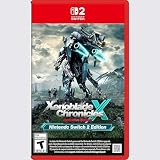
- Rebuild humanity on the mysterious planet Mira in this action RPG that’s been enhanced for the Nintendo Switch 2 system
Keep utility Blades even when they are not your strongest
A common Blade can remain useful because it supplies a skill your rarer Blades do not have. Store or retain utility-focused Blades until you are certain you no longer need their Field Skills. Developing their relevant chart nodes can turn an initially inconvenient requirement into a practical reason to use them.
The reviewed guidance does not establish a complete list of every story-critical Field Skill check or a universal minimum rank for every location. For a specific obstacle, rely on the requirement shown at that location and the Blade’s current skill display rather than applying a rank remembered from another area.
A practical early-game routine
After each new Blade
- Record its element, weapon class, and combat role.
- Check whether its Field Skills cover a gap in your current party.
- Open the Affinity Chart and identify one or two achievable early nodes.
- Equip it on a suitable Driver and use it long enough to understand its Arts and Special timing.
Before opening more crystals
- Ask whether the party lacks healing, defense, damage, an element, or a weapon class.
- Check whether an existing Blade can cover that need after chart progression.
- Use common crystals for immediate coverage.
- Hold some rare or premium crystals if the roster is already functional and you are still learning what you need.
When exploration is blocked
- Read the complete Field Skill requirement.
- Search your Blade list rather than assuming the newest Blade is the answer.
- Swap the required Blade into the active party.
- Raise the relevant chart skill or return after progression if the total is insufficient.
- Mark the location mentally or on your own notes so you can revisit it.
Common beginner mistakes and fixes
Opening every rare crystal immediately
Problem: You may gain a Blade that duplicates a role while the party still lacks a needed element or Field Skill.
Fix: Use common crystals to solve immediate gaps and save some premium options until your team needs a deliberate addition. Saving is optional planning, not a guarantee of a desired result.
Ignoring Affinity Charts until the party feels weak
Problem: You miss easy upgrades, Field Skills, and additional branches that could have been earned during normal play.
Fix: Inspect every new chart and complete simple combat, gathering, quest, and Trust requirements as they arise.
The Tool Desk
Outbyte PC Repair FREERepair Windows errors before they cause bigger problemsFix Now →Outbyte Driver Updater FREEFix the driver behind crashes, sound loss and screen glitchesFind Drivers →Assuming a Blade is useless because its damage is low
Problem: You discard exploration utility or a future chart reward.
Fix: Evaluate the Blade’s role, Field Skills, and progression nodes before removing it from your roster.
Trying to overpower a Field Skill obstacle
Problem: Levels and damage do not satisfy an interaction that checks a skill total.
Fix: Change the active party, develop the relevant Blade, or return later.
Quick wins for a faster PC:
Fix the driver behind crashes, sound loss and screen glitchesFind Drivers →Clear out junk files and repair common Windows errorsFree Scan →Scan for outdated or missing drivers - takes under a minuteDriver Scan →Using only one Blade or one element in combat
Problem: You lose flexibility for Driver Combos, Blade Specials, and Chain Attacks.
Fix: Practice switching among equipped Blades and use the tutorial guidance to connect Driver Arts, Specials, and the Party Gauge.
Choosing between a party swap and later progression
| Option | Choose it when | Trade-off |
|---|---|---|
| Swap in an available Blade | You already own the required Field Skill at the needed level | You may temporarily lose a preferred combat role or element |
| Develop the current Blade | The Blade is close to an Affinity Chart or Trust requirement | You spend time completing the listed condition |
| Return later | The requirement depends on a quest, gathering, Trust, or future progression | The reward remains unavailable until you revisit the location |
There is no universal best answer. Swap when the reward is convenient and the party can spare the temporary change. Develop a Blade when the upgrade will help in several places. Return later when forcing progress would interrupt the story or require an inefficient grind.
Quick Recap
Quick checklist for a new player
- Know which Driver is using each Blade and what weapon class that Blade supplies.
- Maintain enough role and element coverage to handle ordinary fights.
- Use common Core Crystals to address clear gaps.
- Save some rare or premium crystals if you have no immediate need.
- Open every new Blade’s Affinity Chart.
- Complete easy chart requirements during normal battles, gathering, and quests.
- Watch Trust requirements separately from action-based requirements.
- Keep utility Blades that provide uncommon or needed Field Skills.
- When an obstacle blocks you, check the active party before assuming the route is closed.
- Practice Driver Combos, Blade Specials, Party Gauge building, and Chain Attacks as they become available.
Product prices and availability are accurate as of the date/time indicated and are subject to change. Any price and availability information displayed on Amazon at the time of purchase will apply.

