
Free tools Windows power users keep installed
One-click scans. No signup required.
iTechGuides is reader-supported. When you buy through links on our site, we may earn an affiliate commission. As an Amazon Associate I earn from qualifying purchases. Learn more
There is no single FPS penalty for Windows 11 Virtualization-based Security (VBS). In published tests, the effect ranged from little change in several games to a larger loss in a particular title. Your result depends on the processor, game, and test conditions. Memory Integrity is one VBS protection—not a synonym for VBS—and turning it off removes a layer of kernel security. Check your own system before deciding whether a measured performance difference is worth that trade-off.
What VBS and Memory Integrity do
VBS uses hardware virtualization and the Windows hypervisor to create an isolated environment for security-sensitive functions. Memory Integrity, also called Hypervisor-protected Code Integrity (HVCI), is a feature that uses this environment to protect kernel-mode code integrity. Microsoft describes Memory Integrity as a VBS feature that runs code-integrity checks in the secure environment to help protect against kernel-level malware. Microsoft’s Memory Integrity documentation and its VBS overview explain the distinction.
That distinction matters when interpreting gaming claims: a benchmark that reports VBS or HVCI performance is describing a particular security configuration, not proving that every Windows 11 PC will lose the same amount of performance.
Do these 3 things before closing this tab:
1Clear out junk files and repair common Windows errors2Fix the driver behind crashes, sound loss and screen glitches3Repair Windows errors before they cause bigger problemsHow much can VBS affect gaming performance?
Published results vary by game and setup. The tested systems do not establish a current, universal average for Windows 11 PCs, so their figures are examples—not predictions for your computer.
#1 Best Overall

- Disclaimer: Maximum Speed requires overclocking/PC BIOS adjustments. Maximum speed and performance depend on system components, including motherboard and CPU
- Hand-sorted memory chips ensure high performance with generous overclocking headroom
- VENGEANCE LPX is optimized for wide compatibility with the latest Intel and AMD DDR4 motherboards
- A low-profile height of just 34mm ensures that VENGEANCE LPX even fits in most small-form-factor builds
- A solid aluminum heatspreader efficiently dissipates heat from each module so that they consistently run at high clock speeds
| Test | What it found | How to interpret it |
|---|---|---|
| Tom’s Hardware, 2021 | With a Ryzen 7 5800X, three tested titles showed less than a 2% performance reduction with VBS enabled; Project Cars 3 showed the largest reported reduction in that test set, at 8.1%. | These numbers apply to that article’s hardware, games, and test setup. Read the test and its context. |
| PCWorld, 2021 | Its test used built-in benchmark modes for ten games and averaged three runs per game with Memory Integrity off and on. The report did not find a drastic gaming performance drop in its tested setup. | This is a counterpoint to claims of a uniform large loss, not evidence that no game or PC is affected. Read PCWorld’s results. |
| ComputerBase, 2023 | Its VBS/HVCI comparison highlighted the potential for significant performance cost on CPUs without MBEC support. | Its results and graphs are specific to its test setup. Read the ComputerBase comparison. |
These results should not be averaged together: the articles used different processors, games, Windows builds, and methods. A benchmark that exposes a CPU bottleneck can also show a different effect from play on a system limited by its graphics card. The reported FPS change in one set of tests therefore cannot tell you exactly what will happen in your games.
Why the processor can change the result
HVCI relies on processor and firmware support for virtualization-related features. Microsoft identifies Intel Mode-based Execution Control for EPT (MBEC), AMD Guest-mode execute trap for NPT (GMET), and an ARM execute-never capability as mechanisms that reduce HVCI’s performance and power impact. Older processors that rely on Restricted User Mode to emulate required functionality can see a greater impact, according to Microsoft. The relevant capability is platform-specific; a processor family name alone does not establish how a particular system will perform. Microsoft’s discussion of VBS and hardware support provides further context.
Rank #2

- Requires overclocking/BIOS adjustments. Maximum speed and performance depends on system components, including motherboard and CPU.
- G.SKILL RipjawsV Series DDR4 U-DIMM Memory Kit, Model: F4-3200C16D-16GVKB
- Non-ECC, DDR4 U-DIMM, 288-pin, for Desktop PC & Gaming
- Includes JEDEC default profile, and Intel XMP memory overclock profile
- Do not mix memory kits. Memory kits are sold in matched kits that are designed to run together as a set. Mixing memory kits will result in stability issues or system failure.
How to check whether VBS and Memory Integrity are active
Check the actual state before comparing performance. Windows Security can show Memory Integrity status; beginning with Windows 11 version 22H2, Windows Security warns when it is turned off. Microsoft also documents checking VBS through the Win32_DeviceGuard class in the rootMicrosoftWindowsDeviceGuard namespace. Its VirtualizationBasedSecurityStatus value indicates whether VBS is enabled and running. See Microsoft’s instructions for Memory Integrity and its Device Security overview.
After changing a setting, restart if Windows requests it, then verify the status again before benchmarking. Do not assume that a requested toggle took effect: compare results only after confirming the state for each condition.
Rank #3

- Disclaimer: Maximum Speed requires overclocking/PC BIOS adjustments. Maximum speed and performance depend on system components, including motherboard and CPU
- AMD EXPO & Intel XMP 3.0 Compatible Only: Dual memory profiles allow you to easily select optimized settings for your platform, whether you’re running an AMD or Intel processor
- Dynamic RGB Lighting: Individually addressable RGB lighting delivers vibrant effects through a sleek, understated panoramic diffuser
- Onboard Voltage Regulation: Onboard voltage regulation for reliable power at high frequencies
- Maximum Bandwidth and Tight Response Times: Optimized for peak performance on the latest AMD and Intel DDR5 motherboards
How to test whether disabling Memory Integrity helps your games
A useful comparison isolates the security setting rather than mixing it with other changes. Test only if you have a specific performance question and are comfortable temporarily removing that protection.
- Record your starting state. Check Memory Integrity in Windows Security and confirm VBS status using Microsoft’s documented
Win32_DeviceGuardmethod. Note your Windows build, processor, graphics card, game version, and driver. - Choose a repeatable game scene. Use the same built-in benchmark or the same reproducible route each time. Keep resolution, graphics settings, driver, background tasks, and other system conditions as consistent as you can.
- Run repeated comparisons. Record multiple runs in each condition instead of relying on one result. Compare average FPS separately from low-FPS results and frame-time consistency; an average can hide uneven delivery.
- Change only the setting being investigated. Use Windows Security to change Memory Integrity, restart if required, and verify the new state before the next set of runs.
- Restore your preferred protection and verify it. After testing, check the setting and VBS status again rather than assuming the previous configuration returned automatically.
Record whether the game is CPU- or GPU-limited if you can identify it. A repeatable improvement in a CPU-limited scene may not translate to a graphics-limited game, and small changes between runs can be ordinary measurement variation rather than a reliable gain.
Rank #4
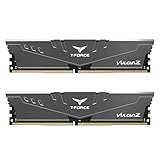
- Simple design to perfectly protect the cooling module with high thermal conductive adhesive
- Supports Intel & AMD motherboards
- Selected high-quality IC
- Supports XMP2.0
- Energy saving with ultra-low working voltage
Should you turn Memory Integrity off for gaming?
For most players, retain it as the security default unless a repeatable, meaningful issue gives you a reason to investigate. Disabling Memory Integrity trades away a layer that helps protect kernel-mode code integrity; it is not a risk-free FPS setting. If a game or anti-cheat system fails, first check the game’s and anti-cheat provider’s current support guidance rather than assuming the security feature must be disabled.
What’s actually slowing this PC down?
Pick the symptom - the matching free tool is one click away.
Compatibility can matter independently of frame rate. Microsoft says that, although passing the relevant Hardware Lab Kit test is sufficient for a Microsoft signature, it strongly recommends thorough functional testing of drivers with Memory Integrity enabled. That guidance is relevant to anti-cheat software and other game-related drivers. Microsoft’s HVCI driver compatibility documentation explains the recommendation.
Best Value

- [Capacity] 32GB Kit (2x16GB) UDIMM Compatible with Select Gaming Desktop PCs
- [Speed] PC Speed (PC4-25600), DDR4 3200MHz
- [Specification] ECC Type = Non-ECC, Form Factor = Unbuffered UDIMM, CL=16, Number of Pins = 288 Pins, Voltage = 1.35V
- [Overclocking] Intel XMP 2.0 and AMD Ryzen
What to know about the reported 2026 rollout
A September 2, 2026 report by Tom’s Hardware said Microsoft planned to begin expanding automatic Memory Integrity enablement to more eligible Windows 11 PCs through quality updates starting in October 2026, after device-readiness checks. The report said devices where users had deliberately disabled the feature would retain that choice. This is a reported, staged rollout—not confirmation that every Windows 11 PC will receive the change. Check Microsoft’s current Windows Security status and rollout communications for your device. Read Tom’s Hardware’s report.
Quick Recap
Product prices and availability are accurate as of the date/time indicated and are subject to change. Any price and availability information displayed on Amazon at the time of purchase will apply.

