
The Tool Desk
Outbyte Driver Updater FREEFix the driver behind crashes, sound loss and screen glitchesFind Drivers →Outbyte PC Repair FREEClear out junk files and repair common Windows errorsFree Scan →iTechGuides is reader-supported. When you buy through links on our site, we may earn an affiliate commission. As an Amazon Associate I earn from qualifying purchases. Learn more
Not yet—but AI is making biological design faster and more capable. Today’s systems can help researchers propose genetic sequences, predict how designs may behave, automate experiments and learn from test results. They can edit existing organisms and help construct large synthetic genomes. They cannot routinely create a self-maintaining, self-replicating organism from nonliving ingredients, because the hardest steps still require physical DNA construction, a viable cellular context, extensive testing and biological debugging.
“From scratch” can mean three very different things
Claims about AI creating life often combine work at different levels. The distinction matters because an edited bacterium, a cell carrying a chemically synthesized chromosome and a cell assembled from nonliving molecules do not demonstrate the same capability.
Edited organism
An existing cell or organism receives designed genetic changes. Gene-editing systems such as CRISPR can alter or add genetic material inside a living biological system. AI can help select targets, design sequences and predict outcomes, but the original cell supplies the membrane, molecular machinery, metabolism and replication systems.
Synthetic genome or chromosome
Researchers can design and chemically synthesize substantial genetic material, assemble it and place it into a biological chassis. Synthetic-genomics work has applications in bioproduction, advanced cell therapies and crops designed to tolerate environmental stress. The genome may be largely synthetic while the recipient cell remains pre-existing life.
#1 Best Overall

- THE COMPLETE SCIENCE KIT: Start your science experiment journey with our kit, complete with 10 pre-poured agar plates, 10 cotton tipped sticks, 1 pipette, 1 plastic vial to be used in experiments, simple-to-follow instructions, and an informative science experiment ebook project guide. This product is intended for ages 15 years and older.
- RELIABLE & SECURE: Experience the height of science education with our kit, created for educational purposes. These agar plates include a thick agar layer, that are ready to use for your experiment. The customized packaging are more durable than conventional solutions.
- CONVENIENTLY PRE-POURED FOR EASY USE: Our pre-poured, ready-to-use nutrient agar petri dishes eliminates the need for technical agar melting and pouring. Our skillfully concocted plates facilitates proper agar consistency and thickness.
- THE EXPERIMENT EBOOK: Get creative and think of thrilling ideas to experiment in the classroom with our science kit that includes an exciting experiment ebook. The eBook is filled with simple experiments that come with clear step-by-step instructions to help you succeed!
- WE VALUE CUSTOMER SATISFACTION: We believe that you will enjoy your science fair project kit and would even suggest it to your acquaintances. However, if you are not entirely satisfied with it, please let us know and we will make things right.
Synthetic cell or organism from nonliving components
The strongest meaning of “from scratch” requires a system to organize itself, maintain a boundary, process energy and materials, reproduce and ideally evolve without inheriting a living chassis. Build-a-Cell’s 2024 roadmap calls this “a compelling vision” and states that “building a functioning cell ‘from scratch’ has yet to be accomplished.”
| Level | What is built | What still comes from existing life | Current evidence |
|---|---|---|---|
| Edited organism | Designed genetic changes in a living organism | Cell structure, metabolism and replication machinery | Established engineering practice, with variable predictability |
| Synthetic genome | A chemically synthesized and assembled chromosome or genome | A biological chassis that receives and runs it | Demonstrated in research systems, but difficult to implement and debug |
| Synthetic cell | A cell-like system assembled from nonliving components | Ideally none for core life functions | Active research frontier; a fully functioning cell has not been built |
| Autonomous organism | A self-maintaining, self-replicating and potentially evolving organism | None | Not routinely achievable with current AI or synthetic-biology tools |
How AI changes the design-build-test-learn cycle
The National Academies and the UK Government describe synthetic biology as an iterative Design-Build-Test-Learn (DBTL) process. AI does not remove that loop; it can shorten and improve parts of it.
Rank #2

- High Power Optical Magnification: Equipped with 4X, 10X, 40X objective lenses, a WF25X eyepiece, and a 2X magnification lens, this compound light microscope delivers versatile zoom settings from 100X up to 2000X. Outperforming standard 100x, 400x, and 1000x entry-level light microscope models, its crystal-clear glass optics allow students and adults to easily inspect biological cells, micro-organisms, and plant tissues in high contrast.
- Complete Microscope Kit with 28 Slides: Designed as an all-in-one microscope kit (or microscopio set) ready for immediate science experiments out of the box. Includes 10 pre-prepared specimen slides, 18 blank slides for DIY samples, 1 universal phone clip adapter for digital photography, 1 Bluetooth remote camera shutter, and a dedicated power adapter—providing a complete microscope with slides experience for home or lab use.
- Top & Bottom LED Dual Illumination: Features an adjustable top and bottom LED light system tailored for diverse specimen types. Use the upper light for opaque solid items (offering crisp view for coins and insect wings like a stereo scope) and the bottom light for translucent biological cells. The coaxial coarse and fine focus knobs ensure sharp adjustment superior to basic binocular or monocular setups.
- Age 8-18 & SGS Safety Certified: SGS certified for non-toxic materials and reliable electrical safety, making it a safe STEM microscope for kids 10-12 (with adult supervision) and an ideal microscope for teens aged 12-18. It perfectly satisfies basic to intermediate biology experiment needs as a trusted microscope for students in middle school and high school classrooms.
- Versatile Educational STEM Gift: Whether used for homeschooling science projects, classroom teaching, or entry-level research, this model bridges the gap between toy scopes and a heavy professional microscope setup (without the complex costs of an electron microscope). It is a practical, inspiring educational science gift for curious young researchers and a functional microscope for adults and hobbyists.
- Design: Models can generate candidate DNA sequences, proteins, pathways or regulatory elements against specified goals.
- Predict: Machine-learning systems can estimate expression, structure, toxicity, metabolic effects or other properties before a construct is made.
- Plan experiments: Scientific language models and optimization software can help choose which designs to test first and how to allocate laboratory resources.
- Build: Automated laboratories can order, assemble and handle biological components, although synthesis, assembly and delivery remain physical bottlenecks.
- Test: Instruments measure growth, expression, metabolism, immune response or other phenotypes.
- Learn and redesign: AI can analyze results, identify likely failure modes and propose the next experimental round.
This creates faster, more iterative engineering. It does not guarantee that a generated sequence will work in a cell, because biological behavior depends on interactions that models may not capture.
Why a complete genome design is not the same as creating life
A genome is an information system, not a complete organism. Turning a digital design into a viable system requires DNA synthesis at the required scale, accurate assembly, delivery into a compatible context, activation of the genetic program and validation that the resulting cell behaves as intended.
Rank #3
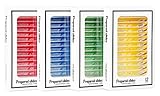
- Safety Material: The high transparency plastic microscope slide is cleaned in advance so that it’s non-toxic, no stains, scratches and any bacteria. there is no danger of sharp corners on the fingers because the microscope slides have smooth edges
- Classification Label: The microscope slides with specimens is well prepared, well labeled, it’s easy to classify and collect for permanent storage&moisture-proof
- Clear Observation: Stereo microscopy with top and bottom lights can provide the best microscopic image which is clean , clear, and well-dyed. cell tissue slides will stimulate young children and slides with insect parts will be more interesting for them
- Amazing Quantity: 48pcs prepared microscope slide of plant ins_ect animal tissue for basic biology education, the kid's specimen can provide students or family educator interesting educational scientific tool and provid excellent teaching aids for biology
- Perfect Science Gift: A good collection of microscope slides, gift wrapping, is a great microscope accessory gift for close-up biology course for a young family member who is just beginning to do biological research
Errors can occur at every stage. A sequence may be chemically difficult to synthesize, assembled with mistakes, toxic when expressed, incompatible with the host’s regulation or unable to support essential processes. Researchers must diagnose those failures experimentally and revise the design. Nature Reviews Genetics describes the move from computational genome design to implementation as highly complex.
The same limitation applies to AI-generated proteins and pathways: a plausible design is evidence of a hypothesis, not proof of a functioning organism.
Rank #4

- REAL OWL PELLETS FOR HANDS-ON LEARNING – Dissect 4 genuine owl pellets and uncover real animal bones. An ideal science education kit designed to deliver tactile, lab-based biology exploration. Encourages curiosity, investigation, and discovery.
- ENGAGING SCIENCE EDUCATION ACTIVITY – Explore key biology concepts through an immersive owl pellet dissection experience. Ideal for high school classroom use (15+), the kit fosters skills in observation, analysis, and hands-on learning.
- INCLUDES DISSECTION TOOLS FOR FOUR PARTICIPANTS – Each kit comes with 4 plastic tweezers and 4 wooden probes, making it perfect for group lab activities. Great for educators, science laboratories, or collaborative research environments.
- PDF BONE CHARTS FOR EASY IDENTIFICATION – Features downloadable full-color PDF bone identification charts to help users accurately match and identify bones. Designed to enrich the learning process and reinforce biological structure knowledge.
- SCIENCE EDUCATION FOR TEENS AND ADULTS – Created for learners aged 15 and older. Supports advanced exploration of animal biology, ecosystems, and anatomical structures in a responsible and age-appropriate way.
Where the present capability boundary lies
The National Academies’ 2025 assessment gives a precise boundary: In contrast, current AI-enabled biological tools are not capable of the de novo design of a self-replicating organism such as a virus.
Recommended Free Tools
That statement does not mean AI is irrelevant to biological design. It means that specifying a complete autonomous organism, constructing all required biological components, making them operate together and confirming reliable replication remain unsolved as a routine workflow. The OECD likewise assesses that the field is far from fully autonomous, self-growing and evolving cells.
Best Value

- Intended Use: The 60 microscope slides with specimens suitable for science class, homeschool & biology curriculum, various samples covering different topics like biology, botany, zoology, Variety allows for more learning opportunities
- Microscope Slide Kit Preparation: The Lab-Grade microscope slides with case made with high-quality glass and techniques. Well-prepared slides provide clearer image and durable enough for repeated use, complement STEM biology science education– aligned with NGSS standards for K-12 education
- Labeling & Identification Guide: Microscope glass slides color labels classified by course to facilitate use, clearly labeled with specimen details like name, magnification, include an identification chart guide which made this microscope accessories kit easy to dig deeper than just knowing the name of the samples
- Glass Slides Storage & Protection: Comes with a sturdy, organized case to protect the slides for microscope from damage and dust, compatible with most microscope's stage size and objectives, such as compound, stereo, digital, and pocket microscopes
- Prepared Slides Age Appropriateness: The childrens microscope slides contain variety of samples such as plant, animal, microbiology, tissues, cells, bacteria, fungi, histology, for teaching, studying various biological specimens, ideal microscope slides for kids ages 8-12 and adults
How to judge claims about “AI-generated organisms”
Ask where a project sits on this evidence ladder:
| Evidence level | What it shows | What it does not show |
|---|---|---|
| Simulation or model output | A computer-generated sequence or predicted structure | That the design can be built or function in a cell |
| Designed sequence | A candidate DNA, protein or pathway selected for synthesis | That synthesis, expression or viability will succeed |
| Built construct | A physical genetic construct or cell component exists | That the complete system is viable or stable |
| Viable engineered system | A living chassis performs a measured function | Independence from the original chassis or autonomous evolution |
| Evolving population | A system reproduces and changes across generations | That it was created entirely from nonliving components |
Likely near-term applications
Near-term progress is more likely to appear as improved engineering of living systems than as a wholly artificial organism.
- Bioproduction: redesigned microbes or cells could make chemicals, materials and biologic medicines more efficiently.
- Medicine and cell therapy: AI-assisted designs may support therapeutic proteins, engineered immune cells and other advanced treatments, subject to extensive safety testing.
- Agriculture: synthetic-genomics methods may help create crops with stress-tolerance traits or improve biological inputs.
- Environmental work: engineered organisms could be designed for sensing, remediation or resource recovery, where containment and ecological assessment are essential.
- Specialized cellular functions: researchers may build cells optimized for sensing, manufacturing or controlled responses while still depending on biological chassis and laboratory conditions.
Why safety and governance are part of the capability question
AI-enabled biological design is dual-use. The same tools that accelerate beneficial discovery can lower the time and expertise needed to propose harmful biological changes. The National Academies, OECD and government assessments treat governance as part of the technology, not an afterthought.
- Biosecurity: screening and oversight are needed to reduce misuse of sequence-design and synthesis capabilities.
- Biosafety: engineered organisms require containment, risk assessment and monitoring for unintended effects.
- Data supply chains: model quality depends on the provenance, security and representativeness of biological data.
- Human oversight: experimental decisions, release policies and interpretation of uncertain model outputs require qualified experts.
- Accountability: laboratories, software providers, funders and regulators need clear responsibilities as automated DBTL systems become more capable.
What would count as a true from-scratch organism?
A convincing demonstration would need more than an AI-generated genome. It would show that nonliving components can assemble into a bounded system that maintains its internal chemistry, obtains and uses energy, reproduces reliably and passes those capabilities to descendants. If the population can adapt over generations without a pre-existing living chassis supplying essential functions, it would approach the strongest definition of artificial life.
No current consensus date or probability establishes when that milestone will be reached. The evidence supports a gradual path: AI-assisted engineering first, increasingly synthetic genomes and cell systems next, and autonomous organisms only if major experimental and governance challenges are solved.
Quick Recap
Product prices and availability are accurate as of the date/time indicated and are subject to change. Any price and availability information displayed on Amazon at the time of purchase will apply.

