
Free tools Windows power users keep installed
One-click scans. No signup required.
iTechGuides is reader-supported. When you buy through links on our site, we may earn an affiliate commission. As an Amazon Associate I earn from qualifying purchases. Learn more
If your phones are filtered correctly on cellular data or other Wi‑Fi networks but show ads on your own Wi‑Fi, the blocker is usually not broken. Your phones are taking a different DNS path at home—often through the router’s advertised resolver, an IPv6 resolver, or encrypted DNS—so the home blocker never sees their requests.
Start with the query log: bypass or allowed request?
The fastest diagnosis is to test each phone while it is connected to the home Wi‑Fi.
- Open the blocker’s query log on its administration page.
- On one phone, load a page that normally generates a recognizable ad or tracking request.
- Search the log for that phone’s hostname or IP address and for the domain requested.
If no requests from the phone appear, the phone bypassed the blocker. If the requests appear and are marked allowed, the DNS path is working and the remaining ads may be outside DNS filtering’s capabilities or permitted by your rules.
What’s actually slowing this PC down?
Pick the symptom - the matching free tool is one click away.
Why the failure happens only at home
The router advertises another DNS server
Phones normally learn DNS settings through DHCP when they join Wi‑Fi. If the router supplies your internet provider’s resolver, a public resolver, or a secondary DNS address alongside the blocker’s address, clients can resolve domains without passing through the blocker. Router-based DNS configuration is the normal way to cover every device on a home network.
#1 Best Overall

- USB Blocker NO LOOPHOLES: Safety should be your first choice.You don't have to choose how to operate it, just plug in the data blocker of USKYT to physically block data transfer / syncing,Only provide charging function for mobile devices, 100% so as to prevent any hacker from invading.
- USB PERFECT COMPATIBILITY:3rd Gen design chip automatically switches between Apple, Universal and Samsung LG standards to ensure compatibility with your device and charge at up to 2.4A
- SAFE AND LOVELY:Advanced 3rd Gen design with multiple security features . MINI Version The appearance material is Aluminum alloy metal , Beautiful, fashionable and generous,rugged design and durability
- Data Blocker USB PROTECTIVE SHIELD: USB Data Blocker are used by the governments of the USA, Canada, UK and New Zealand as well as 100s of corporations around the world to secure their devices,100% guarantee against hacker attack. It's a simple and easy method to keep your phone away from data breach.
- METAL QUALITY, PLEASE REST ASSURED:We make the best quality.if you have any questions, we will resolve your issue within 24 hours.Own it, be your data protector.(This link is only available for USB A interface)
IPv6 provides a separate route
Even when IPv4 DHCP points to the blocker, the router may advertise IPv6 DNS servers. A phone that prefers IPv6 can therefore bypass the IPv4-only configuration. Check the router’s IPv6 DNS advertisements as well as its ordinary DHCP settings.
Encrypted DNS ignores local DNS settings
Android Private DNS, iPhone configuration profiles, and browser Secure DNS can send lookups through an encrypted resolver. Those lookups do not reach a local network blocker unless that service is specifically configured to handle the encrypted traffic. Menu names vary by operating-system version, browser, and router firmware, so check each phone and browser rather than relying on one universal path.
Fix the network configuration
Set the blocker as the router’s DNS server
- Open the router’s administration interface.
- Find the LAN, DHCP, or Network settings section.
- Enter the blocker’s LAN address as the primary DNS server. Remove or carefully evaluate any secondary DNS address that points elsewhere.
- Save the settings and renew the Wi‑Fi lease on each phone by disconnecting and reconnecting, or by restarting the phone.
- Repeat the query-log test.
AdGuard Home’s documentation recommends using the router’s DHCP/DNS settings so all home clients receive its address automatically. This approach changes one network setting instead of configuring every phone individually.
Crashes, No Sound, or Screen Glitches?
Random freezes, missing sound and display glitches usually trace back to one bad driver. Find and replace yours safely.Free scan · under a minutePC Slower Than It Used to Be?
A free scan shows the junk files, broken settings and background clutter dragging Windows down - then fixes them in one click.Free scan · Windows 10 & 11Rank #2
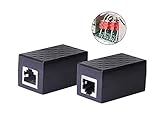
- PROTECTION EQUIPMENT - The Network Surge Protector Suppressors protects against network surges.Insert a Network Surge Protector in your network cables, to prevent network surging.This is a good insurance policy for your expensive router and outdoor POE antenna.
- EXTENSION - Use this RJ45 Coupler to connect two network cables into one longer network cable. When your network cable is too short and needs to be extended, using this dual-pass is a very good solution.Data transmission rate:100Mbps
- SURGE PROTECTION - Built-in 8 TVS anti-detonator, prevent lightning and other abnormal current through the network cable damage to your computer equipment.
- HIGH QUALITY - Fixed interface shielding external EML,RFL and other electromagnetic interference.Effectively prevent network signal damage.Using PC flame retardant raw materials, fire rating 100V0.
- EASY TO USE - Plug and play.There is no ""In"" or ""Out"" cable side of this device, both sides are identical RJ-45 Interface.Regardless of whether your protected device is behind any particular side, it can work properly by connecting the correct cables.
Use the blocker’s DHCP service when the router cannot set DNS
Some routers do not let you specify a custom DNS server. In that case, the blocker can provide DHCP itself. First disable DHCP on the router, then enable and configure DHCP in the blocker, including the correct address pool, gateway, and lease range. Pi-hole documents this arrangement for networks where the router cannot advertise a custom DNS server. Never run both DHCP servers on the same LAN; competing servers can give devices inconsistent gateways and DNS addresses.
Check the blocker itself
Confirm it listens on the LAN interface
If the phone still produces no log entries after the router change, verify that the blocker is listening on the LAN interface and the expected DNS port. A service bound only to localhost or a management interface cannot answer requests from Wi‑Fi clients. Also check that the router’s firewall permits LAN clients to reach the blocker.
Inspect filters when requests are visible
When the phone’s requests appear in the log, inspect enabled blocklists, allowlists, rewrites, and custom rules. A domain may be intentionally allowed, missing from the active lists, or rewritten by a local rule. Test one domain at a time so you can distinguish a rule problem from a connectivity problem.
Rank #3

- LIFETIME PRIVATE BROWSING INCLUDED: Built-in decentralized VPN service delivers always-on privacy without subscriptions, masking your IP and encrypting traffic as you roam with this portable wifi and vpn router, ideal for privacy-conscious travelers and remote workers.
- LIGHT DAILY CONNECTIVITY TIER: Designed as a low-overhead portable router mode for light browsing and messaging, this setting trims background chatter and quietly blocks intrusive ads to stretch limited hotel or café bandwidth, helping privacy-minded users keep everyday email, social feeds, and cloud notes responsive without burning through data or battery on the go.
- OPTIMIZED POCKET ROUTER CAPACITY: Tuned as a compact portable wifi router for 1–3 small devices, this pocket router balances speed and stability so your phone, tablet, or laptop stay reliably connected without slowdowns, ideal for focused solo work sessions or minimalist travel setups.
- SMART CONTENT FILTERING CONTROL: Intelligent traffic management automatically prioritizes video and music streams while enabling smart ad blocking and simple parental controls, helping this portable wifi router keep casual entertainment smooth and family browsing more focused without extra apps or complex setup, ideal for relaxed evenings or kid-friendly screen time.
- ENTERPRISE-GRADE THREAT DEFENSE: Enterprise-grade firewall hardening, tracker blocking, and DNS-layer malware shielding work together on this portable wifi router to quietly stop suspicious sites and risky connections before they load, reducing phishing and data-theft exposure for privacy-first users who treat every network like a hostile one.
Stop device-level bypasses
- Android: review the Private DNS setting and any management profile or VPN that supplies a resolver.
- iPhone and iPad: check installed configuration profiles, DNS-management apps, and VPN settings.
- Browsers: inspect Secure DNS or DNS-over-HTTPS settings separately from the operating system.
- Router: review both IPv4 and IPv6 DNS advertisements and remove unintended fallback resolvers.
After changing a setting, reconnect the phone to Wi‑Fi and run a fresh query-log test. A phone can retain a previous network configuration until its lease or connection is renewed.
Router-wide versus per-device deployment
| Deployment | Coverage | Bypass resistance | Operational effort | Failure visibility |
|---|---|---|---|---|
| Router DHCP/DNS | All clients that accept the router’s settings | Protects plain DNS clients; encrypted DNS, VPNs, and alternate IPv6 paths can still bypass it | One router or DHCP change | Central blocker query log shows client requests |
| Per-device configuration | Only selected phones, browsers, or profiles | Depends on each device’s ability to prevent alternate resolvers | Repeat settings on every device and browser | Device-local diagnostics; no complete central view |
A router deployment is usually the best baseline for a household. Per-device settings are useful for phones that travel, for testing, or for networks where you cannot administer the router.
When the blocker is working but ads remain
DNS filtering can block a domain before a device connects to it, but it cannot remove every advertisement. AdGuard’s FAQ states: “Essentially, any advertising that shares a domain with content cannot be blocked by a DNS-level blocker.” If the relevant requests are visible in the query log and the blocker handles them normally, ads served from the same domain as videos, articles, or other required content may be an inherent DNS-level limitation rather than a home-network failure.
Quick Recap
A reliable troubleshooting checklist
- Test one phone on home Wi‑Fi while watching the query log.
- If nothing appears, correct router DHCP/DNS, IPv6 DNS, Private DNS, Secure DNS, VPN, or profile settings.
- If requests appear, inspect blocklists, allowlists, rewrites, and custom rules.
- If the router cannot advertise custom DNS, disable its DHCP and use the blocker’s DHCP service.
- Renew leases or reconnect devices after every network change.
- If logged requests still produce ads, determine whether the ads share a domain with requested content.
Product prices and availability are accurate as of the date/time indicated and are subject to change. Any price and availability information displayed on Amazon at the time of purchase will apply.

