
Free tools Windows power users keep installed
One-click scans. No signup required.
iTechGuides is reader-supported. When you buy through links on our site, we may earn an affiliate commission. As an Amazon Associate I earn from qualifying purchases. Learn more
A sour, grassy cup is often under-extracted, while a harsh, drying or burnt-tasting cup may be over-extracted. Grind size can move extraction in the right direction: a slightly finer grind usually extracts more, and a slightly coarser grind usually extracts less. That is a useful starting point, not a complete diagnosis. Roast level, beverage strength, water, brew time, uneven flow and how long the coffee sits can all change what you taste.
Adjust one variable at a time, make a small change, and compare the new cup with the previous one. The goal is not maximum extraction; it is a balance you enjoy for your particular coffee and brewer.
What bitter and sour flavors usually indicate
Taste is a clue about extraction, not a laboratory measurement. Extraction yield is the percentage of coffee solids that dissolve into the water. Beverage strength, often expressed as total dissolved solids (TDS), is how concentrated that dissolved material is in the finished drink. The two dimensions are related but not identical: a coffee can be strong without being highly extracted, or weak without being especially under-extracted.
Sour, sharp or grassy: often lower extraction
When too little of the coffee has dissolved, the cup can taste sharply acidic, tart, thin or grassy. The Specialty Coffee Association’s brewing-chart discussion places sour or grassy impressions toward the low-extraction side. A fast flow, a grind that is too coarse for the recipe, insufficient contact time, or water that does not reach all the grounds can produce this profile.
#1 Best Overall
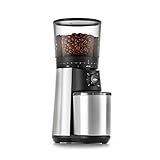
- 40mm stainless steel conical burrs: Precision grinding system produces uniform coffee grounds to ensure even extraction for rich, balanced flavor in every cup.
- 15 grind settings (plus 43 micro-adjustments): Easily customize your coffee grind—from fine for espresso to coarse for French press and cold brew.
- One-touch start: The Conical Burr Coffee Grinder remembers your last setting. Just push to grind—no need to reset each time.
- Brew bigger: Large removable hopper holds up to 12 ounces of coffee beans.
- Always fresh: UV-blocking tint shields coffee beans in sunny kitchens.
Bitter, harsh or drying: often higher extraction
As extraction rises, later-dissolving compounds can add bitterness, astringency or a drying finish. A grind that is too fine, a long contact time, or channels that overwork part of the bed can contribute. Dark roasting can also create roast-derived bitterness before grind changes are considered.
Why the classic chart is only a map
The SCA chart connects strength, extraction yield and brew ratio, but its familiar taste zones simplify a complicated sensory response. The same extraction can taste different with another roast, water chemistry or brew method, and personal preference varies. Treat the chart as a direction finder rather than a universal target. “More extracted” is not automatically “better.”
| What you taste | Possible extraction direction | First grind experiment | Other checks |
|---|---|---|---|
| Sharp sourness, grassy acidity, thin body | Often low extraction | Go slightly finer | Check contact time, flow and whether all grounds are wet |
| Harsh bitterness, drying finish, roasty bite | Often high extraction | Go slightly coarser | Check dark roast, brew time, strength and time held |
| Bitter and sour sensations together | Possibly uneven extraction | Do not make a large change; improve consistency first | Look for channeling, clumps, uneven pouring or a mixed grind |
How grind size changes extraction
Grinding exposes more surface area. Under the same recipe, finer particles generally let water dissolve coffee compounds more readily, increasing extraction. Coarser particles generally slow dissolution and lower extraction. These are directional tendencies, not guarantees: changing grind also changes flow resistance and contact time, so the result depends on the brewer, filter, dose, water and technique.
PC Slower Than It Used to Be?
A free scan shows the junk files, broken settings and background clutter dragging Windows down - then fixes them in one click.Free scan · Windows 10 & 11Outdated Drivers Are Slowing You Down
One free scan finds every outdated or missing driver and matches the right update for your exact hardware.Free scan · exact hardware matchFiner is a controlled move toward more extraction
If your cup is clearly sour and weak, move one small setting finer. In a pour-over, that may slow the drawdown and give water more contact with the grounds. In an immersion brewer, it may increase the rate at which solids dissolve. If the result becomes drying or bitter, the change was too large or another variable is responsible.
Rank #2

- 【Durable Conical Burr】With 40-millimeter stainless steel conical burrs, OLLYGRIN burr coffee grinder ensure optimal flavor extraction and create uniform grounds.
- 【Precise Grinding Settings】The OLLYGRIN burr coffee grinder offers 30 precise grind settings to make everything from an ultra-fine grind for espresso to a coarser grind for french press coffee for your customized brewing method.
- 【Keep the Optimal Flavor of Coffee】 OLLYGRIN burr coffee grinder has a gear reduction motor, which generates the slow grinding action. The coffee grinder produces less heat from friction and ensures the flavor and aroma of the coffee beans intact.
- 【Large Capacity & Auto-locking System】 OLLYGRIN burr coffee grinder has a large hopper, it is capable of holding 10 ounces of whole beans. Also allows to store enough beans for several servings of coffee. Ollygrin coffee grinder has a auto-locking system, the coffee hopper on burr grinder can resist the beans from spilling out for easy removal, storage, and transfer of the bean hopper.
- 【Double Safety Protection】* Friction clutch prevents damage to the grinding gear of burr grinder in the event of small stones in your beans. **Built-in overheating protection protects the motor of burr grinder to ensure the coffee grinder a long life.
Coarser is a controlled move toward less extraction
If the cup is aggressively bitter or astringent, move one small setting coarser. This can speed flow and reduce the amount extracted. A very coarse grind can swing too far and leave the cup sour and hollow, so make the smallest repeatable adjustment your grinder allows.
Why grinder consistency matters
A batch containing many fines and boulders can extract unevenly: fines may become over-extracted while larger pieces remain under-extracted. That combination can taste both bitter and sour. A burr coffee grinder with adjustable settings can make controlled, repeatable changes; the category is useful when a current grinder cannot hold a consistent setting. The SCA lists home-grinder specifications and test methods as under development, so a grinder should not be presented as SCA-certified merely because it has a particular design.
Other causes to check before blaming the grind
Roast level and roast character
Roasting changes the compounds available to dissolve. Darker coffees can bring smoky or bitter roast notes even when extraction is reasonable. Lighter coffees can retain pronounced acidity that may be perceived as sour, especially when the drink is weak. Compare coffees at similar strength before deciding that one grind setting works for every roast.
What’s actually slowing this PC down?
Pick the symptom - the matching free tool is one click away.
Beverage strength and brew ratio
Adding more water lowers concentration; using more coffee raises it. Neither change alone tells you whether the grounds were under- or over-extracted. A concentrated, low-extraction brew may taste sour, while a dilute, high-extraction brew can still taste harsh. Keep your coffee and water amounts stable while you troubleshoot grind.
Rank #3
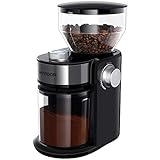
- [ UNIFORM BURR GRINDING ] Premium metallic flat burr mill ensures consistent, uniform grounds without burning beans. Perfectly preserves rich coffee aroma for pour-over, drip, and cold brew.
- [ 16 PRECISE SETTINGS ] Features 16 micro-adjusted grind settings. Easily customizes from fine for espresso to coarse for French press at a simple turn. Get fresh, flavorful coffee at home.
- [ 2-14 CUPS AUTO-STOP ] Electric smart timer dial allows selecting 2 to 14 cups. One-touch automatic operation runs hands-free and auto-shuts off when finished. No waste, zero hassle.
- [ UPGRADED SAFETY LOCK ] Equipped with a dual safety interlock system. The grinder only operates when both the bean hopper and chamber are securely locked, preventing stuck issues or spills.
- [ EASY CLEAN & ACCESSORIES ] Removable grounds chamber with an anti-spill lid helps control powder scattering. Includes a professional brush to easily sweep away leftover micro-grounds.
Time, temperature and flow
Contact time and water temperature influence how much dissolves. The SCA-reported brewing-temperature study adjusted grind size, brew time and temperature to reach target extraction and strength values. Within that tested design and range, sensory differences tracked the extraction and strength produced by those variables rather than acting as wholly independent flavor switches. This does not mean temperature or grinder choice never matters; it means their effects must be interpreted in the context of the recipe and equipment.
Holding time
Coffee can taste more bitter as it sits. The SCA’s explanation of bitterness identifies holding time, along with roast, concentration and extraction, as an influence. Taste the coffee promptly and note whether the complaint appears only after it has cooled or remained in a carafe.
A one-change-at-a-time grind adjustment
- Stabilize the recipe. Write down the coffee, dose, water amount, brew method, grind setting, brew time and approximate yield or cup volume. Keep those values unchanged for the comparison.
- Describe the defect precisely. Record whether the cup is sharp and thin, woody and drying, roasty, weak, or simply more acidic than you prefer. “Bitter” and “sour” can describe different sensations, so specific notes help.
- Make one small grind move. For sharp sourness, move one setting finer. For harsh bitterness, move one setting coarser. If your grinder has a numbered dial, record the old and new numbers; numbering is not standardized between grinders.
- Repeat the same brew. Use the same water, pouring pattern, dose and temperature. Discard or purge enough retained grounds if your grinder holds coffee from the previous setting, then brew normally.
- Compare side by side. Taste the original and adjusted cups at the same age and temperature. Decide whether the target flavor became less intense, whether body changed, and whether a new bitterness or sourness appeared.
- Stop when the cup is balanced for you. If the change improved the cup, keep it and make no other adjustment. If it worsened the cup, return to the prior setting and test the opposite direction or investigate another variable.
If the cup is sour and thin
Try a slightly finer grind first. If that does not help, check for a very fast brew, dry pockets in the bed, an overly dilute ratio or a coffee whose natural acidity you simply do not enjoy. Change only one of those after the grind comparison.
Do these 3 things before closing this tab:
1Clear out junk files and repair common Windows errors2Fix the driver behind crashes, sound loss and screen glitches3Repair Windows errors before they cause bigger problemsIf the cup is bitter and drying
Try a slightly coarser grind first. If bitterness remains, check whether the roast itself is strongly roasty, whether the brew ran unusually long, whether the beverage is concentrated, and whether it has been held hot for an extended period.
Rank #4

- [Consistent Flavor Extraction]: Choose the coarseness you need from the 28 settings on the Lonkion burr coffee grinder. The flat metal burr grinding head ensures an even and consistent grind. Whether you need a fine grind for espresso or a coarser grind for French press coffee, you can adjust the grind size for any coffee type.
- [On-Demand Control, Convenient Operation]: Select from 2 to 12 cups with auto-stop functionality. Simply adjust the coarseness, set the number of cups, and press the switch—the grinder handles the rest automatically.
- [Overheat Protection, Low Noise]: The Lonkion burr coffee machine operates with low noise and is equipped with an overheat protection system. If the chip detects an abnormal situation, it will automatically stop working.
- [Easy to Clean]: The Lonkion burr coffee grinder features a specially treated plastic container that helps prevent static electricity and keeps coffee grounds from sticking. Plus, it comes with a brush for hassle-free cleaning.
- [Compact and Lightweight, Ideal for Storage]: This burr grinder is designed to be compact and user-friendly. It easily fits into different kitchen spaces and can be stored with minimal effort.
If both sensations appear in one cup
Uneven extraction is one possible explanation: some particles may be over-extracted while others are under-extracted. It is not the only diagnosis established by taste. Inspect the bed for clumps, cracks or obvious channels; improve distribution and pouring consistency before making a dramatic grind change. A more uniform grind can make the next adjustment easier to interpret.
Independent reader supportYour contribution helps us test, update, and keep practical guides available for everyone.Use the advice with the brewing method
Pour-over
Pour-over responds visibly to grind because particle size changes flow through the filter bed. A finer setting commonly slows drawdown; a coarser setting commonly speeds it. Keep your pouring pattern and water volume fixed while testing. As a concrete, method-specific example, the SCA’s best-practice guideline for a two-cup pour-over specifies 22 grams of coffee, a medium-fine grind and 400 grams (or milliliters) of water. That example is not a universal setting for every pour-over, and it is not a recipe for espresso or immersion brewing.
Immersion brewing
In an immersion brewer, all grounds sit in water for a prescribed period, so grind changes alter dissolution and filtering more than they alter a continuous flow rate. Keep steep time and agitation consistent. A finer grind may increase extraction and sediment; a coarser grind may reduce extraction but can leave the drink thin if the contact period is short.
The Tool Desk
Outbyte Driver Updater FREEFix the driver behind crashes, sound loss and screen glitchesFind Drivers →Outbyte PC Repair FREEClear out junk files and repair common Windows errorsFree Scan →Espresso and other pressure brewers
Pressure brewers are especially sensitive to small grind changes because the puck controls flow resistance. Move in tiny increments and keep dose, tamping and shot volume consistent. A change that is appropriate for a filter coffee may be far too large here. If the grinder cannot make repeatable micro-adjustments, diagnosing by taste becomes difficult.
Best Value

- Slim, powerful grinder with precise settings from fine to coarse, with 15 settings and 29 micro-adjustments
- Stainless steel conical burrs provide high grind quality and consistency
- Holds up to 50 grams of coffee beans, for making up to 6 cups/30 oz of coffee
- At only 11 in/28 cm tall and 4 in/10 cm wide, it’s compact enough to store easily on countertops or in cabinets
- Upper and lower burrs are removable for easy, thorough cleaning
What the SCA experiments actually show
One SCA-reported sensory experiment found the strongest sourness in samples at approximately 16% extraction yield and relatively high strength of about 1.5% TDS. Brown-roasted flavor was strongest at approximately 24% extraction and high strength of about 1.5% TDS. Those values describe that experiment’s samples and conditions; they are not universal home-brewing targets or proof that every coffee should be pushed to either number.
The broader lesson is that extraction and strength interact. Measuring TDS with a refractometer can help an experienced brewer separate concentration from extraction, but taste remains the final decision for a home cup. Without measurement, a controlled comparison—one variable, one small change, same recipe—is more reliable than chasing a number from a different brewer.
Common troubleshooting mistakes
- Changing several variables at once: A new grind, water ratio and temperature leave you unable to tell what helped. Reset and test one change.
- Making a large grind jump: Overshooting can turn sour into bitter or bitter into sour. Use the smallest setting that produces a noticeable comparison.
- Using “strong” as a synonym for “over-extracted”: Strength is concentration, not extraction yield. Correct the ratio and grind separately.
- Ignoring retained or mixed particles: A grinder that produces clumps or a wide particle distribution can create contradictory flavors. Distribute grounds evenly and consider a more adjustable burr grinder if repeatable changes are impossible.
- Judging coffee at different temperatures: Taste the comparison cups at similar temperatures and after the same holding time.
- Assuming the chart defines your preference: SCA’s chart is intentionally simplified. A lively acidic cup may be correct for one person, while another prefers a rounder, less extracted profile.
A practical decision rule
Start with the simplest interpretation: sour and thin usually calls for a little more extraction, so test finer; bitter and drying usually calls for a little less, so test coarser. Preserve every other condition, compare the cups directly, and stop when the flavor suits you. If neither direction works, broaden the diagnosis to roast, strength, flow, temperature, holding time and grind consistency rather than continuing to force grind size to solve a problem it cannot solve alone.
Recommended Free Tools
Quick Recap
Product prices and availability are accurate as of the date/time indicated and are subject to change. Any price and availability information displayed on Amazon at the time of purchase will apply.

