
iTechGuides is reader-supported. When you buy through links on our site, we may earn an affiliate commission. As an Amazon Associate I earn from qualifying purchases. Learn more
Sulfur concrete can crack because the sulfur binder contracts and changes phase as it cools, because repeated temperature changes reduce strength, or because the installed concrete is being attacked by water, acids, corrosion, sulfation, process chemicals, or movement that the detailing cannot accommodate. Those mechanisms do not apply equally to every product: unmodified elemental-sulfur concrete behaves differently from modified sulfur and sulfur-polymer cement systems.
The reliable way to diagnose a failure is to identify the binder first, then match the crack pattern and damage to the actual temperature, moisture, chemical, and restraint conditions. Prevention depends on exposure-specific mixture qualification, controlled hot-mix placement, compatible aggregate, movement joints, sealed moisture paths, and inspection for process or steam-coil leaks.
What sulfur concrete is—and why the binder changes the diagnosis
Sulfur concrete replaces the hydraulic cement paste in ordinary concrete with a sulfur-based binder. The aggregate still provides most of the volume, but the binder hardens by cooling and solidifying rather than by Portland-cement hydration. That gives sulfur concrete rapid strength development and useful chemical resistance in selected environments, but it also makes temperature history, sulfur chemistry, and joint detailing central to performance.
“Sulfur concrete” is a family of materials, not one universal recipe. The first question in a crack investigation should be whether the installation uses unmodified elemental sulfur, a sulfur-modified cement, or a sulfur-polymer cement. A conclusion based on one category can be wrong for another.
#1 Best Overall

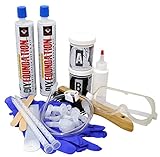
- FIX FOUNDATION WALL CRACKS EASILY: Our Concrete Crack Repair Kit offers a reliable solution for foundation crack repair injection kit and concrete crack repair. Homeowners can address concrete cracks and cement crack filler issues efficiently, preventing water infiltration and protecting the basement from potential water damage. Whether you’re facing rainstorms or just trying to maintain your basement, it provides a hassle-free solution, saving you the cost and trouble of hiring professionals.
- LONG-LASTING WATERPROOF PROTECTION AND SEALING: Our Hydra Stop 300 Polyurethane Foam expands to fill cracks, acting as a concrete crack filler that creates a durable, waterproof concrete sealer barrier. This foam sealant gap filler helps prevent moisture entry, providing long-lasting protection concrete patch to your basement and foundation. Homeowners worried about water damage and basement flooding can rely on this effective solution.
- PRESERVE YOUR HOME’S VALUE AND STRUCTURAL INTEGRITY: In addition to offering a practical foundation cement crack filler solution, our kit helps maintain the structural integrity of your foundation. Sealing cracks with concrete crack sealer reduces the risk of foundation cement crack repair issues, helping to protect your home from further damage and providing lasting concrete crack repair. With an easy-to-apply system, this kit allows DIY homeowners to feel confident in their repair work.
- INCLUDES COMPLETE REPAIR SOLUTION: Our concrete crack filler and sealer kit includes 2-Hydra Stop 300 Polyurethane Foam, 2-Poxy Paste crack sealant, 15-surface ports, caulk gun, 2 pairs nitrile gloves, safety glasses, drop cloth, 10-wooden sticks, 10-corner ports, wire brush and a flexible injection hose assembly. This simplifies foundation cement crack filler repairs, making it easy for DIY homeowners to handle large cracks with the help of clear instructions and video tutorials.
- WHY CHOOSE APPLIED TECHNOLOGIES: Applied Technologies has been a trusted name in waterproofing and foundation repair solutions for over two decades. Our Hydra Stop 300 Polyurethane Foam provides effective foundation crack repair and concrete crack filler performance, ensuring a reliable seal. With easy-to-follow instructions for concrete crack sealer application and durable cement crack filler materials, we offer products designed to help protect your home and provide lasting results.
| Binder category | What matters most | How to use the evidence |
|---|---|---|
| Unmodified elemental sulfur | Cooling contraction, sulfur phase behavior, brittleness, and thermal cycling can create internal stress and loss of integrity. | Classic phase-change and contraction discussions apply most directly here; do not generalize them to every modified system. |
| Modified sulfur | Modifier chemistry, proportion, aggregate compatibility, moisture, and operating temperature determine durability. | Require formulation-specific qualification rather than assuming the unmodified material’s behavior. |
| Sulfur-polymer cement | Polymer formulation, chemical exposure, temperature range, joints, and installation controls govern performance. | ASTM C1159 addresses sulfur polymer cement and sulfur modifier for chemical-resistant sulfur concrete, but the cited ASTM C1159-98 edition is historical; verify the active edition before specifying. |
ASTM International describes the scope of ASTM C1159-98 as: “This specification covers the requirements for sulfur polymer cement for use in rapid setting and high strength applications of chemical-resistant sulfur concrete.” That scope identifies an intended use; it is not a guarantee that a particular mixture will survive a particular plant environment.
The main ways sulfur concrete cracks or fails
Cooling contraction and sulfur phase change
When hot sulfur concrete cools, the sulfur binder contracts. Unmodified sulfur can also undergo phase changes as its temperature history evolves. Contraction and phase transformation can impose tensile stress on the binder-aggregate composite. If the stress exceeds the material’s capacity—especially in a brittle formulation, at a restrained interface, or around a defect—cracks or localized loss of bond can result.
There is no single phase-change number that can be used as a universal design value. The temperature at which a transition matters, the magnitude of movement, and the resulting stress depend on formulation, modifier, aggregate, cooling history, geometry, and restraint. A reported value from one laboratory mixture should not be copied into a specification for another mixture.
Thermal cycling and operating temperature
Daily or process-related heating and cooling repeatedly expands and contracts the composite. Restraint from a base, walls, embedded items, or adjacent pours converts that movement into stress. Cycling can also change the mechanical properties of the sulfur binder.
A 1980 ASTM symposium study, Durability Studies of Sulfur Concrete, found that some sulfur concretes lost compressive and flexural strength after temperature cycling; flexural strength showed the largest effect. The same abstract reported no cracking in its specimens during salt-solution immersion. That combination is important: a laboratory exposure can show strength loss without visible cracking, and a no-crack result under one immersion condition does not establish durability under a different temperature, chemical, or restraint regime.
For a real installation, evaluate the minimum and maximum service temperatures, rate and frequency of cycling, hot spots, thermal gradients, restraint, and the qualified binder. Avoid relying on a generic “safe temperature” that is not tied to the exact formulation and exposure.
Chemical attack, corrosion, sulfation, and polymerization in service
Industrial sulfur storage pits and process areas can fail through several simultaneous mechanisms. An ASCE paper on sulfur storage pits identifies corrosion, sulfation, acidic attack, thermal expansion, and polymerization as relevant deterioration mechanisms. These are service-environment causes, not merely manufacturing defects.
Water can enter through the concrete matrix or arrive through leaks in steam coils. Once water or process liquid reaches a vulnerable interface, it can transport acids, salts, or contaminants, maintain corrosive conditions, and amplify thermal or chemical damage. A crack in a sulfur storage pit therefore should not automatically be attributed to sulfur phase change. Inspect the process system, drainage, coil integrity, and chemical history before selecting a repair.
Aggregate, contaminants, and moisture incompatibility
The aggregate is part of the chemical and thermal system. Absorption, surface contamination, grading, moisture content, and mineral compatibility can affect wetting, voids, bond, and the stresses generated during cooling. An aggregate that performs acceptably in a dry laboratory comparison may behave differently when exposed to process liquid, standing water, or repeated heating.
Project-specific aggregate characterization and complete-mixture qualification are prudent when failure consequences are high. Test the actual binder and aggregate combination under representative moisture and temperature conditions instead of qualifying the binder alone.
Joints, interfaces, and restraint
Even a chemically resistant mixture can crack if movement is trapped. Long slabs, pit walls, penetrations, changes in thickness, transitions to Portland-cement concrete, and rigid equipment supports create stress concentrations. An unsealed joint can also become a direct path for acid or water to reach the base.
Windows Errors? Fix Them Before They Spread
Repair common Windows errors and clear accumulated junk for a smoother, more stable PC - no reinstall needed.Free scan · no reinstallOutdated Drivers Are Slowing You Down
One free scan finds every outdated or missing driver and matches the right update for your exact hardware.Free scan · exact hardware matchRank #2
- Drill-Free Injection: Repair basement wall cracks effortlessly without drilling, ensuring minimal disruption to your home's structure.
- Simple Application: Use a standard caulking gun to inject the low-viscosity, 2-component urethane, making the process accessible for any homeowner.
- Effective Hairline Crack Repair: Seal even the smallest cracks permanently with the specialized urethane, preventing further water seepage and damage.
- Interior Repair Advantage: Save on costly excavation by repairing cracks from inside your basement, maintaining exterior aesthetics and structural integrity.
- Comprehensive Protection: This solution not only protects against water but also acts as a barrier against radon and soil gases, safeguarding your basement environment.
Joint width, spacing, isolation, substrate preparation, and sealant compatibility must be designed for the expected movement and chemicals. A joint that is adequate for a dry floor may be unsuitable for a hot, acidic storage pit.
Do not confuse sulfur-binder cracking with sulfate attack in Portland-cement concrete
Portland-cement concrete can crack through external or internal sulfate attack and other cement-paste mechanisms. The Federal Highway Administration’s Guidelines for Detection, Analysis, and Treatment of Materials-Related Distress in Concrete Pavements describes those cement-based distress patterns. They may matter in an adjacent pavement, foundation, or repair, but they are not interchangeable with cracking caused by sulfur-binder contraction or phase change.
Before applying a diagnostic chart or specifying a sulfate-resistant repair, confirm the material. Useful identification evidence includes construction records, supplier documentation, color and texture, core examination, and laboratory binder characterization. Treat an interface between sulfur concrete and Portland-cement concrete as two materials with different movement and chemical requirements.
A practical failure-investigation workflow
Use the following sequence before deciding whether a crack is cosmetic, structural, chemical, thermal, or a combination of causes.
Free tools Windows power users keep installed
One-click scans. No signup required.
- Identify the binder system. Obtain the batch or product record and determine whether the installation is unmodified sulfur, modified sulfur, or sulfur-polymer cement. Check the applicable current specification; ASTM C1159-98 and ASTM C1312 pages cited for this subject identify historical editions, so their current status must be confirmed before use.
- Map the damage. Record crack width, length, orientation, depth, spacing, branching, spalls, debonded areas, exposed aggregate, discoloration, and whether damage follows joints, penetrations, walls, or hot spots. Photograph the same locations over time.
- Establish the thermal history. Record normal operating temperature, excursions, startup and shutdown rates, cycling frequency, radiant hot spots, and temperature differences between the surface, base, and adjacent members. Note whether the concrete was restrained during cooling.
- Inventory moisture and chemicals. Check standing water, washdown, drainage, acid or salt exposure, chemical spills, vapor condensation, leaks in steam coils, and paths through joints or the base. Compare the map of liquid exposure with the map of cracking and corrosion.
- Check construction and detailing records. Review aggregate source and moisture, mix temperature, placement sequence, compaction, cooling controls, joint layout, sealant, substrate condition, and any interruptions or cold interfaces. Missing records are a reason for additional testing, not a reason to assume the most familiar failure mechanism.
- Test representative material. Where the consequences justify it, take cores or other samples for binder identification, aggregate examination, voids, contamination, and mechanical or chemical testing. ASTM C1312 provides a controlled practice for making and conditioning chemical-resistant sulfur-polymer-cement concrete specimens in the laboratory. It improves comparison between mixtures but does not reproduce every field exposure.
- Separate primary and secondary damage. For example, thermal cracking may open a path for water, after which acidic attack or corrosion enlarges the defect. Record the initiating condition and the later aggravating conditions rather than assigning one label to the entire failure.
How to prevent cracking before construction
Specify the complete system, not a generic “sulfur concrete”
Write the binder technology, aggregate requirements, intended chemical exposure, moisture condition, temperature range, cycling, restraint assumptions, joints, installation method, and acceptance tests into the project specification. Ask the supplier to identify the formulation and its limits. If a standard is cited, verify that the edition is current and that its scope matches the proposed material.
Comparison should cover at least the following dimensions:
| Decision dimension | Questions to answer before approval |
|---|---|
| Binder formulation | Is it unmodified sulfur, modified sulfur, or sulfur-polymer cement? What modifier and proportion are used? |
| Aggregate | What are the source, grading, absorption, moisture condition, cleanliness, and chemical compatibility? |
| Chemical resistance | Has the complete mixture been evaluated against the actual acids, salts, hydrocarbons, oxidizers, or process chemicals? |
| Thermal performance | What operating range, cycling frequency, thermal gradient, and restraint were represented in testing? |
| Moisture exposure | Can water reach the matrix, base, joints, penetrations, or steam coils, and how will it be drained or excluded? |
| Installation | What hot-mix temperature, handling window, placement sequence, compaction, and cooling controls are required? |
| Movement and interfaces | Where are expansion, isolation, and construction joints, and is the sealant compatible with the chemicals and temperatures? |
| Evidence and repairability | Are test methods, acceptance criteria, inspection records, and a compatible repair procedure defined? |
Available technical sources establish these as relevant comparison axes, but they do not establish a universal ranking of sulfur-concrete products.
Qualify the complete mixture under representative conditions
Use the actual binder, aggregate, proportions, and intended production process for qualification. Include the moisture and temperature history that matters in service, plus representative cycling where cycling is expected. ASTM C1312 is useful for controlled laboratory specimen preparation and conditioning when comparing sulfur-polymer-cement mixtures. It does not replace field-specific design, supplier limits, or an assessment of restraint and joints.
Recommended Free Tools
For high-consequence work, compare strength retention, flexural behavior, dimensional movement, bond at interfaces, chemical exposure response, and visible cracking after conditioning. Keep the test temperature, duration, immersion liquid, cycling schedule, and specimen preparation with the results so that a later user does not mistake a laboratory condition for a universal guarantee.
Control hot-mix production and placement
Sulfur concrete is placed as a specialized hot material. ACI Committee 548’s Guide for Mixing and Placing Sulfur Concrete in Construction addresses mixing and placement in environments where conventional Portland-cement concrete can fail. Follow the supplier’s and engineer’s specified temperatures, mixing sequence, handling time, placement method, and safety controls; do not substitute ordinary Portland-cement curing assumptions.
Quality control should document batch proportions, aggregate condition, mix temperature, placement temperature, layer or pour sequence, compaction, joint locations, and cooling or protection measures. Prevent contamination and unintended water contact while the material is being handled. Investigate any batch that falls outside the qualified process window instead of assuming that rapid set will conceal the deviation.
Rank #3

- FAST & EASY CRACK REPAIR: Quickly seal leaks with this advanced 10' foundation crack repair injection kit designed for fast results and minimal effort. Sets rapidly and helps homeowners fix structural cracks in minutes without waiting hours or calling professionals
- COMPLETE ALL-IN-ONE REPAIR KIT: This premium concrete crack filler includes everything you need, such as urethane foam, injection ports, adhesive, gloves, and tools, so you can start immediately. Offers more material than standard kits for better coverage and value
- NO SPECIAL TOOLS REQUIRED: Designed for easy DIY foundation repair, this system works with a standard caulking gun; no drilling or special equipment needed. Quick and effective concrete crack repair, making it a hassle-free solution for homeowners
- DURABLE WATERPROOF SEAL: The expanding urethane creates a durable barrier that blocks water intrusion and prevents future damage. Excellent for foundation leak repair and reliable concrete wall leak repair, ensuring your basement stays dry and protected over time
- FIX, SEAL & PREVENT FUTURE DAMAGE: Engineered to restore structural integrity, this solution seals existing cracks and helps prevent future leaks, protecting your home's foundation for the long term
Design joints and seal moisture paths
Movement joints should accommodate the expected thermal and shrinkage movement without transferring damaging restraint. Isolate the sulfur concrete from incompatible or highly restrained components where the design requires it, and detail penetrations so that movement does not concentrate at a sharp corner.
Do these 3 things before closing this tab:
1Scan for outdated or missing drivers - takes under a minute2Clear out junk files and repair common Windows errors3Fix the driver behind crashes, sound loss and screen glitchesA CDC-hosted industrial evaluation of sulfur concrete in corrosive environments recommends sealing expansion joints with an acid-resistant elastomer to limit acid or moisture penetration to the base. That recommendation still requires compatibility verification for the actual chemicals, temperature, movement, and substrate. Sealant selection is not a generic product substitution.
Design the base and drainage for the real exposure
Provide a drainage path for wash water and process liquids, avoid details that trap liquid beneath the slab, and protect the base from the chemicals identified in the exposure assessment. In sulfur storage pits, include inspection access for steam coils and other potential leak sources. A chemically resistant top layer cannot compensate for a persistently wet or chemically attacked base detail.
Special considerations for sulfur storage pits
Storage pits combine large restrained surfaces, hot sulfur, process chemicals, steam heating, and difficult access. Inspect them using an exposure map rather than a crack-only survey.
- Check steam coils, welds, valves, and penetrations for leaks or localized overheating.
- Look for standing water, blocked drains, condensate, and liquid paths through joints or the concrete matrix.
- Inspect for acidic deposits, sulfation, corrosion products, polymerized or otherwise altered sulfur, and aggregate debonding.
- Compare cracks with thermal gradients near coils, walls, corners, and transitions.
- Record whether deterioration is confined to the sulfur concrete or continues into the base, joint seal, reinforcement, or adjacent Portland-cement concrete.
The ASCE discussion of sulfur storage pits identifies corrosion, sulfation, acidic attack, polymerization, thermal expansion, water ingress, and steam-coil leaks as relevant contributors. A repair decision that addresses only the visible crack can fail again if the leak, chemical source, or thermal restraint remains.
What’s actually slowing this PC down?
Pick the symptom - the matching free tool is one click away.
Repair and remediation: match the intervention to the cause
There is no responsible one-size-fits-all patch for sulfur concrete. Before repair, establish whether the defect is stable, still moving, chemically active, wet, or associated with loss of bond or section. A qualified structural or materials engineer should determine whether the installation can remain in service during investigation and what temporary containment is required.
If movement or thermal cycling is primary
Remove the restraint or redesign the joint detail where feasible, then use a repair material and procedure compatible with the existing sulfur binder and service temperature. A rigid Portland-cement patch may have different movement and chemical behavior and should not be assumed compatible. Confirm bond, thermal movement, and chemical resistance with the repair designer and material supplier.
If water or chemical ingress is primary
Stop the leak, improve drainage, remove contaminated or unsound material as directed by the engineer, and restore the joint or interface seal with a chemically and thermally compatible system. Sealing a crack while water continues to arrive through a steam coil, base, or adjacent joint treats the symptom rather than the cause.
If the mixture or placement was deficient
Use cores, records, and testing to define the extent of the deficient area. Do not infer the quality of an entire floor from one surface crack, but do not limit repair to the crack if testing shows widespread voids, poor bond, contamination, or strength loss. Replacement or a designed overlay may be required, with the new material qualified for the same exposure.
Quick wins for a faster PC:
Scan for outdated or missing drivers - takes under a minuteDriver Scan →Repair Windows errors before they cause bigger problemsFix Now →Verify the repair
Document the prepared area, substrate condition, repair-material batch, temperature, joint geometry, curing or cooling procedure, and post-repair inspection. Recheck crack width, leakage, temperature response, and chemical exposure during a representative operating period. Acceptance should be based on the engineer’s criteria, not on a cosmetically closed surface alone.
Strength, speed, and the limits of headline numbers
ACI Committee 548’s 1988 guide reported compressive strength in excess of 9,000 psi within one day of casting. That is a source-era figure from the guide’s abstract, not a guaranteed result for every sulfur-concrete mixture, aggregate, production process, or project. Early compressive strength also does not by itself establish flexural durability, resistance to thermal cycling, joint performance, or chemical compatibility.
Rank #4
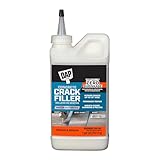
- Concrete crack filler repairs horizontal cracks in concrete, stone and other masonry materials
- Water activated dry powder repairs cracks up to 1/2”W x 1/2”D a single pass
- Ready for light foot traffc in 4 hours, return to full service (including vehicles) within 48 hours
- Ready to use formula, no shaking or mixing: prep surface, fill crack and mist
- DAP Concrete Crack Filler resists shrinkage, UV fading, and cracking
The 1980 durability study’s observation that flexural strength was most affected by temperature cycling reinforces why a compressive-strength-only specification can miss the failure mode that matters in a restrained slab or pit wall.
A specification and inspection checklist
- Binder category and current applicable standard are identified.
- Supplier documentation states formulation, temperature limits, chemical limits, and installation controls.
- Aggregate source, grading, absorption, moisture, and cleanliness are qualified.
- Complete-mixture tests represent the actual chemicals, moisture, temperature range, cycling, and restraint.
- Hot-mix production, transport, placement, compaction, and cooling procedures are documented.
- Expansion, isolation, and construction joints are shown on drawings.
- Joint sealants and interface materials are verified for chemical, thermal, and movement compatibility.
- Drainage, base protection, penetrations, and steam-coil access are included.
- Inspection records capture crack maps, leakage, temperatures, chemical deposits, and repairs.
- Repair procedures identify how the cause will be removed and how compatibility will be verified.
Frequently asked questions
Does modified sulfur eliminate cracking?
No. Modification can improve durability compared with unmodified sulfur, but cracking can still result from the selected formulation, thermal cycling, restraint, moisture, chemicals, aggregate incompatibility, or poor detailing.
The Tool Desk
Outbyte Driver Updater FREEScan for outdated or missing drivers - takes under a minuteDriver Scan →Outbyte PC Repair FREEClear out junk files and repair common Windows errorsFree Scan →Is a sulfur-concrete crack proof that the material was mixed incorrectly?
No. A crack may reflect binder contraction, phase behavior, thermal cycling, chemical exposure, water ingress, movement restraint, or a combination. Batch and placement records and the service exposure are needed to distinguish those causes.
Can ordinary sulfate-resistant Portland-cement concrete repair sulfur concrete?
Not automatically. Portland-cement sulfate-attack guidance addresses a different binder system. A repair must be checked for movement, bond, temperature, moisture, and chemical compatibility with the sulfur concrete and its environment.
Why did a laboratory specimen survive immersion while the field floor cracked?
The specimen may have had a different binder, aggregate, temperature history, restraint, joint condition, chemical concentration, or cycling schedule. The 1980 ASTM study reported no cracking under its salt-solution immersion condition while still observing strength losses after temperature cycling.
Which standard should be cited for sulfur-polymer-concrete testing?
ASTM C1312 provides a laboratory practice for making and conditioning chemical-resistant sulfur-polymer-cement concrete test specimens. Confirm the current edition and use it as controlled comparative testing, not as a substitute for exposure-specific design.
Frequently Asked Questions
Does modified sulfur eliminate cracking?
No. Modification can improve durability compared with unmodified sulfur, but cracking can still result from the formulation, thermal cycling, restraint, moisture, chemicals, aggregate incompatibility, or detailing.
Is a sulfur-concrete crack proof that the material was mixed incorrectly?
No. Binder contraction, phase behavior, thermal cycling, chemical exposure, water ingress, movement restraint, and construction quality can all contribute.
Can ordinary sulfate-resistant Portland-cement concrete repair sulfur concrete?
Not automatically. The repair must be checked for movement, bond, temperature, moisture, and chemical compatibility with the sulfur-concrete system.
Why did a laboratory specimen survive immersion while the field floor cracked?
Laboratory specimens may have different formulation, aggregate, temperature history, restraint, joint condition, chemical concentration, or cycling schedule than the field installation.
Recommended Free Tools
Which standard addresses laboratory sulfur-polymer-concrete specimens?
ASTM C1312 provides a practice for making and conditioning chemical-resistant sulfur-polymer-cement concrete test specimens; verify the current edition before use.
Quick Recap
Product prices and availability are accurate as of the date/time indicated and are subject to change. Any price and availability information displayed on Amazon at the time of purchase will apply.

