
Outdated Drivers Are Slowing You Down
One free scan finds every outdated or missing driver and matches the right update for your exact hardware.Free scan · exact hardware matchWindows Errors? Fix Them Before They Spread
Repair common Windows errors and clear accumulated junk for a smoother, more stable PC - no reinstall needed.Free scan · no reinstalliTechGuides is reader-supported. When you buy through links on our site, we may earn an affiliate commission. As an Amazon Associate I earn from qualifying purchases. Learn more
Rechargeable batteries lose usable capacity because chemical reactions, temperature, charging, discharge depth, current, storage and age gradually reduce how much energy a cell can deliver. For replaceable nickel-metal hydride (NiMH) cells, replace a battery when runtime remains inadequate after a correct charge and clean-contact check, when a compatible charger repeatedly takes unusually long or reports end of life, or when one cell makes a matched multi-cell set unreliable. There is no universal age or recharge-count cutoff, and the figures printed in product literature depend on test conditions.
What “losing capacity” means
Capacity is the amount of charge a battery can deliver under stated conditions. A cell that once powered a camera for several hours may later run it for only part of that time. The battery can still reach a normal-looking voltage immediately after charging while storing less usable energy, so a voltage reading alone does not establish capacity.
Short runtime on one occasion is not proof of permanent degradation. Energizer’s NiMH Handbook and Application Manual says available discharge capacity varies significantly with battery temperature and discharge rate. A cold cell, a high-drain device, or a device that draws power differently can therefore appear “worse” even when the cell has not suddenly failed. Compare runtime in the same device under similar conditions before deciding that capacity has been lost.
Free tools Windows power users keep installed
One-click scans. No signup required.
Why NiMH capacity declines
Charge and discharge stress
Energizer identifies depth of discharge, charge current, discharge current, overcharge and over-discharge as factors that influence NiMH cycle life. Repeatedly draining a cell until a device shuts off uses more of its available depth than a partial discharge. High current also changes the amount of capacity that can be delivered during that particular run.
#1 Best Overall

- RELIABLE PERFORMANCE: 8-pack of AA rechargeable NiMH batteries (2,000 mAh)
- DEVICE COMPATIBLE: Ideal for remote controls, flashlights, clocks, and more
- LONG LASTING: Can be recharged up to 1000 times with minimal power loss
- LOW SELF DISCHARGE: Maintains 80% capacity for 2 years
- EASY USE & STORAGE: Shelf-life up to 5 years; great for everyday or emergency use; arrives pre-charged and ready to use
Panasonic warns that using eneloop until a device stops working may cause over-discharge, which can damage the electrodes. For those cells, recharging before the device completely stops is preferable to routinely pushing the battery to its limit.
Temperature and storage
Temperature affects both immediate output and long-term aging. Energizer lists battery temperature and storage conditions among the variables that affect cycle life. Panasonic advises keeping eneloop away from high temperatures and not leaving depleted cells in a device for an extended period. Heat accelerates aging; prolonged storage while empty can leave a cell vulnerable to excessive discharge through the device’s small standby drain.
Age and chemistry changes
All rechargeable cells gradually lose capacity while they are used and while they sit in storage. Panasonic’s consumer FAQ states: “All batteries, whether single-use dry or rechargeable, experience capacity reduction over time during storage.” Energizer’s 2020 NiMH Handbook gives a typical expectancy life of 2 to 5 years. That is manufacturer handbook guidance, not an automatic replacement date; a lightly used cell stored well can behave differently from a heavily cycled cell exposed to heat and deep discharge.
Do these 3 things before closing this tab:
1Scan for outdated or missing drivers - takes under a minute2Repair Windows errors before they cause bigger problems3Fix the driver behind crashes, sound loss and screen glitchesHow many times can you recharge NiMH batteries?
Cycle numbers are meaningful only with their test basis attached. Energizer says, “Under ideal controlled conditions, up to one thousand cycles can be obtained with NiMH batteries,” while cautioning that real-world factors can reduce the total.
Rank #2

- 4 pack of Energizer Power Plus Rechargeable AA Batteries
- Energizer AA batteries offer up to a 12 year battery life for a lasting rechargeable AA battery option
- Energizer rechargeable batteries save money when you use the AA rechargeable battery with an Energizer Battery Charger
- AA batteries made with 22% recycled materials and chargeable batteries are designed to prevent leaks
- Use AA rechargeable batteries as batteries for cameras, game systems and other devices for convenient use with less waste
Panasonic’s eneloop FAQ explains why two numbers can appear for the same product family. The original “up to 2,100” estimate used IEC 61951-2:2011 test conditions. After the standard was revised in 2017, Panasonic reports approximately 600 cycles under the more stringent conditions. These are eneloop figures on Panasonic’s stated test bases, not a universal lifespan for every NiMH cell.
| Figure | What it describes | Qualification |
|---|---|---|
| Up to 1,000 cycles | NiMH cycle life | Energizer handbook statement for ideal controlled conditions; real-world use may reduce it. |
| 2 to 5 years | Typical expectancy life | Energizer 2020 handbook guidance, not a guaranteed deadline. |
| Up to 2,100 cycles | Earlier eneloop estimate | Panasonic figure based on IEC 61951-2:2011 conditions. |
| Approximately 600 cycles | Updated eneloop estimate | Panasonic figure under the revised, more stringent 2017 conditions. |
A “cycle” is not necessarily one calendar-day charge. In practical use, several partial discharges may add up to roughly one full discharge equivalent, while the manufacturer’s laboratory procedure may use a specific depth of discharge, current, temperature and charge method. Do not replace a cell merely because a counter or estimate reaches one of these numbers.
How to tell when a rechargeable battery needs replacing
Use performance and charger evidence together rather than relying on age alone.
- Charge it correctly. Use a charger designed for the battery’s chemistry and size, and follow the battery and charger instructions. A charger made for another chemistry can give misleading results or damage a cell.
- Inspect contacts. Check the battery terminals and the device contacts for dirt, oxidation or anything preventing firm contact. Panasonic notes that poor contact can create performance problems that resemble a failing battery. Clean only as directed by the device or battery maker, and do not scrape away material aggressively.
- Repeat a like-for-like runtime check. Test the cell in its intended device after a full compatible charge. Compare with the same device, operating pattern, temperature and load where possible. Energizer’s guidance means a high-drain or cold-use comparison can otherwise exaggerate the apparent loss.
- Watch charging behavior. Panasonic identifies longer-than-usual charging on a quick charger as a reason replacement may be advisable. A change that persists across normal charging sessions is more informative than one unusually long session.
- Read the charger’s per-cell warning. Selected Panasonic chargers use a yellow flashing indicator for a battery approaching end of life and red flashing for end of life. Indicator colors are not universal; the individual charger manual controls, and timing varies with the device, usage frequency and other conditions.
- Replace when the task is no longer reliable. If runtime remains too short after the checks above, or a compatible charger repeatedly flags the cell, retire it from that application and replace it with a compatible cell.
There is no percentage-of-original-capacity threshold established here that applies to every consumer or device. A remote control that runs for months and a camera that fails during a burst have different practical limits.
Rank #3

- RELIABLE PERFORMANCE: 24-pack of AA rechargeable NiMH batteries (2,000 mAh)
- DEVICE COMPATIBLE: Ideal for remote controls, flashlights, clocks, and more
- LONG LASTING: Can be recharged up to 1000 times with minimal power loss
- LOW SELF DISCHARGE: Maintains 80% capacity for 2 years
- EASY USE & STORAGE: Has a shelf-life up to 5 years for everyday or emergency use; arrives pre-charged and ready to use
What to do when a device uses several cells
Use a matched group. Panasonic warns against mixing capacities, types, brands, ages or charge levels because the weaker cell can be over-discharged while the stronger cells still power the device. Its guidance is to replace cells used together at the same time.
- Match the chemistry and physical size specified by the device manual.
- Use the same model and capacity in the set.
- Do not combine an old cell with a new one merely because both are the same nominal size.
- Charge the group together in a charger that treats each cell appropriately, then store and use them as a set.
- Label sets if you own several groups so cells do not get mixed accidentally.
If one cell repeatedly causes a charger warning, replace the set rather than pairing that weak cell with otherwise healthy cells. A device designed for one cell should not be modified to use a different chemistry or voltage.
Charging habits that extend NiMH service life
Top up instead of forcing a full drain
Panasonic says eneloop cells resist memory effect and can be topped up. Its Singapore FAQ describes memory effect as a reduction in maximum voltage despite remaining overall battery power, which can make voltage fall earlier in use. That does not mean partial charging damages every rechargeable battery; the advice is specific to the cited eneloop products and should not be generalized to other chemistries.
What’s actually slowing this PC down?
Pick the symptom - the matching free tool is one click away.
For eneloop, Panasonic instead cautions that fully discharging before every recharge can lead to over-discharge, electrode damage and shorter life. Recharge before the device stops whenever practical.
Rank #4
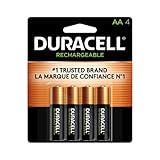
- LONG-LASTING POWER BETWEEN CHARGES: With its Long-Life Ion Core technology, Duracell Pre-Charged NiMH AA Rechargeable batteries are designed for heavy-use devices like video game controllers, wireless electronics, baby monitors, and more
- PRE-CHARGED AND READY TO USE: Duracell NiMH AA rechargeable batteries come pre-charged and will hold a charge for up to 1 year when not in use
- GUARANTEED FOR 10 YEARS IN STORAGE: Duracell guarantees each Pre-Charged NiMH AA battery to last 10 years in storage, or 400 charges, whichever comes first, and they hold a charge for up to 1 year when not in use
- # 1 TRUSTED BATTERY BRAND: From storm prep to holiday needs, Duracell is the # 1 trusted battery brand
- QUALITY ASSURANCE: With Duracell batteries, quality is assured; every Duracell product is guaranteed against defects in material and workmanship
Control heat and depleted storage
Keep cells away from high temperatures during charging, use and storage, following the product instructions. Remove depleted cells from equipment that will sit unused for an extended time. The device’s standby draw can continue to discharge them after normal operation has stopped.
Use a charger with useful cell-level information
A NiMH smart charger with individual battery status indicators can help identify a cell that behaves differently from the others. Panasonic documents selected chargers that show charging progress and can flag an approaching or reached end of life. Such an indicator is a charger-specific diagnostic, not a laboratory capacity measurement, and not every charger offers it.
How to compare a suspect cell fairly
- Runtime or measured capacity: compare in the same device and under similar temperature and load.
- History: note approximate age, storage conditions, deep-discharge incidents and charging pattern.
- Recharge count: use a cycle claim only when the product’s test conditions are known.
- Per-cell charger results: compare cells charged in the same session and slot conditions.
- Compatibility: confirm the device requires NiMH, the correct size and the correct number of cells.
Keeping a simple record of purchase date, cell set and unusual charger warnings can reveal whether a problem follows one cell or the device itself. If every cell performs poorly in one piece of equipment but normally elsewhere, inspect the equipment, contacts and load before discarding the set.
Choosing replacements without creating a new problem
For a device that specifies AA NiMH cells, buy replacement AA NiMH cells that match the required capacity range and use them as a complete set. Panasonic’s FAQ lists multiple AA eneloop capacity variants, so the device manual and the cell label should be checked before purchase. Do not substitute lithium-ion cells or another voltage simply because the physical size looks similar.
Best Value

- Battery: Pack of 8 AA 2800mAh Ni-MH rechargeable batteries with battery storage cases
- 1200 Tech, ProCyco (Professional recycle) helps maximize its best power performance while charging.
- Improved low self discharge makes it still maintain 80% of capacity after 3 year of non-use
- Batteries come pre-charged partially and can be used immediately out of the package. Recommended to use batteries after fully charged.
- Batteries are great for use in household devices such as digital cameras, toys, remote
A charger that identifies each cell individually is useful when you maintain several sets or need to distinguish a weak cell. Verify that the charger explicitly supports the chemistry and size you own; a status light or end-of-life message has meaning only within that charger’s design.
What this guidance does not establish
The evidence above concerns replaceable NiMH cells, particularly Panasonic eneloop guidance. It does not establish a universal replacement threshold for lithium-ion batteries, built-in battery packs or other rechargeable chemistries. Lithium-ion packs can require different charging, storage and safety procedures, so follow the device and battery manufacturer’s instructions instead of applying the NiMH cycle figures here.
This evidence also does not provide universal instructions for swollen, leaking or unusually hot batteries. Stop using a battery that shows those symptoms and consult the product manufacturer’s safety guidance for handling and disposal. Do not continue charging it to test whether capacity returns.
A practical replacement decision
Replace a replaceable NiMH cell when the evidence points to a persistent, application-level failure: correct charging has been attempted, contacts are sound, comparable testing still shows inadequate runtime, and a compatible charger may also report prolonged charging or end of life. When the device uses multiple cells, replace the complete matched group. Treat published cycle counts and the 2-to-5-year expectancy as context rather than a deadline, because temperature, discharge depth, current, storage and age determine how quickly a particular set reaches that point.
Quick Recap
Product prices and availability are accurate as of the date/time indicated and are subject to change. Any price and availability information displayed on Amazon at the time of purchase will apply.

