
iTechGuides is reader-supported. When you buy through links on our site, we may earn an affiliate commission. As an Amazon Associate I earn from qualifying purchases. Learn more
Hurricanes cause widespread outages because they can damage several layers of the electric grid at the same time. Wind can bring down trees, poles and conductors; flooding can disable substations and other equipment; and a failure upstream can prevent an otherwise intact neighborhood circuit from being energized. The result is a physical service disruption, not necessarily a shortage of electricity generation.
Utilities restore service through a controlled sequence: assess damage and hazards, repair facilities that feed critical services, rebuild transmission and distribution paths that reconnect the most customers, and then complete neighborhood and individual-service repairs. The exact order and duration depend on the storm, terrain, access, equipment damage and available crews.
How a hurricane damages the power system
Wind breaks the equipment that carries electricity
Hurricane-force winds can snap wooden or composite poles, bend or break towers, throw branches into conductors and pull down entire spans of line. A single fallen tree may interrupt one local circuit; a line of damaged poles can cut service to many circuits. Flying debris can also damage transformers, switches and communications equipment that crews need to operate the grid safely.
Flooding reaches substations and control equipment
Floodwater can inundate substations, switchyards, underground equipment and access roads. Substations transform voltage and route power between transmission and distribution networks. If one is flooded or otherwise damaged, a large area may lose service even when some neighborhood wires remain standing. The U.S. Energy Information Administration’s account of Hurricane Helene describes wind and flooding damage to transmission and distribution lines and substations.
#1 Best Overall

- 𝗣𝗼𝘄𝗲𝗿𝗳𝘂𝗹 𝗢𝘂𝘁𝗽𝘂𝘁 - 4400 peak watts and 3400 running watts, perfect for RV camping and home backup
- 𝗠𝘂𝗹𝘁𝗶-𝗢𝘂𝘁𝗽𝘂𝘁 𝗢𝗽𝘁𝗶𝗼𝗻𝘀 - Includes 2*120V AC ports, 1*12V DC port, 1*RV port
- 𝗟𝗼𝗻𝗴 𝗥𝘂𝗻𝘁𝗶𝗺𝗲: Runs for up to 14 hours at 25% load with ECO mode, 2 gallon fuel tank with fuel gauge, allows you to check fuel levels at a glance, keeping you prepared
- 𝐋𝐨𝐰 𝐍𝐨𝐢𝐬𝐞: Under 72 dBA from 23FT away, this generator provides steady power for your home during a power outage or RV nights
- 𝗟𝗶𝗴𝗵𝘁𝘄𝗲𝗶𝗴𝗵𝘁 𝗮𝗻𝗱 𝗣𝗼𝗿𝘁𝗮𝗯𝗹𝗲: Only 56lbs, easy to move around
One failure can make other intact lines unusable
Electricity must move through an interconnected path. If a transmission line, substation or feeder upstream of your street is out, a local line may not be energized until that higher-level repair is complete. Crews may also keep a circuit de-energized while they inspect it for hidden damage. This is why an outage can begin far from your home and why visible repairs near your property do not always mean service can be restored immediately.
Physical outage versus an electricity supply shortage
These events are often confused, but they are different emergencies. A hurricane-related outage usually means the grid’s physical delivery equipment is damaged or disconnected. A supply shortage means available generation or transmission capacity cannot meet demand. The U.S. Department of Energy’s state and territory playbook treats those as separate types of electricity emergency.
| Situation | What fails | What restoration requires |
|---|---|---|
| Physical service disruption | Poles, conductors, transformers, substations or other delivery equipment | Damage assessment, safe isolation and repairs that rebuild a path from the grid to customers |
| Electricity supply shortage | Generation or transmission capacity is insufficient for demand | Balancing supply and demand, bringing resources online or reducing load; physical storm repairs may not be the primary issue |
A hurricane can create both conditions in different places, but the widespread local outages residents see after landfall are commonly caused by damage to transmission and distribution infrastructure.
Free tools Windows power users keep installed
One-click scans. No signup required.
Why an outage can cover a whole region
Hurricanes affect broad areas rather than one point. The storm’s wind field can extend hundreds of miles, while rain and storm surge can flood low-lying substations and roads. Damage may occur simultaneously on high-voltage transmission routes, distribution feeders, neighborhood transformers and the communications systems used to monitor them. Utilities therefore may have thousands of trouble reports before a full inventory of damage is possible.
Rank #2

- Efficient Output: This portable power station features 8 output ports, including 2 AC sockets (110V 120W, 240W peak), 1 USB-C port (18W), 2 QC 3.0 USB ports, 1 USB port (5V 2.4A), and 2 DC ports (12V/10A). The LED display clearly shows the working status and remaining power. Ideal for camping and outdoor adventures, this camping power bank can power devices like night lights , mini fans, and below 120W other essential equipment, making it a reliable companion for your trips
- Easy To Carry: This portable solar power bank (6.6 x 4 x 3 inches) is a must-have, weighing just 2.3 pounds for effortless portability. Its innovative hidden handle saves space while providing convenience, and it supports simultaneous charging—powering up the bank while charging your devices. Perfect for emergencies, it keeps your mobile phones, laptops, iPads, PSPs, cameras, and wireless headphones powered wherever you go. A reliable, space-saving solution for both home and on-the-go energy needs, making it an essential addition to your home essentials.
- Three Recharging Modes: 88Wh portable rechargeable power station with Three methods to charge the portable power station. 1. you can fully charge the power supply via AC outlet (adapter included) 2. it can be charged under the sun with a solar panel(15V-24V)(Solar Panel Not Included). 3. The power station can be charged by (12V/24V) socket of the car and car charger efficiently. Cycle life >1500 times
- High brightness LED lighting: This portable generator has built-in 3 lighting modes (steady light and flash, SOS mode). To meet your different needs, there are also separate AC/DC buttons to make your operation more convenient, When you go out camping or encounter a power failure, this battery generator is a very good choice
- What You Get: 1* HOWEASY 88Wh portable power station, 1 *AC power adapter, 1* car charger, 1* user manual,We also provide 24/7 customer service and a 24-month product warranty.
Outage totals also depend on how the number is counted. A “customer” generally refers to a utility account or service connection, while a count of people includes everyone who lives in affected homes. Hours without electricity measure duration, not the number of accounts. These measures should not be treated as interchangeable.
Why your neighbor may get power first
Restoration is not normally a nearest-outage-first process. A crew may pass your street because the fault affecting it depends on an upstream transmission or substation repair, because the utility is still assessing hazards, or because another assignment will restore service to a critical facility or a much larger number of customers.
Two homes that appear to share a neighborhood can also be served by different feeders, transformers or phases. One circuit may be repaired while another remains isolated. Service to a house can stay off after a neighborhood line is energized if the individual service drop, meter equipment or weatherhead is damaged. Utilities may require a qualified inspection before reconnecting that premise.
FEMA training material describes common priorities: infrastructure feeding critical community facilities is addressed first, followed by transmission and distribution segments serving the largest numbers of customers. Water and wastewater systems may require special coordination even when they represent fewer customer meters. These are general practices, not a guarantee of the sequence used by every utility.
Rank #3

- Powerful yet Compact: Boasting a 1,500W AC output and a 3,000W surge peak, the Solar Generator 1000 V2 can power multiple appliances, including AC units, fridges, and electric pots. With a 1,070Wh capacity and a lightweight build of only 23.8 lbs, along with a foldable handle, it makes an excellent companion for outdoor camping, road trips, or emergencies.
- One Hour Fast Charging: Charge your Explorer 1000 v2 Portable Power Station from 0% to 100% battery level in just one hour with emergency charging activated via the Jackery App. It defaults to 1.7 hours for a full charge to optimize battery health. Engineered with advanced ChargeShield 2.0 technology, this power station charges safer, faster, and smarter.
- 10 Year Lifespan: The Explorer 1000 v2 portable power station is equipped with a durable LFP battery, maintaining over 70% of its original capacity even after 4,000 charge cycles, offering longevity exceeding 10 years.
- Tailored for Versatility: Featuring two USB-C ports, one USB-A port, one DC car port, and three pure sine wave AC ports, along with LED lights, the Solar Generator 1000 V2 is capable of charging multiple devices simultaneously, meeting power needs in various scenarios. PD 100W fast USB-C charging ensures a rapid charging speed, even without power adapters.
- Smart App Control: Effortlessly switch between different charging modes with Jackery’s App—including one hour emergency charging from 0 to 100%, 30 dB quiet overnight charging mode, and energy efficiency mode. Maximize the freedom to adjust the power station to meet your needs.
How utilities restore power after a hurricane
The steps below describe the usual operating logic. Utilities adapt them to the storm’s damage, their own emergency plans and the conditions workers find in the field.
- Establish a safe operating picture. Control centers collect outage reports, weather information, system alarms and field observations. Crews and dispatchers identify downed lines, flooded sites, blocked roads and other hazards. The utility may keep equipment de-energized until it can be inspected and isolated safely.
- Survey and prioritize damage. Utilities determine which transmission lines, substations, feeders and local circuits are affected. They map dependencies: a neighborhood feeder cannot be restored if the substation supplying it is unavailable. Critical community facilities, such as hospitals, emergency operations centers and water systems, are identified for coordinated restoration.
- Repair transmission and substations that unlock the system. High-voltage lines and substations form the backbone that carries power into an area. Repairing them can allow multiple downstream circuits to operate. These jobs often require specialized equipment, replacement structures and careful testing before energization.
- Restore major distribution segments. Crews repair feeders and other distribution sections that serve the largest numbers of customers. A single repaired feeder can return power to several neighborhoods, businesses or public facilities. Work may include replacing poles, restringing conductors and repairing switches or transformers.
- Coordinate water, wastewater and other essential services. Utilities and emergency managers may sequence work around water treatment, pumping and wastewater facilities. Reliable electricity at these sites supports public health and can require temporary generation or special switching arrangements.
- Repair neighborhood circuits and local transformers. Once upstream paths are available, crews move through individual circuits, replace damaged transformers and reconnect blocks or subdivisions. They continue checking for secondary damage that was hidden by darkness, flooding or fallen vegetation.
- Complete individual-service repairs and verify restoration. The final work can involve a service drop, meter socket or connection to a single building. Crews verify that equipment is safe and that protection and voltage are correct before returning it to service. Customers should not attempt to repair or move damaged electrical equipment themselves.
What determines restoration time
There is no universal number of hours or days for a hurricane outage. A utility can provide an estimate only after it understands the damage and access conditions. The most important variables are:
| Factor | Why it changes the timeline |
|---|---|
| Damage scope | A few broken components can be replaced quickly; widespread pole, conductor and substation damage requires many work sites and staged testing. |
| Grid layer affected | A failed transmission line or substation must be repaired before dependent distribution circuits can be energized. |
| Terrain and access | Flooded roads, debris, washed-out bridges and remote or mountainous terrain slow inspections, deliveries and crew movement. |
| Safety and weather | Standing water, unstable structures, live-wire hazards and continuing severe weather can prevent crews from entering an area. |
| Materials and specialized equipment | Large transformers, poles and high-voltage structures may need transport, assembly and testing before use. |
| Available workforce | Utilities may need outside crews and mutual-assistance coordination when local personnel cannot cover all repair sites. |
For these reasons, an initial estimate may cover a broad service area and then change as inspections reveal more damage. A current outage map or utility notice is more relevant to your address than a national average from a previous year.
Quick wins for a faster PC:
Fix the driver behind crashes, sound loss and screen glitchesFind Drivers →Clear out junk files and repair common Windows errorsFree Scan →Mutual assistance brings in outside crews
Utilities commonly rely on voluntary mutual-assistance partnerships to obtain lineworkers, damage assessors, vehicle operators, logistics staff and specialized equipment from other utilities. Incoming crews work under the affected utility’s operating procedures and coordination system; they do not independently decide when a circuit is energized.
Rank #4

- Portable Generator with 60W Solar Panel Included: with a big battery pack, ZeroKor 300W solar powered generator are powerful enough to charge smartphones,tablets,laptops,headphones or other outdoor small camping supplies(Tips:Using electrical appliances over 300W may damage the portable solar generator, especially some devices that are prone to heat or built-in air compressor such as coffee maker,Hair dryer, water pump etc )
- Multiple Charging outlets for camping gear with SOS Flashlight: with 2* 300W Max wall AC outlets, 1* DC port (9V-12.6V/10A max ), 3* 5V/3A Max USB ports, 1*quick charge USB port (5V/3A 9V/2A Max), Flashlight with reading mode and SOS mode for your outdoor Adventures, our portable solar power station offers a versatile charging solution,allowing you to charge your outdoor smart devices directly from a wall AC outlet
- Multiple Charging Optional, Solar Panel Charger 60W Included: ZeroKor portable power bank generator can be recharged by Home AC outlet, DC5521 13V-23V Solar Panel (Portable Power Station built-in MPPT), 12V Carport. Take the portable solar power bank generator with you on-the-go and never worry about power shortage,the portable AC outlet design makes it more suitable for Tent camping OFF-Grid
- Built in BMS(Battery Management System) : ZeroKor portable power station features short circuit protection, over-current protection, over-voltage protection, overload protection and overheating protection. The built-in cooling fan system will automatically start and stop according to the portable battery pack internal temperature during use. Acting as a portable solar power bank, it accommodates multiple devices simultaneously, making it perfect for indoor and outdoor use
- HIGH CONVERSION EFFICIENCY: ZeroKor solar panels 60W monocrystalline solar cell have a high conversion efficiency of 20.5%, and its performance is better than that of polycrystalline solar panels under the condition of insufficient light
The North American Electric Reliability Corporation’s 2025 technical assessment reported more than 4.7 million customers affected by combined transmission and distribution outages associated with Hurricanes Helene and Milton. It also reported nearly 50,000 mutual-assistance personnel from at least 34 states involved in restoration. Those figures illustrate the scale of coordination required for major storms, but they do not predict the duration of any particular customer’s outage.
Independent reader supportYour contribution helps us test, update, and keep practical guides available for everyone.Who is responsible for restoration?
Utilities retain operational control of repairs and re-energization. FEMA’s January 2025 Power Outage Incident Annex states: “Restoration of power will remain within the purview of the utility companies.” The Department of Energy coordinates federal energy-restoration support when needed, while FEMA coordinates broader lifesaving and life-sustaining assistance.
This division matters during a prolonged outage. Federal, state and local agencies can help with shelters, fuel, transportation, communications and emergency response, but the utility controls the technical decisions that make a circuit safe to energize. Local emergency managers may coordinate priorities for critical facilities without directing line crews’ switching operations.
Outdated Drivers Are Slowing You Down
One free scan finds every outdated or missing driver and matches the right update for your exact hardware.Free scan · exact hardware matchWindows Errors? Fix Them Before They Spread
Repair common Windows errors and clear accumulated junk for a smoother, more stable PC - no reinstall needed.Free scan · no reinstallSafety rules for residents
Downed wires may be energized, may become energized later or may be tangled with other conductive objects. Floodwater around electrical equipment can also be dangerous. OSHA’s hurricane activity guidance is intended for trained utility workers and supervisors and emphasizes that restoration requires specially trained and qualified technicians.
Best Value
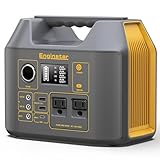
- PURE SINE WAVE & MULTIPORT: solar generator for camping built with two 110V pure sine wave AC outlets, more efficient and more stable, which can power for your lamp, fan and protect your important file in laptop from damage. DC 12V Car Port can provide power for mini fridge and car charger. Equipped 2 DC outputs (12V 8A & 24V 3A) can provide power for vacuum. 2 USB outputs (5V/3.1A) for phone and tablet, USB-C fast charge port (18W)
- PORTABLE BUT POWERFUL: 9 x 5.5 x 7.5 inches body size, only 6.5lb, EnginStar 300W portable power station is every compact, built-in LED light and large LCD display, easy to read, EnginStar portable power station provides 296 watt-hours of power usage, sufficient to power for weekend camping trips, road trip, RV living, outdoor off-grid activities, can provide enough juice to charge your phones, laptop, camera, CPAP, drone and more
- 3 CHARGING WAYS POWER SUPPLY: EnginStar power bank with ac outlet can charge by wall charger at home (fully charge time about 7 hours); 300w solar powered generator, can be charged with solar panel (sold separately) in the sunny day field; EnginStar 300w camping generators can be charge by car charger on the go
- SUPERIOR PROTECTION SYSTEM: generators for home use with smart battery management system, equipped with overloading, over discharging, overcharging, overheating, and short circuits, high quality lithium ion batteries support more than 1000 times of charge cycle for long-term battery performance, reliable and safely
- Package Contain and Battery Maintain: 1*EnginStar Rechargeable Electrical Power Station, 1*User Manual, 1*Home Charger, 1*car charger cable, Recommend fully charge it every 2-3 months to keep the power station in good work condition, recharge in time before drain all the power
- Stay well away from downed lines, damaged poles, substations, transformers and flooded electrical equipment.
- Keep children, pets and vehicles away from debris near electrical infrastructure.
- Report hazards through your utility’s outage or emergency channel and use local emergency services when there is an immediate threat to life.
- Do not touch a fallen wire, operate utility switches, remove a meter or attempt to repair a service connection.
- Follow utility instructions before using a generator or reconnecting household circuits; improper connections can backfeed power onto lines and injure workers.
What the recent outage statistics mean
The EIA reported that U.S. electricity customers experienced an average interruption duration of 11 hours in 2024. It also attributed 80% of the hours without electricity that year to Hurricanes Beryl, Helene and Milton. These are national, annual aggregates reported in 2025. They describe the effect of several storms across the country, not the expected duration of a current outage at your address.
Storm-specific numbers require their own context. NERC’s figures for Helene and Milton count customers affected by combined transmission and distribution outages. A 2019 Government Accountability Office review reported that 3.3 million people in Puerto Rico lost power after Hurricane Maria. “Customers” and “people” are different units, and a total taken at one point in time is not the same as the number of customer-hours without service.
What to do while waiting for restoration
Use the utility’s current outage map, text alerts or telephone system to confirm that your address is recorded. If neighbors have power but your home does not, check whether the utility lists a separate premise-level problem and report it rather than assuming the circuit is still under repair.
For essential loads, emergency backup power can help, but equipment must be sized for the devices you intend to run and installed and operated safely. FEMA publication P-1019 discusses emergency power systems and natural-hazard outage conditions; it does not endorse a particular portable product. A small unit should never be assumed to power an entire home, and generators must be kept away from enclosed spaces to prevent carbon-monoxide poisoning.
Keep refrigerators and freezers closed as much as possible, follow local boil-water or evacuation notices, and use designated warming or cooling centers when advised. Restoration estimates can change as crews complete inspections, so rely on the latest utility and emergency-management notice for your location.
Quick Recap
Product prices and availability are accurate as of the date/time indicated and are subject to change. Any price and availability information displayed on Amazon at the time of purchase will apply.

