
Recommended Free Tools
iTechGuides is reader-supported. When you buy through links on our site, we may earn an affiliate commission. As an Amazon Associate I earn from qualifying purchases. Learn more
EVGA stopped making graphics cards in 2022 after ending its partnership with NVIDIA. The company said the decision reflected principle and an increasingly difficult relationship—not simply finances. NVIDIA CEO Jensen Huang gave a different account, saying EVGA chief executive Andrew Han had wanted to wind down the business for years. The reporting supports several contributing pressures, but not one undisputed explanation.
What happened when EVGA exited the GPU business?
In September 2022, EVGA announced it would end its relationship with NVIDIA and would not produce cards for the upcoming GeForce RTX 40 series. It planned to sell its remaining GeForce inventory and continue honoring support obligations for existing customers. EVGA did not announce a switch to AMD or Intel graphics cards. Ars Technica’s contemporaneous report covered the announcement and its immediate implications.


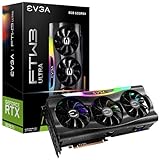

The exit was consequential for EVGA: Ars Technica reported, citing Gamers Nexus, that GeForce sales accounted for about 80% of EVGA’s revenue. That is a reported revenue estimate, not the same measure as later figures describing the share of sales.
Why did EVGA say it was leaving NVIDIA?
EVGA cited principle and poor communication
As reported by Ars Technica in 2022, EVGA CEO Andrew Han described the decision as a matter of “principle” rather than finances. He objected to limited communication about new products, including pricing and availability, and to learning final suggested prices when NVIDIA announced products publicly. The complaint was about the partnership’s handling of business information, not simply a decision to stop selling one generation of cards.
#1 Best Overall
NVIDIA’s Founders Edition cards complicated partner economics
NVIDIA sold its own Founders Edition cards alongside products made by partners such as EVGA. Reporting at the time said those first-party cards could undercut partner cards, leaving board partners to cut prices or risk losing sales. Ars Technica reported that EVGA said it was losing hundreds of dollars on some RTX 3080 and RTX 3090 cards after price cuts; that claim concerns particular products and circumstances, not every EVGA GPU.
A 2026 TechSpot retrospective added an account from Brendon Ray Hedrick, a former EVGA product manager who worked there from 2016 to 2019. Hedrick said the company needed to offer a card at NVIDIA’s advertised starting price, even at a loss, to protect access to chips. He also described limited information before launches and argued that NVIDIA’s own card designs narrowed the performance advantage available to more expensive custom circuitry and cooling. These are Hedrick’s recollections, not an independent audit of EVGA’s finances or NVIDIA’s practices.
A volatile market added pressure
The GPU business was also navigating a sharp change in market conditions. After constrained supply and unusually high prices, cryptocurrency-market shifts—including Ethereum’s move away from GPU mining—contributed to weaker demand, excess inventory, and competition from used cards. Meanwhile, designing and manufacturing modern high-end GPUs had become more demanding and costly, while margins for add-in-board partners were under pressure. These conditions help explain the strain around EVGA’s exit, but the reporting does not establish them as its sole cause.
PC Slower Than It Used to Be?
A free scan shows the junk files, broken settings and background clutter dragging Windows down - then fixes them in one click.Free scan · Windows 10 & 11Outdated Drivers Are Slowing You Down
One free scan finds every outdated or missing driver and matches the right update for your exact hardware.Free scan · exact hardware matchWhat did NVIDIA say about EVGA’s departure?
In a September 2022 interview, NVIDIA CEO Jensen Huang said Han had wanted to wind down the business for a couple of years and had other plans. Huang also called EVGA a great partner and said the market would be served after its departure. PC Gamer reported Huang’s comments.
That account differs in emphasis from EVGA’s public explanation, which focused on principle, communication, and its relationship with NVIDIA. The available reporting presents two attributed explanations rather than resolving which was decisive.
How large was GPU business for EVGA?
Published estimates use different measures and come from different reporting, so they should not be treated as interchangeable:
| Reported figure | What it measures and who reported it |
|---|---|
| About 80% | GeForce sales as a share of EVGA revenue, reported by Ars Technica in 2022, citing Gamers Nexus. |
| 78% | EVGA sales, as described in TechSpot’s 2026 retrospective summarizing the historical business context and citing former manager Hedrick. |
Revenue and sales are not identical measures, and the figures come from different reports and contexts. Neither should be read as a single audited figure establishing the exact share of every aspect of EVGA’s business.
Did EVGA start making AMD or Intel GPUs instead?
No. EVGA said it would not replace NVIDIA with another GPU supplier. Its announced plan was to sell through remaining GeForce stock and support existing customers, rather than continue graphics-card production under a different chip maker.
Quick Recap
Best Value
Product prices and availability are accurate as of the date/time indicated and are subject to change. Any price and availability information displayed on Amazon at the time of purchase will apply.

