
iTechGuides is reader-supported. When you buy through links on our site, we may earn an affiliate commission. As an Amazon Associate I earn from qualifying purchases. Learn more
Speakers usually hum after a power amplifier is added because the new connection creates an unintended current path between equipment grounds, commonly called a ground loop. Unbalanced RCA cables are especially susceptible because their shield carries both signal reference and interference current. However, the timing is only a clue: a bad cable or connector, faulty speaker wiring, or a problem inside the amplifier or speaker can produce the same symptom.
The fastest safe test is to disconnect every input cable from the amplifier while leaving the speakers connected. If the hum stops, reconnect sources one at a time until it returns. The connection that brings the noise back identifies the signal path to investigate. If the hum remains with every amplifier input removed, stop treating it as an input loop and investigate the amplifier, speakers, or speaker wiring instead.
What changes when you connect a power amplifier?
Audio equipment normally has several paths to ground: the protective earth in a mains power cord, the signal reference in an interconnect, and the chassis or shield of each device. Connecting a power amplifier to a preamp, receiver, DAC, mixer, or other source can join those paths in more than one place. A small voltage difference between the devices then drives unwanted current through the audio cable’s shield or signal ground. The speakers reproduce that current as a low-frequency hum.
Do these 3 things before closing this tab:
1Repair Windows errors before they cause bigger problems2Fix the driver behind crashes, sound loss and screen glitches3Clear out junk files and repair common Windows errorsThis is a ground loop, but it is not the only explanation. Connecting the amplifier may also expose a loose RCA plug, a damaged interconnect, a shorted speaker conductor, or an internal fault that was not audible before. A hum that appears exactly when a particular cable is connected is useful diagnostic evidence, not proof of one cause.
#1 Best Overall

- Ground loop filter noise isolator, eliminating the hiss, buzz and interference caused by ground loops which happens when the audio source and the speaker use the same power source in some car speakers / home stereo systems when using the Bluetooth receiver.
- You can enjoy the clean and clear music/audio by eliminating the current noise in some car speakers / home stereo systems.
- Works with any device that has a 3.5mm jack including smartphones, tablets, mp3 player, speakers, when grounding issues persist. You could also use with a Bluetooth Receiver/Bluetooth Hands-free Car Kit in your Car Audio System/Home Stereo.
- Being so mini, portable and light, plug and play, no battery need or button, all you need to do is to plug in the ground loop isolator
- Portable, light-weight and plug and play without any complicated setup. Package Contents: Besign Ground Loop noise Isolator with 3.5mm Audio Cable, User Manual.
Why RCA connections are often involved
RCA is an unbalanced connection. One conductor carries the signal and the outer shield serves as the return and reference. That arrangement is more vulnerable to noise currents flowing through the shield than a correctly wired balanced connection. If both devices provide compatible balanced XLR or TRS input and output, the balanced path can reduce susceptibility to common interference. It cannot repair a defective amplifier, speaker, or incorrectly wired cable.
Prepare for a safe test
Turn the system volume down before making any change. Follow the amplifier and source manuals, and power equipment down before disconnecting or reconnecting cables unless the manual explicitly permits another procedure.
- Keep the amplifier connected to its speakers during the input-isolation test.
- Do not touch bare speaker-wire ends.
- Do not allow positive and negative speaker conductors to touch each other or the chassis.
- Use only connectors and signal levels that the equipment is designed to accept.
- Never remove a protective-earth pin or use a mains ground-lift plug to silence hum.
Sennheiser’s guidance specifically warns against isolating ground at the main power connection. If a grounding control, wiring arrangement, or service procedure is unclear, ask the amplifier manufacturer or a qualified technician.
Free tools Windows power users keep installed
One-click scans. No signup required.
Rank #2

- Eliminates ground loop noise between the audio source and radio. For use with audio devices have 4-Channel RCA audio outputs, including pre-amp outputs.
- Made from High Fidelity Permalloy Transformers to minimize signal loss, unlike other old ground loop isolators with HUGE DISTORTION under 100Hz.
- Close to perfect response of +/- .03 db from 2 to 20,000Hz.
- Super compact design for easy installation in tight space.
- Split pin RCA connector with pure Oxygen Free Copper spiral shielding wire.
Step-by-step isolation test
- Lower the volume and power down. Give the amplifier and connected sources enough time to shut down according to their manuals.
- Remove every input interconnect from the power amplifier. Leave the speaker cables attached. Inspect the exposed speaker connections before powering up; no loose strands should be able to bridge terminals.
- Power up cautiously and listen at low volume. If the hum is still present with all amplifier inputs removed, the noise is not entering through one of those source cables. Proceed to the section on amplifier, speaker, and speaker-wiring faults.
- If the hum stops, power down and reconnect one source cable. Use the normal input and output pair for that source, then power up and check again at low volume.
- Repeat one connection at a time. The cable or source connection that makes the hum return narrows the problem to that signal path. Do not reconnect several sources together; doing so removes the diagnostic clue.
- Reseat and inspect the suspect connection with power off. Check for a plug that is not fully inserted, a bent or loose connector, damaged cable strain relief, or a cable routed under mechanical tension.
- Try a known-good, compatible interconnect. If the hum disappears, replace the suspect cable. If it remains, test the source’s other output or the amplifier’s corresponding input only when the manuals confirm compatibility.
- Test a compatible balanced path if available. Connect balanced output to balanced input with the correct XLR or TRS cable. A balanced test is meaningful only when both devices support that connection as an audio input/output pair.
- For a confirmed RCA signal-path loop, consider signal isolation. A correctly specified audio isolation transformer, often described as an RCA audio ground-loop isolator, can interrupt the unwanted signal-ground current. Install it in the identified signal path, not in the mains safety connection.
- Stop if there is damage or persistent noise. Sparks, burning smell, overheating, audible crackling, a protection shutdown, or hum that remains with all inputs removed calls for manufacturer support or a qualified service technician.
How to interpret the result
| Test result | Most useful interpretation | Next action |
|---|---|---|
| Hum stops when all amplifier inputs are disconnected | The noise is entering through a source, interconnect, or the way that signal path is grounded. | Reconnect one cable at a time; inspect the connection and test a known-good compatible cable. |
| Hum returns when one particular connection is restored | That source/cable/connection path is the leading suspect. | Try the source’s compatible balanced output, if available, or use correctly specified signal isolation after confirming the RCA path. |
| Hum remains with every amplifier input disconnected | The amplifier, speakers, or speaker wiring may be generating or carrying the noise. | Check speaker wiring for shorts or loose strands, then contact the manufacturer or a qualified technician if the condition persists. |
| Hum changes after moving or reseating a plug | A connector fit, cable shield, or cable fault may be involved. | Power down, reseat the plug, and compare with a known-good compatible interconnect. |
Outlaw Audio’s troubleshooting guidance makes the same important distinction: noise that persists after all amplifier inputs are removed may originate in the amplifier, speakers, or speaker wiring. Do not keep buying input accessories when that test points downstream of the inputs.
Choose a remedy only after identifying the path
| Remedy | Use it when | Important limitation |
|---|---|---|
| Replace the RCA interconnect | The suspect path changes when the cable is moved, reseated, or replaced with a known-good compatible cable. | A replacement cable will not correct a ground difference or a fault in the source or amplifier. |
| Balanced XLR or TRS interconnect | Both source and amplifier have compatible balanced connections and the balanced signal path is wired for the intended audio level. | Using an incompatible connector, adapter, or unbalanced input can create a different problem rather than remove the hum. |
| Audio isolation transformer | The isolation test shows that hum enters through a confirmed RCA signal path. | It may alter level or frequency response in some systems and cannot fix speaker wiring, amplifier faults, or mains-safety problems. |
| Service or manufacturer support | Hum remains with all amplifier inputs disconnected, or there are signs of electrical damage. | Internal repairs require the model’s service procedure and appropriate electrical competence. |
These are conditional remedies, not a universal ranking. The correct choice depends on where the hum enters, which connectors the equipment actually supports, whether protective earth remains intact, and whether the noise survives input disconnection.
Checking cables and connections without creating a new fault
Power everything down before inspecting or reseating an interconnect. RCA plugs should fit firmly without excessive looseness. Look for a bent center pin, a cracked shell, a shield that has pulled away from the plug, or corrosion. A cable can pass a simple continuity check and still have an intermittent shield connection, so substitution with a known-good cable is more informative when available.
Rank #3

- Designed exclusively to eliminate ground loop hum and alternator whine between car audio head units and amplifiers. This product is NOT for radio static, antenna noise, or speaker distortion. Please confirm your noise type before purchasing to ensure this product is right for your situation.
- Made from High Fidelity Permalloy Transformers to minimize signal loss, unlike other old ground loop isolators with HUGE DISTORTION under 100Hz.
- Close to perfect response of +/- .03 db from 2 to 20,000Hz
- Super compact design for easy installation in tight space.
- Split pin RCA connector with pure Oxygen Free Copper spiral shielding wire
Inspect speaker wiring separately. A stray strand touching the adjacent terminal can trigger protection, distortion, or noise. Confirm that each amplifier channel’s positive terminal reaches the speaker’s positive terminal and that the negative conductor reaches the negative terminal. Keep cable ends short enough that they cannot contact the chassis or another terminal when the connector is tightened.
Krell’s amplifier manual places input and output connection checks before attributing hum to a ground loop. That order matters: a loose or miswired connection is easier and safer to correct than an internal repair, and it can imitate a grounding problem.
Why balanced wiring can help—and when it cannot
A balanced audio connection carries the signal on two conductors with opposite polarity and uses a separate shield or reference arrangement. At the receiving input, common interference picked up by both signal conductors can be rejected. That makes a compatible balanced link less sensitive to ground-related noise than an unbalanced RCA link in many installations.
Rank #4

- Package Contents: 2PCS Ground Loop Noise Isolator with 3.5mm audio cable in one set, enough to meet your needs and we also provide the user manual, which can help you easily use them
- Eliminating the Buzzing Noise: The audio isolation transformer can help filtering out buzzing, hiss and interference noise and achieve clear music/audio in car audio/home stereo systems
- Easy to Use: Please plug the ground loop noise isolator directly into the speakers AUX port, and plug another side into the audio source. Then you can enjoy the good quality sound with no other setup needed.
- Portable: The size of ground loop noise isolator is 2.36 x 0.75 x 0.75 inch (0.05lb), compact and lightweight, easy to carry and store. You can use them when you want to achieve clean, clear and uncompromised music/audio
- Application: The 3.5mm audio jacks is compatible for smartphones, tablets, laptop, mp3 player, radio or other speakers. If you have any question about the ground loop noise isolator, please feel free to contact us
The qualification is essential: both ends must provide a genuine compatible balanced input/output, and the cable must be wired correctly. An XLR-shaped connector does not by itself prove that a device has a balanced circuit. Consult the equipment manuals for connector pinout, signal level, and whether the output is electronically balanced, transformer balanced, or merely adapted. Balanced wiring also will not remove hum that remains after every amplifier input is unplugged.
Independent reader supportYour contribution helps us test, update, and keep practical guides available for everyone.When the amplifier, speakers, or speaker wiring are the source
If the amplifier hums with no input cables attached, reconnecting sources and adding isolators is unlikely to solve the underlying problem. With power off, verify that speaker conductors are secure and not shorted. If the wiring is correct and the hum remains, the amplifier’s power-supply or grounding circuitry, a speaker’s internal wiring, or another hardware fault becomes more plausible.
Windows Errors? Fix Them Before They Spread
Repair common Windows errors and clear accumulated junk for a smoother, more stable PC - no reinstall needed.Free scan · no reinstallCrashes, No Sound, or Screen Glitches?
Random freezes, missing sound and display glitches usually trace back to one bad driver. Find and replace yours safely.Free scan · under a minuteAt that point, avoid opening the amplifier unless its manufacturer explicitly authorizes user service and you have the required qualifications. Power amplifiers can contain hazardous voltages even after shutdown. Record the model, the connected speaker load, when the hum begins, whether it changes with volume, and whether it occurs on one or both channels; provide those observations to the manufacturer or technician. The exact amplifier design determines the safe next test.
Best Value
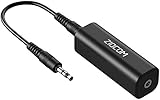
- Eliminating Buzzing Noise : Eliminating the buzzing noise, caused by ground loops which happens when the audio source and the speaker use the same power source in some car speakers / home stereo systems when using the Bluetooth receiver.
- Working Principle: Filters out noise instantly for clear, uninterrupted, uncompromised sound by eliminating the current noise in some car speakers / home stereo systems
- Plug and Play: Nifty little gadget that just plugs in; no other setup needed.
- Wide Compatibility: Works with any audio device that has 3.5mm audio jacks, for your Car Audio System/Home Stereo.
- Note: The Ground Loop Isolator connect to the AUX Jack in car to eliminate noise.You will enjoy good quality sound when use it with Ground Loop Noise isolator.
Common mistakes that make hum troubleshooting worse
- Removing the earth pin. This defeats a safety feature and can put dangerous voltage on exposed metal. It is not an acceptable audio fix.
- Changing several cables at once. You lose the information about which connection restored the hum.
- Assuming timing proves a ground loop. The new amplifier may have coincided with a failed cable, damaged connector, or speaker-wiring problem.
- Installing an isolator before testing. An isolator only addresses a signal-path loop; it does not diagnose a fault that remains with all inputs removed.
- Using an arbitrary adapter. Connector shape does not establish balanced compatibility, correct level, or correct pinout.
- Testing at high volume. A wiring mistake or transient can damage speakers and hearing. Start low and stop at the first sign of crackling, protection, or overheating.
What manufacturer guidance establishes
Sennheiser’s guide, updated October 14, 2025, emphasizes preserving the mains protective ground and using signal-path isolation only after identifying the problematic connection. Sound Devices’ support article, updated December 7, 2025, also treats grounding and interconnect configuration as path-dependent rather than as a one-size-fits-all fix.
Yamaha’s troubleshooting guidance and Outlaw Audio’s support material describe disconnecting amplifier inputs to separate an input-loop problem from noise generated farther downstream. A Krell owner manual likewise starts with checking input and output connections. These recommendations support a general diagnostic method; they do not establish the cause in any particular installation. Your amplifier’s manual takes precedence for connector assignments, load limits, and service instructions.
A compact decision checklist
- Lower volume and power down before changing connections.
- Keep protective earth connected; never use a mains ground-lift plug.
- Disconnect all amplifier inputs while leaving speakers connected.
- If the hum stops, reconnect one source and cable at a time.
- Inspect the connection and substitute a known-good compatible cable.
- Use a compatible balanced path when both devices support it.
- Use an RCA signal isolation transformer only after confirming the RCA path is where the hum enters.
- If hum remains with all inputs removed, check speaker wiring and seek model-specific service guidance.
The Bottom Line
A power amplifier often reveals a ground loop through a newly connected RCA signal path, but the only reliable way to distinguish that from a cable, speaker, wiring, or amplifier fault is controlled input disconnection. Preserve the protective earth, reconnect one path at a time, and choose balanced wiring, cable replacement, isolation, or service according to the test result.
Quick wins for a faster PC:
Fix the driver behind crashes, sound loss and screen glitchesFind Drivers →Clear out junk files and repair common Windows errorsFree Scan →Scan for outdated or missing drivers - takes under a minuteDriver Scan →Quick Recap
Product prices and availability are accurate as of the date/time indicated and are subject to change. Any price and availability information displayed on Amazon at the time of purchase will apply.

