
Quick wins for a faster PC:
Repair Windows errors before they cause bigger problemsFix Now →Scan for outdated or missing drivers - takes under a minuteDriver Scan →Clear out junk files and repair common Windows errorsFree Scan →iTechGuides is reader-supported. When you buy through links on our site, we may earn an affiliate commission. As an Amazon Associate I earn from qualifying purchases. Learn more
Games can feel rewarding because they combine meaningful choices, visible progress, social connection, and challenges that hold attention. Psychology offers useful ways to explain that appeal—especially self-determination theory and research on flow—but neither says every game will feel good to every player, or that gaming is always beneficial.
Why can playing a game feel rewarding?
A useful explanation comes from self-determination theory: people are often motivated when they experience autonomy, competence, and relatedness. Games can create opportunities for all three, though a particular game may support one need more than another—or fail to meet a player’s needs at all.
Autonomy: having meaningful choices
Autonomy is the feeling that you are acting with choice or volition. A game can have firm rules and still feel self-directed if you can choose meaningful approaches, decisions, or styles of play. A long list of options is not enough by itself: if choices feel cosmetic or controlling, they may not create a genuine sense of agency. Przybylski, Rigby, and Ryan proposed autonomy alongside competence and relatedness as a basis for understanding games’ appeal and possible effects on well-being (their 2010 article).
Competence: noticing that your skill is growing
Competence is the sense that you can act effectively and meet a challenge. Clear goals and useful feedback can make improvement easier to see: you learn a move, solve a harder puzzle, or complete a task that once felt out of reach. A setback can also provide information for another attempt, but failure is not automatically enjoyable; its effect depends on how the game presents it and how the player experiences it.
#1 Best Overall

- GAME OF SWEET REVENGE: Enjoy classic Sorry! gameplay with this Sorry! board game for kids. It's an edge-of-your-seat race to home, so hurry up and get there first
- FIRST ONE HOME WINS: Who will be the first player to get all 3 of their pawns to the home space? But watch out! Players can get "sweet revenge" by sending each other's pawns back to the starting point
- SO MANY POSSIBILITIES: Slide, collide, and score to win the Sorry! game. This family game for kids and adults features so many possibilities depending on the card picked up and strategy chosen
- CLASSIC SORRY! GAMEPLAY: Remember playing the original Sorry! game as a kid? Bring back memories of playing the Sorry! game with family members and introduce it to a new generation
- FAMILY GAME NIGHT FAVORITE: A go-to game for family time or anytime indoor fun, the Sorry! game for kids is one of the best family games for game night
A 2008 experiment involving a game-learning context found that support for competence and relatedness affected most of the outcomes measured. Perceived satisfaction of those needs mediated the significant experimental effects. This supports the needs-based account in that particular context, not a claim about all games or players (Sheldon and Filak’s study).
Relatedness: feeling connected
Relatedness is the experience of connection or belonging. Cooperative goals, shared progress, and social interaction can make play more meaningful for people who value playing with others. But social play is not a universal preference: some players want solitude, and the effects of interaction depend on the people and circumstances involved.
Rank #2

- UNO card game provides classic play, where players match colors or numbers in a race to get rid of all their cards!
- Action Cards and Wild Cards add unexpected excitement and game-changing fun, like the Reverse Card that switches the direction of play!
- The deck includes 3 blank Wild Cards for house rules anyone can make up -- erase and create new rules each game!
- When down to one card, players don't want to forget to yell 'UNO!' Keep score and the first player or team to 500 wins!
- The color blind accessible deck has special graphic symbols on each card to help identify its color, allowing players with any form of color blindness to play!
What is flow in gaming?
Flow is an absorbed, focused experience that can feel pleasurable. Khoshnoud and colleagues define it as “intense involvement in an activity with high degrees of concentration and focused attention accompanied by a sense of pleasure” in their 2020 review. Games are useful settings for studying flow because they can present goals, provide feedback, and adjust challenge in structured ways (Khoshnoud et al., 2020).
In everyday terms, a player may become deeply engaged when the next goal is clear, feedback helps them understand what is happening, and the task gives them a reason to keep concentrating. This is not a universal formula. What feels absorbing varies among players, and flow is only one kind of enjoyment: a game can be fun without producing intense absorption.
Rank #3

- EXPLORE THE ISLAND OF CATAN: Settle the uninhabited island of Catan by gathering resources, building infrastructure, and nurturing trade relationships.
- STRATEGY AND COMPETITION: Compete with 2-3 opponents to expand your settlements and cities while managing resources and avoiding the robber.
- TRADE, BUILD, AND SETTLE: Use brick, wood, wheat, ore, and sheep to construct roads, settlements, and cities in your race to 10 victory points.
- REPLAYABLE AND ENGAGING: With a modular hexagonal board, no two games are the same, offering endless strategic opportunities and replayability.
- FOR FAMILIES AND STRATEGY ENTHUSIASTS: Designed for 3-4 players, ages 10 and up, CATAN 6th Edition is perfect for family game nights and friendly competition. Add the CATAN 5-6 Player Extension (sold separately) to expand your game to 5-6 players.
What does neuroscience explain—and what remains uncertain?
Neuroscience has not identified one settled brain or body mechanism that explains flow. Khoshnoud and colleagues describe associations across a varied body of studies involving attention control, arousal, reward processing, automatic action control, and reduced self-referential processing. These are correlates reported across different studies and measures, not proof that one process causes the experience.
Flow is subjective and difficult to reproduce in a laboratory task. The review therefore emphasizes combining objective measurements with participants’ retrospective reports. It does not support the idea that dopamine alone explains why games feel good, or that a single “pleasure center” accounts for gaming enjoyment.
Rank #4

- CLASSIC BEGINNER GAME: Do you remember playing Candy Land when you were a kid. Introduce new generations to this sweet kids' board game
- RACE TO THE CASTLE: Players encounter all kinds of "delicious" surprises as they move their cute gingerbread man pawn around the path in a race to the castle
- NO READING REQUIRED TO PLAY: For kids ages 3 and up, Candy Land can be a great game for kids who haven't learned how to read yet
- GREAT GAME FOR LITTLE ONES: The Candy Land board game features colored cards, sweet destinations, and fun illustrations that kids love
Does enjoyment depend on winning?
No. Winning is one possible source of satisfaction, but challenge, practice, feedback, and the chance to try again can matter too. The evidence needs a boundary: a 2015 review discussing these mechanisms focused on exergames, or games involving physical activity, so its findings should not be generalized automatically to all entertainment games (Lyons et al., 2015).
The Tool Desk
Outbyte PC Repair FREERepair Windows errors before they cause bigger problemsFix Now →Outbyte Driver Updater FREEFix the driver behind crashes, sound loss and screen glitchesFind Drivers →Can games improve well-being?
There is no single answer for every player or situation. A review by Halbrook, O’Donnell, and Msetfi describes video games as entertainment with varied effects on well-being. It identifies motivation, social interaction, physical activity, game characteristics, and circumstances outside play as relevant factors (their 2019 review).
Best Value
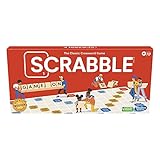
- CLASSIC CROSSWORD GAME: Get family and friends together for a fun game night with the Scrabble board game! Put letters together, build words, and earn the most points to win
- WOODEN TILES AND RACKS: This edition of the Scrabble game features 100 wooden letter tiles and wooden tile racks. The textured gameboard helps tiles stay on the board
- RACK UP THE POINTS: Scrabble letters are worth points, and premium squares on the gameboard multiply the score. Surprise opponents with 2-letter words, challenge their choices, and strategize to win
- GAME FOR 2-4 PLAYERS: Go for classic Scrabble gameplay in a head-to-head face-off, or mix things up and play in teams. The game guide offers expert tips, and other ways to play this classic word game
- FUN FAMILY GAME: Do you remember playing Scrabble when you were a kid? Introduce this fun game to your kids and grandkids! Connect over a classic board game and create memories for generations to come
The review discusses possible benefits, including prosocial behavior in social contexts and enjoyment during physically active games, but it does not establish that gaming is beneficial for everyone. It also frames the relationship between violent games and aggression as substantially dependent on individual and sociocontextual factors. The evidence does not justify a blanket claim that gaming is either good or harmful.
Independent reader supportYour contribution helps us test, update, and keep practical guides available for everyone.What can gamified-learning studies tell us?
Research on gamified education is related to the psychology of games, but it is not the same as research on ordinary commercial play. A 2024 meta-analysis examined 35 independent gamified-learning interventions published from 2011 to 2022, involving 2,500 participants. Its reported effects apply to those learning settings, not to video games in general (Li, Hew, and Du, 2024).
| Outcome in gamified learning | Reported effect |
|---|---|
| Intrinsic motivation | Hedges’ g = 0.257; 95% CI [0.043, 0.471]; p = .019. The authors reported this overall effect across the 35 interventions and 2,500 participants. |
| Perceived autonomy | Hedges’ g = 0.638; 95% CI [0.139, 1.136]; p = .012. |
| Perceived relatedness | Hedges’ g = 1.776; 95% CI [0.737, 2.814]; p = .001. |
| Perceived competence | Hedges’ g = 0.277; 95% CI [0.001, 0.553]; p = .049. The authors described this as a minimal impact. |
These averages describe interventions in learning contexts. They cannot establish how strongly a commercial game will motivate a particular person, or predict whether that person will enjoy it.
What’s actually slowing this PC down?
Pick the symptom - the matching free tool is one click away.
Why the same game can feel different to different people
People differ in whether they want choice, mastery, social interaction, focused challenge, or something else from play. The same activity may feel absorbing to one person and frustrating or uninteresting to another. Outcomes also depend on the player’s situation outside the game and on features such as social interaction and physical activity. The cited reviews do not establish a universally most enjoyable genre or a single design recipe that works for everyone.
Quick Recap
Product prices and availability are accurate as of the date/time indicated and are subject to change. Any price and availability information displayed on Amazon at the time of purchase will apply.

