
Recommended Free Tools
iTechGuides is reader-supported. When you buy through links on our site, we may earn an affiliate commission. As an Amazon Associate I earn from qualifying purchases. Learn more
Coding agents can appear more capable because many coding tasks offer a concrete artifact to change and fast ways to check that change. Go-to-market (GTM) work—such as prospecting, campaign planning, and market decisions—often depends on shifting context, uncertain signals, and outcomes that take time to judge. That is a useful explanation for the perceived gap, not a measured finding: the available studies do not directly compare coding agents with GTM agents, and coding agents themselves remain unreliable in important settings.
Why task structure can favor coding agents
An agent has to do more than produce a plausible answer. It must gather information from an environment, take a sequence of actions, observe what happens, and adjust its strategy. Google Research’s January 2026 report describes this as sustained interaction under partial observability, with performance shaped by task decomposition, dependencies, and feedback.
Some coding tasks have a relatively legible loop: inspect a repository, edit files, run tests, and review the result. Tests do not prove that a change is correct in every respect, but they can provide quick, repeatable evidence about defined requirements. A task with a clear specification and a bounded change may therefore give an agent more useful feedback than work whose success depends on interpreting people, markets, or delayed business outcomes.
Crashes, No Sound, or Screen Glitches?
Random freezes, missing sound and display glitches usually trace back to one bad driver. Find and replace yours safely.Free scan · under a minutePC Slower Than It Used to Be?
A free scan shows the junk files, broken settings and background clutter dragging Windows down - then fixes them in one click.Free scan · Windows 10 & 11That contrast is a reasoned application of the studies, not a result they directly measured. A campaign or prospecting workflow can also be broken into useful steps and evaluated; a code change can be ambiguous, risky, or hard to test. The decisive question is not whether a task is “coding” or “marketing,” but whether its goal, dependencies, feedback, and acceptable outcome are clear enough for an agent to act and learn reliably.
#1 Best Overall

- BE A CODING MASTER WHILE PLAYING: Kids can make VinciBot coding robot recognize items, ask weather, make it sing, dance, perform light shows, or express its mood through the LED matrix, with rich activities, children can learn AI, IoT, TinyML, and coding while playing. VinciBot programable robot offers 100% open programming for kids 8-12 and up, providing endless fun AI games to explore
- EASY TO GET STARTED: Play the STEM robot out of the box with 3 preset modes - line following, precision drawing and IR remote mode to let Vincibot robotics run, dance, sing and light up without coding basics. Equipped with 1500mAh battery for over 4h of continuous use on single charge, allowing teens to learn with the robot toy anytime, anywhere
- CODING ZERO TO HERO: Play Vincibot STEM toy out of box with challenge booklet (17 coding cases). More detailed beginner-friendly tutorials with over 75 hands-on cases on the Vinci.MatataStudio website to help kids master programming skills step by step, including Scratch& Python, AI, robotics, computer science, IoT and TinyML. Our robotic offers endless opportunities with ever-updated tutorials and free lifelong programming platform for creating unique STEM projects and enhancing coding proficiency
- MORE OPEN: This kids robotics is highly extensible, multiple Vincibots can be combined to create various forms. The robot is compatible with LEGO bricks, TECHNIC motors, and a wide range of third-party electronic modules, offering greater diversity and flexibility for play, teaching, and robotics competitions, making it an ideal STEM educational toy for teens to learn programming and grow up with AI technology, it's also an ideal teaching tool, back to school supplies
- MULTI-FUNCTIONS: This educational STEM kit is equipped with 8 sensors, enabling a variety of gameplay combinations. Helping kids learn programming, the basic concepts of hardware control and robotics knowledge. This robotics science kit makes a great gift for boys girls ages 8-12 and up, perfect for occasions like New Year, Christmas, graduations, and birthdays etc,.
More agents help only when the work can be divided
In its controlled evaluation of 180 agent configurations, Google Research found that coordination strategy mattered and that adding agents was not automatically beneficial. On one parallelizable finance-reasoning task, centralized coordination improved performance by 80.9% over a single-agent baseline. On the sequential PlanCraft planning task, tested multi-agent variants performed 39–70% worse. In the evaluated setup, independent multi-agent systems amplified errors 17.2 times, compared with 4.4 times for centralized systems. The study’s predictive model selected the optimal coordination strategy for 87% of unseen task configurations.
Those figures belong to the specific evaluation and tasks; they are not general performance forecasts for software development or GTM. They do illustrate a practical risk: splitting work is useful when subtasks can proceed independently, but harmful when later decisions depend on earlier ones or agents pass flawed assumptions along. GTM workflows can include both patterns. Researching separate market segments may be parallelizable; deciding whom to contact, what to say, and when to follow up can involve dependencies and noisy evidence. That application is analysis, not a finding from Google’s task set.
Rank #2

- 【5 in 1 AI Interaction Robot】Watch as the clever digital eyes blink and change expressions, Lifelike sounds based on commands bring the robot to life instantly. Be amazed by its magical transformations: a wobbling snail, a busy engineer, a diligent snowplow, a mighty tank, and a mysterious magician. Switch between five characters at will, sparking boundless creativity.
- 【Remote & App-Controlled】Equipped with a 2.4GHz remote controller and a feature-rich smartphone APP. From mischievous toddlers to imaginative teens, there's a perfect mode for every age. Transform your living room into a racetrack, your bedroom into a coding lab – every space becomes a joyful playground!
- 【STEM Hands-on Education】 494 high-quality building blocks to create your own robot kingdom! Be a little architect, building the future world with your hands. Transform into a programmer, commanding your robot army with code.
- 【Long-lasting Battery】Built-in Battery Just plug in the charging cable. Features safety-certified 3.7V 400mAh lithium battery. 40 minutes of non-stop play? Piece of cake! From cosmic explorations in the living room to jungle expeditions in the bedroom. Quick to charge, long-lasting, and worry-free.
- 【Parent-Kids Interaction】Ready to power up this family fun generator? Assemble, program, and control together, enhancing parent-child relationships. Fun, educational, and family-bonding, an ideal gift for Children's Day, birthdays, and Christmas.
How to judge whether a workflow is agent-friendly
Before comparing agents, examine the work they are expected to do. The following is a decision framework drawn from the task-structure, production, and coding-agent findings; it is not a measured coding-versus-GTM scorecard.
| Question | What to examine | Why it matters |
|---|---|---|
| Is the goal specific? | Can success and an acceptable output be described in advance? | Vague goals make it harder to distinguish a sound result from a plausible one. |
| Can the work be split? | Are subtasks independent, or does each step depend on the previous one? | Coordination can help parallel work and create overhead or error propagation in sequential work. |
| How quickly does feedback arrive? | Can the agent check an action’s result promptly, or must it wait for a delayed outcome? | Fast, informative feedback supports iteration; delayed or noisy signals make course correction harder. |
| How is correctness judged? | Can defined checks test the output, or does it require contextual human judgment? | Mechanical checks can catch some failures quickly, while judgment-heavy work needs review and clear evaluation criteria. |
| How stable is the context? | Does relevant information remain current and consistent, or change across sources and over time? | Partial, shifting context can make a once-reasonable action wrong or poorly grounded. |
| What if an error propagates? | Can a mistake be contained, or will downstream steps compound it? | Higher propagation risk calls for checkpoints, tighter coordination, or human approval. |
| Where does human review fit? | Which actions can proceed automatically, and which require a person to approve or evaluate them? | Supervision can catch errors, but it also defines the real operating model and workload. |
What deployed agents look like in practice
“Agents work” can suggest long-running autonomy, but production evidence points to a more supervised reality. Pan and colleagues’ 2026 paper, Measuring Agents in Production, combines 20 in-depth case studies with a survey of 86 practitioners working on deployed systems across 26 domains. In that surveyed sample:
Rank #3
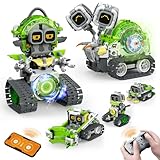
- 5-in-1 Building Kit: This erector building block set includes 478 pieces, allowing kids to create five different models: animal snails, AI robots, and engineering vehicles. With easy-to-follow instructions, children can assemble each model with ease. It’s an exciting and educational way to introduce STEM concepts while providing hours of fun and creative play!
- Interactive Expressions: The cute snail engages with your child by displaying emotions like curiosity, excitement, and calmness through its expressive eyes. If you prefer quieter playtime, simply mute the robot sound with a single click—turning off the noise while still enjoying the snail's charming interactions.
- App Control: Beyond the remote control, you can unlock a more interactive experience with the feature-packed app. Effortlessly control your car with 360° rotation and movement in all directions: forward, backward, left, and right. The app also offers educational features like driving simulation, gravity gyroscope, navigation paths, pet traction, AI programming, and more. It’s a fantastic way to promote STEM learning while keeping your child engaged—away from video games!
- Building and Coding: Suitable for beginners aged 6 and up, this programmable smart block toy offers a fun and easy-to-follow building experience with clear instructions. It helps kids take a break from screens while developing key skills like logical thinking, planning, and execution. Combining entertainment with education, it's the perfect toy choice for boys aged 8-13.
- Ideal Gifts for Kids: Bring home this awesome robot set! This educational STEM toy is perfect for Back-to-School, Birthdays, Children’s Day, Christmas, Halloween, Thanksgiving, and New Year’s. It makes an ideal gift for birthday parties, family gatherings, or fun indoor and outdoor play with parents. Suitable for boys and girls ages 6-12.
- 68% of agents executed at most 10 steps before human intervention.
- 70% relied on prompting off-the-shelf models rather than weight tuning.
- 74% depended primarily on human evaluation.
The authors identify reliability—consistent correct behavior over time—as the leading development challenge and describe systems-level design as a way practitioners address it. These are findings from the paper’s practitioner sample, not a census of deployed agents, and the study does not isolate GTM systems. They nevertheless help explain why a useful agent deployment is often a supervised workflow, not an unattended digital employee.
Coding-agent results are real but limited
Coding benchmarks and demonstrations can make coding agents look dependable, but success on a subset of tasks does not establish broad reliability. Mehtiyev and Assunção’s April 2, 2026 arXiv preprint analyzes 9,374 trajectories from 19 agents, eight coding-agent frameworks, 14 language models, and 500 tasks. The authors report that even top-ranked agents fail on more than 20% of benchmark problems.
Rank #4

- Arduino Programming, Open Source: miniArm is built on the Atmega328 platform and is compatible with Arduino programming. The programs for miniArm are open-source, and learning tutorials and secondary development examples are available, making it easier for you to develop your robotic hand.
- High-Performance Hardware, Support Sensor Expansion: miniArm is equipped with a 6-channel knob controller, Bluetooth module, high-precision digital servos, and other high-performance hardware. Moreover, it provides multiple expansion ports for sensor integration, including ESP32 Cam, accelerometer, touch sensor, glowy ultrasonic sensor, etc., empowering users to engage in secondary development for sonic ranging and pose control capabilities.
- Versatile Control Options: miniArm supports app control, and users can utilize knob potentiometers for real-time knob control and offline action editing.
- Spark Your Creativity with miniArm: Expand the capabilities of miniArm with various sensors and unlock endless possibilities for your project.
- Starter Kit NO Glowing ultrasonic sensor, Touch sensor, Acceleration sensor, ESP32Cam Module.
The paper also cautions against treating patch size or apparent task simplicity as a complete explanation for difficulty. Human annotators judged 12 never-solved tasks easy and requiring simple patches, yet every agent in the study failed on them. The authors point to architectural reasoning and domain knowledge as possible gaps. Successful trajectories more often gathered context before editing and spent effort validating results. These are patterns observed in that analysis, not universal causal rules or guarantees that following the same sequence will make an agent succeed.
Results also change with the coding context. A Montana Research Foundation review dated August 2026 summarizes two trials with substantially different conditions: a 2023 controlled Copilot trial in which developers completed a scoped, greenfield HTTP-server task 55.8% faster, and a 2025 METR randomized trial involving 16 experienced open-source developers and 246 real issues in their own mostly mature repositories, in which developers took 19% longer when AI tools were allowed. The percentages are the review’s summaries of those studies, not a direct comparison between agents or a prediction for all coding work. Bounded, well-specified work and issues embedded in mature systems are different tasks.
Best Value

- INTERACTIVE TOUCH SCREEN: Features a vibrant built-in display that lets students naturally engage with content, make selections, and receive real-time feedback.
- MOTION-BASED LEARNING: Equipped with an accelerometer and gyroscope so students can explore physics concepts like acceleration, velocity, and motion in real time.
- AI-POWERED EDUCATIONAL EXPERIENCE: Ari’s AI integration opens up dynamic, personalized learning paths that adapt to students’ needs and creativity.
- MEASURE DISTANCES WITH PRECISION: Includes a time-of-flight sensor that helps students detect and measure obstacles, making STEM learning more practical and hands-on.
- IDEAL FOR STEM CLASSROOMS AND HOMESCHOOLING: Designed to bring real-world technology into the learning environment—perfect for educators, parents, and students.
Benchmarks and adoption metrics need context
A benchmark score is only as informative as its tasks, tests, and setup. The Montana Research Foundation review reports that OpenAI stopped evaluating models on SWE-bench Verified in February 2026 after auditing a selected set of failures. Material test or task-description problems were found in 59.4% of that audited set. That is the share of the selected failures audited—not the share of all benchmark tasks that were invalid.
The same review summarizes a 2024 DORA survey finding: a 25% rise in AI adoption was associated with a 1.5% fall in delivery throughput and a 7.2% fall in delivery stability. These are associations in survey data; they do not show that AI adoption caused the changes. Together with the varied coding trials, the figures argue for checking the conditions behind a result rather than treating any single benchmark, study, or adoption metric as a verdict on agent capability.
What the apparent GTM gap does—and does not—mean
The available evidence supports a cautious explanation: tasks with clear goals, useful feedback, manageable dependencies, and effective validation are easier to operationalize as agent workflows. Some coding tasks have these properties, while many GTM activities involve changing external context, judgment, and delayed outcomes. But neither category is uniform. Coding agents can fail on apparently simple benchmark tasks and slow experienced developers in mature repositories; GTM work can also be narrowed into bounded tasks with reviewable outputs.
Quick wins for a faster PC:
Fix the driver behind crashes, sound loss and screen glitchesFind Drivers →Clear out junk files and repair common Windows errorsFree Scan →Scan for outdated or missing drivers - takes under a minuteDriver Scan →No cited study directly measures a performance gap between coding agents and GTM agents. So “coding agents work and GTM agents don’t” is too broad as a factual conclusion. The defensible takeaway is that agent performance depends heavily on the work’s structure and on the system built around the model: context gathering, coordination, validation, reliability controls, and human oversight.
Quick Recap
Product prices and availability are accurate as of the date/time indicated and are subject to change. Any price and availability information displayed on Amazon at the time of purchase will apply.

