
Free tools Windows power users keep installed
One-click scans. No signup required.
iTechGuides is reader-supported. When you buy through links on our site, we may earn an affiliate commission. As an Amazon Associate I earn from qualifying purchases. Learn more
The likeliest explanation is risk, not a lack of imagination: a dedicated rise-to-fame RPG would be a costly new concept to build and market, and its career, reputation, relationship, and story systems would all need to work together. Industry commentary links rising game-development costs with greater caution around unfamiliar projects. But there is no public evidence here that a particular publisher considered and rejected this exact idea, and the market has adjacent games rather than a clear large-scale AAA/AA example built around fame as its central RPG loop.
What the apparent gap does—and does not—mean
“No AAA/AA rise-to-fame RPG” is best understood as a market observation, not proof that no studio has ever tried the idea. The examples identified here approach fame through different formats: one adds celebrity progression to a life simulator, while another tells a branching Hollywood story in an interactive-video format. Neither is an obvious large-scale game whose main loop combines an entertainment career, personal choices, and persistent RPG progression.

That distinction matters. The premise has been explored, but the specific combination may be harder to greenlight and produce than a familiar sequel or a game built around established genre conventions.
Quick wins for a faster PC:
Fix the driver behind crashes, sound loss and screen glitchesFind Drivers →Clear out junk files and repair common Windows errorsFree Scan →Scan for outdated or missing drivers - takes under a minuteDriver Scan →Why a new career RPG can be a difficult greenlight
AAA development is expensive and lengthy. McKinsey’s 2025 analysis says AAA production budgets often exceed $200 million and describes three to five years and $200 million to $500 million of production effort. These are broad estimates, not a budget range that applies to every game. McKinsey attributes much of the work to engineering and art, and quotes Unity president and CEO Matt Bromberg: “The single biggest value we could offer this industry is to help people build better games, more innovative games, more efficiently.”
#1 Best Overall

- EXPLORE A FOLKLORE-INSPIRED WORLD: Immerse yourself in the dark and mysterious Witchwood, filled with unique characters, monsters, and folklore-inspired adventures.
- MORE FLEXIBLE QUEST PATHS: Offers new ways to fulfill your character’s goals with narratively driven storylines and multiple paths to victory.
- DYNAMIC CHOICES THAT SHAPE THE WORLD: Every decision you make can drastically change the game world and impact future scenarios.
- APP-SUPPORTED GAMEPLAY: Leverages Destinies’ Scan&Play technology for a seamless, story-driven experience—no game master required.
- REQUIRES BASE GAME: This is an expansion and requires the Destinies base game to play. Designed for 1-3 players, ages 14+, for a richly immersive tabletop experience.
Omdia’s 2025 analysis adds that rising graphical expectations and competition around hardware can increase production effort, while slower market growth and marketing costs complicate investment decisions. Its reported game-cost figures illustrate the scale, but they use different scopes and evidence and should not be treated as a directly comparable ranking:
| Game or estimate | Reported figure | What the figure represents |
|---|---|---|
| Cyberpunk 2077 | $174 million | Total development costs disclosed by CD Projekt Red after launch, as reported by Omdia in 2025. |
| Horizon Forbidden West | $212 million | A disclosed figure reported by Omdia in 2025. |
| Marvel’s Spider-Man 2 | Estimated $300 million | An Omdia estimate from 2025, not a confirmed company disclosure. |
| Call of Duty: Black Ops Cold War | $700 million | Lifetime costs cited by Omdia in 2025 from a court filing—not development costs alone. |
Former PlayStation executive Shawn Layden has described the commercial pressure directly: “Today, the entry costs for making a AAA game is in triple-digit millions now. I think, naturally, risk tolerance drops.” GameSpot reported his argument that higher costs encourage sequels and copycats and that the AA space has contracted. This is an industry perspective, not a measured study proving that costs caused the absence of this particular game concept.
Rank #2

- Begin your adventure in the Stormlight Archive universe with this complete Cosmere Roleplaying Game Starter Set, designed to introduce new players and game masters to the epic Stormlight campaign setting.
- Includes a condensed 60-page starter rulebook that teaches the core mechanics of the Cosmere RPG, making it easy for beginners to learn tabletop roleplaying and start playing quickly.
- Jump right into the action with Bridge Nine, a 48-page introductory adventure for 1st-level characters featuring story-driven encounters, battlemaps, and tokens for heroes and enemies.
- Designed to make game mastering easier with six pregenerated character sheets and initiative cards, helping groups begin their first RPG session with minimal preparation.
- Comes with six standard RPG dice plus a custom plot die to enhance storytelling, gameplay decisions, and immersive fantasy roleplaying in the Stormlight Archive setting.
The practical implication is that a publisher evaluating a new idea must believe it can attract an audience, justify its production scope, and stand out in a crowded market. A rise-to-fame story RPG may have a clear fantasy, but it does not come with the same ready-made expectations as a familiar franchise or a well-established action-RPG formula.
Games have explored fame, but in different forms
The nearest examples show that the premise is not untouched. Their formats also clarify what a dedicated story RPG would still need to combine.
Rank #3

- Immersive Solo Narrative – Play as Luma and her bear companion, Brom, in a heartfelt quest to heal the Wildwoods from a dark shadow, guided by a richly illustrated storybook.
- Innovative River Card Mechanic – Experience tension and flow in every scene with the unique River System, making each challenge dynamic and engaging.
- Quick Setup & Easy Storage – Start your adventure in under 2 minutes! Each chapter’s cards are pre-packaged and the in-box tray keeps everything organized for fast setup and teardown.
- Storyfold System Debut – Wildwoods is the first game to use the new Storyfold system, designed for immersive storytelling, engaging solo gameplay, and accessibility.
- Stunning Art & Engaging Gameplay – Enjoy beautiful artwork and a captivating narrative that brings the magical forest and its creatures to life.
| Game | How it approaches fame | What makes it different from a dedicated rise-to-fame RPG |
|---|---|---|
| The Sims 4 Get Famous | EA describes an acting career and celebrity progression, including the possibility of becoming an A-lister. | It is an expansion for The Sims 4, placing fame inside a broader life-simulation framework rather than making it the foundation of a standalone story RPG. |
| The Fame Game: Welcome to Hollywood | Steam describes a 2025 interactive FMV story about an ordinary man becoming the lead actor on a television show and climbing Hollywood’s ladder. Matt Dean Films calls it a narrative-driven dating sim. | Its emphasis is authored interactive narrative and romance, rather than a broad, systemic career simulation. Steam’s tags include “RPG” and “story rich,” but its tags are user-defined and do not establish a rigorous genre classification or production scale. |
Together, these games demonstrate that celebrity and entertainment careers can support game narratives. They do not establish how large the audience for a dedicated career RPG would be, nor do they show that AAA/AA studios have never made a related project.
What a dedicated fame RPG would have to make work
The genre-specific challenge is a design inference, not a reason confirmed by a named studio. A convincing game would need to connect advancement at work with the rest of the player’s life. If fame were only a meter that rises after missions, the career could feel cosmetic. If every decision affected everything, the game could become difficult to explain, write, and balance.
Rank #4
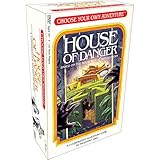
- Number of players: 8
- Brand New in box.
- The product ships with all relevant accessories
- Package Dimensions: 6.4 L x 21.8 H x 14.0 W (centimeters)
- Work and opportunity: Auditions, performances, or other jobs need to give the player meaningful routes forward, not just repeat the same task with a higher reward.
- Skills and progression: Training should change what opportunities are available or how the player handles them, so advancement feels earned.
- Reputation and public image: The game would need to show how audiences and industry figures respond—and distinguish public visibility from professional credibility.
- Relationships and private choices: Personal connections could create support, conflict, or trade-offs with career decisions rather than existing as a separate side activity.
- Money and consequences: Income, costs, setbacks, and the pressures of success can give choices weight, provided they serve the story rather than become bookkeeping.
These systems would also affect production scope. More career paths and branching outcomes can mean more writing, animation, voice work, and quality assurance. That is a plausible cost concern, not evidence that any particular publisher rejected a pitch for those reasons.
Why the concept may fit a smaller scope first
A focused version could center on one entertainment industry and a limited number of consequential career decisions, with reputation and relationships tied directly to those choices. That approach might make the core loop easier to communicate and keep the story manageable. It is a design possibility, not a prediction about what studios will make.
Best Value
There is also no reliable published demand figure established here for this exact concept. Individual community questions, product descriptions, or the existence of related games cannot substitute for representative audience research. So the defensible answer is not that players would reject the idea; it is that the commercial case and production plan for this particular combination are not publicly established.
The most accurate answer
AAA/AA studios appear not to have produced an obvious large-scale game centered on a fully integrated rise-to-fame RPG loop, but that is a qualified observation rather than a universal historical claim. Rising costs and industry risk aversion offer a credible explanation for why a novel concept could be harder to approve. The specific design would also need to connect career progress, skills, public reputation, relationships, and personal consequences without letting the scope balloon. No public evidence here shows that a studio rejected the idea—or that a lack of audience is the reason it remains uncommon.
Quick Recap
Product prices and availability are accurate as of the date/time indicated and are subject to change. Any price and availability information displayed on Amazon at the time of purchase will apply.
Recommended Free Tools

