
iTechGuides is reader-supported. When you buy through links on our site, we may earn an affiliate commission. As an Amazon Associate I earn from qualifying purchases. Learn more
If an iPhone alarm did not sound, check that the alarm is enabled, set for the time and days you intended, and assigned an audible sound. Then check the Ringtone and Alerts volume in Settings. Silent mode and Focus modes such as Do Not Disturb do not silence a Clock alarm, according to Apple Support. If you use a Health sleep schedule, check its wake-up alarm separately: it is not the same as a regular Clock alarm.
Start by checking the alarm you meant to use
A missed alarm can come down to a setting on the alarm itself rather than a general iPhone sound setting. In the Clock app, open Alarms and check the alarm you expected to hear. Confirm its switch is on, its time is correct, and its repeat days include the day you need.
If it is a one-time alarm, make sure it is set for the intended date and time. If it repeats, verify the selected days rather than assuming the schedule runs every day. Apple’s iPhone alarm settings include controls for repeat days and sound; a disabled alarm, incorrect time, or unintended repeat selection can explain why the expected alert did not happen.
Check the alarm closest to the time you expected it to ring, especially if you have more than one. A list of alarms can include one-time alerts and recurring ones with different schedules. The name or position of an alarm in the list is not a substitute for checking its enabled switch and timing. For example, a weekday alarm will not cover a day that is not selected, and an alarm set for a different time can appear to have failed even though its settings match a different plan.
#1 Best Overall

- ❗❗❗𝐍𝐨𝐭𝐞: 𝐍𝐨𝐭 𝐂𝐨𝐦𝐩𝐚𝐭𝐢𝐛𝐥𝐞 𝐰𝐢𝐭𝐡 𝐒𝐚𝐦𝐬𝐮𝐧𝐠 𝐚𝐧𝐝 𝐀𝐧𝐝𝐫𝐨𝐢𝐝 𝐝𝐞𝐯𝐢𝐜𝐞𝐬.AirPods don't support wireless charging — they need to be plugged in. (USB-C & Lightning ports are both included)
- 【𝟓 𝐢𝐧 𝟏 𝐌𝐚𝐠𝐧𝐞𝐭𝐢𝐜 𝐖𝐢𝐫𝐞𝐥𝐞𝐬𝐬 𝐂𝐡𝐚𝐫𝐠𝐢𝐧𝐠 𝐒𝐭𝐚𝐭𝐢𝐨𝐧】Multifunctional magnetic wireless charging station,you can have the benefits of a large digital alarm clock, 7 colors night light, iPhone wireless charger, apple watch and airpods charger.Free yourself from charging cables,save space and organize your desk, bedroom and nightstand,it is both useful and good looking.
- 【𝐖𝐢𝐝𝐞𝐥𝐲 𝐂𝐨𝐦𝐩𝐚𝐭𝐢𝐛𝐥𝐞】The magnetic wireless charging station is suitable for multiple devices of Apple products,compatible with iPhone 18 17 16 15 14 13 12 11 10 9 8 Pro/Pro Max/Plus/mini/air/Duo/X/XR/XS/XS series;iWatch 12/11/10/9/8/7/6/5/4/3/2/SE/Ultra 4 3 2 1;AirPods 1/2/3/4/5/Pro/Pro 2/pro 3
- 【 𝐢𝐏𝐡𝐨𝐧𝐞 & 𝐢𝐖𝐚𝐭𝐜𝐡 𝐌𝐚𝐠𝐧𝐞𝐭𝐢𝐜 𝐖𝐢𝐫𝐞𝐥𝐞𝐬𝐬 𝐂𝐡𝐚𝐫𝐠𝐢𝐧𝐠 】Raised design fits your iPhone better (Case Thickness<5mm), no need to adjust the angle multiple times, improves charging noise and heat issues. Comes with watch wireless charging and supports two types of Airpods with USB-C and Lightning ports.
- 【𝐀𝐥𝐚𝐫𝐦 𝐂𝐥𝐨𝐜𝐤 𝐰𝐢𝐭𝐡 𝟎-𝟏𝟎𝟎% 𝐀𝐝𝐣𝐮𝐬𝐭𝐚𝐛𝐥𝐞 𝐁𝐫𝐢𝐠𝐡𝐭𝐧𝐞𝐬𝐬】The brightness of LED display is dial-controlled and adjustable(0-100% Dim) or all turn off that can't bother your sleep.The alarm clock has 3 adjustable volume levels that can engage people in deep sleep and time mode [ 12 or 24 HR & AM or PM ] for you to choose. Snooze allows extra 9 minutes of slumber.
Take a moment to distinguish “the alarm did not go off” from “the alarm went off but I did not hear it.” If the alarm is absent from the expected time or day, start with the enabled state, time, repeat days, and which alarm system you used. If it appears to trigger but is silent or hard to hear, focus on Sound, Ringtone and Alerts volume, and the specific behavior associated with StandBy or Attention Aware.
Check the alarm’s Sound setting
Open the alarm’s edit controls and inspect Sound. Choose an audible tone if the setting is None. Apple specifically identifies None as a setting to check when an alarm does not sound or the iPhone only vibrates. Vibration by itself is not evidence that the alarm’s sound volume is too low: the selected sound may be None.
Make sure you are editing the alarm that actually matters. If you have several alarms, check each relevant one; changing a different alarm will not fix the one that was meant to wake you.
Think of the sound selection and the volume slider as two separate checks. Sound answers whether the alarm has an audible tone selected; Ringtone and Alerts controls how loud alerts are. Raising the volume will not add a tone when Sound is set to None. Conversely, choosing a tone does not guarantee it will be easy to hear if the alert volume is low. Check both before concluding that the phone ignored the alarm.
Raise the alarm volume in Sounds & Haptics
iPhone alarm loudness is controlled by the Ringtone and Alerts setting. Open Settings > Sounds & Haptics and move the Ringtone and Alerts slider to a level you can hear. This is the relevant setting to check when an alarm sounds but is too quiet.
The side volume buttons do not necessarily change that setting. In Sounds & Haptics, check Change with Buttons: when it is enabled, the iPhone’s volume buttons can adjust Ringtone and Alerts volume; when it is disabled, button presses do not adjust that alert-volume control. If you used the side buttons to lower the volume, check the slider directly rather than assuming it reflects the alarm level.
This distinction can explain why music or other audio seems loud enough while an alarm is not. The slider Apple identifies for alarm troubleshooting is specifically Ringtone and Alerts. Check that control itself rather than using another sound as a measurement of alarm volume. If Change with Buttons is off, the phone’s buttons will not adjust this alert setting, so use the slider in Settings.
Free tools Windows power users keep installed
One-click scans. No signup required.
Menu wording and layout can vary by iOS version. If the labels on your device differ, look in Settings for the sound controls and the Ringtone and Alerts slider. Apple documents this volume setting as part of its alarm troubleshooting guidance.
Choose a level that is audible in the place where you expect to use the alarm. The essential point is to inspect the actual slider rather than infer its setting from the phone’s general sound, button presses, or an unrelated notification. If the alarm is still too quiet after confirming that it has a sound and the slider is raised, continue through the checks for Attention Aware and the sleep-schedule alarm type if applicable.
Rank #2

- ❗ ❗ ❗𝐍𝐎𝐓𝐄: Not Compatible with Samsung Watch; If not charging or charging unstable, try using the included adapter & cable.
- 𝟑-𝐢𝐧-𝟏 𝐖𝐢𝐫𝐞𝐥𝐞𝐬𝐬 𝐂𝐡𝐚𝐫𝐠𝐞𝐫 𝐰𝐢𝐭𝐡 𝐀𝐥𝐚𝐫𝐦 𝐂𝐥𝐨𝐜𝐤: Charge your for iPhone, for Apple Watch, and for AirPods all at once on a single charging dock. Stay organized and clutter-free while easily checking the time or waking up with the built-in LED alarm clock. This space-saving solution delivers great value and simplifies your daily routine - a versatile essential for use in bedroom, home, office, or other occasions.
- 𝐃𝐢𝐠𝐢𝐭𝐚𝐥 𝐀𝐥𝐚𝐫𝐦 𝐂𝐥𝐨𝐜𝐤 𝐰𝐢𝐭𝐡 𝐀𝐝𝐣𝐮𝐬𝐭𝐚𝐛𝐥𝐞 𝐁𝐫𝐢𝐠𝐡𝐭𝐧𝐞𝐬𝐬 : Enjoy a clear LED display (6 dimming levels for day/night), including a lowest setting so soft even sensitive sleepers won’t be disturbed. It also features 3 adjustable alarm volumes, 9-minute snooze, and 12/24-hour formats—all in one intuitive design that adapts to your bedside sleep style.
- 𝐃𝐫𝐨𝐩-𝐚𝐧𝐝-𝐆𝐨 𝐅𝐫𝐞𝐞𝐝𝐨𝐦, 𝐓𝐚𝐤𝐞𝐬 𝐔𝐩 𝐋𝐞𝐬𝐬 𝐒𝐩𝐚𝐜𝐞 𝐭𝐡𝐚𝐧 𝐎𝐭𝐡𝐞𝐫𝐬: Say goodbye to tangled cables. Just plug in with a single power cord, place your devices down, and start charging. The sleek matte finish and minimalist LED clock double as stylish room décor. Taking up about the same space as your iPhone, it’s compact enough to keep your workspace, nightstand, or travel bag neat and organized.
- 𝐏𝐡𝐨𝐧𝐞 𝐂𝐚𝐬𝐞-𝐅𝐫𝐢𝐞𝐧𝐝𝐥𝐲 < 𝟓𝐦𝐦: It charges through most phone cases up to 5mm, just keep your phone protected while powering up. Please note that our phone charging panel is NOT magnetic and also doesn't work with bulky cases that have metal rings, pop-out grips, built-in card slots, or extra-thick designs.
Silent mode, Focus, and headphones usually are not the cause
Do not start by disabling Silent mode or Do Not Disturb. Apple says Silent mode, Do Not Disturb, and other Focus modes do not affect the Clock alarm sound. Its support guidance also says connected headphones do not prevent the alarm from playing through the iPhone’s built-in speakers.
That distinction matters because these settings affect other alerts and notifications, so an otherwise quiet phone can create the impression that an alarm should also be muted. For the Clock alarm, check its enabled state, time, repeat days, Sound selection, and Ringtone and Alerts volume instead.
Apple’s wording is direct: “Do Not Disturb, the Ring/Silent switch and Silent mode don’t affect the alarm sound.” That guidance applies to the Clock alarm; it is not a reason to skip the alarm’s own settings. If the phone is silent for calls or notifications, that does not establish that the alarm was also muted. Likewise, connected headphones are not the first setting to remove when troubleshooting: according to Apple, the built-in speakers still play the alarm.
These are useful exclusions because they keep troubleshooting focused. You do not need to turn off a Focus mode or disconnect headphones just to test the settings Apple identifies for the Clock alarm. First check the alarm itself and alert volume. If the alert that failed was the wake-up alarm tied to a Health sleep schedule, verify that separate alarm rather than assuming the regular Clock alarm’s behavior settles the question.
If the iPhone only vibrates or is in StandBy
If the alarm appears to trigger but you hear no tone, first confirm the alarm’s Sound is not set to None. Apple also notes a StandBy-specific behavior: alarm haptics are disabled while the iPhone is in StandBy. In that situation, vibration is not a reliable indication that the alarm should also be making sound; check the selected audible sound.
These checks separate two different symptoms: a low Ringtone and Alerts level can make an audible tone hard to hear, while Sound set to None means there is no selected tone to hear. StandBy affects haptics, so do not rely on vibration alone to judge whether an alarm sound is configured.
The Tool Desk
Outbyte PC Repair FREEClear out junk files and repair common Windows errorsFree Scan →Outbyte Driver Updater FREEScan for outdated or missing drivers - takes under a minuteDriver Scan →When diagnosing “only vibrates,” check the sound selection before changing other settings. If it is None, select an audible sound. If it already has a tone, check the Ringtone and Alerts slider. Then consider whether the phone was in StandBy, where Apple says haptics are disabled. These are distinct behaviors: a vibration-only alert can point to None, while StandBy changes haptics and makes vibration a poor test of whether a tone is selected.
Do not treat the absence of haptics in StandBy as proof that an alarm did not trigger. Use the sound setting and alert volume to assess whether an audible alarm is configured. Apple’s guidance does not identify StandBy as a reason to assume the sound is disabled; the practical check it gives is to ensure the sound is not set to None.
Check Attention Aware if an alarm sounds unusually quiet
On a compatible Face ID iPhone, Attention Aware features can lower alert volume while you are looking at the device. If an alarm seems quieter when you look at the screen, this setting is worth checking. Open Settings > Face ID & Passcode > Attention Aware Features.
Rank #3

- 10W Fast Wireless Charger: this wireless charing alarm clock support fast charging and charges universal cellphones with wireless charging in high efficiency way without overheating, which is really handy and space saving while keeps your bedside nightstand neat and clean.
- Wood Alarm Clock with Large Numbers: the 1.8 inches big digits on the 6.5 inches electric clock are easy to see without glasses. Two steps setting makes the wood clock very easy to setup, no reset hassle for daylight saving time with manual DST.
- 5 Level Adjustable Bightness with OFF Display: the dimmable alarm clock has 5 level brightness dimmer with OFF mode so you can dim display brightness per your need, no glaring light for bedside use.
- Extra USB Charging Port: the wireless charger clock also comes with an extra USB ports to charge other electronic devices which is a great handy addtion for bedroom, livign room, office
- 5 Level Volume Control with Battery Backup Alarm: the alarm volume is adjustable to hig or low level so it can serve as a loud alarm clock for heavy sleepers adults and won't blast you awake. Backup battery function will trigger the alarm during power cut, no worry about oversleep. Alarm lasts for 2 minutes and just tap the snooze button on the top for extra 9 mins sleep.
Apple describes Attention Aware as lowering alert volume in that circumstance. That makes it a possible explanation for a quiet alert, not evidence that the alarm failed to trigger. If the alarm did not sound at all, continue checking the alarm’s own settings and the Ringtone and Alerts slider.
This check is most relevant when the symptom is that an alert seems quieter while you are looking at the iPhone. It is not a general explanation for an alarm that was disabled, set for the wrong day, or configured with Sound set to None. If you are unsure whether the problem is volume or scheduling, first establish whether the correct alarm was enabled for the intended time; then check the sound and slider before considering Attention Aware.
The setting is specifically associated with compatible Face ID devices, so it may not apply to every iPhone. Apple’s guidance describes a volume-lowering behavior, not an alarm cancellation. Treat it as one targeted explanation for a quiet alert rather than as a replacement for the basic alarm checks.
Clock alarms and Health sleep-schedule alarms are separate
A regular alarm in Clock and the wake-up alarm associated with a Health sleep schedule are separate controls. If you rely on the sleep schedule, do not assume that checking an unrelated regular Clock alarm verifies the scheduled wake-up alarm. Identify which one you set, then inspect that alarm’s own enabled state and sound options.
For a regular Clock alarm
Open Clock > Alarms, select the relevant alarm, and check its enabled switch, time, repeat days, Sound, and volume. These are the controls for an ordinary alarm created in Clock.
What’s actually slowing this PC down?
Pick the symptom - the matching free tool is one click away.
Use this route if you created the alarm directly in the Clock app. Confirm the settings on the particular entry you intended to use, rather than relying on the fact that some other alarm is enabled. If you use a repeating Clock alarm, verify its selected days; if it is a one-time alarm, verify its time. Then check the sound and alert-volume settings in the same way as for any other Clock alarm.
For a scheduled wake-up alarm
Use the sleep-schedule wake-up controls rather than treating the alarm as an ordinary Clock alarm. Clock’s Change control for the scheduled wake-up alarm leads to options such as whether the alarm is enabled, its sound, volume, and snooze. When editing, pay attention to whether the change applies only to the next alarm or to the schedule. A one-time change will not necessarily alter later scheduled wake-ups.
Apple’s user guidance distinguishes the sleep schedule from standard alarms. If the scheduled wake-up did not sound, verify the schedule-linked alarm itself; if a separate Clock alarm failed, troubleshoot that Clock alarm instead.
The next-alarm-versus-schedule choice is important if you are trying to make a lasting change. A setting change for only the next wake-up is not the same as changing the schedule for future wake-ups. Before leaving the controls, make sure the scope of the edit matches what you intended: a single upcoming alarm or the recurring sleep schedule. Also verify that the wake-up alarm is enabled and review its sound and volume rather than assuming those controls match a regular Clock alarm.
Outdated Drivers Are Slowing You Down
One free scan finds every outdated or missing driver and matches the right update for your exact hardware.Free scan · exact hardware matchPC Slower Than It Used to Be?
A free scan shows the junk files, broken settings and background clutter dragging Windows down - then fixes them in one click.Free scan · Windows 10 & 11Rank #4
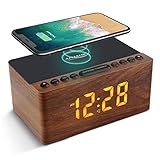
- 【𝐒𝐭𝐲𝐥𝐢𝐬𝐡 𝐖𝐨𝐨𝐝𝐞𝐧 𝐃𝐞𝐬𝐢𝐠𝐧 𝐟𝐨𝐫 𝐃𝐞𝐜𝐨𝐫】You will love the aesthetic of this vintage-looking bedside clock. It’s sleek, clean, modern and looks like a beautiful piece of wood furniture. Taking up about the same space as your iPhone. Its functionality and stylish appearance makes it a perfect gift for your family, lovers or friends.
- 【𝐐𝐮𝐢𝐞𝐭 𝐀𝐥𝐚𝐫𝐦 𝐂𝐥𝐨𝐜𝐤 𝐰𝐢𝐭𝐡 𝐐𝐈 𝐂𝐞𝐫𝐭𝐢𝐟𝐢𝐞𝐝 𝐖𝐢𝐫𝐞𝐥𝐞𝐬𝐬 𝐂𝐡𝐚𝐫𝐠𝐢𝐧𝐠】 Unique top non-slip charging design ! ANJANK alarm clock supports 5W/7.5W/10W adaptive charging, which can charge your smart phone quickly and easily. Besides, it also features an USB port to charge other electronic devices, such as a second phone or watch, powerbank or smartwatch. Simplify your nightly routine, eliminating the need for cumbersome charging cables.
- 【𝐅𝐦 𝐑𝐚𝐝𝐢𝐨 & 𝐒𝐥𝐞𝐞𝐩 𝐓𝐢𝐦𝐞𝐫】 ANJANK wooden radio clock with a frequency range of 87.5-108MHz. It allows you to easily tune and save your favorite channels. With a premium adjustable volume speaker, you can enjoy the clear and pristine sound. Sleep timer function (10-120min) for you to choose.
- 【𝐔𝐩𝐠𝐫𝐚𝐝𝐞𝐝 𝟗 𝐖𝐚𝐤𝐞 𝐮𝐩 𝐒𝐨𝐮𝐧𝐝𝐬 𝐚𝐧𝐝 𝐒𝐧𝐨𝐨𝐳𝐞】Wake up with 8 alarm sounds(Beep、Lullaby、Rain、Waves、Water sounds、Buzzer、Bird sounds、Kanoon) or your favorite radio station — start your day in a good mood.Choose from 9 sounds, and press SNOOZE for 9 extra minutes of sleep.The alarm starts low and gently builds up, so you’re not jolted awake.
- 【𝐋𝐚𝐫𝐠𝐞 𝐁𝐢𝐠 𝐍𝐮𝐦𝐛𝐞𝐫𝐬 𝐰𝐢𝐭𝐡 𝐀𝐝𝐣𝐮𝐬𝐭𝐚𝐛𝐥𝐞 𝐁𝐫𝐢𝐠𝐡𝐭𝐧𝐞𝐬𝐬】1.2" number digits are not only bright and easily visible but also come with a fantastic dim mode. This dimming feature can ensure you sleep in darkness but also be able to see the time when I wanted to, 💕and even one more which turns off the display altogether, catering to different preferences and lighting needs for you.
In short, choose the troubleshooting path based on how the alarm was created. A regular Clock alarm is checked in Clock’s Alarms list. A sleep-schedule wake-up is associated with the Health schedule and has its own options, including a choice about whether changes apply once or to the schedule. Confusing the two can lead you to verify the wrong alarm and leave the actual wake-up settings unchanged.
Avoid changing the iPhone’s time as a workaround
Manually changing the time in Settings to affect an app’s behavior can affect alarms, Apple cautions. It is not a dependable alarm fix. If an alarm is wrong, correct the alarm’s own time and schedule rather than changing the iPhone’s system clock.
Changing the system time is different from editing the time on an alarm. If the Clock alarm is scheduled incorrectly, adjust that alarm; if its repeat days are wrong, change those days. Avoid using a manual clock change as a way to force an app or alarm to behave differently, because Apple warns it can affect alarms.
A quick troubleshooting order
Work through these checks in order, stopping when you find the setting that explains the problem:
Quick wins for a faster PC:
Clear out junk files and repair common Windows errorsFree Scan →Scan for outdated or missing drivers - takes under a minuteDriver Scan →- Identify the alarm system. Decide whether the missed alert was a regular Clock alarm or a Health sleep-schedule wake-up alarm.
- Confirm it is enabled. For a regular alarm, open Clock > Alarms and check its switch. For a sleep-schedule wake-up, inspect the schedule-linked alarm.
- Verify when it should ring. Check the time and, for a repeating alarm, the selected days.
- Choose an audible sound. Edit the relevant alarm and make sure Sound is not set to None.
- Check Ringtone and Alerts. Open Settings > Sounds & Haptics and adjust the slider. Check Change with Buttons if you expected the side buttons to control this volume.
- Account for the symptom. If the iPhone only vibrated, check Sound and whether it was in StandBy. If it sounded too quiet while you were looking at the screen on a Face ID device, check Attention Aware Features.
- Leave unrelated settings alone. Silent mode, Focus, and connected headphones are not Apple’s stated causes of a Clock alarm being silenced. Do not change system time as a workaround.
For a sleep-schedule wake-up, add one more check: when using Clock’s Change control, confirm whether an adjustment is for the next alarm only or for the schedule. That distinction matters if the same problem returns on a later scheduled wake-up.
If you are not sure which symptom best describes what happened, follow the sequence from top to bottom. First identify the alarm and verify that it was enabled for the right time and day. Next check whether an audible sound was selected and whether the alert volume was adequate. Only then investigate the more specific explanations: StandBy when vibration is involved, Attention Aware when a Face ID device sounds quiet while being viewed, or the sleep-schedule controls when the wake-up came from Health.
Independent reader supportYour contribution helps us test, update, and keep practical guides available for everyone.Why an alarm can seem to fail when its settings are different
Several settings can produce similar experiences, but they point to different fixes. An alarm that is switched off or scheduled for the wrong day will not alert when expected. An alarm with Sound set to None may vibrate without an audible tone. A low Ringtone and Alerts level can make a selected tone too quiet. A sleep-schedule alarm may be controlled separately from the regular alarm you checked.
Keeping those causes distinct makes troubleshooting faster: first establish which alarm was supposed to ring, then inspect its schedule and sound, and finally check the iPhone’s alert-volume controls. If the device behaved as though it triggered but was quiet, Attention Aware or the volume setting is more relevant than a schedule check.
Do these 3 things before closing this tab:
1Repair Windows errors before they cause bigger problems2Fix the driver behind crashes, sound loss and screen glitches3Clear out junk files and repair common Windows errorsIt is also useful to separate a cause from an unrelated setting. Silent mode and Focus can explain why calls or other notifications are quiet, but Apple says they do not affect the Clock alarm sound. Headphones can be connected without preventing the alarm from playing through the built-in speakers. Those facts narrow the search: focus on the alarm’s state and schedule, its selected sound, its alert volume, and whether the alarm is a sleep-schedule wake-up.
Best Value

- 10W Fast Wireless Charger: this wireless charing alarm clock support fast charging and charges universal cellphones with wireless charging in high efficiency way without overheating, which is really handy and space saving while keeps your bedside nightstand neat and clean.
- Wood Alarm Clock with Large Numbers: the 1.8 inches big digits on the 6.5 inches electric clock are easy to see without glasses. Two steps setting makes the wood clock very easy to setup, no reset hassle for daylight saving time with manual DST.
- 5 Level Adjustable Bightness with OFF Display: the dimmable alarm clock has 5 level brightness dimmer with OFF mode so you can dim display brightness per your need, no glaring light for bedside use.
- Extra USB Charging Port: the wireless charger clock also comes with an extra USB ports to charge other electronic devices which is a great handy addtion for bedroom, livign room, office
- 5 Level Volume Control with Battery Backup Alarm: the alarm volume is adjustable to high or low level so it can serve as a loud alarm clock for heavy sleepers adults and won't blast you awake. Backup battery function will trigger the alarm during power cut, no worry about oversleep. Alarm lasts for 2 minutes and just tap the snooze button on the top for extra 9 mins sleep.
Each symptom suggests a different first check. For no alert at the expected time, verify the switch, time, repeat days, and alarm type. For an alert that seems to happen without a tone, check whether Sound is None. For a tone that is present but too quiet, raise Ringtone and Alerts and consider Attention Aware in the specific situation Apple describes. For a vibration question while in StandBy, remember that haptics are disabled there and check the audible sound directly.
Apple’s guidance and device-version caveats
The steps here follow Apple Support’s guidance on setting and changing iPhone alarms and Apple’s iPhone User Guide material on sound and sleep-schedule controls. Apple’s concise troubleshooting description covers an alarm that “doesn’t sound,” is “too quiet,” or when the iPhone “only vibrates.” The procedures are support guidance, not a controlled test of every iPhone model or iOS release. Settings labels and layouts can change, so use the closest matching controls on your installed version.
Apple’s guidance provides settings-based checks rather than a failure rate or a promise that one cause explains every missed alarm. If the listed checks do not match what you see, consult Apple’s current support instructions for the iOS version and device you use. In the meantime, avoid assuming that a silent phone, connected headphones, or a Focus mode explains a Clock alarm, and avoid manually changing system time as a workaround.
Recommended Free Tools
Frequently Asked Questions
Does Silent mode or Do Not Disturb stop an iPhone alarm?
No. Apple says Silent mode, Do Not Disturb, and other Focus modes do not affect the Clock alarm sound. Check the alarm’s enabled state, schedule, Sound setting, and Ringtone and Alerts volume instead.
Why did my iPhone alarm only vibrate?
Edit the alarm and check whether Sound is set to None. Choose an audible sound, then check Ringtone and Alerts in Settings > Sounds & Haptics. If the iPhone was in StandBy, Apple says alarm haptics are disabled, so check the sound rather than relying on vibration.
How do I make my iPhone alarm louder?
Open Settings > Sounds & Haptics and raise the Ringtone and Alerts slider. If you expect the side buttons to adjust that volume, check Change with Buttons; when it is off, the buttons do not adjust the alert-volume control.
Do headphones prevent an iPhone alarm from sounding?
Apple says connected headphones do not prevent the alarm from playing through the iPhone’s built-in speakers.
PC Slower Than It Used to Be?
A free scan shows the junk files, broken settings and background clutter dragging Windows down - then fixes them in one click.Free scan · Windows 10 & 11Outdated Drivers Are Slowing You Down
One free scan finds every outdated or missing driver and matches the right update for your exact hardware.Free scan · exact hardware matchIs a Health sleep-schedule wake-up alarm the same as a Clock alarm?
No. They have separate controls. Check the schedule-linked wake-up alarm for its enabled state, sound, volume, and snooze options. When editing it through Clock’s Change control, note whether the change applies to only the next alarm or to the schedule.
Can Attention Aware make an iPhone alarm quieter?
On a compatible Face ID iPhone, Attention Aware features can lower alert volume while you are looking at the device. Check Settings > Face ID & Passcode > Attention Aware Features if an alert seems quieter in that situation; it is not evidence that the alarm failed to trigger.
Should I change my iPhone’s clock time to fix an alarm?
No. Apple cautions that manually changing the iPhone’s time to affect app behavior can affect alarms. Correct the alarm’s own time or schedule instead.
The Bottom Line
First identify whether the missed alert was a regular Clock alarm or a Health sleep-schedule wake-up. Check that it is enabled for the right time and days, select an audible Sound, and raise Ringtone and Alerts in Settings > Sounds & Haptics. Silent mode, Focus, and connected headphones do not silence the Clock alarm; use StandBy and Attention Aware as targeted checks for vibration or unusually quiet alerts.
Quick Recap
Product prices and availability are accurate as of the date/time indicated and are subject to change. Any price and availability information displayed on Amazon at the time of purchase will apply.

