
iTechGuides is reader-supported. When you buy through links on our site, we may earn an affiliate commission. As an Amazon Associate I earn from qualifying purchases. Learn more
3D TVs surged into the consumer spotlight around 2010, but never became a routine way to watch television. More than 23 million sets shipped worldwide in 2011, yet glasses, uneven content, and the extra equipment needed to watch in 3D made the experience difficult to sustain. By the middle of the decade, manufacturers and broadcasters were pulling back.
When 3D TVs arrived in living rooms
Stereoscopic images long predate television, but the mainstream consumer push for 3D TVs began around 2010. The timing followed renewed attention to 3D cinema and a wave of home sets from manufacturers including Sony, Panasonic, and LG. Ofcom’s 2010 UK communications report recorded the launch cycle and listed a Sony 3D television at £1,799, illustrating how premium the early products were (Ofcom, Communications Market Report 2010).
The format initially attracted substantial commercial interest. DisplaySearch figures reported by Wired put worldwide 3D television shipments above 23 million in 2011, including 3.6 million in the United States. Those are shipment figures, not a measure of how many households owned a set or watched 3D regularly (Wired, January 2012).
What’s actually slowing this PC down?
Pick the symptom - the matching free tool is one click away.
Early models such as Samsung’s UE40C7000 appeared during this launch period. But buying a television was only the first step: watching a 3D movie at home could also require compatible glasses, a compatible source device, and a 3D disc or other 3D content. A contemporary setup described by What Hi-Fi? included a compatible Blu-ray player and 3D disc (What Hi-Fi?, “The defining TV formats of the 21st century”).
#1 Best Overall

- [Cinema 3D Glasses] Circular polarized non-flashing passive 3D glasses, polarized to reduce glare and improve picture clarity. Suitable for all passive Real technology compatible screens - the most common 3D technology on the market. A pair of glasses that supports 3D TV and cinema.
- [Better 3D Experience] The 3D movie glasses in theaters are public glasses, hygiene cannot be guaranteed. And being used by people for a long time may cause damage to the lenses affecting the viewing of 3D images. Bring your own glasses can bring you a more comfortable experience.
- [Compatible with Multiple Devices] 3D glasses can be used in all Real format cinemas, non-flashing polarized 3D TVs, polarized 3D computer monitors and polarized 3D projectors.
- [Note] The following are not available: IMAX 3D、 MasterImage 3D、 Red-blue 3D movies/regular TVs, monitors and projectors、 Active shutter 3D TVs, monitors and projectors、Cell phones. Please confirm that the product matches your TV or monitor before purchase, if you are not sure, you can ask the seller's service center.
- [Reliable After-sales Service] Our company offers a 12-month warranty. If there is any problem with the product, please feel free to contact us. We will try our best to help you. Free replacement or 100% refund.
How home 3D worked—and why glasses mattered
Consumer 3D televisions used different techniques to send a separate image to each eye. Two approaches competed in the living room: active-shutter and passive glasses. They were not interchangeable systems, so eyewear that worked with one set might not work with another.
| Approach | What viewers used | Practical consideration |
|---|---|---|
| Active shutter | Powered glasses that alternated which lens was open in sync with the television. | The eyewear required power and added another device viewers had to wear and keep available. |
| Passive | Glasses designed for the television’s passive 3D system. | Glasses from a different system were not necessarily compatible; viewers still needed special eyewear. |
Both approaches asked people to wear glasses for ordinary living-room viewing. The added friction was especially apparent when several people wanted to watch together: a household needed enough compatible pairs, and guests could not assume their own glasses would work. The viewing experience could also depend on where people sat.
Rank #2

- COMPATIBILITY: Universal design fits for most 3D movies, TV shows, and video games using red-blue anaglyph 3D technology
- PACKAGE CONTENTS: Set includes 4 pairs of classic red and blue 3D viewing glasses for group entertainment
- CONSTRUCTION: Lightweight frame with durable plastic construction and red-blue filtered lenses for optimal 3D viewing
- VERSATILE USE: Compatible with red-blue 3D content across various media including DVDs, gaming consoles, and television programming
- DESIGN FEATURES: Simple, comfortable frame design suitable for extended viewing sessions with minimal eye strain
Glasses-free, or autostereoscopic, televisions were explored as a way to remove that burden. The available account does not establish a commercially successful mass-market alternative that reversed the broader decline.
PC Slower Than It Used to Be?
A free scan shows the junk files, broken settings and background clutter dragging Windows down - then fixes them in one click.Free scan · Windows 10 & 11Outdated Drivers Are Slowing You Down
One free scan finds every outdated or missing driver and matches the right update for your exact hardware.Free scan · exact hardware matchWhy 3D television lost momentum
No single explanation accounts for the retreat. The format asked viewers to accept extra equipment and a more constrained experience without offering enough compelling everyday content to make those inconveniences worthwhile for most households.
Rank #3
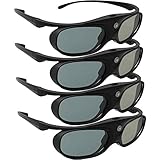
- Next generation super fast 144Hz refresh rate, ahead of other 120Hz or 96Hz product's level
- Fashion design, beautiful color stands out among other dull black ones. Lightweight and portable to take, comfortable for long time wearing. Please note we don't support 3D TV
- 178° wide viewing angle enables you to watch large screen movies without distortion, providing you a superior 3D visual experience
- Built-in high capacity rechargeable batteries allows you playing up to 30 hours continuously. Indicator Light for showing Battery status
- Easy Operation: Simple One Button Operation with Auto 5 seconds Stand by and 5 minutes Shut Off, detailed user manual included
Glasses made casual and group viewing harder
Special eyewear complicated spontaneous viewing and watching with family or friends. Sports seemed like a promising live use, but getting a group equipped with compatible glasses was inconvenient. IEEE Spectrum identifies eyewear burdens and the difficulty of group sports viewing among the problems that weakened the format (IEEE Spectrum, “3-D TV is Officially Dead (For Now) and This Is Why It Failed”).
Content was uneven and the playback chain added hurdles
Having a 3D television did not guarantee a steady supply of programs worth watching in 3D. Early content was uneven, and retrospective accounts point to poor conversions as well as a shortage of compelling routine viewing. A viewer also had to match the television with suitable content and, for disc playback, compatible equipment. Industry disagreement over whether Hollywood was supplying enough material was visible even during the early sales period (Wired, “Poor 3-D TV Sales? Panasonic Blames Hollywood”).
Rank #4

- 👓UNIVERSAL COMPATIBILITY: These 3D glasses work with most 3D-ready TVs, movies, DVDs, and gaming systems that use red/blue anaglyph 3D technology
- 🎮PACKAGE CONTENTS: Set includes 4 pairs of classic red and blue lens 3D glasses for shared viewing experiences with family and friends
- 📺LIGHTWEIGHT DESIGN: Simple frame construction ensures comfortable viewing during extended movie sessions or gaming periods
- 🎬VERSATILE USE: Compatible with various 3D content including printed materials, videos, games, and television programs using anaglyph technology
- 📽️EASY TO USE: Simply put them on and enjoy instant 3D effects with compatible content - no batteries or power source required
Broadcasters did not see enough home adoption
Dedicated 3D programming could not solve the problem if too few viewers wanted to watch. Wired reported ESPN’s stated reason for ending its 3D service as “limited viewer adoption of 3D services to the home” (Wired, January 2012). That explanation points to weak demand for home 3D as a service, rather than a single technical flaw.
Quick wins for a faster PC:
Repair Windows errors before they cause bigger problemsFix Now →Scan for outdated or missing drivers - takes under a minuteDriver Scan →Clear out junk files and repair common Windows errorsFree Scan →Other television improvements were easier to sell
Manufacturers could promote sharper or otherwise improved 2D displays without asking viewers to wear glasses, buy compatible playback equipment, or seek out 3D programming. IEEE Technology and Society’s retrospective discusses the broader reasons the 3D revolution failed (IEEE Technology and Society, “Why Did the 3D Revolution Fail?”). In practice, 3D did not deliver enough regular value to outweigh its extra requirements for most households.
Best Value
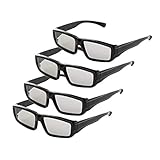
- 4x Polarized Passive 3D Glasses for Passive Polarized 3D TVs Projectors RealD Cinema!
- Please confirm the 3D type of your device!
- The Device manual or nameplate Must be Passive or Polarized 3D!
- Not Active Shutter 3D Glasses, Not Compatible with 3D active Shutter TVs and Projectors!
- Includes: 4 Pairs of Polarized Passive 3D Glasses, 4 glasses bags
How quickly the market turned
The decline was not simply an immediate collapse after the initial launch. Sets shipped in significant numbers in 2011, but shipments did not show whether owners used the feature often or whether the wider content ecosystem could be sustained. By 2014, IEEE Spectrum described 3D television as effectively abandoned by some manufacturers. A 2023 Digital Trends retrospective reported that 3D sets accounted for 8% of sales in 2016; that is a secondary-source market-share figure, not a directly comparable continuation of the 2011 shipment total, and its underlying primary dataset is not identified in the report (Digital Trends, “Why didn’t 3D movies and TV ever catch on?”).
Can you still watch 3D movies on an old TV?
Possibly, if you already have a television that supports 3D and can assemble a compatible playback chain. A 3D Blu-ray setup generally requires a 3D-capable television, compatible player, 3D disc, and glasses that work with that specific television system. Check the exact model manuals and supported formats before buying a player, disc, or replacement glasses. Current stock and model-level compatibility vary, and no current product availability is established here.
A modern television should not be assumed to support 3D simply because it can play high-resolution video. The feature depended on specific hardware and compatible content; it cannot be added by a setting to an ordinary non-3D display.
Quick Recap
Product prices and availability are accurate as of the date/time indicated and are subject to change. Any price and availability information displayed on Amazon at the time of purchase will apply.

