
Quick wins for a faster PC:
Scan for outdated or missing drivers - takes under a minuteDriver Scan →Repair Windows errors before they cause bigger problemsFix Now →Fix the driver behind crashes, sound loss and screen glitchesFind Drivers →iTechGuides is reader-supported. When you buy through links on our site, we may earn an affiliate commission. As an Amazon Associate I earn from qualifying purchases. Learn more
For most Steam Frame owners, change only one documented eye-tracking option: enable Show advanced settings, open SteamVR > VR Settings > General, and try Track Dominant Eye Only if one eye is a more reliable tracking reference. For ordinary use, leave the headset’s foveated-streaming behavior at its default. Valve’s public material does not document a universal consumer calibration routine or a best foveation-strength value, so changing developer rendering variables is not a substitute for headset setup.
The short answer by use case
| Your situation | What to change | What not to assume |
|---|---|---|
| One eye is a better tracking reference, or you need an accessibility adjustment | Enable Show advanced settings, then use VR Settings > General > Track Dominant Eye Only. | This is an option to try, not a guaranteed solution for every eye condition or tracking failure. |
| Normal foveated streaming | Start with the default behavior. | Valve has not published a universal owner-facing calibration sequence or slider value in the reviewed consumer material. |
| You are building or testing an Unreal application | Use the Steamworks VRS documentation and project variables appropriate to your renderer. | Those variables are developer settings, not SteamVR controls that improve every owner’s headset tracking. |
| You need eye-openness data through OSC | Check the SteamVR release notes and confirm SteamOS 0.4.3 or newer is installed where required. | This is a software/data compatibility requirement, not a calibration control. |
That distinction matters because Steam Frame combines eye tracking with several different systems. The headset uses two interior cameras for eye tracking, while Valve describes Foveated Streaming as a way to direct the highest-quality streamed pixels toward the point of gaze. A setting intended for an application developer cannot be treated as a missing end-user calibration menu.
What Steam Frame eye tracking is doing
Valve describes eye tracking primarily as an input to Foveated Streaming. The system receives low-latency gaze data and uses it to concentrate stream quality where you are looking instead of delivering the same level of detail across the entire image. This is particularly relevant when Steam Frame is receiving a rendered VR view from a PC. Valve characterizes the headset as a standalone device designed primarily for low-latency PC streaming, while also supporting standalone VR and non-VR experiences.
Outdated Drivers Are Slowing You Down
One free scan finds every outdated or missing driver and matches the right update for your exact hardware.Free scan · exact hardware matchWindows Errors? Fix Them Before They Spread
Repair common Windows errors and clear accumulated junk for a smoother, more stable PC - no reinstall needed.Free scan · no reinstallValve’s product description says Foveated Streaming typically provides “over a 10x improvement in image quality and effective bandwidth.” That is a vendor claim from the product page, not an independently verified benchmark or a promise that every game, network, or user will see the same result. It also should not be read as proof that every standalone rendering path uses the same eye-tracked streaming behavior.
#1 Best Overall

- CARDBOARD MONKENAUT — Get our best Gorilla Tag bundle yet with this Amazon exclusive deal. Purchase Meta Quest 3 to get exclusive items, including the Gorilla Space Program Suit and Helmet, plus 2,000 SHINY ROCKS.
- NEARLY 30% LEAP IN RESOLUTION — Experience every thrill in breathtaking detail with sharp graphics and stunning 4K+ Infinite Display.
- NO WIRES, MORE FUN — Break free from cords. Game, play and explore in immersive worlds — untethered and without limits.
- 2X GRAPHICAL PROCESSING POWER — Enjoy lightning-fast load times and next-gen graphics for smooth gaming powered by the Snapdragon XR2 Gen 2 processor.
- EXPERIENCE VIRTUAL REALITY — Blend virtual objects with your physical space and experience two worlds at once in your VR headset.
For an owner, the practical consequence is simple: gaze tracking can change where streamed detail is allocated, but the public consumer documentation does not expose a generally recommended foveation level, a required lighting specification, a glasses adjustment, or a universal recalibration workflow. Avoid inventing a value for any of those items.
How to try the documented accessibility setting
Track Dominant Eye Only is the clearly named owner-facing eye-tracking adjustment in Valve’s official Steam Hardware material. Use it when one eye provides a more dependable reference than the other, or when you are testing whether a single-eye tracking mode better matches your vision.
- Open SteamVR on the headset or connected system.
- Turn on Show advanced settings. The exact location of that switch can vary with the installed SteamVR interface, so use the advanced-settings control shown in your current build rather than relying on an old screenshot.
- Open VR Settings.
- Select General.
- Find Track Dominant Eye Only and enable it.
- Return to the same page if you need to disable the option and compare behavior with both-eye tracking.
Valve’s announcement identifies this as an accessibility option, but it does not define every supported condition or promise that it resolves monocular vision, amblyopia, nystagmus, or all forms of eye-tracking loss. Treat the switch as a controlled test: use it when a single eye is clearly the more useful reference, then judge whether gaze-driven detail behaves more consistently in the content you use.
Rank #2

- CARDBOARD MONKENAUT — Get our best Gorilla Tag bundle yet with this Amazon exclusive deal. Purchase Meta Quest 3S to get exclusive items, including the Gorilla Space Program Suit and Helmet, plus 2,000 SHINY ROCKS.
- NO WIRES, MORE FUN — Break free from cords. Game, play and explore immersive worlds — untethered and without limits.
- 2X GRAPHICAL PROCESSING POWER — Enjoy lightning-fast load times and next-gen graphics for smooth gaming powered by the Snapdragon XR2 Gen 2 processor.
- EXPERIENCE VIRTUAL REALITY — Take gaming to a new level and blend virtual objects with your physical space to experience two worlds at once in your VR headset.
- 2+ HOURS OF BATTERY LIFE — Charge less, play longer and stay in the action with an improved battery that keeps up. *Based on the graphic performance of the Qualcomm Snapdragon XR2 Gen 2 platform vs the Meta Quest 2 platform.
What to do for ordinary foveated streaming
If you do not have a specific accessibility reason, begin with the default eye-tracking behavior. Valve’s consumer-facing description explains the purpose of gaze-directed streaming but does not publish a mandatory calibration sequence or a universal setting value. That means there is no evidence-based “best” slider position that can be recommended to every Steam Frame owner.
Keep the streamed and standalone cases separate
Foveated Streaming concerns the allocation of quality in a streamed image. A standalone application can have its own rendering path and performance characteristics. Do not assume that changing a streaming-related behavior will tune every application running directly on the headset, and do not infer that a developer’s foveation variable controls Steam Link or encoded-video settings.
If the feature or setting is missing
First identify the software you are actually running. Confirm the SteamVR version and SteamOS version, and note whether you are on a stable or beta channel. The retrieved official material does not establish a single minimum version for the consumer accessibility switch, and the announcement does not expose a publication date. A menu item that is absent in one build may therefore reflect software-channel differences rather than a hardware fault.
Rank #3
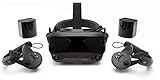
- Displays - Dual 1440 x 1600 LCDs, full RGB per pixel, ultra-low persistence global backlight illumination (0.330ms at 144Hz)
- Ergonomic Adjustments - Head size, eye relief (FOV), IPD, speaker positions. Rear cradle adapter included.
- Inter-pupillary Distance (IPD) - 58mm - 70mm range physical adjustment
- Optics - Double element, canted lens design
- NOTE - PC compatible with Valve Index is required
If gaze-directed quality seems wrong
Record the exact symptom before changing unrelated settings: for example, whether detail stays fixed in the center, follows the wrong eye, or changes only in streamed content. Then verify that you are testing a path in which Foveated Streaming is expected to apply, and recheck the installed versions. The available official material does not justify telling every owner to recalibrate, change lighting, remove glasses, or set a particular foveation strength. Those may be topics for a current Valve support article, but they are not established controls in the sources covered here.
What’s actually slowing this PC down?
Pick the symptom - the matching free tool is one click away.
Developer controls are not headset-owner settings
Steamworks documentation for Unreal describes two broad approaches to variable-rate shading (VRS): runtime-provided VRS and a legacy, application-driven Fragment Density Map approach. Valve recommends runtime-provided VRS for most projects. The legacy path exists for developers who want to tune the density map themselves.
| Developer concept | What it controls | Who should use it |
|---|---|---|
| Runtime-provided VRS | The runtime supplies eye-tracked shading-rate behavior to the application. | Developers integrating Steam Frame support into a project. |
| Legacy application-driven VRS/FDM | The application supplies and tunes its own foveation map. | Developers who deliberately need application-level control. |
xr.VRS.SteamFrame.FoveationLevel |
A legacy Unreal tuning variable. Active levels trade image quality against performance. | Unreal developers testing their own project, not ordinary headset owners. |
For the documented legacy variable, level 3 provides the highest overall image quality and the worst performance among the active levels. Level 0 provides the lowest overall image quality and maximum performance. A value of -1 disables foveation. These descriptions apply to the application’s rendering configuration; they are not recommendations for a SteamVR menu.
Rank #4

- All-In-One VR Solution: The VIVE Focus series offers standalone and PC VR experiences. Harness the power of virtual reality with high-resolution displays, versatile tracking features, and immersive applications. Base station-free.
- PC VR Gaming Headset: Immerse yourself in low-latency VIVEPORT and SteamVR gameplay. DisplayPort mode delivers lossless, high-fidelity visuals straight from your PC.(1) Connect your PC directly to your Wi-Fi router using an Ethernet cable for PC VR streaming.
- Make Interactions Real: Connect in VRChat like never before. With built-in eye tracking and low-light hand tracking; plus face and body tracker support, movement in VR is intuitive and lifelike.(2)(3)
- Immersive 5k Headset Display: The immersive display puts you right at the heart of the action with a 5K resolution of 2448 x 2448 pixels per eye, up to 120° field of view, and 90 Hz refresh rate.
- Personalize Your Fit: Auto-IPD adjustment aligns the XR headset's lenses with the centers of your pupils, giving your eyes the clearest, most comfortable viewing experience.(4)
The Steamworks guide also documents additional project configuration switches for Unreal Engine 5.5 or later. It notes that its dynamic-foveation variable is currently unimplemented and warns that VRS has compatibility constraints with dynamic resolution. Those details belong in a developer’s build and test plan. They do not establish a consumer calibration procedure, and entering them into a general SteamVR troubleshooting discussion can send an owner in the wrong direction.
Independent reader supportYour contribution helps us test, update, and keep practical guides available for everyone.The SteamOS 0.4.3 caveat
Current SteamVR release notes state that Steam Frame eye-openness data exposed through OSC requires SteamOS 0.4.3 or newer. OSC is a data-exposure path, so this requirement matters when software is trying to read eye-openness information externally. It does not mean that every eye-tracking function requires 0.4.3, nor does it create a calibration menu.
Before advising an update, check the release channel and the versions installed on the specific headset. The release-note requirement does not establish that every user is already on 0.4.3, that the capability is stable for every channel, or that an update will resolve a gaze-tracking problem unrelated to OSC eye-openness data.
Best Value

- VISUALS: 2880 x 2880 per eye resolution and 16.6 million pixels, enjoy the pinnacle of clarity
- SCREEN TECHNOLOGY: QLED display, supporting local dimming and HDR, achieving high contrast and vivid colors
- LENS: Glass aspheric lens, providing edge-to-edge clarity and reducing distortion
- ULTRA-LOW LATENCY: Up to 120Hz, Experience minimal lag with high refresh rates, providing a fluid and responsive VR environment for immersive simulations
- COMPATIBILITY: Seamlessly integrate with your existing SteamVR setup, including compatibility with controllers like the Valve Index Knuckles or HTC VIVE
A decision guide for common situations
You have useful vision in one eye and want a single reference
Use Show advanced settings > VR Settings > General > Track Dominant Eye Only. Compare the result with the option off, and keep the mode that produces more dependable gaze-directed behavior. Do not describe the setting as a medical accommodation with guaranteed support for a particular diagnosis; Valve’s announcement does not make that promise.
You simply want the sharpest streamed picture
Leave the owner-facing eye-tracking behavior at its default and test the content you actually stream. Valve’s “over a 10x” statement is a typical product-page claim, not a measured guarantee for your network or game. There is no documented universal foveation-strength value to enter.
You are troubleshooting a missing menu item
Enable advanced settings, confirm the exact SteamVR and SteamOS versions, and note whether your installation uses a beta or stable channel. If the item remains unavailable, use the current Valve support and release documentation for that build rather than substituting Unreal developer variables.
Recommended Free Tools
You are developing an Unreal title
Follow the Steamworks VRS guidance for your engine version and rendering architecture. Decide whether runtime-provided VRS is sufficient before considering legacy map controls. Test performance and image quality in the project itself, especially if dynamic resolution is enabled, because the documentation warns of compatibility constraints.
You need OSC eye-openness output
Verify SteamOS 0.4.3 or newer and check the release notes for the channel you are using. Keep this requirement scoped to OSC eye-openness exposure; it is not evidence that a consumer eye-tracking calibration control has changed.
Quick Recap
What not to change blindly
- Do not change Unreal console variables in the expectation that they will recalibrate Steam Frame’s cameras.
- Do not treat
xr.VRS.SteamFrame.FoveationLevelas a universal SteamVR quality slider. - Do not assume a missing calibration screen proves that eye tracking is defective; the reviewed consumer documentation simply does not describe a general calibration workflow.
- Do not apply the SteamOS 0.4.3 OSC requirement to every eye-tracking feature.
- Do not generalize streamed foveated rendering behavior to every standalone or non-VR experience.
A concise owner checklist
- Decide whether your problem is accessibility, streamed-image behavior, developer rendering, or OSC data.
- For accessibility, enable advanced settings and try Track Dominant Eye Only under VR Settings > General.
- For normal use, keep the default and avoid hunting for an undocumented universal calibration value.
- Confirm SteamVR and SteamOS versions when a setting or feature is absent.
- Keep Unreal VRS variables inside the application-development workflow.
- For OSC eye-openness data, verify the SteamOS 0.4.3-or-newer requirement and the release channel.
Product prices and availability are accurate as of the date/time indicated and are subject to change. Any price and availability information displayed on Amazon at the time of purchase will apply.

