
The Tool Desk
Outbyte Driver Updater FREEFix the driver behind crashes, sound loss and screen glitchesFind Drivers →Outbyte PC Repair FREEClear out junk files and repair common Windows errorsFree Scan →iTechGuides is reader-supported. When you buy through links on our site, we may earn an affiliate commission. As an Amazon Associate I earn from qualifying purchases. Learn more
The best Sony E-mount lens depends on your camera’s sensor, the subjects you shoot, and how much size, aperture and reach you are willing to carry. For full-frame travel and everyday photography, the Sony FE 20-70mm F4 G is a particularly practical starting point. Portrait specialists may prefer the FE 85mm F1.4 GM II, landscape and event photographers may need the FE 16-35mm F2.8 GM II, and APS-C users who photograph distant subjects should look at the E 70-350mm F4.5-6.3 G OSS. None is a universal winner: each solves a different framing problem.
Use this guide to match an E-mount lens to your camera format, focal-length needs, aperture requirements, stabilization expectations, carrying comfort and budget. Model availability and prices vary by country and date, so confirm the exact lens, mount, firmware support and local price before ordering.
Start with your camera’s sensor format
Sony sells E-mount cameras in two main formats: full-frame and APS-C. The mount is physically related, but the angle of view is not interchangeable in practice. Check your camera’s specification or manual before choosing a lens.
Recommended Free Tools
Full-frame cameras
Full-frame Alpha bodies use the entire 35mm-sized sensor with FE lenses. A 20mm lens gives a genuinely wide view, an 85mm lens gives a classic short-telephoto portrait perspective, and a 70-200mm-type range reaches distant subjects without changing lenses. FE lenses can also be mounted on Sony APS-C bodies, but the smaller sensor sees a narrower portion of the image.
#1 Best Overall
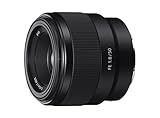
- Large F1. 8 maximum aperture enables beautiful defocusing effects
- 7-blade circular aperture creates beautiful defocused bokeh
- Compact, lightweight design Ideal for full-frame e-mount cameras
- Aspherical element controls spherical aberration and coma
- Double-gauss configuration suppresses field curvature & distortion
APS-C cameras
APS-C bodies use a smaller sensor, so the same focal length frames more tightly. A 35mm lens on APS-C behaves approximately like a 52.5mm lens on full frame for angle of view; a 50mm lens behaves approximately like a 75mm lens. Sony’s support guidance treats APS-C and full-frame choices separately for this reason.
What happens when you mix formats
DPReview notes that Sony full-frame cameras apply a 1.5x crop to APS-C lenses by default. The resulting file uses a smaller central area of the sensor. If you disable crop mode, an APS-C lens can leave dark, unrecorded corners (vignetting), especially at wider focal lengths. A full-frame lens on an APS-C camera does not create vignetting, but its field of view becomes narrower. Decide whether that extra reach is useful or whether you actually need a wider lens.
Quick recommendations by photographic job
| Photographic need | Strong starting point | Why it fits | Main trade-off |
|---|---|---|---|
| Full-frame travel and everyday use | Sony FE 20-70mm F4 G | Wide 20mm setting, useful normal-to-short-telephoto range and constant f/4 aperture in a compact travel-oriented design. | f/4 gathers less light and gives less background blur than a faster f/2.8 zoom or prime. |
| Full-frame portraits | Sony FE 85mm F1.4 GM II | 85mm perspective, f/1.4 maximum aperture, fast autofocus and improved optical performance over the original model according to TechRadar. | 642g and a premium price make it less convenient than a small prime or general-purpose zoom. |
| Wide landscapes, interiors and events | Sony FE 16-35mm F2.8 GM II | Very wide-to-wide-normal coverage with an f/2.8 aperture for low light and subject separation. | More expensive and heavier than a slower f/4 alternative; confirm current specifications before purchase. |
| APS-C sports and wildlife | Sony E 70-350mm F4.5-6.3 G OSS | Long reach in an APS-C design, optical stabilization and beginner-friendly handling. | The maximum aperture narrows from f/4.5 to f/6.3 as you zoom, so fast shutter speeds may require brighter light or higher ISO. |
| One full-frame lens for varied subjects | Sony FE 24-105mm F4 G OSS | Useful range, quick focus, sharpness across its aperture range and optical stabilization, as described by DPReview. | It does not reach as wide as 20mm or open as fast as an f/2.8 zoom or prime. |
| Small full-frame prime kit | FE 24mm F2.8 G, FE 40mm F2.5 G or FE 50mm F2.5 G | Compact, fixed focal lengths for landscape, general stills or portraits and snapshots. | Each prime requires you to move or change lenses when the framing is wrong. |
Best full-frame E-mount lenses by subject
Travel, street and everyday photography: FE 20-70mm F4 G
The FE 20-70mm F4 G is designed around the situations in which changing lenses is inconvenient. Its 20mm end handles architecture, interiors and broad landscapes more effectively than a conventional 24mm starting point. At the other end, 70mm is useful for portraits, details and compressed travel scenes. The constant f/4 aperture keeps exposure behavior predictable while zooming and supports a relatively compact build.
Choose it when one lens must cover a day of walking, sightseeing, family photographs and occasional video. The compromise is light: f/4 is two stops slower than f/2.8, so you may need a higher ISO indoors or a slower shutter speed. It also produces less background blur than a fast portrait prime. TechRadar positions the lens as a compact, versatile travel zoom rather than an outright replacement for every premium standard zoom.
The FE 24-70mm F2.8 GM II is the more premium optical direction if low-light speed and maximum image quality matter more than the extra 4mm of width and carrying ease. It starts at 24mm, costs more, and is less wide. Treat the choice as a priority decision: 20mm flexibility and portability versus f/2.8 speed and premium construction.
Portraits: FE 85mm F1.4 GM II
An 85mm focal length on full frame gives flattering working distance for head-and-shoulder portraits without the exaggerated perspective that can occur when a wide lens is held close. The f/1.4 aperture admits substantial light and can isolate a face from a busy background when depth of field and focusing distance are appropriate.
TechRadar describes the FE 85mm F1.4 GM II as a premium portrait prime with fast, responsive autofocus and improved optical performance compared with the original. The review lists 85mm, f/1.4 and a 642g weight. That weight is reasonable for a professional portrait lens but noticeable on a small body or during a full day of travel.
Do these 3 things before closing this tab:
1Clear out junk files and repair common Windows errors2Fix the driver behind crashes, sound loss and screen glitches3Repair Windows errors before they cause bigger problemsThe FE 85mm F1.8 is the value-oriented alternative cited in the same guide. A general-purpose zoom may be a better first purchase if you photograph portraits only occasionally, need group shots, or often switch between people and environmental scenes. A fixed 85mm lens is a deliberate portrait tool, not the most flexible one-lens solution.
Rank #2

- Fast, quiet VXD linear motor for high-speed and high-precision autofocus
- MOD (Minimum Object Distance) of 7.1” at wide end and maximum magnification ratio of 1:2.7 for creative close-ups
- New design provides enhanced texture and greater user-friendliness
- Compact at 4.6" long and weighing just 19 oz
- Moisture-Resistant Construction and Fluorine Coating
Landscapes, interiors and events: FE 16-35mm F2.8 GM II
The FE 16-35mm F2.8 GM II covers dramatic 16mm perspectives, conventional wide-angle compositions and a 35mm setting that can work for environmental portraits or documentary scenes. The f/2.8 aperture helps in dim venues and can separate a nearby subject from the background at the longer end.
TechRadar positions it for wide-angle work, events and landscapes. A wide zoom requires careful composition: lines near the frame edge can appear stretched, and placing a person too close to a 16mm corner can exaggerate body proportions. Use the wider settings when the scene itself is the subject, and move back or zoom toward 24–35mm for people.
Sony’s FE PZ 16-35mm F4 G is the practical alternative when power-zoom operation, smaller size, lower weight or lower cost matters more than an extra stop of light. The f/4 model is not a slower version that wins every comparison; it is better suited to daylight landscapes, travel video and photographers who value portability.
Free tools Windows power users keep installed
One-click scans. No signup required.
General-purpose reach: FE 24-105mm F4 G OSS
The FE 24-105mm F4 G OSS is a useful compromise for photographers who want more telephoto reach than a 24-70mm zoom while keeping one lens on the camera. DPReview describes quick focus, sharpness across its aperture range, a convenient size and optical stabilization. The 105mm end can frame portraits, details and distant subjects more tightly than a 70mm setting.
Its 24mm wide end is suitable for many travel scenes but not as expansive as 20mm or 16mm. The constant f/4 aperture favors predictable exposure and manageable size; photographers working in dark interiors, fast-moving events or demanding subject-isolation situations may prefer an f/2.8 zoom or a fast prime. DPReview’s guide is older, so treat this as a supported example of the lens’s role rather than a current market ranking.
Compact prime options: FE 24mm, 40mm and 50mm F2.5 G
Sony’s 2021 Australia and New Zealand announcement grouped three compact FE primes around different jobs. The FE 24mm F2.8 G suits landscapes and broad environmental scenes; the FE 40mm F2.5 G is a general stills and movie focal length; and the FE 50mm F2.5 G is aimed at portraits and snapshots. Each uses a 49mm filter diameter.
| Lens | Stated maximum aperture | Stated weight | Stated filter size | Natural role |
|---|---|---|---|---|
| FE 24mm F2.8 G | f/2.8 | 162g | 49mm | Landscape, travel and environmental scenes |
| FE 40mm F2.5 G | f/2.5 | 173g | 49mm | General stills and movie work |
| FE 50mm F2.5 G | f/2.5 | 174g | 49mm | Portraits and snapshots |
Those weights and filter specifications are model-specific figures from Sony’s 2021 announcement, not a claim that every current compact E-mount lens has the same dimensions. Their advantage is carrying comfort and a consistent small-filter kit. Their limitation is fixed framing: a 24mm composition cannot become a 50mm portrait without moving or changing lenses.
Quick wins for a faster PC:
Repair Windows errors before they cause bigger problemsFix Now →Fix the driver behind crashes, sound loss and screen glitchesFind Drivers →Clear out junk files and repair common Windows errorsFree Scan →Best APS-C choice for distant subjects: E 70-350mm F4.5-6.3 G OSS
The E 70-350mm F4.5-6.3 G OSS is aimed at APS-C photographers who need reach for wildlife, field sports, aviation, outdoor performances or pets. Sony’s subject guidance recommends telephoto lenses for sports and wildlife, and TechRadar describes this model as a beginner-friendly APS-C telephoto with useful reach and good optical quality.
Rank #3

- Supreme lightweight portability that makes telephoto shooting fun
- Uncompromising image quality with 15 elements in 10 groups that lets you focus on creativity
- Up-close shooting performance (31.5" / 1:9.4 Wide & 59.1" / 1:5.1 Tele)
- Moisture-Resistant Construction
On an APS-C body, the angle of view is equivalent to roughly 105–525mm on full frame. That is an angle-of-view comparison, not a change to the lens’s physical focal length or aperture. The long end can fill the frame with a distant subject, while 70mm is easier to use when the subject moves closer. Optical SteadyShot (OSS) can help counter camera shake for static or slowly moving subjects, but stabilization does not freeze a running animal or athlete; shutter speed still matters.
The f/4.5–6.3 range means less light reaches the sensor as you zoom. In bright daylight that may be inconsequential. At dawn, dusk or under stadium lighting, you may need a higher ISO, a slower shutter speed, or a faster lens. Check your body’s autofocus settings and tracking performance as well as the lens before relying on it for fast action.
Zoom or prime: choose the behavior you actually need
Choose a zoom when framing speed matters
- A zoom lets you change composition without changing position, valuable for travel, weddings, events and unpredictable subjects.
- One lens can replace several primes, reducing sensor exposure to dust and the weight of a multi-lens bag.
- The trade-off is often a smaller maximum aperture, greater size or higher cost, especially in constant-f/2.8 designs.
Choose a prime when light, rendering or compactness matters
- A wide aperture such as f/1.4 can provide more light and shallower depth of field than an f/4 zoom at the same focal length.
- A fixed focal length encourages deliberate movement and can be much smaller and lighter, as shown by Sony’s 162g, 173g and 174g compact primes.
- You must accept one field of view, move your feet, crop, or change lenses when the scene does not fit.
Neither design is inherently better. A traveler who misses shots while changing lenses benefits from a zoom; a portrait photographer who controls subject distance may gain more from a fast prime.
What’s actually slowing this PC down?
Pick the symptom - the matching free tool is one click away.
Specifications that deserve a place in your decision
Focal length and field of view
Start with the composition you cannot create easily. Wide focal lengths show more of a room or landscape but demand attention to edge distortion. Normal focal lengths look natural for everyday scenes. Short telephoto lengths flatter portraits. Long telephotos fill the frame from a distance. On APS-C, multiply the focal length by approximately 1.5 for a full-frame angle-of-view comparison.
Maximum aperture
A lower f-number lets in more light and can reduce depth of field. It does not guarantee a sharper image or attractive blur in every scene. At f/1.4, focusing errors and extremely thin depth of field are more visible. Constant apertures, such as f/4 across a zoom, make exposure changes more predictable.
Optical stabilization
OSS can reduce blur from hand movement, particularly at slower shutter speeds and with longer lenses. It cannot correct subject movement. The E 70-350mm F4.5-6.3 G OSS and FE 24-105mm F4 G OSS include stabilization in the cited descriptions; verify whether a specific body-lens combination coordinates in-body and optical systems.
Autofocus and intended subject
Fast, responsive autofocus is especially important for portraits with moving eyes, sports and wildlife. TechRadar specifically reports fast, responsive autofocus for the FE 85mm F1.4 GM II. A lens may focus quickly on one body and behave differently on another, so confirm firmware and compatibility for your exact camera.
Minimum focusing distance and close-up work
Macro and close-up photography needs a lens that can focus near the subject, not merely a long focal length. Sony’s guidance treats close-ups as a distinct use case and recommends macro lenses. If flowers, products or small objects are a main subject, check the manufacturer’s minimum focusing distance and maximum magnification rather than assuming a travel zoom will provide true macro detail.
Rank #4
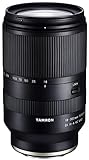
- World’s first 16.6x all-in-one zoom lens for APS-C mirrorless cameras
- Best-in-class, extremely fast and precise AF provided by VXD linear motor focus mechanism
- Maintains high resolving power from the center to the corners throughout the range
- Compact and portable design at 4.9 X 2.9 inches and a weight of just 21.9 ounces
- Moisture-Resistant Construction and Fluorine Coating
Size, weight, filters and cost
Carryability affects how often a lens is used. Compare dimensions, weight, filter diameter, hood design and the cost of compatible filters or caps. A fast telephoto may deliver a brighter view but add substantial bulk. Retail prices, stock and regional catalogs change, so use a current local listing rather than an old price tier.
Independent reader supportYour contribution helps us test, update, and keep practical guides available for everyone.A practical buying process
- Identify the body format. Write down whether your camera is APS-C or full frame, and check whether it is an E-mount body that supports the lens’s autofocus and stabilization features.
- List your three most common subjects. Separate portraits, landscapes, close-ups, sports, wildlife, pets, travel and video instead of choosing an undefined “all-around” lens.
- Set the required framing range. Decide whether you need a genuinely wide 16–20mm view, a 24–70mm everyday range, a 70–105mm portrait/detail end, or long APS-C reach.
- Set the light requirement. Daylight travel may be comfortable at f/4. Indoor events, night streets and subject isolation may justify f/2.8 or a faster prime.
- Check support features. Confirm autofocus behavior, OSS, power zoom, focus controls, weather sealing information and firmware compatibility from the manufacturer’s current page.
- Compare what you will carry. Put the lens weight beside your camera, spare batteries and other equipment. A theoretically superior lens that stays at home is a poor practical choice.
- Verify local price and availability. Prices and inventory were not established by the cited guides and can differ by region. Confirm the exact model suffix, warranty and return terms before paying.
Common mistakes and how to avoid them
Buying for the wrong sensor format
A full-frame lens on APS-C is safe but narrower than its printed focal length suggests. An APS-C lens on full frame normally triggers the 1.5x crop; disabling crop can expose dark corners. Recheck the format before assuming a 16mm or 24mm lens will look equally wide on every body.
Assuming a longer lens is automatically better for wildlife
Reach helps, but shutter speed, light, autofocus tracking, subject distance and technique determine whether distant action is sharp. The E 70-350mm’s f/6.3 long-end aperture can be limiting in low light. Stabilization helps camera shake, not a moving bird or athlete.
Choosing aperture without considering depth of field
Very wide apertures can leave only a thin slice of a portrait sharp. Focus on the intended eye, check shutter speed, and stop down when you need more of a face or group in focus.
Comparing unlike focal lengths without an angle-of-view conversion
A 35mm APS-C lens and a 35mm full-frame lens have the same physical focal length but different framing on their respective sensors. Compare equivalent angle of view, not just the number printed on the barrel.
Treating an old ranking as a current market verdict
DPReview’s format-separated guide is several years old, while TechRadar’s model guide is more current but remains one publisher’s editorial assessment. Use those evaluations to understand a lens’s role, then confirm today’s specifications, firmware, stock and regional price.
Third-party E-mount options
Sigma and Tamron are established third-party makers included in current discussions of Sony E-mount alternatives. They can expand the available focal ranges, apertures and price points, but a recommendation should be model-specific. Before buying, verify that the exact lens has the correct Sony E mount, supports your body’s autofocus modes, receives compatible firmware updates, and is available with a local warranty. Do not assume that two lenses with similar focal lengths have identical stabilization, close-focusing, weather-sealing or video behavior.
Outdated Drivers Are Slowing You Down
One free scan finds every outdated or missing driver and matches the right update for your exact hardware.Free scan · exact hardware matchWindows Errors? Fix Them Before They Spread
Repair common Windows errors and clear accumulated junk for a smoother, more stable PC - no reinstall needed.Free scan · no reinstallHow to make the final choice
- Choose the FE 20-70mm F4 G when one compact full-frame travel zoom and a genuinely wide 20mm view are your priorities.
- Choose the FE 85mm F1.4 GM II when portraits are central and you accept 642g plus premium cost for f/1.4 rendering and autofocus.
- Choose the FE 16-35mm F2.8 GM II when wide landscapes, interiors or events demand 16mm coverage and f/2.8; choose the FE PZ 16-35mm F4 G when compactness and cost matter more than speed.
- Choose the E 70-350mm F4.5-6.3 G OSS for APS-C sports, wildlife and pets where long reach matters more than a bright aperture.
- Choose the FE 24-105mm F4 G OSS when a full-frame body needs broad everyday coverage, quick focus and optical stabilization in one lens.
- Choose one of the compact 24mm, 40mm or 50mm F2.5-class primes when low carrying weight and a deliberate fixed viewpoint matter more than zoom flexibility.
Sony’s broad advice is to match the lens to the subject—large apertures or medium telephoto lenses for portraits, wide lenses for landscapes, macro lenses for close-ups, and telephoto reach for sports and wildlife. That principle is more reliable than any universal “best lens” list. Jun Yoon, Sony Australia and New Zealand’s Head of Digital Imaging, said in the 2021 compact-prime announcement, “We are constantly innovating the tools that creators need to enhance their ability to capture the world.” It is a corporate statement, not independent testing, but it reflects the practical reality: the right tool is the one whose field of view, light-gathering ability and carrying demands fit the photographs you actually make.
Quick Recap
Product prices and availability are accurate as of the date/time indicated and are subject to change. Any price and availability information displayed on Amazon at the time of purchase will apply.

