
Do these 3 things before closing this tab:
1Repair Windows errors before they cause bigger problems2Scan for outdated or missing drivers - takes under a minute3Clear out junk files and repair common Windows errorsiTechGuides is reader-supported. When you buy through links on our site, we may earn an affiliate commission. As an Amazon Associate I earn from qualifying purchases. Learn more
Start with Picture mode, then change only the control that matches the problem you see. On a Roku TV, the useful choices depend on the television model, the input, and whether the signal is SDR, HDR10, or Dolby Vision. There is no single set of slider numbers that is correct for every Roku panel or room.
Play the program or select the HDMI, Live TV, or AV source you want to adjust, press the Star/Options button on the Roku remote, and open Picture Settings. Roku stores picture settings separately for each video input, so streaming playback and a connected console may need different adjustments.
Open the settings for the picture you are actually watching
Roku’s picture menu is context-sensitive. Begin playback before opening it, or switch to the exact Live TV, HDMI, or AV input that looks wrong. If you change settings while watching a streaming app, those changes do not automatically become the settings for a game console on another HDMI port.
Windows Errors? Fix Them Before They Spread
Repair common Windows errors and clear accumulated junk for a smoother, more stable PC - no reinstall needed.Free scan · no reinstallCrashes, No Sound, or Screen Glitches?
Random freezes, missing sound and display glitches usually trace back to one bad driver. Find and replace yours safely.Free scan · under a minuteAfter pressing Star/Options, choose Picture Settings. Labels and the available controls vary by Roku TV model. The menu normally lets you reset the selected picture mode, and some sets offer an option to apply the current settings to all inputs. Use that all-input command only when the same appearance is genuinely wanted everywhere; otherwise, leave inputs independent.
#1 Best Overall

- Bright, clear picture: Bring entertainment to life on our 40" flat screen TV with bright 1080p Full HD—perfect for bedrooms, kitchens, and beyond. Roku Smart Picture cleans up incoming TV signals, optimizes them, and chooses the right picture mode.
- Seamless streaming: With fast Wi-Fi and apps that launch in a snap, Roku Select Series TVs get you to your entertainment quickly. You get excellent picture quality, clear sound, automatic updates, and more. It’s simple to use. Hard to outgrow.
- TV, simplified: With setup that only takes minutes, a simple-to-navigate Home Screen, and an uncluttered remote control that does all you need—Roku makes it easier to watch the TV you love.
- A world of free entertainment: Enjoy a huge selection of free live TV, news, sports, movies, shows, and much more—all just a click away.
- More streaming, less searching: With personalized picks right on your Home Screen, quick access to the sports and entertainment you watch most, and fast and easy search in one place—the days of endless scrolling are over.
Choose a picture mode before touching individual sliders
Picture modes are broad presets. They change several characteristics at once and are the quickest way to match the image to the room and the material. Select the mode while the relevant type of content is playing, then make small corrections only if needed.
SDR television and movies
For ordinary standard-dynamic-range content, choose the preset whose brightness and overall character suit your room. A dark room generally needs less aggressive brightness than a sunlit room, but your viewing comfort and the panel’s behavior matter more than a universal recommendation.
HDR10
HDR10 modes appear when the TV detects compatible HDR10 playback. Roku describes the common choices this way:
| HDR10 mode | Roku’s documented character | When to consider it |
|---|---|---|
| Dark | Balanced and closest to a cinema presentation | A dim or controlled room, or a preference for a less forceful image |
| Normal | Brighter with a slight color boost | General viewing when Dark looks subdued |
| Bright | Vivid and much brighter | A bright room or a deliberate preference for a punchier presentation |
These are descriptions, not a claim that one mode is universally accurate. When HDR playback ends, the TV returns to the mode it used for the previous content type.
Dolby Vision
On a Dolby Vision-capable Roku TV, Dolby Vision modes appear only after compatible Dolby Vision content is detected. Treat them as a separate set of choices from SDR and HDR10. A mode selected during Dolby Vision playback does not replace your SDR choice.
Rank #2

- Breathtaking picture: Sharp 4K brings out rich detail on our 55" flat screen TV, while the QLED screen and HDR10 create bright, accurate colors. Roku Smart Picture cleans up incoming TV signals, optimizes them, and chooses the right picture mode.
- Seamless streaming: With fast Wi-Fi and apps that launch in a snap, Roku Select Series TVs get you to your entertainment quickly. You get excellent picture quality, clear sound, automatic updates, and more. It’s simple to use. Hard to outgrow.
- TV, simplified: With setup that only takes minutes, a simple-to-navigate Home Screen, and an uncluttered remote control that does all you need—Roku makes it easier to watch the TV you love.
- A world of free entertainment: Enjoy a huge selection of free live TV, news, sports, movies, shows, and much more—all just a click away.
- More streaming, less searching: With personalized picks right on your Home Screen, quick access to the sports and entertainment you watch most, and fast and easy search in one place—the days of endless scrolling are over.
What each basic picture control changes
Roku does not publish one recommended numeric value for every slider. Use the symptom you can see to decide which control deserves a small adjustment, and compare a familiar scene after each change.
| Control | What it changes | Use it when |
|---|---|---|
| Backlight | The screen’s peak backlight level | The entire picture is too dim or too bright for the room, while black-level detail otherwise looks appropriate |
| Brightness | How dark black areas appear | Shadow areas look crushed or lifted; check dark clothing and low-light scenes rather than judging a bright image |
| Contrast | The intensity of white parts of the image | Whites look weak or overly intense; watch bright clouds, subtitles, and highlights for lost detail |
| Sharpness | The apparent emphasis of edges | Edges look unnaturally soft or outlined; excessive sharpness can make text and faces look harsh |
| Color | Color intensity | The image appears washed out or excessively saturated; use familiar skin tones as a check |
| Tint | The red-to-green balance | A clear overall cast remains after selecting a sensible mode; make very small changes |
Not every Roku TV exposes every basic control. If a slider is missing, the model or current signal does not provide it. Avoid changing several controls at once: doing so makes it impossible to tell which adjustment fixed or caused a problem.
Expert Picture Settings: useful, but optional
Expert Picture Settings are intended for viewers who understand calibration. Roku documents controls such as gamma, noise reduction, color temperature, color space, local dimming, action smoothing, and LED action clarity, but a particular television may show only some of them.
Requirements and access
Direct access on the television requires a 4K Roku TV running Roku OS 12.5 or later. Roku’s mobile app can expose Expert Picture Settings on a lower Roku OS version. In either case, start an active stream or select a physical input before opening the picture menu; the controls are not presented from an idle home screen.
Color temperature and white balance
Roku’s support documentation states: “A colorimeter is recommended when making custom temperature adjustments.” A colorimeter measures the display instead of relying on eyesight, making it appropriate for calibration-minded users rather than a prerequisite for ordinary viewing.
Rank #3
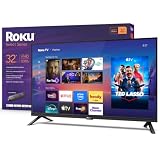
- Bright, clear picture: Bring entertainment to life on our 32" flat screen TV with bright 1080p Full HD—perfect for bedrooms, kitchens, and beyond. Roku Smart Picture cleans up incoming TV signals, optimizes them, and chooses the right picture mode.
- Seamless streaming: With fast Wi-Fi and apps that launch in a snap, Roku Select Series TVs get you to your entertainment quickly. You get excellent picture quality, clear sound, automatic updates, and more. It’s simple to use. Hard to outgrow.
- TV, simplified: With setup that only takes minutes, a simple-to-navigate Home Screen, and an uncluttered remote control that does all you need—Roku makes it easier to watch the TV you love.
- A world of free entertainment: Enjoy a huge selection of free live TV, news, sports, movies, shows, and much more—all just a click away.
- More streaming, less searching: With personalized picks right on your Home Screen, quick access to the sports and entertainment you watch most, and fast and easy search in one place—the days of endless scrolling are over.
Leave white-balance and color-management controls at their defaults unless you are correcting a specific, repeatable error with suitable measurement. Roku says custom 11-point white-balance values are global rather than input-specific, so a change can affect more sources than the per-input adjustments in the normal menu.
What’s actually slowing this PC down?
Pick the symptom - the matching free tool is one click away.
Gamma, noise reduction, and color space
Gamma changes how brightness is distributed through the mid-tones; noise reduction can smooth noisy sources but may remove fine texture; color-space choices govern how the TV interprets color information. These controls are easy to misuse when the source itself is mastered differently. Change one setting at a time, keep a record of the original value, and reset the selected picture mode if the result is worse.
Local dimming: change it only when your TV offers it
Local dimming controls independently lit screen zones to improve contrast. Roku lists Off, Low, Medium, and High levels. The feature is not universal: Roku identifies Plus and Pro Series televisions as supporting local dimming. If the control is absent, the television does not support it and there is no hidden menu that can enable it.
| Level | Practical trade-off |
|---|---|
| Off | No zone-based adjustment; useful as a reference when judging whether dimming helps your panel |
| Low | A restrained contrast effect with less aggressive zone behavior |
| Medium | A stronger compromise between contrast and possible blooming or pumping |
| High | The most forceful zone adjustment; inspect subtitles and bright objects on dark backgrounds for halos |
When local dimming is active, Dynamic Contrast is automatically disabled on models that provide that setting. Do not troubleshoot the missing Dynamic Contrast control as a fault while local dimming is enabled.
Gaming settings for a console HDMI input
Use the console’s HDMI input as the context before changing game-related options. On supported setups, Roku can detect the console and enable gaming features for that port.
The Tool Desk
Outbyte Driver Updater FREEFix the driver behind crashes, sound loss and screen glitchesFind Drivers →Outbyte PC Repair FREEClear out junk files and repair common Windows errorsFree Scan →Rank #4

- Bright, clear picture: Bring entertainment to life on our 24" flat screen TV with bright 720p HD—perfect for bedrooms, kitchens, and beyond. Roku Smart Picture cleans up incoming TV signals, optimizes them, and chooses the right picture mode.
- Seamless streaming: With fast Wi-Fi and apps that launch in a snap, Roku Select Series TVs get you to your entertainment quickly. You get excellent picture quality, clear sound, automatic updates, and more. It’s simple to use. Hard to outgrow.
- TV, simplified: With setup that only takes minutes, a simple-to-navigate Home Screen, and an uncluttered remote control that does all you need—Roku makes it easier to watch the TV you love.
- A world of free entertainment: Enjoy a huge selection of free live TV, news, sports, movies, shows, and much more—all just a click away.
- More streaming, less searching: With personalized picks right on your Home Screen, quick access to the sports and entertainment you watch most, and fast and easy search in one place—the days of endless scrolling are over.
Game Mode and ALLM
Game Mode reduces the delay between a controller action and the corresponding image. Auto Low-Latency Mode (ALLM) can switch the television into a low-latency mode when ALLM is enabled on the console. Both features depend on the TV, HDMI connection, and console.
HDR, VRR, FreeSync, and high frame rates
HDR engages automatically only when the TV, the console connection, and the game all support it. Variable refresh rate (VRR), FreeSync, high-frame-rate options, and THX Game Mode appear only on compatible Roku televisions and connected equipment. Their absence is normally a capability limitation, not a setting that needs to be unlocked.
For a competitive game, prioritize the lowest practical latency and verify that the console is actually outputting the expected resolution, refresh rate, and HDR status. For a cinematic single-player game, you may prefer a different picture mode, but keep that choice on the console’s input rather than applying it to every source.
Independent reader supportYour contribution helps us test, update, and keep practical guides available for everyone.Motion processing: use less when movement looks artificial
Motion-control names vary among third-party Roku TV models. Depending on the set, you may see Action Smoothing, Action Clarity, or LED Motion Clarity, or none of these labels.
Roku’s troubleshooting guidance warns that high motion settings can create odd motion or ghosting. If pans look unnaturally slick, faces warp, or moving objects leave trails, lower the setting or choose Off. Motion processing is a preference and a source-dependent compromise, not a mandatory picture improvement.
Best Value

- Breathtaking picture: Sharp 4K brings out rich detail on our 50" flat screen TV, while the QLED screen and HDR10 create bright, accurate colors. Roku Smart Picture cleans up incoming TV signals, optimizes them, and chooses the right picture mode.
- Seamless streaming: With fast Wi-Fi and apps that launch in a snap, Roku Select Series TVs get you to your entertainment quickly. You get excellent picture quality, clear sound, automatic updates, and more. It’s simple to use. Hard to outgrow.
- TV, simplified: With setup that only takes minutes, a simple-to-navigate Home Screen, and an uncluttered remote control that does all you need—Roku makes it easier to watch the TV you love.
- A world of free entertainment: Enjoy a huge selection of free live TV, news, sports, movies, shows, and much more—all just a click away.
- More streaming, less searching: With personalized picks right on your Home Screen, quick access to the sports and entertainment you watch most, and fast and easy search in one place—the days of endless scrolling are over.
OLED-specific protection
Roku OLED televisions ship in Low Power picture mode by default to help reduce burn-in risk. This advice applies to Roku OLED models, not to every Roku TV.
During a long session with a fixed logo, news banner, scoreboard, or game overlay, Roku advises lowering brightness. Also avoid leaving a static image on screen unnecessarily. If you own an LCD Roku TV, do not apply OLED-specific burn-in guidance as though it were a requirement for that panel type.
A safe adjustment sequence
- Select the source: start playback or choose the exact Live TV, HDMI, or AV input that needs work.
- Open the menu: press Star/Options, then select Picture Settings.
- Choose the mode: select an SDR, HDR10, or Dolby Vision mode appropriate to the current signal and room.
- Correct one visible problem: use backlight for overall light output, brightness for black appearance, contrast for whites, sharpness for edges, color for intensity, or tint for a red-green cast.
- Recheck familiar material: compare faces, dark detail, bright highlights, and text after each small change.
- Handle optional features: enable local dimming, gaming features, or motion processing only when your model offers them and the image or activity benefits.
- Record or reset: if the result is confusing, reset the selected picture mode rather than altering more sliders. Apply settings to all inputs only when you intentionally want identical treatment.
Common problems and what they mean
The picture menu does not show a control
Check the TV model, the current signal, and the input. Roku exposes features conditionally; local dimming, VRR, motion controls, and Expert Picture Settings are all model-dependent. A missing option generally means the television or signal does not support it.
HDR looks different from the picture you just set
HDR10 and Dolby Vision use their own modes. Wait for HDR playback to begin, then open Picture Settings again and choose the HDR mode you want. When playback returns to SDR, the TV returns to the SDR mode.
Streaming looks fine but a console does not
Settings are stored per input. Switch to the console’s HDMI port before changing its mode, Game Mode, or HDR-related choices. Confirm that the console and game support the feature you expect.
Motion looks worse after increasing a slider
Reduce the motion setting or turn it off. Roku specifically notes that high settings can produce artifacts and ghosting; more processing is not automatically smoother or clearer.
Advanced color changes made every source look different
Custom 11-point white-balance values are global rather than input-specific. Reset the affected picture mode and avoid further calibration changes without measurement equipment. For custom temperature work, Roku recommends a colorimeter.
Recommended Free Tools
Quick Recap
Product prices and availability are accurate as of the date/time indicated and are subject to change. Any price and availability information displayed on Amazon at the time of purchase will apply.

