
Do these 3 things before closing this tab:
1Repair Windows errors before they cause bigger problems2Scan for outdated or missing drivers - takes under a minute3Clear out junk files and repair common Windows errorsiTechGuides is reader-supported. When you buy through links on our site, we may earn an affiliate commission. As an Amazon Associate I earn from qualifying purchases. Learn more
To identify your Logitech Harmony remote, find its model name or model number, check whether your setup includes a Harmony Hub, then match both details to Logitech’s model-specific support information. The Hub check matters: Logitech separates Hub-based remotes from infrared (IR) remotes, and the setup instructions depend on which type you have.
How to identify your Harmony remote
- Look for a model name or model number. Check visible branding and any product information on the remote. Logitech’s guidance does not establish one universal location for the label on every Harmony remote, so do not assume it will be in a particular place.
- Check whether your setup includes a Harmony Hub. Note whether a Hub is present and part of the remote’s configuration. Logitech says Hub-based remotes work with a Harmony Hub, while IR remotes do not.
- Compare the name with Logitech’s family lists. Use the examples below as a starting point, not a complete catalog: Logitech labels its lists “and more.”
- Open the support page for the exact model. Logitech’s support site provides model-specific setup information and links to resources such as MyHarmony software, syncing help, troubleshooting, and release notes.
Keep identifiers distinct. A model name, model number, and serial number are not interchangeable; Logitech’s guidance specifically cautions that the serial number (SN) is not the model number. Its label-location examples concern devices being configured and do not establish where every remote’s own model information appears.

Which models are Hub-based and which use infrared?
Logitech’s compatibility page groups the following examples into two families. Because the page says “and more,” absence from these examples does not prove a remote is not a Harmony model.
Free tools Windows power users keep installed
One-click scans. No signup required.
| Family on Logitech’s list | Listed examples | Control and Hub relationship |
|---|---|---|
| Harmony Infrared Remotes | Ultimate One, Touch, One, 900, 700, 650, 600, 350, 300, 200 | Use infrared and do not work with Harmony Hub. |
| Harmony Hub-based Remotes | Elite, Ultimate Home, Ultimate, Companion, Smart Control, Hub, Smart Keyboard | Work with Harmony Hub and control devices using Wi-Fi or Bluetooth. |
These are Logitech’s published examples, not an exhaustive catalog or a visual identification guide. The support landing page also has setup pages for models including the 950, 665, and other remotes; use the page matching your exact model rather than relying on appearance alone.
#1 Best Overall
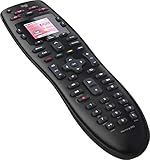
- No need for multiple remotes or remembering what to turn on or which input setting to use. Just press one button and Harmony does it all for you.
- Say goodbye to that jumble of remotes once and for all. Combine up to 10 old-fashioned remotes into one.
- Go directly to the shows, movies, and music you love with 23 customizable channel favorites.
- If things get off track, on-screen help will walk you through the steps to get everything working again.
- Harmony does the setup work for you. There are no confusing button combinations to press or codes to enter. Get to using your remote faster, with less frustration.
What the Hub check changes
Logitech’s comparison distinguishes the two types by how they control devices. Hub-based remotes work with the Harmony Hub and use Wi-Fi or Bluetooth; IR remotes send infrared commands directly and are not compatible with the Hub. Logitech’s comparison also lists Harmony mobile-app support and certain smart-home integrations for Hub-based remotes, while marking those features unsupported for IR remotes. Check the support page for your specific model before assuming that an individual feature is available.
Independent reader supportYour contribution helps us test, update, and keep practical guides available for everyone.Where to get the right setup instructions
Once you have the model name or number and know whether a Hub is part of the setup, go to Logitech’s Harmony compatibility page to check its family examples, then find the matching model in Logitech Harmony Support. Logitech’s support site links to model-specific setup guides and configuration resources. Choose the Hub-based or IR instructions that match your setup rather than selecting a guide based only on the remote’s shape.
Quick Recap
Best Value
Rank #4

- Easy Internet-based setup and live customer support
- Dedicated on-screen activity buttons
- Color LCD touch screen
- Contoured backlit buttons
- Can learn IR codes from existing remote controls
Rank #3

- Discontinued by Manufacturer
Rank #2
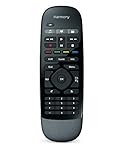
- Use your smartphone (available Harmony Smartphone app) or the included Harmony Remote to control your entertainment devices.Internet access Wi-Fi: Supports 802.11g/n, WPA Personal, WPA2-AES and 64/128-bit WEP encryption
- Smartphone app includes Swipe and Tap control for one-touch control of your entertainment system, up to 50 favorite channel icons, volume, media playback, and more (Works with iPhone iOS 6.0 or later and Android 4.0 or later)
- Included Harmony Hub lets you control devices hidden behind cabinet doors or walls, including game consoles such as PS3, Wii, and Xbox 360
- Future-proof control of up to 8 devices: Works with over 270,000 devices including cable TV boxes, Apple TV, Roku, Sonos, Amazon Fire TV, Phillips Hue, Xbox One, PS3, and TV-connected PC or Mac
- Removable battery
Product prices and availability are accurate as of the date/time indicated and are subject to change. Any price and availability information displayed on Amazon at the time of purchase will apply.

