
Free tools Windows power users keep installed
One-click scans. No signup required.
iTechGuides is reader-supported. When you buy through links on our site, we may earn an affiliate commission. As an Amazon Associate I earn from qualifying purchases. Learn more
For adults in the United States who have no symptoms and are at average risk, routine screening recommendations focus on breast, cervical, and colorectal cancer. Annual low-dose CT is recommended for a specific group of current or former smokers, not for every average-risk adult. The right schedule depends on age, the organ being screened, the guideline organization, and whether you can complete the required follow-up.
This overview summarizes U.S. guidance from the U.S. Preventive Services Task Force (USPSTF) and the National Cancer Institute (NCI). It applies to people without symptoms and without a personal or family history that raises risk. Symptoms, previous cancer, abnormal results, high-risk polyps, inflammatory bowel disease, hereditary syndromes, prior chest radiation, or other risk factors require an individualized plan with a clinician.
What “average risk” and “screening” mean
Screening tests people who do not have symptoms to look for cancer or precancerous changes before they become noticeable. It is different from diagnostic testing: a lump, unexplained bleeding, persistent cough, change in bowel habits, or another concerning symptom should be medically evaluated rather than waiting for the next screening date.
For this article, average risk means the population covered by the cited recommendations. For example, the USPSTF colorectal recommendation applies to asymptomatic adults without prior colorectal cancer, adenomatous polyps, inflammatory bowel disease, or a personal diagnosis or family history of a known hereditary syndrome such as Lynch syndrome or familial adenomatous polyposis. “Average risk” does not mean zero risk.
#1 Best Overall
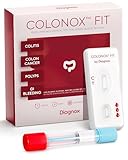
- Clinical Grade Stool Test Kit - Colonox FIT by Diagnox is an at-home stool test kit that detects hidden or occult blood in your stool, which may be a sign of GI or colorectal disorders.
- Affordable Complete Kit - Colonox FIT has everything you need. The kit includes a collection tube, antibody test, and collection apper with instructions for quick and seamless sampling & testing.
- Rapid & Easy to Read Results - Get accurate and easy-to-read results within 10 min. Look for two lines for a positive result, indicating the presence of blood, or only one line for a negative result.
- Highly Sensitive - The Colonox FIT uses antibodies to detect hemoglobin in your stool. This clinical-grade test is sensitive enough to detect hemoglobin concentrations as low as 45 ng/mL.
- Certified CLIA Waived - The Colonox FIT is a CLIA-waived test and FDA-cleared for home use. Gain reliable medical-grade insights from the comfort of your home.
A useful screening program should find cancer early, reduce the chance of dying from that cancer when people are screened regularly, and provide benefits that outweigh harms. Possible harms include false-positive results, false-negative results, bleeding or other procedure-related injury, overdiagnosis of a cancer that would never have caused trouble, overtreatment, anxiety, and the burden and cost of follow-up.
A positive screening result is not a diagnosis. Follow-up testing is part of the screening process, particularly after a positive stool-based colorectal test.
At-a-glance U.S. recommendations
| Cancer | Who is covered | Routine schedule | Important limits |
|---|---|---|---|
| Breast | Average-risk women and other people assigned female at birth, ages 40–74 | Mammography every two years | USPSTF says evidence is insufficient to determine the balance of benefits and harms for routine screening at age 75 or older. |
| Cervical | People with a cervix in the guideline’s age range and without high-risk conditions | USPSTF options: Pap every 3 years at 21–29; at 30–65, primary HPV every 5 years, HPV/Pap cotest every 5 years, or Pap every 3 years. ACS starts at 25 and prefers primary HPV every 5 years through 65. | Do not screen after 65 when prior screening has been adequate and no high-risk condition exists. Do not screen after total hysterectomy with cervix removal when there is no relevant high-grade precancer or cervical-cancer history. |
| Colorectal | Asymptomatic average-risk adults, ages 45–75 | Choose a stool-based or visualization strategy at its specified interval. | At 76–85, offer selectively based on health, previous screening, and preferences. A positive non-colonoscopy test generally requires colonoscopy follow-up. |
| Lung | Adults ages 50–80 with at least 20 pack-years who currently smoke or quit within the past 15 years | Low-dose CT every year | Eligibility is based on smoking exposure and age; this is not universal screening. The USPSTF recommendation is for people who are candidates for curative treatment. |
Breast cancer screening
USPSTF schedule
The USPSTF final breast-screening recommendation, dated April 30, 2024, recommends mammography every two years from age 40 through 74 for average-risk women and other people assigned female at birth. This is a biennial schedule, not an annual one.
Recommended Free Tools
For routine screening beginning at age 75, the USPSTF states that evidence is insufficient to assess whether benefits outweigh harms. That is not a recommendation to stop automatically at 75; it means the decision should account for health, life expectancy, prior screening, and personal preferences with a clinician.
Rank #2

- Test Early, Monitor Timely : INDICAID iFOB Test monitors hidden or occult blood in stool. Test for Ulcers, Polyps, Colitis
- High Sensitivity and Accuracy : FDA 510(k) Cleared iFOB home test kit is sensitive enough to monitor low levels of hemoglobin in stool
- Cost-Effective : FSA/HSA reimbursement eligibility helps make colorectal health monitoring more accessible
- Simple Process & Rapid Results : No prep needed. Simply test at home and get results in minutes
- Comprehensive at-Home Kit : Includes test cassette, collection tools, and step-by-step guide. The INDICAID iFOB test provides a reliable method for at-home stool analysis
When this schedule does not fit
NCI notes that people with harmful BRCA variants, high-dose chest radiation at a young age, a previous breast cancer, or certain high-risk breast lesions may need earlier, more intensive, or otherwise different screening. Those situations are not average risk.
Evidence is also insufficient for the USPSTF to recommend a blanket supplemental MRI or ultrasound strategy for everyone with dense breasts. Dense-breast decisions should be made using the person’s complete risk profile and local clinical guidance rather than assuming an additional test is always needed.
Cervical cancer screening
USPSTF options
NCI’s summary of USPSTF guidance recommends a Pap test every three years for ages 21–29. For ages 30–65, it lists three acceptable options:
The Tool Desk
Outbyte Driver Updater FREEScan for outdated or missing drivers - takes under a minuteDriver Scan →Outbyte PC Repair FREEClear out junk files and repair common Windows errorsFree Scan →- Primary high-risk human papillomavirus (HPV) testing every five years.
- HPV/Pap cotesting every five years.
- Pap testing alone every three years.
These are alternatives, not tests that should all be performed at every visit. The available test, the laboratory’s validated method, and your clinician’s recommendation determine which option is practical.
Rank #3

- Early Detection: Colon Cancer Screening Test Kit is designed to detect bowel cancer in its early stages through a simple stool sample (feces) test. The test is easy to perform and provides accurate results within minutes, allowing for quick detection and treatment.
- Preferred Screening Method - Colon test kit for cancer is a FIT test, the preferred annual stool screening method for colon cancer according to the Colorectal Cancer Alliance and Cleveland Clinic.
- No Preparation Required: Unlike other testing methods, FOB test Kit requires no special preparation or diet changes, making it a convenient and hassle-free option for at-home testing.
- Fast and Easy-to-Use: Colon cancer Test at home and get results in just 10 minutes, with no mail-in lab testing required.
- High Accuracy - The colorectal cancer screening test is over 99% accurate.
ACS guidance differs at the starting age
The American Cancer Society (ACS) guidance summarized by NCI starts routine screening at age 25 and prefers primary HPV testing every five years through age 65. HPV/Pap cotesting every five years or cytology (Pap testing) every three years are acceptable alternatives in that guidance. Because the starting age differs, identify the organization whenever you state a cervical-screening schedule.
HPV vaccination lowers risk but does not eliminate the need to follow the recommended screening schedule.
When screening can stop
The cited USPSTF summary recommends against screening after age 65 when a person has had adequate prior screening and has no other high-risk condition. People with inadequate prior screening, a history of high-grade precancer or cervical cancer, immunosuppression, or another elevated-risk condition may need continued surveillance.
Quick wins for a faster PC:
Repair Windows errors before they cause bigger problemsFix Now →Fix the driver behind crashes, sound loss and screen glitchesFind Drivers →After a hysterectomy that removed the cervix, screening is not recommended when there is no history of high-grade precancer or cervical cancer. If the cervix remains, or if the relevant history is present, the plan is different.
Rank #4

- TEAR-BASED SCREENING AT-HOME TEST: Collects tear fluid samples to analyze protein biomarkers associated with breast tissue changes, providing biological insight into breast health for women aged 30 and above
- CLIA-CERTIFIED LAB ANALYSIS: Samples are processed by Auria, a high-complexity CLIA-certified laboratory, with results reviewed by healthcare professionals to ensure accuracy and reliability
- SIMPLE COLLECTION PROCESS: Easy-to-use home collection kit includes everything needed to collect tear samples and return them to the lab using prepaid packaging for convenient, hassle-free testing
- SECURE ONLINE RESULTS: Receive detailed lab reports securely online, with access to an educational community consultation to help you understand your results and breast health in a supportive environment
- SUPPLEMENTAL SCREENING TOOL: Designed to complement routine breast screening methods such as mammograms, not to replace professional medical care or diagnostic procedures
Colorectal cancer screening
Who should be screened
The USPSTF recommends screening average-risk, asymptomatic adults from age 45 through 75; its recommendation states, “The USPSTF recommends offering colorectal cancer screening starting at age 45 years.” For ages 76–85, screening should be offered selectively after considering overall health, previous screening, and the person’s preferences. The potential benefit is usually greater for someone who has never been screened than for someone who has been screened regularly.
Compare the available strategies
| Strategy | Interval | What the person does | Follow-up if abnormal |
|---|---|---|---|
| High-sensitivity guaiac fecal occult blood test (gFOBT) | Every year | Collect stool samples at home according to the kit instructions. | Positive results require diagnostic colonoscopy. |
| Fecal immunochemical test (FIT) | Every year | Collect a stool sample at home. | Positive results require diagnostic colonoscopy. |
| Stool DNA-FIT | Every 1–3 years | Collect and return a stool sample using the supplied kit. | Positive results require diagnostic colonoscopy. |
| CT colonography | Every five years | Undergo a computed-tomography examination, usually with bowel preparation. | A finding may require colonoscopy for direct examination and tissue removal. |
| Flexible sigmoidoscopy | Every five years | Undergo an examination of the lower colon and rectum, generally with preparation. | Abnormal findings may require colonoscopy. |
| Flexible sigmoidoscopy plus annual FIT | Sigmoidoscopy every 10 years and FIT every year | Complete both parts on their separate schedules. | Abnormal results may require colonoscopy. |
| Colonoscopy | Every 10 years | Complete bowel preparation and a procedure that examines the colon and can remove polyps. | Findings determine surveillance timing or treatment. |
The “best” option is the validated test you can complete on schedule and follow through on. A test with a longer interval is not useful if preparation or access makes completion unlikely. Conversely, a convenient home test still requires prompt colonoscopy when the result is positive.
Why average-risk status matters
People with prior colorectal cancer, adenomatous polyps, inflammatory bowel disease, a hereditary syndrome, or a known high-risk family history need a different schedule. Do not substitute the intervals in the table for a surveillance plan prescribed after a previous finding.
Lung cancer screening
Eligibility
The USPSTF recommends annual low-dose computed tomography (LDCT) for adults ages 50–80 who have accumulated at least 20 pack-years, currently smoke, or quit within the past 15 years.
Best Value
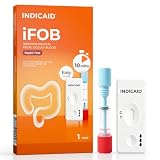
- Test Early, Monitor Timely : INDICAID iFOB Test monitors hidden or occult blood in stool.
- High Sensitivity and Accuracy : FDA 510(k) Cleared iFOB home test kit is sensitive enough to monitor low levels of hemoglobin in stool
- Cost-Effective : FSA/HSA reimbursement eligibility helps make colorectal health monitoring more accessible
- Simple Process & Rapid Results : Simply test at home and get results in minutes
- Comprehensive at-Home Kit : Includes test cassette, collection tools, and step-by-step guide. The INDICAID iFOB test provides a reliable method for at-home stool analysis
A pack-year expresses cumulative exposure: smoking one pack per day for one year equals one pack-year. Two packs per day for 10 years also equals 20 pack-years; one-half pack per day for 40 years equals 20 pack-years. A clinician or structured history should calculate the total rather than relying on a rough estimate.
When annual LDCT is not appropriate
This recommendation is defined by age and smoking history; it is not a routine scan for every adult. Screening is intended for people who are healthy enough to undergo evaluation and potentially curative treatment. Screening should stop when a person has not smoked for 15 years, develops a health problem that substantially limits life expectancy or the ability to receive curative treatment, or reaches the upper age boundary, subject to clinical judgment.
Tests that are not routine average-risk screening
Ovarian cancer
NCI states that CA-125 blood testing and transvaginal ultrasound have not been shown effective as routine ovarian-cancer screening tests for average-risk people. Using them without a high-risk indication can create false alarms and unnecessary procedures.
What’s actually slowing this PC down?
Pick the symptom - the matching free tool is one click away.
Prostate cancer
Expert groups generally discourage automatic PSA screening for everyone because false-positive results and overdiagnosis can lead to biopsies and treatment harms. A PSA decision should be individualized with a clinician, considering age, family history, race and ethnicity, overall health, and personal values. The appropriate choice is shared decision-making, not an automatic test for every average-risk man.
Multi-cancer early-detection tests
NCI reports that whether multi-cancer early-detection tests improve outcomes for people without symptoms remains unknown and requires randomized trials. The NCI overview updated October 16, 2023, stated that no such tests had FDA approval on that page’s publication date. Regulatory status can change, so verify current status with the FDA and a clinician before treating any commercial test as a substitute for recommended screening.
How to build a personal screening plan
- Confirm that you are asymptomatic. New or persistent symptoms need diagnostic care, not a routine screening appointment.
- List risk-changing facts. Include previous cancer or abnormal tests, high-risk polyps, inflammatory bowel disease, genetic testing, family history, prior chest radiation, organ removal, smoking history, and HPV vaccination.
- Match each eligible cancer to a schedule. Use the age and interval for the specific guideline organization, especially for cervical screening.
- Choose a colorectal method you can complete. Discuss preparation, procedure risks, access, cost, and the required follow-up pathway.
- Record the date and result. Keep copies of mammography, cervical, colorectal, and LDCT reports so the next clinician can judge whether screening is up to date.
- Complete follow-up. Ask what happens after an abnormal result before choosing a test; an incomplete follow-up pathway undermines the benefit of screening.
Access and practical barriers
If cost or insurance is a barrier, ask a clinician, local health department, or cancer-control program about eligibility-based services. NCI describes the CDC National Breast and Cervical Cancer Early Detection Program as providing screening services to eligible low-income, uninsured women. Eligibility and availability vary by location, so confirm details directly with the program serving your area.
Screening schedules are not permanent lifetime calendars. New symptoms, a new family-history detail, an abnormal result, or a change in health can move someone out of the average-risk pathway. Reassess the plan at routine visits and whenever risk changes.
Quick Recap
Sources and guidance dates
- NCI, “What Cancer Screening Tests Check for Cancer?” (screening purposes, harms, and tests not shown effective for routine use).
- NCI, “Cervical Cancer Screening,” updated February 13, 2025 (USPSTF and ACS schedules).
- NCI, “Mammograms,” updated December 2, 2025 (summary of USPSTF mammography guidance).
- USPSTF, “Recommendation: Breast Cancer: Screening,” final recommendation April 30, 2024.
- USPSTF, “Recommendation: Colorectal Cancer: Screening,” final recommendation published 2021; NCI EBCCP summary updated August 18, 2025.
- USPSTF, “Final Recommendation Statement: Lung Cancer: Screening,” final recommendation published 2021.
- NCI, “Cancer Screening Overview (PDQ®),” updated October 16, 2023 (benefits and harms).
Product prices and availability are accurate as of the date/time indicated and are subject to change. Any price and availability information displayed on Amazon at the time of purchase will apply.

