
iTechGuides is reader-supported. When you buy through links on our site, we may earn an affiliate commission. As an Amazon Associate I earn from qualifying purchases. Learn more
Yes. Android has iPod-style alternatives, usually sold as digital audio players (DAPs). A DAP is a separate pocket device for local music, and Wi-Fi models can also run streaming applications. The Sony NW-A306 is the closest fit for someone who wants a small, dedicated Android player; the FiiO M21 is a larger option with more internal storage and several wired outputs. An Android phone you already own remains the simplest choice for app-based listening, but it does not separate music from calls, notifications and other phone activity.
The right replacement depends on what you mean by “iPod equivalent”: a distraction-free music device, an iPod Touch-style app platform, or merely an inexpensive offline player. The comparisons and setup steps below match each goal to the hardware, storage, battery and software trade-offs that matter.
| # | Preview | Product | Price | |
|---|---|---|---|---|
| 1 |
|
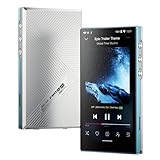
JadeAudio/FiiO JM21(4+64) Android 13 Hi-Res Music Player MP3 with Snapdragon 680, Bluetooth WiFi USB... | $249.99 | Buy on Amazon |
What counts as an Android iPod equivalent?
The iPod name covered several kinds of products. For current Android buyers, the closest category is a digital audio player (DAP): a purpose-built music device with its own storage, headphone output, battery and playback software. A Wi-Fi DAP adds Android applications and streaming, while a simpler file player concentrates on music copied from a computer. Specialist player guides use DAPs as the modern portable-player category and distinguish them from ordinary smartphones (What Hi-Fi? portable music-player guide).
There is no single Android model that reproduces every iPod generation. Android DAPs use a touch interface, Android settings and third-party services rather than Apple’s former menus and ecosystem. They can, however, deliver the practical benefits many people wanted from an iPod Touch: a separate music library, a compact device, wireless networking for apps and no need to use a primary phone while listening.
#1 Best Overall
- The world's first Snapdragon 680 portable HiFi player JM21: The Qualcomm Snapdragon 680, built on a 6nm advanced process, features an 8-core Kryo 265 architecture with a clock speed of up to 2.4GHz. This results in a significant performance boost, lower power consumption, and smooth, seamless operation.
- Custom Android 13 open-source system: The deeply customized Android 13 open-source system offers smooth and seamless performance, allowing effortless control. It provides the freedom to install streaming apps like Spotify, Apple Music, and other applications as desired.
- Dual flagship DACs, CS43198, with a powerful 700mW output drive: The JM21 features a fully balanced audio architecture, powered by two flagship Cirrus Logic CS43198 DACs paired with two high-performance SGM8262 operational amplifiers. Through audiophile-grade circuit design and tuning, the JM21 delivers a balanced output power of up to 700mW + 700mW, offering powerful drive and exceptional sound quality. It effortlessly powers headphones or large over-ear models with ease and authority.
- At just 13mm thin and weighing only 156g, the device offers a comfortable one-handed grip that completely frees your pinky. With an impressive 12.5 hours of battery life, it ensures uninterrupted listening wherever you go, easily lasting from morning to night. Every listening session is a pleasurable experience without worrying about battery life.
- he self-developed DAPS digital audio purification system, coupled with a fifth-generation FPGA and custom dual femtosecond crystal oscillators, ensures that both local playback on third-party music apps like FiiO Music and Apple Music, as well as output to an external USB DAC, maintain the original audio sampling rate. This guarantees lossless audio quality for a pristine listening experience.
Choose by the job you need the device to do
- Separate music from your phone: choose a dedicated DAP.
- Run streaming apps like an iPod Touch: choose a Wi-Fi Android DAP and verify that the services you use support its Android software.
- Play a local library cheaply: your existing phone or a basic file player may be more economical; this comparison does not establish a particular low-cost model.
- Use a wired headphone jack: select hardware with a documented 3.5 mm output, because many current phones omit one.
What a DAP does not automatically provide
A Wi-Fi Android player is not a cellular phone. It normally needs a Wi-Fi connection for account sign-in, app downloads and streaming, unless you first save music for offline use. It also is not a guaranteed replacement for every iPod Touch application: each music service controls its own Android compatibility, minimum software version, download rules and periodic account checks. A service can work on one DAP and be unavailable or unreliable on another.
Android brings flexibility, but it also brings permissions, updates, notifications and account management. If your ideal iPod was a simple device with almost no configuration, a file-focused player may feel more appropriate than a full Android DAP. If your priority is streaming-app choice, the extra setup is the price of flexibility.
Android iPod alternatives compared
| Option | Best fit | Documented specifications and claims | Main trade-offs |
|---|---|---|---|
| Sony NW-A306 | Compact Android DAP for local files and Wi-Fi music apps | Android; Wi-Fi; 32 GB internal memory with about 18 GB available for music; microSD slot; 3.5 mm output; USB-C; Bluetooth 5.0 with SBC, AAC, LDAC, aptX and aptX HD. Sony claims up to 36 hours for 44.1 kHz FLAC, up to 32 hours for 96 kHz FLAC and about 26 hours in a music-service app. US MSRP listed by Sony: $399.99. | Usable internal space is limited, Android navigation can feel cumbersome, and battery results vary with settings and use. The MSRP is not a live retail price and does not represent every region. |
| FiiO M21 | Android DAP buyer who values capacity and multiple wired outputs | Android with Google Play access; 64 GB internal storage plus microSD expansion; PCM up to 32-bit/768 kHz; DSD512 and MQA support. What Hi-Fi? reports claimed runtimes of 15 hours through 3.5 mm and about 11.5 hours through balanced output. Review-time pricing context: £279, $329 and AU$529. | Bulkier than a slim phone. Specifications and prices are review-time or reported figures; regional configurations and availability can differ. |
| Android phone already owned | Lowest-friction access to Android music applications | Runs streaming and local-file apps without buying another device. | Storage is shared with photos, applications and the operating system; a headphone jack depends on the phone model; calls and notifications remain on the same device. |
The product specifications above come from Sony’s US product page and What Hi-Fi?’s editorial coverage. Read the exact regional listing before ordering: software support, stock, included accessories, card limits and street prices can change.
Which specifications actually matter?
Usable storage matters more than the headline capacity. Sony’s 32 GB becomes approximately 18 GB for music after Android and system data. The M21’s reported 64 GB leaves more room before a card is added, but neither number tells you the maximum supported microSD size. Confirm that limit in the manual for the exact regional model.
Outputs should match your headphones. Both examples document a 3.5 mm connection; the M21 review also discusses balanced output. Balanced cabling is an option for compatible equipment, not a requirement for normal headphones. Bluetooth codec lists describe what the player can transmit; your headphones or car receiver still determine the codec actually negotiated.
Battery claims need context. A local 44.1 kHz FLAC session, a high-resolution file, Bluetooth transmission and a streaming app place different demands on the battery. Compare like with like instead of treating a single “up to” number as everyday endurance.
Sony NW-A306: the most compact dedicated Android choice
Sony positions the NW-A306 as an Android Walkman with Wi-Fi, music applications, local collection access and a computer connection for transferring files (Sony NW-A306 specifications). Its combination of a 3.5 mm jack, USB-C and Bluetooth means you can use wired headphones, wireless headphones or a car system. Bluetooth 5.0 support includes SBC, AAC, LDAC, aptX and aptX HD, so the receiving device determines which codec is actually used.
Storage is the key compromise
Sony lists 32 GB of onboard memory but says approximately 18 GB is available for music after the system occupies space. That is enough for a curated library, but a large lossless collection can consume it quickly. The microSD slot lets you move music storage off the internal memory; confirm the current supported card capacity and formatting instructions in the regional manual before buying a card. Keep applications and system updates on internal storage when possible, and leave free space for updates and database scans.
Interpreting the battery figures
Sony’s playback figures are maximum claims under specified conditions, not a guaranteed number of hours for every listener. High-resolution files, screen use, wireless networking, Bluetooth transmission, equalizer processing and streaming can reduce endurance. Sony also warns that network services or software may change, be interrupted or be discontinued. Treat the “up to” numbers as a comparison point, then plan charging around your own mix of local playback and apps.
Interface and app expectations
What Hi-Fi? calls the NW-A306 an affordable iPod Touch alternative and praises its compactness and balanced presentation, while identifying a clunky Android interface and limited usable internal storage as drawbacks (What Hi-Fi? iPod-alternatives guide). Android gives you familiar application flexibility, but it also brings notifications, settings screens and account permissions that a simple iPod menu did not. Disable unnecessary notifications and remove unused applications if you want a quieter, appliance-like experience.
Price qualification
Sony’s US page lists a $399.99 MSRP in a page FAQ generated July 23, 2026. That is a manufacturer-listed US reference price, not a verified current retailer offer, and Sony notes that promotions or financing terms may expire. Prices in other countries should be checked separately.
Free tools Windows power users keep installed
One-click scans. No signup required.
FiiO M21: more capacity and output choices
The M21 is a second Android DAP to consider when the NW-A306’s compact size and limited internal space are not the priority. What Hi-Fi?’s review reports Google Play access, 64 GB of internal storage, microSD expansion and support for high-resolution formats including PCM up to 32-bit/768 kHz, DSD512 and MQA (What Hi-Fi? FiiO M21 review).
Its output selection is useful for listeners who switch between ordinary 3.5 mm headphones and balanced cables. The review reports claimed battery life of 15 hours through the 3.5 mm output and about 11.5 hours through balanced output. Balanced wiring does not automatically sound better or make incompatible headphones safer; use the connector specified for your headphones and follow the manufacturer’s guidance.
The trade-off is physical size. The review describes the M21 as bulkier than slim smartphones, so check dimensions, case options and pocket comfort if portability is your main reason for leaving a phone behind. The review’s listed prices—£279, $329 and AU$529—are regional editorial figures accessed October 13, 2026, not guaranteed current offers.
Format numbers versus listening results
PCM, DSD and MQA figures describe what the player can decode; they do not guarantee that every recording will sound better. Your headphones, mastering, volume level and source files remain important. A player that handles your existing library reliably is usually more useful than one whose maximum format number you never use.
Recommended Free Tools
When an Android phone is the better answer
A phone already provides Android applications, Wi-Fi, Bluetooth and local playback, so it is the lowest-friction route. You avoid buying, charging and maintaining a second computer. It also gives you the widest choice of current music applications and accessories.
The disadvantages are practical rather than audiophile. Music competes for internal storage with photographs and applications, calls or alerts can interrupt playback, and many phones require a USB-C adapter or Bluetooth headphones instead of offering a 3.5 mm jack. A DAP is worthwhile when those interruptions, storage conflicts or connector limitations are more annoying than the purchase price and an additional device.
Buying checklist: requirements to verify first
- Confirm the exact regional model. Memory, firmware, included accessories, warranty coverage and supported services can vary by country.
- Check your music service. Look up its current Android minimum version, offline-download policy and device limits. Do not assume that an app available on a phone will remain supported on every DAP.
- Estimate local-library space. Start with the approximately 18 GB usable figure for the Sony, or the reported 64 GB for the M21, then reserve room for apps, updates and database files.
- Verify card support. Confirm the maximum microSD capacity and whether the player expects a particular format. Buy a card only after those details are known.
- Match the connector. Decide whether you need 3.5 mm, balanced output, Bluetooth or a USB-C adapter. Headphones are optional accessories, not a requirement to operate either DAP.
- Price the complete setup. Include the player, a supported microSD card if needed, a case and any wired adapter. Treat Sony’s $399.99 figure and the M21 review prices as reference points, not live offers.
- Check returns and support. A DAP is a second computer. A retailer’s return window and the manufacturer’s software-support history matter if an app fails or the battery does not meet your expectations.
How to set up an Android DAP
- Charge and update it. Connect the player by USB-C, install available system updates and restart before loading a large library. Updates can change application compatibility and battery behavior.
- Connect to Wi-Fi. Use your home network for account sign-in, application downloads and large album transfers. If you intend to listen offline, finish downloads while connected.
- Choose an account policy. Sign in only to the services you need. A DAP can be kept separate from a personal phone account if privacy or reduced notifications matters.
- Install music applications. On models with Google Play access, install your chosen services, set download quality and mark playlists for offline use. Availability and minimum Android versions are controlled by each service, not by the DAP manufacturer.
- Insert and prepare a microSD card. Power down if the manual requests it, insert the card, then format it in the player only after backing up any existing files. Use a card size the exact model and regional documentation support.
- Copy local music. Connect the player to a computer, select file-transfer mode and copy albums into an organized folder structure. Eject the device safely so its media database can finish scanning.
- Check metadata. Correct artist, album, track-number and cover-art tags on a computer when possible. Consistent tags prevent duplicate artists and misordered albums in the player library.
- Configure outputs. Test 3.5 mm headphones at low volume first, then pair Bluetooth equipment and confirm the codec and volume behavior. Use balanced output only with a compatible balanced cable and connector.
- Reduce phone-like distractions. Turn off unneeded application notifications, disable automatic updates while traveling and set a screen timeout that balances battery life with usability.
- Test offline playback. Turn off Wi-Fi, play copied files and open downloaded playlists. This catches incomplete transfers, licensing restrictions and card-mount problems before a trip.
How to choose between the two DAPs
Choose the Sony when pocketability comes first
The NW-A306 makes sense for a reader who wants a genuinely small second device, a headphone jack, Wi-Fi applications and expandable storage. Accept the need to manage internal space and an Android interface that may feel less direct than an old iPod.
Choose the FiiO when capacity and connections matter more
The M21 is the stronger shortlist candidate if 64 GB before microSD expansion, Google Play access and separate wired output choices outweigh a thicker body and shorter reported balanced-output runtime. Confirm the local version and current support before purchase.
Do these 3 things before closing this tab:
1Scan for outdated or missing drivers - takes under a minute2Repair Windows errors before they cause bigger problems3Fix the driver behind crashes, sound loss and screen glitchesKeep using your phone when convenience wins
If you mostly stream, rarely need a headphone jack and do not mind notifications, a phone avoids a second library, charger and account. Buy a DAP for a specific separation or storage problem, not merely because its format numbers look impressive.
Common pitfalls and fixes
- Running out of internal space: move local files to a supported microSD card, remove unused applications and keep free space for updates.
- Streaming works at home but not offline: download albums or playlists inside the service application and test with Wi-Fi disabled; some downloads require periodic account verification.
- Battery life falls below the headline claim: compare your use with the manufacturer’s test conditions. Streaming, Bluetooth, a bright screen and high-resolution processing all consume more power.
- Albums appear split or out of order: repair metadata and track numbers, then rescan the library.
- Bluetooth sounds different from wired playback: the headphones may select a different codec, or the application may apply its own volume and processing. Check both devices’ codec settings.
- Prices or stock do not match an article: manufacturer MSRPs and review-time prices are reference points. Verify the exact country, memory configuration, warranty and return policy at the time of purchase.
- Applications stop working: Android DAP services depend on third-party applications and network providers. Check the application’s current compatibility requirements and keep a local library for essential offline listening.
- A card appears empty after insertion: back up its contents, confirm the player supports its capacity and format it only according to the manual. Re-indexing can take time after a large transfer.
- The player feels too slow or cluttered: remove unused apps, limit background syncing and disable nonessential notifications. Android convenience and iPod-like simplicity require different settings.
Is a dedicated Android music player worth buying?
It is worth considering when you want music to remain available without carrying your primary phone into every listening session, when a 3.5 mm output matters, or when a separate microSD-based library is easier to manage than shared phone storage. It is less compelling when you already have a modern phone, use only streaming and value the fewest devices.
The practical decision is therefore not “Android versus iPod” in the abstract. It is whether the benefits of a dedicated DAP—physical separation, local capacity, wired output and potentially longer music-focused sessions—justify its cost, extra charging and Android maintenance. The NW-A306 is the compact, app-capable example; the M21 is the roomier, more connection-focused alternative; and an existing phone remains the sensible baseline.
Frequently Asked Questions
Does Android have an iPod Touch equivalent?
Yes. Wi-Fi Android digital audio players provide a separate music device for local files and compatible streaming applications. They are practical substitutes, but their Android interface, app support and storage behavior are not identical to an iPod Touch.
Quick wins for a faster PC:
Repair Windows errors before they cause bigger problemsFix Now →Fix the driver behind crashes, sound loss and screen glitchesFind Drivers →Clear out junk files and repair common Windows errorsFree Scan →Can the Sony NW-A306 stream music without a phone?
It has Wi-Fi and supports music applications, so it can connect directly to a network. You need Wi-Fi for streaming or downloads; for travel without Wi-Fi, save compatible playlists or use local files first.
How much music fits on the NW-A306?
Sony lists 32 GB onboard and approximately 18 GB available for music after system use. A supported microSD card expands capacity, but verify the current card limit and formatting instructions for your regional model.
Is the FiiO M21 better than the Sony NW-A306?
It depends on priorities. The M21 offers reported 64 GB internal storage, microSD expansion, Google Play access and several wired output choices, while the Sony is the more compact option. The M21 is also described as bulkier, and its reported battery figures are lower when using balanced output.
Do I need special headphones for an Android DAP?
No. The Sony documents a 3.5 mm output, and the M21 supports ordinary wired connections as well as balanced options. Bluetooth headphones also work where supported. Balanced output requires a compatible cable and should not be used with an incompatible connector.
Can I use Spotify or another streaming service on a DAP?
Possibly, provided the service supports that player’s Android software and your account. Install the app on a Wi-Fi model, check its minimum Android version and download rules, and test offline playback before relying on it while traveling.
Is a DAP worth buying if I already have an Android phone?
Only when separation, a headphone jack, dedicated storage or fewer interruptions solves a real problem. If you mostly stream and do not mind calls or notifications, the phone is the lower-cost and lower-maintenance choice.
Are the listed prices current?
No price in this comparison should be treated as a live offer. Sony’s US page lists a $399.99 MSRP, while What Hi-Fi? lists regional M21 figures of £279, $329 and AU$529. Check the exact country, configuration, stock and warranty before ordering.
The Bottom Line
Bottom line: Android does have iPod-style replacements. Choose the Sony NW-A306 for the smallest app-capable DAP, the FiiO M21 for more internal capacity and wired-output flexibility, or keep using your phone when convenience matters most. Verify app compatibility, microSD support, regional pricing and return terms before buying.
What’s actually slowing this PC down?
Pick the symptom - the matching free tool is one click away.
Quick Recap
Product prices and availability are accurate as of the date/time indicated and are subject to change. Any price and availability information displayed on Amazon at the time of purchase will apply.

