
Free tools Windows power users keep installed
One-click scans. No signup required.
iTechGuides is reader-supported. When you buy through links on our site, we may earn an affiliate commission. As an Amazon Associate I earn from qualifying purchases. Learn more
AMD’s Athlon XP Performance Rating (PR) was a performance-oriented model number, not the processor’s clock speed. For example, the Athlon XP 2000+ ran at 1.67 GHz and the XP 2200+ ran at 1.80 GHz. AMD used the number to communicate that the lower-clocked Athlon XP could compete with faster-clocked Pentium 4 processors in many workloads, but the rating was never a guarantee of identical performance in every application.
What the Athlon XP Performance Rating meant
The “2000+,” “2100+” and “2200+” labels on Athlon XP processors were AMD’s Performance Rating, usually abbreviated PR. They were intended to make processor comparisons easier during the early 2000s, when Intel’s Pentium 4 architecture often used higher clock frequencies than AMD’s Athlon architecture.

The number was therefore a model designation built around expected relative performance. It was not a measurement in megahertz or gigahertz, and it was not a universal promise that an Athlon XP would match a Pentium 4 carrying the same nominal number. The reviewed material does not establish a single formal equation that AMD used to derive every PR value, so treating “XP 2000+” as an exact 2.00 GHz equivalent would be too strong.
Recommended Free Tools
That distinction is important because the plus sign was part of the product name, not a measurement suffix. It did not mean that the chip could be configured to run at the number shown, nor that every application would produce the same result as a processor running at that frequency. It signaled AMD’s intended performance position in the market of that period.
#1 Best Overall
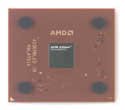
- AMD Athlon XP 2500+ Barton 1.833GHz 512KB L2 Cache Socket A CPU Only, No Fan or Box
Model number versus actual frequency
| Processor | Performance Rating in the name | Actual clock speed reported in the period reviews |
|---|---|---|
| AMD Athlon XP 2000+ | 2000+ | 1.67 GHz |
| AMD Athlon XP 2100+ | 2100+ | 1.73 GHz |
| AMD Athlon XP 2200+ | 2200+ | 1.80 GHz |
The gap between the label and the measured frequency was central to AMD’s marketing argument. An XP 2000+ did not suddenly operate at 2.00 GHz; it was a 1.67 GHz processor whose architecture was expected to deliver competitive work per clock. The XP 2200+ likewise ran at 1.80 GHz, not 2.20 GHz.
In practical terms, a buyer needed to read two different pieces of information: the PR number described AMD’s market positioning, while the actual frequency described the chip’s operating clock. Neither number alone was a complete performance specification.
Why AMD introduced a rating instead of emphasizing gigahertz
Clock speed is only one part of CPU performance. The amount of work completed per cycle, cache behavior, instruction-set support, memory subsystem, compiler choices and the software being run can all change the result. Two processors at different frequencies can trade leads from one application to another.
That distinction mattered especially against the Pentium 4. Intel’s design reached high frequencies, while the Athlon XP could often produce strong results at a lower frequency. AMD’s PR label was an attempt to put the architectural comparison in front of the buyer instead of allowing the larger gigahertz number to dominate the decision.
The rating should consequently be read as “AMD’s performance-positioning model number,” not as a specification such as core voltage, bus speed or guaranteed benchmark score. It also should not be used to compare an Athlon XP directly with a modern processor; the label belongs to a historical product-generation comparison.
It also was not a promise that every Intel product with a similar-looking number would be the comparison target. Pentium 4 systems differed in clock speed and platform, and the same Athlon XP could behave differently depending on memory, chipset, graphics hardware, operating system and application version. A PR label simplified a complicated market message; it did not remove the variables.
What period testing actually showed
The most useful way to evaluate the rating is to look at named workloads rather than ask whether an XP number was “equal” to a Pentium 4 number. The period tests show both why AMD made the claim and why it needed qualification.
Do these 3 things before closing this tab:
1Fix the driver behind crashes, sound loss and screen glitches2Repair Windows errors before they cause bigger problems3Scan for outdated or missing drivers - takes under a minuteAutoCAD 2002: a narrow lead on the total index
In AnandTech’s January 2002 comparison using Cadalyst Labs’ C2001 benchmark for AutoCAD 2002, an Athlon XP 2000+ at 1.67 GHz was tested against a 2.2 GHz Pentium 4 Northwood.
| C2001 AutoCAD 2002 result | Athlon XP 2000+ (1.67 GHz) | Pentium 4 Northwood (2.2 GHz) |
|---|---|---|
| Total Index | 38.25 | 36.63 |
| 3D Wireframe Index | 11.33 | 13.68 |
On the C2001 Total Index, the Athlon score was 1.62 points higher, or approximately 4.4% above the Pentium 4 result when calculated from the published figures. AnandTech characterized that overall advantage as roughly 5%.
Rank #2

- High-speed Athlon XP processor
- Advanced microarchitecture
- Fully pipelined floating-point unit
- Hardware data pre-fetch
- Advanced two-level translation look-aside buffer (TLB) structures
The frequency difference makes the result notable: the XP was running 530 MHz below the Northwood yet still led the combined index. That is the type of outcome AMD wanted shoppers to understand when it used a performance-oriented name instead of relying on the clock number.
The subtest tells a different story. The Pentium 4’s 13.68 in 3D Wireframe was approximately 20% higher than the Athlon XP’s 11.33. This is the clearest demonstration that a total benchmark number can conceal opposing application components. The XP led the combined index, yet Intel led a specific graphics-oriented subtest by a substantial margin.
For someone buying a workstation for a particular AutoCAD workflow, the relevant question would therefore be which operations dominate that workflow, not simply which processor has the larger model number or which system wins an aggregate index. A user focused on wireframe work could reasonably reach a different conclusion from someone looking at the total C2001 index.
SYSMark 2002: Pentium 4 advantages in the displayed charts
A later AnandTech review charted Athlon XP models against several Pentium 4 systems using SYSMark 2002. The chart included the Athlon XP 2200+ at 1.80 GHz, the XP 2100+ at 1.73 GHz and the XP 2000+ at 1.67 GHz. A Pentium 4 system clocked at 2.53 GHz scored higher than the XP 2200+ in both displayed categories.
| SYSMark 2002 category | Athlon XP 2200+ (1.80 GHz) | Pentium 4 (2.53 GHz) | Difference in the displayed scores |
|---|---|---|---|
| Office Productivity | 158 | 178 | Pentium 4 approximately 12.7% higher |
| Internet Content Creation | 240 | 330 | Pentium 4 approximately 37.5% higher |
The reviewer described general-use performance as competitive, while content creation favored the Pentium 4 substantially. The office result was a 20-point gap; the content-creation result was 90 points. Expressed proportionally, the larger category gap shows why a single broad statement about “Athlon XP performance” can mislead.
These are results from the specific systems and software included in SYSMark 2002; they are not a universal ranking of every Athlon XP against every Pentium 4. The 2.53 GHz Pentium 4 in this chart was not the same comparison chip as the 2.2 GHz Northwood in the AutoCAD test, and the workloads were different as well.
Why benchmark version and setup changed the answer
Benchmark names are not enough by themselves. AnandTech explained that SYSMark 2002 changed how its total scores were calculated compared with SYSMark 2001. The suite also changed the relative weighting of component tests and made Internet Content Creation more dependent on memory bandwidth.
In the tests discussed by AnandTech, Internet Content Creation averaged about 600 MB/s of memory bandwidth. The updated suite also correctly detected SSE support on Palomino and Pentium 4 cores. Those changes could alter the relative position of processors even when the CPU models had not changed.
- Do not combine SYSMark 2001 and SYSMark 2002 scores into one trend line.
- Keep the operating system, applications, drivers, memory configuration and motherboard context in mind when comparing period results.
- Use the exact benchmark version named by the review; a score from a revised suite is not automatically interchangeable with an older score.
- Interpret a total score alongside the component results when your workload is specialized.
- Check whether a chart compares processor models at different clock speeds; the 2.53 GHz Pentium 4 SYSMark system and 2.2 GHz Northwood AutoCAD system answer different questions.
This is why a claim such as “the XP 2200+ equals a 2.2 GHz Pentium 4” cannot be treated as a technical constant. The result depends on what is being measured and how the test suite weights it.
Launch-era evidence: strong results, but not a blanket equivalence
At the Athlon XP launch in October 2001, AnandTech published a comparison involving the new AMD processors and Pentium 4 systems. The original test page was not available for direct review in the material consulted here. A later retrospective by Tom’s Hardware attributed a summary to the original reviewer, Thomas Pabst: the Athlon XP 1800+ beat Intel’s flagship 2 GHz Pentium 4 in a majority of that review’s benchmarks.
Quick wins for a faster PC:
Fix the driver behind crashes, sound loss and screen glitchesFind Drivers →Clear out junk files and repair common Windows errorsFree Scan →Scan for outdated or missing drivers - takes under a minuteDriver Scan →That statement is useful historical context, but it should be treated as a report about one review’s benchmark set, not as proof that every XP 1800+ workload surpassed every 2 GHz Pentium 4 workload. “A majority” also does not mean all tests, nor does it identify a single margin that can be applied to other systems.
It also does not establish AMD’s exact internal formula for the PR number. The safe historical conclusion is narrower: launch-era testing gave AMD evidence that a lower-clocked Athlon XP could outperform a higher-clocked Pentium 4 in many selected applications, which supported the company’s decision to foreground a performance rating.
How to compare an Athlon XP with a Pentium 4 correctly
If you are studying a retro-PC configuration, validating an old review or deciding which period system better fits a task, use a controlled comparison rather than the model numbers alone.
- Identify the exact CPU. Record the Athlon XP model, its actual frequency, core generation where known, and the exact Pentium 4 model. “Pentium 4” covers multiple cores, buses and clock speeds.
- Define the workload. Separate office applications, 3D wireframe work, rendering, media encoding, games and other tasks. A processor can lead in one category and lose in another.
- Match the platform. Keep memory amount and speed, storage, graphics hardware, motherboard chipset, operating system and drivers as comparable as practical.
- Name the benchmark version. Record whether the test is C2001 for AutoCAD 2002, SYSMark 2002 or another suite. Do not merge scores from differently defined versions.
- Read component scores. Check whether the total result is hiding a large subtest reversal, as happened with the AutoCAD 3D Wireframe Index.
- Report the result with its conditions. A useful conclusion says which CPU won, in which test, on which setup and by approximately how much.
For a retro build, this method also helps with compatibility decisions. Confirm that the motherboard, memory and graphics card are appropriate for the processor before treating a benchmark comparison as meaningful. A faster score from a differently configured system may reflect the platform as much as the CPU.
What the numbers say about the PR concept
The rating captured a real architectural trade-off
The XP 2000+ versus 2.2 GHz Northwood comparison shows why frequency alone was misleading. AMD’s processor ran 530 MHz slower yet produced a slightly higher C2001 total index. That is a meaningful period result, not merely a marketing slogan.
The rating could not predict every subtest
The same systems reversed position in 3D Wireframe, where the Pentium 4 was about 20% ahead. A model number that implied a single fixed equivalence would fail to describe that result.
Software could favor one architecture
The SYSMark 2002 results show larger Pentium 4 leads, especially in Internet Content Creation. The suite’s memory-bandwidth emphasis and its treatment of SSE support were part of the testing context. Performance was therefore a property of the processor, platform and software combination, not of the PR label in isolation.
Aggregate scores are useful but incomplete
A total index can summarize a mixed workload, which is useful for a general buyer, but it can also hide the operations that matter most to a specialist. The 38.25 versus 36.63 C2001 total favored the XP, while the 11.33 versus 13.68 wireframe result favored the Pentium 4. Reporting both figures is more informative than quoting only the overall winner.
The Tool Desk
Outbyte PC Repair FREEClear out junk files and repair common Windows errorsFree Scan →Outbyte Driver Updater FREEFix the driver behind crashes, sound loss and screen glitchesFind Drivers →Rank #4

- AMD Athlon delivers responsive, reliable computing for everyday users
- Includes Radeon Vega 3 Graphics for smooth videos and gaming
- 2 Cores / 4 Processing Threads, includes near-silent cooler
- 3.2 GHz Clock Frequency, 5MB cache, DDR4-2667 support
- Socket AM4, platform-upgradable to Ryzen
Common mistakes when interpreting “2000+” or “2200+”
- Calling the rating the clock speed: XP 2000+ means 1.67 GHz in the cited test, not 2.00 GHz.
- Assuming exact Pentium 4 equivalence: the label communicates intended competitiveness, not an across-the-board benchmark guarantee.
- Using one benchmark as the whole verdict: AutoCAD’s total and 3D Wireframe results point in opposite directions.
- Comparing scores from different SYSMark generations: SYSMark 2002 changed score calculation and test behavior compared with SYSMark 2001.
- Ignoring the test platform: memory bandwidth, chipset, graphics hardware, drivers and software versions can influence the outcome.
- Mixing comparison chips: a 2.2 GHz Northwood result cannot be silently substituted for a 2.53 GHz Pentium 4 result.
- Reading “majority” as “all”: the launch-era summary about the XP 1800+ described most benchmarks in one review, not every workload.
- Applying the historical rating to current CPUs: Athlon XP and Pentium 4 results describe early-2000s systems and cannot rank modern processors.
What “performance rating” meant for buyers at the time
For a shopper in the Athlon XP era, the PR number provided a quick way to understand AMD’s intended market position without assuming that the processor had the same frequency as a similarly named Intel part. It was especially helpful when a store list placed a 1.67 GHz XP 2000+ beside a Pentium 4 advertised at more than 2 GHz.
The number was still only a starting point. A buyer running mostly office software might see a different balance from a buyer creating web content, encoding media or using 3D CAD. Period reviews were valuable because they connected the model number to actual applications and exposed cases where the Pentium 4 led decisively.
For today’s collector or retro-PC builder, the rating has a different use. It identifies the intended performance tier within the Athlon XP family and helps explain period reviews, but it should not be used as a modern value or speed guarantee. Condition, motherboard compatibility, memory, graphics hardware and the software being run matter more than the “2000+” label by itself.
Independent reader supportYour contribution helps us test, update, and keep practical guides available for everyone.Frequently asked questions
Was the Athlon XP 2000+ a 2.00 GHz processor?
No. The cited period review lists the XP 2000+ at 1.67 GHz. “2000+” was AMD’s Performance Rating model number, not the operating frequency.
What was the Athlon XP 2200+ clock speed?
The XP 2200+ ran at 1.80 GHz in the AnandTech SYSMark 2002 comparison. Its model number and clock speed were different values.
Did an Athlon XP 2000+ beat a 2.2 GHz Pentium 4?
It depends on the test. In Cadalyst Labs’ C2001 AutoCAD 2002 Total Index, the XP scored 38.25 versus 36.63 for the 2.2 GHz Northwood, about a 4.4% lead. In the 3D Wireframe Index, the Pentium 4 scored 13.68 versus 11.33, about 20% higher.
Did the XP 2200+ beat a 2.53 GHz Pentium 4?
Not in the displayed SYSMark 2002 categories. The Pentium 4 scored 178 versus 158 in Office Productivity and 330 versus 240 in Internet Content Creation. Those figures apply to that benchmark version and test setup.
Why can two reviews reach different conclusions?
They may use different applications, benchmark versions, memory configurations, graphics hardware, operating systems or processor models. SYSMark 2002 also changed score calculation and weighting compared with SYSMark 2001, so scores from those generations should not be merged.
What’s actually slowing this PC down?
Pick the symptom - the matching free tool is one click away.
Was there a precise formula behind every PR number?
The period material cited here does not verify a single formal equation for deriving every rating. It is safest to describe PR as a performance-oriented model-number system rather than claim an exact Pentium 4 frequency equivalence.
Best Value

- AMD Athlon XP 2600 CPU Processor Socket A 462 Pin 1.917 GHz 333FSB 512 Cache
- Barton Core
What did the launch reviews claim about the XP 1800+?
Tom’s Hardware later attributed a summary to reviewer Thomas Pabst saying that the XP 1800+ beat Intel’s flagship 2 GHz Pentium 4 in a majority of the launch review’s benchmarks. That is evidence from one review summary, not a universal rule.
Should the PR number be used to choose a modern CPU?
No. Athlon XP and Pentium 4 ratings describe early-2000s products and software. For a current purchase, use contemporary benchmarks and compatibility information. For a retro build, compare exact period hardware in the applications you actually plan to run.
Historical verdict
AMD’s Athlon XP Performance Rating was a model-number system designed to express expected performance relative to the era’s higher-clocked Pentium 4 processors. It correctly highlighted that an Athlon XP could compete at a lower frequency: the XP 2000+ at 1.67 GHz edged a 2.2 GHz Northwood on the cited AutoCAD C2001 total index. But it was not a universal equivalence. The Pentium 4 led the AutoCAD 3D Wireframe subtest and both displayed SYSMark 2002 categories for the XP 2200+, with a particularly large lead in Internet Content Creation.
Outdated Drivers Are Slowing You Down
One free scan finds every outdated or missing driver and matches the right update for your exact hardware.Free scan · exact hardware matchPC Slower Than It Used to Be?
A free scan shows the junk files, broken settings and background clutter dragging Windows down - then fixes them in one click.Free scan · Windows 10 & 11The practical lesson is unchanged for retro hardware analysis: compare exact processor models in the applications you care about, preserve the benchmark version and test conditions, and treat the PR number as a historical performance position rather than a clock-speed specification or guaranteed score.
Frequently Asked Questions
What did AMD’s Athlon XP Performance Rating measure?
It was a performance-oriented model number intended to communicate relative performance against higher-clocked Pentium 4 processors. It was not the chip’s clock frequency or a guaranteed benchmark score.
What was the actual speed of the Athlon XP 2000+?
The XP 2000+ ran at 1.67 GHz in the cited period tests.
Can the PR number be converted directly into Pentium 4 gigahertz?
No. The available period evidence does not establish a universal conversion formula, and benchmark results varied by workload.
Which CPU won the AutoCAD 2002 comparison?
The XP 2000+ led the C2001 Total Index, 38.25 to 36.63, while the 2.2 GHz Pentium 4 led the 3D Wireframe Index, 13.68 to 11.33.
Why are SYSMark 2001 and SYSMark 2002 scores not interchangeable?
SYSMark 2002 changed total-score calculation, component weighting and memory-bandwidth behavior, so the two versions should be treated as separate tests.
The Bottom Line
AMD’s Athlon XP PR numbers described intended performance tiers, not clock speeds. The XP 2000+ ran at 1.67 GHz and could edge a 2.2 GHz Pentium 4 in AutoCAD’s total index, yet lose its wireframe subtest; SYSMark 2002 showed the Pentium 4 ahead, especially in content creation. Compare exact CPUs, workloads and benchmark versions rather than treating “2000+” as a fixed equivalence.
Quick Recap
Product prices and availability are accurate as of the date/time indicated and are subject to change. Any price and availability information displayed on Amazon at the time of purchase will apply.

