
iTechGuides is reader-supported. When you buy through links on our site, we may earn an affiliate commission. As an Amazon Associate I earn from qualifying purchases. Learn more
Call your local emergency number immediately. Unresponsiveness after ketamine can mean severe poisoning, coma, or dangerously slow or stopped breathing. Stay with the person, check whether they are breathing normally, place an unconscious person who is breathing on their side, and follow the dispatcher’s instructions. Do not wait for them to “sleep it off.”
Why an unresponsive person needs emergency help
Ketamine can depress the central nervous system when too much is taken, when it is administered too rapidly, or when it is combined with other depressants. Health Canada warns that large amounts can cause profound sedation, coma, death, or slowed breathing. Official Australian medicine information likewise identifies respiratory depression as a possible result of overdose or excessively rapid administration and describes supportive ventilation as the treatment response.
Alcohol and opioids are particularly important to report. Combining ketamine with central nervous system depressants can slow breathing further or stop it completely. You cannot reliably determine from appearance whether ketamine alone, a mixed-drug exposure, a medical condition, or an injury caused the unconsciousness. Treat the situation as a life-threatening emergency until professionals assess the person.
Windows Errors? Fix Them Before They Spread
Repair common Windows errors and clear accumulated junk for a smoother, more stable PC - no reinstall needed.Free scan · no reinstallCrashes, No Sound, or Screen Glitches?
Random freezes, missing sound and display glitches usually trace back to one bad driver. Find and replace yours safely.Free scan · under a minuteWhat to do in the first minute
- Call emergency services now. Use your local emergency number and state that a person is unresponsive after taking ketamine, or that the substance may be ketamine if you are not certain. Put the phone on speaker if possible so you can keep helping while the dispatcher gives instructions.
- Check for a response. Speak loudly and clearly, using the person’s name if you know it. If there is no response, gently stimulate them as directed by the dispatcher. Do not shake them violently or leave to search for information.
- Check breathing. Tell the dispatcher whether the person is breathing normally. Gasping, irregular, very slow, or shallow breaths are not normal breathing; describe exactly what you observe rather than assuming the person is asleep.
- Follow dispatch instructions. The dispatcher may direct you to provide rescue breaths, begin chest compressions, or use another form of resuscitation or breathing support. Follow the instructions in real time and continue until responders take over or the dispatcher tells you to stop.
- Stay with the person. Keep watching their breathing and responsiveness. If another adult is present, have that person meet the ambulance while you remain beside the patient.
If the person is unconscious but breathing
Place them on their side
Put an unconscious person who is breathing on their side, in a stable position that helps keep the airway clear and reduces choking risk. Move them only as needed to position them safely, and tell the dispatcher what you have done. Keep checking that breathing remains normal; a person who stops breathing or becomes harder to rouse requires immediate notification to the dispatcher.
#1 Best Overall
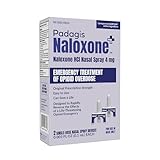
- QUICK & EFFECTIVE: Padagis Naloxone HCl Nasal Spray delivers a dose of naloxone, designed to provide quick and effective reversal of opioid overdose symptoms.
- SIMPLE TO USE: With a simple nasal spray mechanism, Padagis Naloxone HCI Nasal Spray is user-friendly, allowing for ease of use in emergency situations. Safe to use even when Opioids aren’t present.
- COMPACT & CONVENIENT: Each packet contains a nasal spray device and can be easily carried in pockets, purses, or emergency kits, ensuring life-saving intervention is always within reach.
- TRUSTED BY PROFESSIONALS: By equipping individuals with the means to respond to opioid overdoses, Padagis Naloxone HCI Nasal Spray empowers communities to help save lives, offering support in critical moments. Naloxone is trusted by first responders.
Keep monitoring until help arrives
Do not leave to obtain water, look for a dose, or contact friends. Watch the chest and listen for changes in breathing, and report any change promptly. If the person vomits, follows no commands, or develops abnormal breathing, tell emergency services immediately and follow their positioning instructions.
If the person is not breathing normally
Tell the dispatcher at once that the person is not breathing normally. Begin the resuscitation or breathing support the dispatcher directs. Do not delay while trying to identify the exact drug, calculate an amount, or find a pulse if the dispatcher has already instructed you to start aid. Emergency clinicians can provide oxygen, ventilation, and other supportive treatment; an unresponsive person cannot safely be monitored at home.
Continue following the dispatcher’s directions until trained responders arrive. If breathing returns, report that change and continue monitoring rather than assuming the emergency has ended.
Rank #2

- Original Prescription Strength: Two 4 mg single-dose devices. Available over the counter without a prescription. Works quickly, reversing an opioid overdose in minutes.
- A Staple For Medical Supplies & Equipment: NARCAN Nasal Spray is an addition to any emergency first aid kit. It's designed for opioid emergencies and can help save a life in case of an opioid overdose.
- Used by First Responders: Naloxone nasal spray is carried by first responders and commonly employed in emergency situations. NARCAN Nasal Spray is designed to rapidly reverse the effects of a life-threatening opioid overdose. Use as directed.
- Easy to Use: Easy to use nasal spray opioid overdose treatment. No nasal swabs or injections are needed. Safe to use even if opioids are not present.
- First Aid Kit Item: this naloxone overdose medicine can help complete your first aid kit. Designed to rapidly reverse the effects of opioid overdose No training required.
Does naloxone (Narcan) work on ketamine?
No. Naloxone reverses opioid effects; it does not reverse ketamine intoxication. A person may still be in danger after naloxone, even if they briefly appear more alert.
When naloxone may still be appropriate
If opioids may also have been taken, or the substance is uncertain, give available naloxone according to the product instructions while emergency services are being contacted. This is an action for possible opioid involvement, not a treatment for ketamine itself. Do not wait to see whether naloxone works before calling, and do not use a response to naloxone to rule out ketamine poisoning, another drug, or another medical cause.
After giving naloxone
Keep the person under observation and follow the dispatcher’s directions. Opioid effects can return after an initial improvement, and naloxone does not provide breathing support for ketamine-related sedation. Tell responders whether naloxone was given, when it was given, and whether the person’s breathing or responsiveness changed.
Rank #3

- Used by first responders
- Original prescription strength
- Safe and easy to use
- Designed to rapidly reverse the effects of an opioid emergency
What information to give the dispatcher and paramedics
Share what you know without delaying the emergency call. Useful details include:
The Tool Desk
Outbyte Driver Updater FREEFix the driver behind crashes, sound loss and screen glitchesFind Drivers →Outbyte PC Repair FREERepair Windows errors before they cause bigger problemsFix Now →- The person’s age, if known, and any relevant medical information you know.
- What was taken, whether it was definitely ketamine, and whether the product or substance is available for responders to identify.
- The approximate amount, route of use, and time it was taken.
- Any alcohol, opioids, sedatives, or other drugs or medicines taken at the same time.
- Whether the person responds to their name or gentle stimulation.
- Whether breathing is normal, slow, shallow, irregular, or absent.
- Whether naloxone was given and what happened afterward.
Be honest even if you are worried about legal consequences. Accurate information helps clinicians choose breathing support and other treatment. If you do not know an amount or substance, say that it is unknown; do not guess.
Common mistakes that increase risk
- Waiting for the person to wake up: Unresponsiveness is not a normal “sleep” to observe at home.
- Calling a friend instead of emergency services: A friend cannot provide the rapid assessment, airway support, or transport an emergency team can.
- Leaving the person alone: Breathing can worsen without warning, especially after alcohol or opioid use.
- Delaying the call to identify the dose: Call first and provide estimates afterward.
- Assuming naloxone solved the problem: Naloxone does not counteract ketamine, and mixed overdoses still require emergency evaluation.
- Ignoring abnormal breathing: Gasping or very shallow breaths should be reported as abnormal, not treated as evidence that the person is safely asleep.
- Trying to manage the emergency with online advice: Use guidance from the emergency dispatcher while help is on the way.
Poison-control advice and location-specific help
In the United States, Poison Control can be reached at 1-800-222-1222 or through webPOISONCONTROL for poison questions. For an unresponsive person, emergency services come first; do not call Poison Control instead of calling the local emergency number. Poison specialists can provide additional guidance when the person is awake and stable or when responders ask for toxicology support.
Rank #4

- Full prescription strength: Nasonex 24HR provides effective allergy relief with mometasone furoate (glucocorticoid) 50 mcg per spray; available over the counter, without a prescription
- 24-hour relief: This nasal spray temporarily relieves allergy symptoms including nasal congestion, runny nose, sneezing, and itchy nose caused by hay fever or other upper respiratory allergies
- Non-drowsy, scent-free mist: Multi-symptom allergy and congestion relief nasal spray without the drowsiness, so your day stays on track
- How Nasonex works: A trusted choice designed for targeted multi-symptom control; You may start to feel relief within 12 hours and full effect after several days of regular, once-a-day use
- Dosing: Adults 12+: 2 sprays per nostril once daily; Children 2-11: 1 spray per nostril once daily (adult supervision required); Do not use under age 2; See package insert for full directions
Emergency numbers and poison-control systems differ by country. Use the emergency number where the person is located rather than assuming that a U.S. or Canadian number applies. Health Canada notes that Canada’s Good Samaritan Drug Overdose Act offers some legal protection to people who witness an overdose and call 911 or the local emergency number. That protection should not be generalized to other countries; local laws vary.
How to decide what matters while waiting
| What you observe | Immediate action | What to tell responders |
|---|---|---|
| No response, breathing normally | Call emergency services, place the person on their side, and keep monitoring. | They are unconscious but currently breathing normally; report any change. |
| No response, breathing slowly, shallowly, irregularly, or not at all | Tell the dispatcher immediately and follow directions for resuscitation or breathing support. | Describe the exact breathing pattern and when it changed. |
| Possible opioid use or unknown substance | Call emergency services; give naloxone according to its product instructions if available, without delaying the call. | State whether opioids are suspected, what naloxone was given, and the response. |
| Person becomes responsive | Keep emergency services involved and continue observing; do not leave them alone. | Explain how long they were unresponsive and what changed. |
What happens after responders arrive
Tell paramedics where the person was found, what you saw before calling, and every substance or medicine you know about. Show them packaging or containers if they are safely available, but do not delay the call or risk handling an unknown substance. Mention vomiting, abnormal movements, injuries, or a fall if you witnessed any of these events.
Emergency clinicians may need to support breathing and evaluate for mixed-drug exposure or another medical cause. The fact that someone wakes up does not establish that ketamine was the only substance involved or that the danger has passed. Follow the care team’s instructions about transport and observation.
Best Value

- Ridiculously Fast Relief: Unblock your nose in seconds with Afrin No Drip Severe Congestion Nose Spray Decongestant, a fast-acting sinus spray providing sinus pressure and congestion relief with cooling menthol in a convenient twin pack nasal spray bottle
- Effective for Severe Nasal Congestion: This maximum strength nasal spray decongestant is perfect for relieving severe nasal congestion and sinus pressure caused by colds and allergies, offering quick and effective decongestants for adults and children 6 years and older
- No Drip Technology: Afrin's No Drip sinus medicine ensures the medicated mist stays where it's sprayed, providing effective nasal decongestion without the mess or discomfort of it dripping from your nose or down your throat
- Cooling Menthol Formula: Experience the soothing and cooling sensation of menthol while the powerful nasal decongestant works to constrict blood vessels in the nasal passages and reduce swelling to help you breathe easier
- 12-Hour Non-Drowsy Decongestion: Experience long-lasting relief for up to 12 hours without drowsiness, perfect for both day and night use to alleviate nasal congestion and provide sinus pressure relief
Direct answers to the questions people ask most
What should I do if someone will not wake up after ketamine?
Call the local emergency number immediately. Check whether they respond and whether they are breathing normally, place an unconscious breathing person on their side, and follow dispatch instructions.
Can ketamine make someone stop breathing?
Yes. Severe ketamine poisoning can slow breathing, and combining ketamine with alcohol, opioids, or other central nervous system depressants can cause breathing to stop.
Should I let them sleep it off?
No. You cannot safely distinguish sleep from dangerous sedation or coma by watching at home. Unresponsiveness requires emergency assessment.
Quick wins for a faster PC:
Fix the driver behind crashes, sound loss and screen glitchesFind Drivers →Repair Windows errors before they cause bigger problemsFix Now →Scan for outdated or missing drivers - takes under a minuteDriver Scan →Should I give naloxone?
Give it according to its product instructions only when opioid involvement is possible or the substance is uncertain, and only as an addition to—not a replacement for—an emergency call and breathing support.
Quick Recap
Key safety points
- Unresponsiveness after ketamine is an emergency, regardless of the suspected amount.
- Call first; do not delay while investigating what was taken.
- Monitor response and breathing continuously, and use the side position when an unconscious person is breathing.
- Follow the dispatcher’s instructions for resuscitation or ventilation if breathing is abnormal.
- Naloxone treats opioid overdose, not ketamine toxicity.
- Give responders the substance, amount, route, timing, and co-use information you know.
Product prices and availability are accurate as of the date/time indicated and are subject to change. Any price and availability information displayed on Amazon at the time of purchase will apply.

