
Free tools Windows power users keep installed
One-click scans. No signup required.
iTechGuides is reader-supported. When you buy through links on our site, we may earn an affiliate commission. As an Amazon Associate I earn from qualifying purchases. Learn more
Wash any bite, scratch, or potentially exposed area immediately with soap and water, then obtain urgent medical and public-health advice. Do not wait for symptoms or for an animal test before calling. Rabies post-exposure prophylaxis (PEP) can prevent disease when started before symptoms, whereas symptomatic rabies is nearly always fatal. A possible contact does not automatically require PEP; clinicians and health departments assess the animal, the type of contact, local rabies activity, and your vaccination and immune history.
What to do in the first minutes and hours
- Clean the site now. Flush and wash every bite, scratch, or other potentially exposed area thoroughly with soap and water. The CDC says a povidone-iodine solution may be used as an additional virucidal irrigant if available, but do not delay care while looking for it. Cleaning is first aid, not a replacement for an exposure assessment or indicated PEP. See the CDC PEP guidance.
- Call for an urgent assessment. Contact a healthcare professional and your local or state health department as soon as possible. Tell them the date and time, animal species, whether skin was broken, where saliva or nervous tissue contacted you, the animal’s location and behavior, your rabies-vaccine history, and any immune disorder or immune-suppressing medicine.
- Do not manage the animal yourself. Do not capture, euthanize, or transport it for testing. Animal control, a veterinarian, and public-health officials decide whether observation or laboratory testing is safe and appropriate.
- Go to emergency care for symptoms. If you develop illness that could be rabies, seek emergency medical care immediately. PEP is preventive before symptoms; it is not a home treatment for established disease.
In the United States, about 100,000 people receive rabies vaccination after a potential exposure each year, while the CDC clinical overview reports fewer than 10 human rabies cases annually. Those figures are U.S.-specific and do not describe worldwide risk.
What counts as a possible rabies exposure?
Rabies virus is transmitted when infectious saliva or nervous tissue from an infected mammal reaches a bite or scratch, broken skin, or a mucous membrane such as the eyes, nose, or mouth. A bite is the clearest example, but a scratch contaminated with saliva or direct contact of saliva with a fresh wound can also matter. Simply seeing, touching, or being near an animal is not by itself proof of exposure.
What’s actually slowing this PC down?
Pick the symptom - the matching free tool is one click away.
Risk depends on the species and its condition, the route and severity of contact, local epidemiology, and whether the animal can be observed or tested. U.S. public-health materials commonly discuss bats, raccoons, skunks, and foxes as wildlife vectors, but rankings vary by location and should not be exported to another country. A bat found in a room with a sleeping person, for example, needs professional assessment even when no bite is noticed because tiny bites can be difficult to see.
#1 Best Overall

- OUR PROMISE TO YOU. High quality test strips are very sensitive to the environment and changes to temperature. In the unlikely event your strips EVER stop working or turn gray please contact us and we'll send you a replacement bottle straight away. No ifs, no buts, just awesome product and service.
- PET ACTING UNUSUAL OR WEIRD LATELY? The 10 Parameter Test Strips for Pets interprets your pets urine and help you understand what they may be feeling.
- HELP DETECT EARLY SIGNS OF INFECTION. These strips help you test their body before the infection begins to establish itself. Test for Urinary Tract Infections and Disease, Ketones, Leukocytes, Urobilinogen, Protein, Bilirubin and more.
- KNOW YOUR PET BETTER. Checking urine is one of the safest, easiest, and most accurate way to know more about your pet's body. This allows you to plan what food and drinks to provide and which ones to avoid.
- SIMPLE AND EASY TO USE. Dip the test strip in urine for 2 seconds. Immediately shake off excess urine on a paper towel. Wait 2 minutes and match the coloured test pads of the strip to the colour chart bottle.
Do not use a short online checklist to rule yourself in or out. Describe the event to public-health staff, who apply local rules and the current CDC decision aid.
How rabies testing actually works
Animal testing is a laboratory procedure, not a live-animal screen
There are no approved antemortem (while alive) rabies tests for animals. CDC laboratory guidance explains that testing requires euthanasia and examination of brain tissue; a complete cross-section from the brain stem and cerebellum is needed to rule out infection. Qualified laboratories, not pet owners, collect and submit specimens. Typical U.S. results are available 24 to 72 hours after the specimen reaches the laboratory—this is laboratory turnaround, not the time from the bite to an answer. Details are in CDC Laboratory Methods for Rabies Testing.
Never attempt a home test or handle a suspect animal to obtain a sample. Authorities coordinate animal control, veterinary handling, shipping, and laboratory interpretation.
Observation can be an alternative for some pets
A healthy dog, cat, or ferret may qualify for a 10-day post-exposure observation period under public-health supervision. That rule is not a universal waiting instruction: it applies to eligible animals and local procedures, not every mammal or every country. If the animal becomes ill, dies, cannot be located, or is a species with a different risk profile, authorities may recommend testing and/or PEP instead. Do not postpone medical advice while independently counting ten days.
Rank #2

- Professional Quality Testing Kit: The AAwipes Aquarium test kit (50 strips) is developed by experts for fish enthusiasts. It offers 8-in-1 testing capabilities, made with high-quality fiber paper and non-bleeding colors. The kit measures key parameters like Free Chlorine, Nitrate, Nitrite, Hardness, Sodium Chloride, Total Alkalinity, pH and Ammonia nitrogen. By identifying potential issues, our fish tank testing kit helps prevent hidden water problems and ensures the safety and well-being of your fish.
- Versatile Use for Freshwater and Ponds: This aquarium water test kit is versatile and suitable for both freshwater and saltwater environments. It can be used in various aquariums, fish tanks, ponds, pools, and shrimp tanks, making it easy to monitor water quality and ensure your filter functions properly. Experts recommend testing your aquarium water at least twice a week to maintain optimal water quality.
- Fast and Accurate Results: Get accurate results in minutes with just 3 steps: 1) Dip the test strip into water for 2 seconds for pads 1-7; dip pad 8 (Ammonia nitrogen) separately for 5 seconds. 2) Remove the strip without shaking off excess water. Hold horizontally for 30 seconds for pads 1-7, wait 180 seconds to read Pad 8 (Ammonia nitrogen). 3) Compare the colors to the chart for up to 99% accuracy and take necessary action.
- Extended Shelf Life: The test strips are packaged in a well-sealed bottle to ensure they remain effective over time. This protects the strips from moisture and other environmental factors, ensuring you have reliable testing materials on hand when needed.
- Convenient Use: With this kit, you can test your aquarium water at home without the need to send samples to a lab, saving you both time and money. Enjoy peace of mind knowing your aquarium water is balanced and safe without the stress or extra expense.
There is no consumer test that clears a person after a recent contact
Human evaluation is based on the exposure history and public-health risk assessment, not a quick retail test. Antibody testing has a specific role for people with immune compromise or concern that they did not mount an adequate response after PEP. The treating clinician and health department select the timing and interpret the result; an antibody result cannot substitute for exposure assessment or an indicated vaccine series.
U.S. CDC PEP schedules
PEP combines wound care with products that prevent the virus from reaching the nervous system. The regimen below is current U.S. CDC guidance; it is not an individual prescription. A clinician and public-health authority determine whether you need it and arrange the exact products and dates.
| Situation | What CDC generally recommends | Important details |
|---|---|---|
| Never vaccinated against rabies | One dose of human rabies immune globulin (HRIG) plus rabies vaccine on days 0, 3, 7, and 14 | HRIG is given once. It is infiltrated into and around wounds when possible; any remainder is injected at a distant intramuscular site. |
| Previously vaccinated | Rabies vaccine on days 0 and 3; no HRIG | Provide documentation of prior vaccination if available so the schedule is selected correctly. |
| Immune disorder or concern for inadequate response | HRIG plus vaccine on days 0, 3, 7, 14, and 28, followed by antibody testing | The clinician and public-health officials direct the fifth dose and the timing and interpretation of testing. |
If HRIG was not administered on day 0, CDC says it can be given through day 7 of the vaccine series. It should not be injected in the same anatomical site or syringe as vaccine. Your care team handles those technical details.
Pregnancy is not a contraindication to PEP, and CDC reports no known contraindications to rabies vaccination. Tell the clinician about pregnancy, allergies, immune conditions, and medicines so the public-health team can coordinate care.
Rank #3
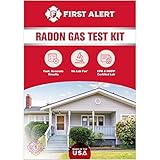
- The simple and safe way to test for radon
- Listed under the EPA radon gas measurement proficiency program
- Includes test materials and lab fees, excluding NJ state fees
- Results are emailed within 72 hours of lab receipt
- Recommended for use only within the United States
Is it too late to start rabies shots?
Do not decide that treatment is pointless because several days—or longer—have passed. For an eligible person who has never been vaccinated, CDC recommends HRIG plus vaccine regardless of the interval since exposure, as long as the person is not showing signs consistent with rabies. This guidance is not permission to wait: PEP is intended to begin before symptoms, so contact healthcare and public health now.
Once symptoms compatible with rabies appear, the situation is an emergency rather than a routine delayed-PEP question. The CDC clinical overview describes symptomatic rabies as nearly always fatal. Seek emergency care for concerning neurologic or systemic illness and disclose the possible exposure immediately.
Independent reader supportYour contribution helps us test, update, and keep practical guides available for everyone.How authorities decide whether PEP is needed
The CDC’s September 2026 algorithm is a decision aid, not a substitute for local reporting requirements or a clinician’s judgment. Officials work through these branches:
- Was there a qualifying exposure? They distinguish a bite, scratch, or infectious-fluid contact from casual proximity.
- What animal and what geography? Species risk and rabies prevalence differ by location. A wildlife exposure in one state may be managed differently from the same event elsewhere.
- Can the animal be safely observed or tested? A healthy dog, cat, or ferret may enter supervised 10-day observation. An animal that can be submitted to a qualified laboratory may produce a negative, positive, or indeterminate result.
- What did the result show? A suitable negative laboratory result can mean PEP is unnecessary or can be stopped under public-health direction. A positive or indeterminate result, an unavailable high-risk animal, or an animal that becomes ill can lead authorities to recommend PEP.
- What is your medical history? Prior vaccination changes the number of doses and removes the need for HRIG; immune compromise may add a day-28 dose and antibody follow-up.
Because these branches interact, do not wait for an animal outcome unless public health specifically tells you that observation is appropriate.
Rank #4
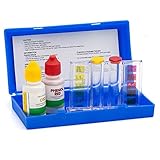
- 2 Way Pool Water Test Kit For Test For OTO, CL, and PH Level
- Includes clear view water testing unit with accurate measuring scale and integrated color for easy reading chemical leaves
- Includes one 1/2-ounce bottle chlorine test solution, one 1/2-ounce bottle pH test solution, plastic tester and carrying case
- Easy to use, just fill each test tube with pool water, add 4 drops of the proper solution into each test tube, put the test tube caps on, shake the testing block then check the Chloride, Bromine and pH readings.
- Please use it before expire date which printed on the back of the case.
What information to gather for the call
- The animal’s species, ownership, vaccination status if known, current location, and whether it is available for observation.
- Exactly what happened: bite, scratch, saliva contact, mucous-membrane contact, or contact with nervous tissue; whether skin was broken; and whether the wound was washed.
- Date, time, and geographic location, including the country and state or province.
- Whether the animal behaved abnormally, was sick, died, or disappeared.
- Your previous rabies vaccinations, immune conditions, pregnancy status, and medicines that suppress immunity.
- Photos of the wound or animal only if they can be obtained safely; never approach or restrain a suspect animal to take one.
These details help the health department apply its local protocol and tell the clinic which vaccine and immune-globulin plan is appropriate.
Common mistakes that create dangerous delays
- Waiting for symptoms. Rabies prevention works before illness; waiting removes the safest window.
- Assuming every contact requires shots—or none does. Exposure and PEP decisions are case-specific.
- Waiting for a live-animal test. No approved antemortem animal test exists, and testing requires laboratory brain tissue after euthanasia.
- Handling the animal personally. Capture and transport can create another exposure and may violate local rules.
- Stopping or changing doses independently. A negative test, missed appointment, or side effect should be discussed with the treating team and public health, who decide whether and how to continue.
- Applying U.S. rules abroad without checking locally. Vaccine products, schedules, species risk, and reporting systems vary by country.
Where to get authoritative help
Start with your local or state health department and an urgent-care or emergency clinician. The CDC’s Rabies Prevention and Control page directs people exposed to an animal that might have rabies to contact the health department immediately. If you are outside the United States, use the equivalent national or regional public-health service; do not assume the U.S. schedule or wildlife categories apply.
Bring the health department’s advice to the treating clinic, keep every appointment on the assigned days, and report any reaction or new symptom promptly. If you cannot reach public health quickly and the exposure is plausible, seek urgent medical care rather than waiting for a callback.
Quick Recap
Product prices and availability are accurate as of the date/time indicated and are subject to change. Any price and availability information displayed on Amazon at the time of purchase will apply.

