
Quick wins for a faster PC:
Clear out junk files and repair common Windows errorsFree Scan →Scan for outdated or missing drivers - takes under a minuteDriver Scan →Repair Windows errors before they cause bigger problemsFix Now →iTechGuides is reader-supported. When you buy through links on our site, we may earn an affiliate commission. As an Amazon Associate I earn from qualifying purchases. Learn more
The right home cinema projector is determined by your room, screen, light control and viewing habits—not by one impressive lumen or contrast number. Measure the projector-to-screen distance, choose a realistic image size, assess ambient light, then verify the exact model’s throw range, brightness in an accurate picture mode, resolution, connections and installation requirements.
Start with the room, not the projector
A projector is part of a system. The wall or screen, viewing distance, room lighting, projector position and source devices all affect the result. A model that looks excellent in a dark theater may appear washed out in a bright living room, while a very bright model can be uncomfortable and less accurate in a light-controlled room.
Measure the three distances that matter
- Available screen width and height: Measure the usable wall or screen area, including obstructions such as windows, shelves and speakers.
- Lens-to-screen distance: Measure from the planned projector lens position—not the back of the chassis—to the screen surface.
- Seating distance: Check whether viewers will sit close enough to see individual pixels or far enough that a very large image loses impact.
Also note ceiling height, power outlets, cable routes, ventilation space and whether doors, lights or furniture will block the beam. If you cannot darken the room, record when and where daylight enters; afternoon window light can matter more than the room’s general brightness.
Recommended Free Tools
Use screen-size examples as planning aids
Epson’s buying guidance gives rough examples of 50–100-inch images for smaller living rooms, 100–150 inches for medium rooms and 150–300 inches for larger theaters, with corresponding viewing-distance ranges. These are planning examples, not ergonomic rules. Personal preference, seating layout, image resolution and viewing angle still determine whether a size feels comfortable.
#1 Best Overall
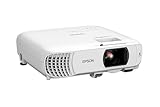
- HOME THEATER PROJECTOR — Bring your entertainment experience to the next level; With detailed 1080p images and fast data processing, the Epson Home Cinema projector is optimized for fast-action sports and more; Also an exciting casual gaming projector
- ULTRA BRIGHT IMAGES — 4,000 Lumens of Color Brightness (IDMS rated) and 4,000 Lumens of White Brightness (ISO Rated)¹; Wall projector for tv and movies delivers clear and crisp images in a variety of lighting conditions
- VIVID AND PRECISE COLOR — Advanced 3LCD technology displays 100% of RGB color signal for every frame, providing precision color accuracy while maintaining vivid color brightness, without distracting "rainbowing" or "color brightness" issues
- VERSATILE CONNECTIVITY — Streaming projector features two HDMI ports and a USB port that functions as a power source for streaming devices²; Connect laptops and devices, including Fire TV, Apple TV, Roku, and Chromecast; Seamless video conferencing
- QUICK AND SIMPLE SETUP — The built-in speaker means you can start using this projector immediately; Easy setup for video and audio right out of the box; Portable projector with speaker can also be easily repositioned
| Room planning example | Approximate image range cited by Epson | What to verify yourself |
|---|---|---|
| Smaller living room | 50–100 inches | Seating distance, wall width and daylight control |
| Medium room | 100–150 inches | Lens position, screen gain and brightness at the chosen size |
| Larger theater | 150–300 inches | Projector light output, screen gain, acoustics and sightlines |
Do not order a projector until the desired image size and lens position both fit. A larger image spreads the same light over more area, so it requires more output or a higher-gain screen for similar luminance.
Check throw distance and installation geometry
Understand throw ratio
Throw ratio is the distance from the lens to the screen divided by image width. For example, a projector with a 1.5 throw ratio needs roughly 1.5 feet of lens distance for every foot of image width, subject to the model’s optical range. A 100-inch diagonal image is not 100 inches wide, so use the manufacturer’s calculator rather than estimating from diagonal size.
Standard-throw projectors usually need space behind the seating row or a ceiling mount. Short-throw models create a large image from a shorter distance. Ultra-short-throw models sit very close to the wall or a specially designed screen. The labels are not standardized enough to prove that a particular model will fit your room.
Use the exact model’s calculator
- Enter the intended diagonal size or image width in the manufacturer’s throw calculator.
- Check the minimum and maximum lens distance, not just one example distance.
- Confirm whether the calculator measures from the lens, chassis front or another reference point.
- Allow room for the mount, cable bends, ventilation and service access.
- Confirm the projector supports your desired image size at the chosen installation height.
Short-throw and ultra-short-throw units are especially sensitive to wall flatness and alignment. A small tilt can produce visible geometric distortion or uneven focus across the image.
Prefer optical adjustments to digital correction
Optical zoom and lens shift let you place the image without moving the projector. Lens shift moves the optical image vertically or horizontally while preserving more resolution. Keystone and sideways-keystone correction reshape the image digitally; they can rescue an imperfect installation, but they may reduce usable pixels and should not replace correct placement when a fixed installation is possible.
Before ceiling mounting, check the exact installation manual for mounting-hole pattern, projector weight, orientation limits, ventilation clearances, cable access and lamp or filter service access. A mount rated for the weight is necessary but does not guarantee that its adjustment range matches the lens position.
Match brightness to the screen and room
Why lumen numbers are not directly comparable
ANSI or ISO lumens describe measured projector output, but the brightness reaching viewers depends on output, image area, screen gain and interfering light. ProjectorCentral summarizes the relationship as:
Free tools Windows power users keep installed
One-click scans. No signup required.
lumens = target screen luminance in foot-lamberts × screen area in square feet ÷ screen gain
A larger screen increases area and therefore needs more lumens for the same luminance. A higher-gain screen reflects more light toward a central viewing position; a lower-gain surface spreads light more widely but produces less central brightness. Room light raises the brightness needed to preserve shadow detail and perceived contrast.
Rank #2

- Exceptional Picture Quality — Provides stunning, detailed 1080p images and fast data processing that’s optimized for fast-action sports, gaming and more
- Ultra Bright Images — 3,400 lumens of color brightness (IDMS rated) and 3,400 lumens of white brightness (ISO rated)¹ deliver outstanding-quality images in a variety of lighting conditions
- Outstanding Picture Brightness — Advanced 3LCD technology displays 100% of the RGB color signal for every frame. This allows for outstanding color accuracy while maintaining excellent color brightness, without any distracting “rainbowing” or “color brightness” issues seen with other projection technologies
- Works with Apple Airplay – Wirelessly stream videos, music, photos and more to your projector right from your iPhone, iPad, or Mac², plus enjoy easy screen mirroring using Miracast to stream from your Windows PC³
- Versatile Connectivity — Features two HDMI ports and a USB port that functions as a power source for streaming devices⁴; easily connect laptops and devices including Fire TV, Apple TV, Roku and Chromecast; connect laptops for seamless video conferencing and more
Use brightness bands only as rough starting points
| Viewing environment | Approximate output band | Qualification |
|---|---|---|
| Dark, dedicated theater | 1,500–2,500 lumens | Epson UK rough use-case guidance, not an independent standard |
| Living room with some ambient light | 2,500–3,500 lumens | Epson UK rough use-case guidance; screen size and light level still matter |
| Bright room or outdoor use | 3,500+ lumens | Epson UK rough use-case guidance; outdoor viewing also depends on darkness and screen size |
ProjectorCentral notes that premium dark-room projectors can be below 3,000 ANSI lumens, while bright-room models may be specified above 3,500. Those ranges describe different conditions rather than a universal threshold. Check whether a specification uses ANSI or ISO lumens and look for independent measurements of the exact model.
Account for picture mode
The brightest preset is not always the best movie mode. ProjectorCentral’s guide notes that bright presets can have a color tint and suggests that accurate modes may produce roughly half to two-thirds of the maximum rating. This is an estimating rule, not a guarantee. Compare measured output in the mode you will actually use.
What’s actually slowing this PC down?
Pick the symptom - the matching free tool is one click away.
For a dark theater, ProjectorCentral reports a Society of Motion Picture and Television Engineers suggestion of 16–22 foot-lamberts for screen luminance. That is a target for light arriving at the screen, not a direct projector-lumen requirement. Screen area, gain and calibration determine how many lumens are needed.
Do not automatically buy the brightest model
Excessive brightness in a dark room can cause eye fatigue and may force compromises in black level, contrast or color accuracy. If a projector offers an adjustable lamp or laser mode, check its output and noise in the lower-power setting. Choose enough headroom for your screen and room, then verify that the movie or cinema mode remains bright enough.
Treat the screen as part of the projector
A smooth, light-colored wall can work, and Samsung says its projectors can be used that way, but results depend on wall uniformity, color, texture and lighting. A dedicated screen usually provides a flatter surface and more predictable reflectance.
Compare screen specifications
- Size and aspect ratio: Match the screen to your content and the projector’s supported image shape.
- Gain: Higher gain concentrates more reflected light toward the center; lower gain offers broader viewing consistency.
- Viewing angle: A high-gain surface can look dimmer from side seats.
- Ambient-light behavior: Ambient-light-rejecting (ALR) screens can preserve perceived contrast in some bright rooms, but their gain and viewing-angle limits must match the projector.
- Installation: Choose fixed-frame, pull-down or motorized construction according to the room and whether the setup is permanent.
- Ultra-short-throw compatibility: UST projectors generally require a screen designed for their steep projection angle to avoid hotspots and uneven brightness.
A screen cannot eliminate daylight. It can redirect or reject some light, but windows and lamps still reduce visible black level. Evaluate the screen and projector together at the intended size.
Evaluate resolution, contrast and HDR claims
Native resolution versus enhancement
Full HD can be sufficient for casual viewing, smaller images and longer seating distances. 4K-class output can reveal more fine detail on a large screen or from closer seats. Confirm whether the model uses a native 4K imaging device, pixel shifting or upscaling. Pixel shifting can look sharp, but it is not the same specification as native 4K.
Check the source chain as well. A 4K projector cannot create 4K detail from a low-resolution stream, and a streaming box, receiver or HDMI cable may limit the available resolution or refresh rate. Samsung notes that its 4K AI upscaling has connection and mode limitations on the cited product page; advertised enhancements should therefore be checked against the exact input you plan to use.
Read contrast figures cautiously
Manufacturers do not use one universally accepted method for reporting projector contrast. ProjectorCentral recommends independent reviews that measure actual black level and contrast. Ambient light can lift the apparent black level even when a projector has a very large published contrast number.
Rank #3

- 4K PRO-UHD (1) — An amazing 4K experience utilizing advanced processing for resolution enhancement, color and image processing; HDR10 (2) and HLG support produce an extraordinary range of color and detail in both bright and dark scenes
- Bright Picture — 2,800 lumens of color and white brightness (6) deliver a bright, vivid picture in a variety of lighting conditions
- True 3-Chip 3LCD technology — displays 100% of the RGB color signal for every frame, providing outstanding color accuracy while maintaining excellent color brightness, without any distracting “rainbowing” or “color brightness” issues seen with other projection technologies.
- Input Lag Time Under 20 ms — Low latency mode allows for responsive gaming with the latest generation of gaming consoles
- Smart Streaming Capability — Latest Android TV (3) interface with a simple-to-use remote – including voice search with built-in Google Assistant; watch all your favorite streaming channels including Netflix, Amazon Prime Video, Hulu, Disney+, HBO Max, YouTube and more; even stream live TV with apps like YouTube TV (4)
Look for measurements of black level, on/off contrast, ANSI contrast, color accuracy and brightness in the selected picture mode. A single dynamic-contrast figure is not enough to predict dark-scene performance.
PC Slower Than It Used to Be?
A free scan shows the junk files, broken settings and background clutter dragging Windows down - then fixes them in one click.Free scan · Windows 10 & 11Crashes, No Sound, or Screen Glitches?
Random freezes, missing sound and display glitches usually trace back to one bad driver. Find and replace yours safely.Free scan · under a minuteHDR is a feature, not a guarantee
HDR support does not prove that HDR images will look bright or correctly balanced. Evaluate accurate-mode brightness, tone mapping, contrast, color volume and screen size. There is no universal HDR-lumen threshold established here, so rely on model-specific measurements and reviews rather than the presence of an HDR logo.
Choose the light source for your ownership plans
| Light source | Typical ownership consideration | Questions to ask before buying |
|---|---|---|
| Traditional lamp | Replaceable lamp and ongoing maintenance | Rated hours, replacement price, availability, warm-up and cool-down behavior |
| LED | Compact and portable category option | Rated life, actual brightness mode, warranty and service path |
| Laser | Generally brighter, longer-lived and lower-maintenance than traditional lamp projection, according to Epson | Rated light-source life, dimming behavior, warranty, repair terms and replacement policy |
These are broad category descriptions, not guarantees for every model. A laser projector can still need filters, firmware updates or repairs, and a lamp model may be the better value for occasional use. Check the exact model’s rated life, warranty region, replacement parts and service terms.
Verify connections and source compatibility
List every device you intend to connect: streaming player, disc player, game console, receiver, computer or set-top box. Then compare that list with the projector’s specification sheet.
- Confirm the number and type of HDMI inputs and the supported resolution, refresh rate and HDR formats for each input.
- Check HDCP requirements for protected streaming and discs.
- Verify whether audio can return through HDMI, pass to an optical output or feed an AV receiver in your preferred arrangement.
- Check USB, network and wireless features only if you have a specific use for them; ports can have power-only or playback limitations.
- Confirm built-in streaming apps, updates and regional availability. Smart platforms and app catalogs can change.
BenQ’s buying guidance highlights HDMI for consoles, streamers and Blu-ray players, but exact port counts and capabilities vary by model. Do not infer HDMI 2.1 gaming features from an HDMI label alone; verify the supported combinations of resolution, refresh rate, variable refresh rate and copy protection.
Do these 3 things before closing this tab:
1Scan for outdated or missing drivers - takes under a minute2Clear out junk files and repair common Windows errors3Fix the driver behind crashes, sound loss and screen glitchesGaming requires measured latency
For gaming, find input-lag measurements at the resolution and refresh rate you will use, then check whether the projector’s game mode changes color or processing. Also verify supported refresh rates and variable-refresh features. There is no single latency cutoff that suits every player and game type, so compare measured figures with your own priorities instead of relying on a gaming badge.
Plan sound separately
Built-in speakers can cover casual viewing, but their placement and output rarely match a full cinema system. Check whether the projector has the audio outputs, HDMI audio-return capability or Bluetooth behavior required by your soundbar, receiver or powered speakers.
For a ceiling-mounted projector, plan speaker cable routes separately from HDMI and power. For an ultra-short-throw installation, confirm that the screen cabinet or console leaves room for the projector’s speakers and does not block ventilation.
Independent reader supportYour contribution helps us test, update, and keep practical guides available for everyone.Calculate the complete setup cost
The projector price is only one part of the purchase. Add the screen, mount or furniture, HDMI cables, power protection, external sound, blackout curtains and any replacement lamp or service costs. A cheaper projector that needs a costly screen or cannot fit without construction may be more expensive than a better-fitting model.
Rank #4
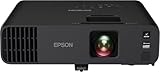
- Exceptional Brightness (1) — 4,600 lumens of color and white brightness ideal for displaying video conferences, large-group presentations, spreadsheets and videos, even in a well-lit room
- High-performance laser light source — 20,000 hours virtually maintenance-free laser light source (2) delivers incredible brightness with no bulbs to replace
- Display stunning life-sized images up to 300" — featuring a 1080p picture 16 times larger than a 75" flat panel, you can simultaneously display meeting participants and your content in striking clarity during virtual meetings, video conferencing and business presentations
- Versatile connectivity — including screen mirroring with Miracast, two HDMI ports and USB power, so you can easily video conference and connect streaming devices, such as Fire TV, Apple TV, Roku and Chromecast (4)
- True 3-Chip 3LCD technology — displays 100% of the RGB color signal for every frame, providing outstanding color accuracy while maintaining excellent color brightness, without any distracting “rainbowing” or “color brightness” issues seen with other projection technologies
Use this comparison worksheet
| Comparison axis | Record for each shortlisted model |
|---|---|
| Room and screen | Ambient-light conditions, screen size, aspect ratio, gain and viewing seats |
| Placement | Throw ratio, lens range, zoom, lens shift, keystone limits and mount position |
| Image | Native/display resolution, measured brightness, black level, contrast, color accuracy and HDR behavior |
| Light source | Type, rated life, maintenance, warranty and replacement cost |
| Connectivity | HDMI versions, supported resolution/refresh combinations, HDCP and audio outputs |
| Gaming | Measured input lag at your intended settings and available game modes |
| Ownership | Projector, screen, mount, cabling, sound, installation and service costs |
Manufacturer specifications establish compatibility; independent reviews are more useful for contrast, HDR handling, color accuracy and input lag. Product specifications, app support, prices and warranties can change, so confirm them for the exact model and region immediately before purchase.
Follow a buying sequence that prevents expensive mistakes
- Sketch the room. Mark the screen wall, seats, windows, lights, power outlets and likely projector position.
- Choose an image size. Use the available wall and seating distance, then allow for speakers and furniture.
- Control light where possible. Plan blackout curtains, shades or lamp placement before compensating with excessive projector brightness.
- Run the model-specific throw calculation. Confirm minimum and maximum distance, image size, lens shift and mount geometry.
- Set a brightness target. Consider screen area, gain, ambient light and the output of the accurate picture mode rather than maximum marketing lumens.
- Select the screen. Match gain, viewing angle and ALR or UST requirements to the projector and seats.
- Check image behavior. Verify native resolution or pixel-shifting method, measured contrast, HDR tone mapping and color performance.
- Audit every source. Confirm HDMI, HDCP, refresh rate, audio routing and app availability for your devices and region.
- Price the whole installation. Include screen, mount, cables, sound, room treatment, lamps and service.
- Read the installation manual. Confirm weight, mounting pattern, clearances, orientation limits and access for maintenance before ordering hardware.
Common buying mistakes and how to avoid them
Choosing by lumens alone
A lumen number without screen size, gain, room light and picture-mode context is incomplete. Compare realized brightness and measured performance under your conditions.
Assuming a short-throw label guarantees a fit
Throw ranges differ substantially. Use the exact calculator and lens reference point, and include mount and cable clearances.
Using digital keystone as the installation plan
Keystone can correct geometry, but it cannot restore pixels or fix uneven focus. Place the projector square to the screen first; use optical shift when available.
The Tool Desk
Outbyte Driver Updater FREEFix the driver behind crashes, sound loss and screen glitchesFind Drivers →Outbyte PC Repair FREERepair Windows errors before they cause bigger problemsFix Now →Buying 4K or HDR without checking the chain
The projector, receiver, cable and source must all support the desired format. Confirm each input’s resolution, refresh and copy-protection limits.
Ignoring the screen
A textured wall, unsuitable gain or UST-incompatible surface can undermine an otherwise capable projector. Treat the screen as a matched component.
Forgetting operating costs
Include lamp replacement, filters, warranty coverage, installation and sound before comparing prices.
Final decision test
Buy only when the exact projector passes all of these checks:
- Its image size and throw range fit the measured room.
- Its accurate-mode brightness suits the screen area, gain and ambient light.
- The screen surface and projector placement work together.
- Resolution, contrast and HDR behavior match the content and seating distance.
- Every source, console, receiver and audio device is compatible.
- Mounting, ventilation, service access and cable routes are practical.
- The complete setup cost and maintenance obligations fit your budget.
That process is more reliable than selecting a projector from a headline specification. The best model is the one that produces a comfortable, correctly sized image in your actual room and continues to support your sources, sound system and maintenance plan.
Quick Recap
Product prices and availability are accurate as of the date/time indicated and are subject to change. Any price and availability information displayed on Amazon at the time of purchase will apply.

