
Quick wins for a faster PC:
Fix the driver behind crashes, sound loss and screen glitchesFind Drivers →Clear out junk files and repair common Windows errorsFree Scan →Scan for outdated or missing drivers - takes under a minuteDriver Scan →iTechGuides is reader-supported. When you buy through links on our site, we may earn an affiliate commission. As an Amazon Associate I earn from qualifying purchases. Learn more
The lowest-priced inkjet printer is rarely the lowest-cost printer to own. Before buying, identify the exact replacement cartridge numbers, published black and color yields, current replacement prices in your market, and whether the cartridges in the box are introductory. Then compare those costs with your real mix of black-only and color pages. Page-yield figures are useful standardized baselines, not guarantees of how many pages your household or office will print.
Start with the cartridges, not the printer’s shelf price
A cheap printer can become expensive when its replacement cartridges cost more than expected or deliver fewer pages than your routine requires. The purchase price is a one-time expense; ink is the recurring expense that determines ownership cost over time.
Do not compare printers by a product family name alone. A single series can have several regional versions, cartridge sizes, or bundles. Use the exact printer model and record the cartridge numbers that its manufacturer lists as compatible. A cartridge that looks similar or fits a related model is not evidence of compatibility.
For every candidate, collect these details before you compare prices:
#1 Best Overall

- HP Ink Cartridges are engineered to work with HP printers to provide consistent quality, reliability and value
- Works with these HP Printers: DeskJet 1255, 2710e, 2720e, 2721e, 2722, 2722e, 2723e, 2724, 2725, 2732, 2742e, 2752e, 2755, 2755e, 4110e, 4120e, 4121e, 4122e, 4123e, 4130e, 4132e, 4152e, 4155e, 4158e; DeskJet Plus 4122, 4132, 4155
- Works with these HP Printers: ENVY 6010e, 6020e, 6022e, 6030e, 6032e, 6034e, 6050e, 6052e, 6055, 6055e, 6075, 6075e, 6420e, 6422e, 6430e, 6432e, 6450e, 6452e, 6455e, 6458e, 6475e; ENVY Pro 6455, 6458, 6475
- Cartridge yield (approx.): 120 pages black, 100 pages tri-color
- Trusted HP Printer Ink Cartridges for every printing need: Perfect for everyday home, office, and small business printing needs — choose HP 67 Ink Cartridges for reliable printing
- The exact black-cartridge number and the exact color-cartridge number or numbers.
- Whether the printer uses one combined color cartridge or separate cyan, magenta, and yellow tanks.
- The published black yield and color yield for each cartridge size.
- Whether the color figure is a composite yield covering cyan, magenta, and yellow.
- Whether the cartridges supplied in the box are introductory cartridges.
- The current price of the compatible replacement set in the country and currency where you will buy.
If any of those items is missing, you do not yet have enough information to call one printer cheaper to run.
Build a model-specific ink-cost sheet
A small worksheet prevents the most common comparison errors. Keep one row for each printer and use the same assumptions for every model.
| Item to record | What it tells you | How to use it |
|---|---|---|
| Printer model | Which hardware and cartridge family you are evaluating | Use the complete model designation, including regional suffixes when shown |
| Black cartridge number | Which replacement supplies fit the printer | Check the manufacturer’s compatibility list, not a reseller’s generic description |
| Color cartridge numbers | Whether color is combined or supplied in individual tanks | Record every required color cartridge for a full replacement set |
| Black yield | The standardized black-page baseline | Keep it separate from the color figure |
| Color yield | The standardized color-page baseline | Note whether it is a composite cyan, magenta, and yellow result |
| Replacement prices | Your recurring supply cost in your market | Use current prices for the exact cartridge numbers and sizes |
| Box-cartridge status | Whether the first set may deliver less than a normal replacement set | Do not use an introductory set as the long-term yield assumption |
| Print mix | How much black-only and color work you actually do | Use separate estimates for text, graphics, photos, and occasional jobs |
Record prices on the same date and from the same type of seller where possible. A low printer price paired with an unusually expensive cartridge set may still be sensible for someone who prints only a few pages a month, while a slightly more expensive printer may suit a frequent color user better. The answer depends on usage, not the shelf label alone.
Free tools Windows power users keep installed
One-click scans. No signup required.
Understand what page yield means
ISO/IEC 24711 is a comparison baseline
HP says applicable inkjet yield figures use the ISO/IEC 24711 method. Its described procedure prints a standard five-page suite continuously until the cartridge reaches end of life. That creates a repeatable baseline for comparing compatible cartridges and printers under the same kind of test.
The test is not a promise that your cartridge will print exactly that number of pages. HP’s official guidance states: “ISO standard page yields should be used only as a starting point for comparison purposes and not to predict the actual yield you will get from your HP printer and cartridge.” Treat the figure as a standardized measurement, not a household guarantee.
Why your pages can differ from the published figure
Real pages are not identical to the fixed test suite. A page containing a small amount of text uses ink differently from a page filled with dense graphics, a full-page background, or a photograph. Print frequency also matters: a person who prints one page every few days may experience a different balance of setup and maintenance use than someone who prints a long document in one session.
Because the standardized procedure is continuous, it does not represent every pattern of intermittent use. Use the published yield to put models on a common scale, then adjust your expectations for your content and schedule.
The Tool Desk
Outbyte Driver Updater FREEScan for outdated or missing drivers - takes under a minuteDriver Scan →Outbyte PC Repair FREERepair Windows errors before they cause bigger problemsFix Now →Black yield and color yield are different measurements
Do not combine black and color figures into one undifferentiated “pages per cartridge” number. A printer may publish a separate black yield and a color yield. For printers with individual color tanks, HP reports one composite color yield for cyan, magenta, and yellow and a separate black yield. The composite figure is not a promise that each individual color tank will last for the same number of pages in your work; the balance of colors on your pages affects which tank empties first.
Rank #2
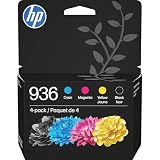
- HP Ink Cartridges are engineered to work with HP printers to provide consistent quality, reliability and value
- Works with these HP Printers: OfficeJet 9122e; HP OfficeJet Pro 9110b, 9125e, 9128e, 9130b, 9135e; OfficeJet Pro Wide Format 9730e
- Cartridge yield (approx.): 1,450 pages black, 800 pages per color
- HP has kept over 2,300 metric tons of plastic out of our world’s oceans to be upcycled into HP Ink cartridges and other everyday products
- Trusted HP Printer Ink Cartridges for every printing need: Perfect for everyday home, office, and small business printing needs — choose HP 936 Ink Cartridges for reliable printing
If your documents are mostly text, black yield is the more relevant starting point. If you regularly print charts, school projects, labels, or photos, color-cartridge cost and composite color yield deserve equal attention.
Calculate cost per page without hiding your print mix
Cost per page is useful only when the cartridge prices, yields, and page type are clearly defined. Separate black-only calculations from color calculations instead of presenting one blended number that may not match your use.
Black-only calculation
For a black-only estimate, divide the current price of the compatible black cartridge by its published black yield:
What’s actually slowing this PC down?
Pick the symptom - the matching free tool is one click away.
Black cost per page = black-cartridge price ÷ published black yield
Label the result as an estimate based on the standardized yield. If you use a high-coverage font, heavy bolding, large headings, or graphics, your actual result can be lower because each page consumes more ink than the test pages.
Color calculation
For color work, use the price of the complete color replacement set required by the printer and the published color yield. With separate tanks, that generally means adding the prices of the cyan, magenta, and yellow cartridges that form the set. Keep the composite-yield qualification beside the result.
Color cost per page = price of the required color set ÷ published composite color yield
Crashes, No Sound, or Screen Glitches?
Random freezes, missing sound and display glitches usually trace back to one bad driver. Find and replace yours safely.Free scan · under a minutePC Slower Than It Used to Be?
A free scan shows the junk files, broken settings and background clutter dragging Windows down - then fixes them in one click.Free scan · Windows 10 & 11If black ink is also consumed on the color pages you print, include the black-cartridge cost in a separate combined estimate. State the assumption explicitly; a color page that uses black text and a color graphic is not equivalent to a page using only the three color inks.
Rank #3
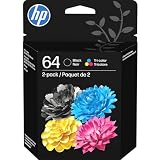
- HP Ink Cartridges are engineered to work with HP printers to provide consistent quality, reliability and value
- Works with these HP Printers: ENVY Inspire 7955e, 7958e; ENVY Photo 6220, 6222, 6230, 6232, 6252, 6255, 6258, 7134, 7155, 7158, 7164, 7830, 7855, 7858, 7864; Tango; Tango X
- Cartridge yield (approx.): 200 pages black, 165 pages tri-color
- Trusted HP Printer Ink Cartridges for every printing need: Perfect for everyday home, office, and small business printing needs — choose HP 64 Ink Cartridges for reliable printing
- HP has kept over 2,300 metric tons of plastic out of our world’s oceans to be upcycled into HP Ink cartridges and other everyday products
Use a blended estimate only when it reflects your routine
A blended monthly estimate can help with a purchase decision, but it must identify the assumed mix. For example, you might estimate a month as a certain number of black-only pages plus a certain number of color pages, then apply the corresponding cartridge costs. A person who prints almost entirely text should not use a color-heavy average, and a family printing frequent images should not rely on a black-only figure.
When cartridge capacities or prices differ by size, calculate each option separately. A larger cartridge can have a lower cost per standardized page while requiring more money at each replacement. That cash-flow difference matters if you print infrequently.
Check whether the cartridges in the box are introductory
The first cartridges are not always equivalent to the replacement cartridges you will buy later. HP notes that some boxed introductory cartridges may print fewer pages than a replacement cartridge. Setup can consume ink before you produce your first ordinary document, and the printer may use additional ink during initialization.
Ask two separate questions:
- Is the cartridge identified as introductory, starter, or setup-only?
- Does the manufacturer publish a different yield for that included cartridge than for the normal replacement?
Do not estimate the printer’s first-year supply cost by treating the contents of the box as a full replacement set. For a fair long-term comparison, use the price and yield of the replacement cartridges you will actually purchase, then mention any lower first-cartridge yield as a separate startup caveat.
Do not compare ink volume by itself
Milliliters can look like an objective way to compare cartridges, but HP cautions against using volume alone. Different printing systems can use ink differently, so a cartridge with more liquid does not automatically produce more pages or a lower cost per page.
Use volume only as supplementary information after checking model-specific yield. A useful order of analysis is:
- Confirm compatibility and cartridge configuration.
- Compare published black and color yields.
- Apply current replacement prices to those yields.
- Use ink volume only to help explain a difference, not to rank printers by itself.
This avoids a common mistake: selecting the cartridge with the largest stated capacity while overlooking a different print system’s higher standardized yield or lower replacement price.
Account for setup, maintenance, and printing frequency
Setup ink is part of ownership cost
Ink can be used while the printer initializes, aligns its system, or prepares the cartridges. That consumption reduces what is available for your first jobs. It is especially important when you print very little, because setup use is spread over fewer pages.
Rank #4

- HP Ink Cartridges are engineered to work with HP printers to provide consistent quality, reliability and value
- Works with these HP Printers: DeskJet 1255, 2710e, 2720e, 2721e, 2722, 2722e, 2723e, 2724, 2725, 2732, 2742e, 2752e, 2755, 2755e, 4110e, 4120e, 4121e, 4122e, 4123e, 4130e, 4132e, 4152e, 4155e, 4158e; DeskJet Plus 4122, 4132, 4155
- Works with these HP Printers: ENVY 6010e, 6020e, 6022e, 6030e, 6032e, 6034e, 6050e, 6052e, 6055, 6055e, 6075, 6075e, 6420e, 6422e, 6430e, 6432e, 6450e, 6452e, 6455e, 6458e, 6475e; ENVY Pro 6455, 6458, 6475
- Cartridge yield (approx.): 240 pages
- Trusted HP Printer Ink Cartridges for every printing need: Perfect for everyday home, office, and small business printing needs — choose HP 67XL Ink Cartridges for reliable printing
Intermittent use changes the practical result
The ISO procedure prints continuously, whereas many homes and small offices print in bursts separated by days or weeks. Your actual yield can therefore diverge from the standardized result even when your documents look similar to the test pages. Include your printing frequency in your decision notes rather than treating the published yield as a fixed entitlement.
Leave room for maintenance
Printers may perform maintenance routines that consume ink, particularly when they have been idle. The supplied guidance identifies setup and maintenance as factors that can affect results. You do not need to invent a maintenance percentage; simply avoid budgeting every drop of the published yield for finished pages.
Compare more than ink economics
Ink cost is important, but it is not the only ownership criterion. HP identifies quality, reliability, productivity, and efficiency as additional factors in choosing a printing system.
Do these 3 things before closing this tab:
1Scan for outdated or missing drivers - takes under a minute2Repair Windows errors before they cause bigger problems3Fix the driver behind crashes, sound loss and screen glitchesQuality
Decide whether your work is primarily plain text, mixed documents, graphics, or photos. A printer that is inexpensive per standardized page may still be a poor fit if its output quality does not meet your needs, forcing reprints or a second device.
Reliability
Consider how disruptive a cartridge or print-system problem would be. A low recurring price has less value if failed jobs, alignment problems, or frequent intervention make routine printing unreliable. Use documented model-specific information and your own requirements rather than assuming that a low price predicts reliability.
Productivity
Think about how many pages you print in a typical session and whether waiting affects your work. A printer suitable for occasional single-page tasks may be a poor match for a household or office that regularly prints long documents.
Efficiency
Efficiency includes how well the system converts supplies into usable output and how much waste or reprinting your workflow creates. Yield is one input to that assessment, not the entire assessment.
Recommended Free Tools
A practical buying procedure
Follow this sequence for each printer on your shortlist:
Best Value

- HP Ink Cartridges for HP printers are engineered to provide consistent quality, reliability and value
- Works with these HP Printers: OfficeJet 8122e; OfficeJet Pro 8135e, 8138e, 8139e
- Cartridge yield (approx.): 500 pages black, 400 pages per color
- Trusted HP Printer Ink Cartridges for every printing need: HP 923 Ink Cartridges are perfect for everyday home, office, and small business printing needs
- HP has kept over 2,300 metric tons of plastic out of our world’s oceans to be upcycled into HP 923 color ink cartridges for HP printers and other everyday products
- Write down the exact model. Include regional or capacity variations shown by the manufacturer.
- Open the model’s supply page. Record every compatible black and color cartridge number and size.
- Identify the configuration. Note whether color is combined or uses separate cyan, magenta, and yellow tanks.
- Copy the published yields. Keep black yield and color yield in separate fields, and mark a color result as composite when the manufacturer describes it that way.
- Check the box contents. Look for introductory or setup-cartridge language and any separate first-cartridge yield.
- Collect current local prices. Price the exact replacement set in your market, not a similarly named cartridge or a different regional version.
- Describe your print mix. Estimate black-only pages, color pages, page coverage, and how often you print.
- Calculate separate estimates. Work out black cost per page and color cost per page, then make a blended estimate only if your assumed mix is written beside it.
- Review non-ink requirements. Compare the quality, reliability, productivity, and efficiency characteristics that matter to your use.
- Recheck before ordering. Cartridge listings and prices can change; confirm compatibility and current price at the time of purchase.
Illustrative worksheet
The following layout shows how to organize the decision without pretending that a universal price or yield exists. Replace the labels with the figures for the exact models you are considering.
| Question | Candidate A | Candidate B |
|---|---|---|
| Exact printer model | Record the full model designation | Record the full model designation |
| Black cartridge number and price | Record the compatible number and current local price | Record the compatible number and current local price |
| Color cartridge configuration | Combined color or individual cyan, magenta, and yellow tanks | Combined color or individual cyan, magenta, and yellow tanks |
| Published black yield | Copy the manufacturer’s figure | Copy the manufacturer’s figure |
| Published color yield | Copy the manufacturer’s figure and identify composite testing | Copy the manufacturer’s figure and identify composite testing |
| Introductory cartridge caveat | Record whether the box set may print less | Record whether the box set may print less |
| Your estimated black cost per page | Black price divided by black yield | Black price divided by black yield |
| Your estimated color cost per page | Color-set price divided by color yield | Color-set price divided by color yield |
| Fit for your usage | Assess print mix, frequency, quality, reliability, productivity, and efficiency | Assess print mix, frequency, quality, reliability, productivity, and efficiency |
This worksheet deliberately leaves the figures for your market and models. The available guidance explains how to interpret yields but does not provide current retail prices or establish a current lowest-cost printer.
Pitfalls that produce misleading comparisons
Choosing the cheapest hardware without pricing replacements
Why it fails: The initial price says nothing about recurring cartridge cost.
Fix: Price the exact replacement set and calculate black and color estimates before buying.
Quoting one page number for every kind of document
Why it fails: Black and color yields are separate, and page coverage changes ink use.
Fix: Keep black-only and color calculations distinct and describe your page mix.
Treating ISO yield as a guarantee
Why it fails: The five-page suite is printed continuously under a standardized method, not under every real-world schedule.
Fix: Use ISO/IEC 24711 yield for comparison, then qualify it for your content and frequency.
Assuming the box cartridges equal normal replacements
Why it fails: Setup can consume ink, and introductory cartridges may have a lower yield.
Fix: Base long-term estimates on replacement cartridges and disclose the startup caveat.
Ranking systems by milliliters
Why it fails: Different systems can use ink differently.
Fix: Compare published yield and replacement cost first; treat volume as supporting context.
Declaring a universal cheapest model
Why it fails: Current prices, regional availability, cartridge sizes, and print mix determine the result.
Fix: Make a model-specific decision using current local prices and a defined usage profile.
When the evidence is enough to choose
You can make a defensible purchase decision when you have all of the following for each candidate:
- Verified cartridge numbers for the exact printer model.
- A clear description of combined versus separate color cartridges.
- Separate published black and color yields, with any composite-color qualification.
- Current local replacement prices for the complete set you will need.
- A written estimate of your black-only and color print mix.
- Acknowledgment of introductory cartridges, setup ink, and the difference between continuous test printing and your schedule.
- A quality, reliability, productivity, and efficiency assessment that matches your priorities.
If a listing gives only the printer price, a vague “high yield” label, or an ink-volume figure without model-specific page yields, postpone the comparison until you can verify the missing details. The right low-cost choice is the printer whose complete supply system fits your actual work, not necessarily the one with the lowest price on the box.
Quick Recap
Product prices and availability are accurate as of the date/time indicated and are subject to change. Any price and availability information displayed on Amazon at the time of purchase will apply.
What’s actually slowing this PC down?
Pick the symptom - the matching free tool is one click away.

