
Do these 3 things before closing this tab:
1Clear out junk files and repair common Windows errors2Fix the driver behind crashes, sound loss and screen glitches3Repair Windows errors before they cause bigger problemsiTechGuides is reader-supported. When you buy through links on our site, we may earn an affiliate commission. As an Amazon Associate I earn from qualifying purchases. Learn more
Tier 2 storage is a middle or secondary level in a storage hierarchy, intended for data that does not need the highest-performance storage but still needs suitable access, protection, and recovery. The label is not a universal standard: each vendor or service may define its tiers differently, so the name alone does not tell you what hardware, speed, or service level you will get.
What does Tier 2 storage mean?
Storage tiering sorts storage options by characteristics such as performance, capacity, availability, and cost, then places data on a tier that meets its needs. Tier 2 commonly refers to a warm or secondary tier: a cost-conscious place for data that is accessed less often than active data but should remain accessible under the system’s terms. Enterprise Storage Forum’s guide to tiered storage explains the general trade-off.
The number is relative to a particular system’s hierarchy. Tier 2 does not identify a specific drive type, latency, IOPS rate, or guarantee. For a named product or service, consult that provider’s documentation rather than assuming another provider’s Tier 2 is equivalent.
What might Tier 2 hold?
Depending on the system, Tier 2 may hold warm data such as older email or historical business records, as well as secondary copies or backup data. Possible implementations include capacity-oriented hard disk drives, SATA-based drives, tape, backup appliances, and cloud storage. These are examples, not requirements; the appropriate medium depends on how quickly data must be accessed and recovered. TechTarget’s overview of tiered storage describes common uses and media.
#1 Best Overall
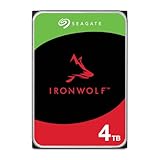
- IronWolf internal hard drives are the ideal solution for up to 8-bay, multi-user NAS environments craving powerhouse performance
- Store more and work faster with a NAS-optimized hard drive providing ultra-high capacity up to 16TB and cache of up to 256MB
- Purpose built for NAS enclosures, IronWolf delivers less wear and tear, little to no noise/vibration, no lags or down time, increased file-sharing performance, and much more
- Easily monitor the health of drives using the integrated IronWolf Health Management system and enjoy long-term reliability with 1M hours MTBF
- Three-year limited warranty protection plan included and three year Rescue Data Recovery Services included
Why the label varies by provider
Different organizations use the same tier number for different policies or product features:
- UK Government Digital Marketplace: The G-Cloud 14 shared-storage catalogue describes its Tier 2 as a low-performing disk option and specifies a fair-use policy of 100 IOPS per provisioned TB. That figure applies to this listed service, not to Tier 2 storage generally. See the G-Cloud 14 service definition.
- Dell Storage Center: Dell’s documentation describes a Tier 2 “Medium Priority” profile as a balance between performance and cost efficiency. It specifies Tier 2 RAID 10 for written data and Tier 2 RAID 5 or RAID 6 for snapshot data. This is behavior in that product’s storage profiles, not a general definition. See Dell’s storage-profile documentation.
- NetApp OnCommand Insight: Tier 2 can appear as a storage-quality annotation associated by default with certain storage families; NetApp documents that annotation rules can be changed or removed. See NetApp’s default storage annotation rules.
These examples are not competing definitions. They show that tier labels describe local classifications, so the provider’s own description and service terms determine what a particular Tier 2 means.
Rank #2

- Store more, compute faster, and do it confidently with the proven reliability of BarraCuda internal hard drives
- Build a power house gaming computer or desktop setup with a variety of capacities and form factors
- The go to SATA hard drive solution for nearly every PC application from music to video to photo editing to PC gaming. Ax. Sustained transfer rate OD: 190MB/s
- Confidently rely on internal hard drive technology backed by 20 years of innovation
- Frustration Free Packaging - This is just an anti-static bag. No cables, no box.
Cloud example: Tier 2 for research data
The University of Arizona’s research-computing service describes a Tier 2 option based on AWS S3 Intelligent-Tiering for research data that is not undergoing active analysis and for backups. The service documentation says this data is not mounted directly on its high-performance computing system; users move it back to Tier 1 with Globus when needed. The page also describes inactivity-based transitions and charges, which are details of that service rather than general AWS terms. Read the University of Arizona Tier 2 Storage page.
How to evaluate a Tier 2 option
Do not choose by tier number alone. Check the actual service characteristics against the workload and recovery requirements:
Rank #3

- IronWolf internal hard drives are the ideal solution for up to 8-bay, multi-user NAS environments craving powerhouse performance.date transfer rate:6.0 gigabits_per_second
- Store more and work faster with a NAS-optimized hard drive providing 8TB and cache of up to 256MB
- Purpose built for NAS enclosures, IronWolf delivers less wear and tear, little to no noise/vibration, no lags or down time, increased file-sharing performance, and much more
- Easily monitor the health of drives using the integrated IronWolf Health Management system and enjoy long-term reliability with 1M hours MTBF
- Three-year limited product warranty protection plan and three year Rescue Data Recovery Services included
- Access: Confirm expected latency, throughput, and access frequency. Determine whether the data is directly available to the application or must be retrieved or moved first.
- Availability and protection: Check redundancy, resilience, backup, and security provisions. A secondary tier is not automatically a backup or a complete recovery plan.
- Recovery: Establish how data is restored, how long retrieval may take, and whether the process meets the workload’s recovery-time needs.
- Retention: Verify how long data remains available and whether the tier is suitable for ongoing access or only archival retention.
- Capacity and cost: Compare storage charges with any costs or operational effort for moving, restoring, or retrieving data.
Ask the provider for the applicable service definition, performance limits, and recovery procedure. Treat any stated IOPS, transition timing, or charge as specific to that service and its terms—not as a property of Tier 2 across the industry.
Quick Recap
Rank #4

- Available in capacities ranging from 2 to 22TB(1) | (1) 1GB = 1 billion bytes and 1TB = 1 trillion bytes. Actual user capacity may be less depending on operating environment.
- For RAID-optimized NAS systems with unlimited number of bays
- Rated for 550TB/yr workload rate(2) | (2) Annualized Workload Rate = TB transferred x (8760 / recorded power-on hours). The maximum rated workload is specified for operating at typical temperature of 40C. Workload Rate will vary depending on your hardware and software components and configurations.
- Designed to handle the demands of high-intensity 24x7 multi-user NAS environments
- Western Digital partners with a wide range of NAS system vendors for extensive testing to ensure compatibility with most NAS enclosures
Product prices and availability are accurate as of the date/time indicated and are subject to change. Any price and availability information displayed on Amazon at the time of purchase will apply.

