
iTechGuides is reader-supported. When you buy through links on our site, we may earn an affiliate commission. As an Amazon Associate I earn from qualifying purchases. Learn more
Across the Grand Theft Auto series, the American Dream is presented as an enticing promise and then exposed as hollow, compromised or inaccessible. GTA IV views opportunity through an immigrant outsider in Liberty City; GTA V treats wealth, fame and consumption as the endpoint of a culture that measures achievement materially. The sharpest irony is that the games criticize this pursuit while rewarding the player for mastering it.
The series’ central argument: opportunity is promised, but rarely delivered
Grand Theft Auto does not offer one fixed definition of the American Dream. Its satire changes with each setting and protagonist, but a recurring pattern is clear: characters are told that hard work, risk and ambition can produce security or status, while the world around them makes that promise unstable. Success is available, yet usually through exploitation, violence, deception or luck rather than through the respectable routes the dream is supposed to endorse.
| # | Preview | Product | Price | |
|---|---|---|---|---|
| 1 |

|
IRIPLEZO Grand Theft Auto V | $24.33 | Buy on Amazon |
| 2 |
|
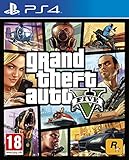
Grand Theft Auto V (PS4) | $26.45 | Buy on Amazon |
| 3 |

|
Grand Theft Auto 5 PS4 - PlayStation 4 ( GTA V Ps4) | $26.95 | Buy on Amazon |
| 4 |

|
Grand Theft Auto V Premium Edition Playstation 4 | $18.08 | Buy on Amazon |
| 5 |

|
Grand Theft Auto V | $84.00 | Buy on Amazon |
That tension is why the series can be read simultaneously as a critique of American capitalism and as a fantasy of getting rich inside it. The games mock consumer culture, celebrity and private wealth, but they also give players money, property, vehicles and escalating power. The American Dream is therefore not just a subject in the dialogue or scenery. It is built into the player’s goals.
What’s actually slowing this PC down?
Pick the symptom - the matching free tool is one click away.
Rockstar narrative lead Rupert Humphries described GTA IV as “a kind of hollow commentary on the illusion of America as a land of opportunity,” then said the studio “sort of doubled down” on that cynicism with GTA V. His description provides a useful authorial frame, but it does not eliminate other readings. The games’ stories, environments and mechanics often pull in different directions.
#1 Best Overall
- STUNNING VISUALS — Enhanced levels of fidelity and performance with new graphics modes featuring up to 4K resolution, up to 60 frames per second, HDR options, ray tracing, improved texture quality, and more
- FASTER LOADING — Quicker access to the action as the world of Los Santos and Blaine County load in faster than ever before.
- ADAPTIVE TRIGGERS AND HAPTIC FEEDBACK — Feel every moment through the DualSense controller, from directional damage to weather effects, rough road surfaces to explosions, and more.
- TEMPEST 3D AUDIO — Hear the sounds of the world with pinpoint precision: the throttle of a stolen supercar, the rattle of neighbouring gunfire, the roar of a helicopter overhead, and more.
- Please note that although this game is Region Free or Region Unlocked and will work on all systems, this is the European version and may differ from the local version in age rating, labeling or instructions.
GTA IV: the American Dream seen by an immigrant outsider
Niko Bellic begins outside the promise
GTA IV places Niko Bellic, an immigrant from Eastern Europe, at the center of its American Dream story. He arrives in Liberty City hoping that his cousin Roman’s claims about prosperity will lead to a safer and more successful life. The contrast between expectation and reality is immediate. Roman’s apparent success is exaggerated, his business is precarious, and the city’s opportunities are tied to debt, criminal networks and betrayal.
Niko is not entering a neutral marketplace in which effort naturally produces advancement. He brings trauma, limited resources and a history of violence, while the people offering him work are themselves trapped in dangerous systems. His outsider status matters because he sees the city’s promise from below and from the outside. The city advertises freedom and reinvention, but his practical choices are narrowed by survival.
Humphries’ description of the game as an immigrant’s story is therefore more precise than calling it a general satire of wealth. The game asks what the American Dream looks like when someone has crossed an ocean expecting opportunity and discovers that access depends on connections, coercion and willingness to compromise.
The Statue of Happiness turns freedom into a commodity
Liberty City’s Statue of Happiness makes the theme visible. The monument parodies New York’s Statue of Liberty, but its raised hand holds a coffee cup rather than a torch. The Guardian reads the substitution as a joke about consumerism displacing the ideal of freedom. The image does not prove that every part of the game has one political meaning, but it gives the player a concrete visual shorthand: a national symbol of liberty has been redesigned around consumption.
The coffee cup is an especially effective alteration because it is ordinary and commercial rather than heroic. A torch suggests enlightenment or guidance; a branded drink suggests routine purchasing. The city still displays an emblem of welcome, but the object in its hand implies that belonging has been translated into a consumer transaction.
Rank #2
- Experience the world of Grand Theft Auto V like never before with the power of the PlayStation 4.
- Explore the City of Los Santos, the countryside and even the ocean.
- Play through an epic single player experience using three very different characters.
- Join your friends in GTA Online and see what trouble you can cause.
- Play golf, tennis, see a film or call someone and just hang out.
What counts as success in Liberty City
Niko’s goals shift during the story. He wants money, but he also wants protection, a stable future and relief from the past. Those aims are not identical to the spectacular wealth associated with popular images of the American Dream. Security and belonging may be the more realistic version of his aspiration, yet even modest stability remains difficult to obtain.
The game’s missions repeatedly show that upward movement is conditional. Niko can earn cash by completing jobs, but each payment pulls him deeper into the structures that make the city unequal. His progress is measurable, but it is not clean. The narrative consequently treats criminal success as evidence of access to power and as proof that legitimate opportunity has failed him.
Recommended Free Tools
GTA V: the dream reaches its material endpoint
Los Santos as an invented national fantasy
In 2013, Rockstar head writer and vice president Dan Houser called GTA V “the endpoint of the American dream.” In the same account, he described Los Angeles as “the dream that America invented.” Rockstar’s official announcement identifies the game’s fictional setting as Los Santos and its surrounding areas, a Southern California landscape built from entertainment, suburbs, luxury property, deserts and financial ambition.
Calling Los Santos an endpoint suggests that the dream has become less a path than a completed spectacle. The city presents success as something visible: a mansion, a sports car, a powerful network, a media profile or a pile of cash. Characters are surrounded by images of achievement, but those images are unstable and frequently absurd.
Three protagonists, three forms of aspiration
GTA V distributes its critique across three protagonists rather than using one immigrant perspective.
Rank #3
- Michael De Santa has already achieved the material dream: a large house, expensive possessions and a family that appears secure. Yet retirement has not made him content. His wealth has produced boredom, resentment and emotional collapse. His story questions whether acquisition can deliver fulfillment after the acquisition is complete.
- Franklin Clinton is still trying to move upward. He wants to leave a dangerous neighborhood and gain access to a more prosperous social world. His ambition resembles a conventional mobility narrative, but the routes available to him involve theft, violence and alliances with people who already possess wealth.
- Trevor Philips represents a more extreme version of entrepreneurial individualism. He turns criminal opportunism into a personal business model and treats domination as proof of freedom. His excess makes the underlying logic easier to see: if every limit is dismissed, ambition becomes appetite and power becomes its own justification.
Together, the protagonists show that the dream can fail at different stages. Franklin is blocked from entry, Michael is dissatisfied after arrival, and Trevor converts unrestricted desire into chaos. None provides a simple alternative model of success.
Wealth, fame and property replace older ideals
The game’s satire targets a culture in which status is demonstrated through possessions and visibility. Homes, cars, aircraft, businesses and clothing are not merely rewards; they are signs that a character has become someone important. The city’s social hierarchy is legible through what people own and where they can go.
This is why the American Dream in GTA V feels broader than the pursuit of a job or a home. It includes celebrity, lifestyle branding, financial speculation and the fantasy of becoming untouchable. The dream promises that personal identity can be remade through consumption. The game then fills the world with characters who are anxious, fraudulent or predatory despite their apparent success.
Humphries’ later remarks make the contrast more pointed. “Maybe the American Dream is more modest now,” he said, describing a house for one’s family and paid-off loans rather than wild success, “but maybe today, that is just as out of reach for the average person.” This is an attributed cultural observation, not a statistical finding, but it clarifies the scale of the satire: even a reduced dream of ordinary security can feel unattainable.
How the earlier 3D games establish the pattern
The series’ early 3D entries already placed aspiration beside inequality and desperation. The Guardian’s retrospective describes those games as worlds where criminal opportunity coexists with social division. Characters pursue money, territory or influence because conventional routes to security appear weak, unavailable or irrelevant.
Do these 3 things before closing this tab:
1Fix the driver behind crashes, sound loss and screen glitches2Repair Windows errors before they cause bigger problems3Scan for outdated or missing drivers - takes under a minuteRank #4
- GRAND THEFT AUTO V: When a young street hustler, a retired bank robber and a terrifying psychopath land themselves in trouble, they must pull off a series of dangerous heists to survive in a city in which they can trust nobody, least of all each other.
- GRAND THEFT AUTO ONLINE: Discover an ever-evolving world of choices and ways to play as you climb the criminal ranks of Los Santos and Blaine County in the ultimate shared Online experience.
- THE CRIMINAL ENTERPRISE STARTER PACK: The Criminal Enterprise Starter Pack is the fastest way for new GTA Online players to jumpstart their criminal empires with the most exciting and popular content plus 1,000,000 dollars bonus cash to spend in GTA Online - all content valued at over GTA 10,000,000 dollares if purchased separately.
Those games are important context, but GTA IV and GTA V provide the clearest evidence for a specific American Dream interpretation because Rockstar writers directly framed them in those terms. The earlier titles establish the series’ recurring method: exaggerate the promises of a city, make criminal enterprise the practical route to advancement, and let the resulting success expose the system’s absurdity.
The central contradiction: the story criticizes wealth while play rewards it
Satire does not cancel the player’s participation
A purely narrative reading can make the games sound more politically settled than they are. The player is invited to laugh at corrupt institutions, shallow celebrities and consumer excess, but is also asked to complete criminal exploits successfully. Money, vehicles and expanded capability make progress tangible. The player may understand the criticism while still enjoying the power that the criticized system provides.
The Guardian notes that players can continue criminal activity after the stories, which weakens any claim that the satire automatically reforms the player. The games do not force a single moral response. They provide a playground in which criminality is both the object of ridicule and the main source of agency.
What John Wills adds to the reading
John Wills’s peer-reviewed analysis of satirical play in GTA V emphasizes that success is not only narrative wealth. It also means mastering driving and shooting, then accumulating money and vehicles. These mechanics place the player inside the material pursuit that the satire may criticize.
That observation explains why the contradiction is productive rather than accidental. If the game merely condemned consumerism from a distance, its message would be straightforward. Instead, it makes the player practice acquisition and domination. The player learns that better equipment, more money and greater mobility make the world easier to control, even while the story questions whether control produces happiness.
Best Value
- Used Book in Good Condition
GTA IV and GTA V compared
| Question | GTA IV | GTA V |
|---|---|---|
| Who stands at the center? | An immigrant outsider trying to survive and build a future in Liberty City. | Three protagonists occupying different positions: established wealth, aspiring mobility and extreme criminal autonomy. |
| What does opportunity look like? | A promise that quickly becomes debt, coercion and unstable criminal work. | Access to money, property, fame and lifestyle, usually through spectacular risk and illegality. |
| What does success mean? | Safety, belonging and relief from the past as much as financial gain. | Wealth, status, possessions, mobility and the ability to impose one’s will. |
| Key symbol or frame | The Statue of Happiness, whose coffee cup is read as consumerism replacing an ideal of freedom. | Los Santos as “the endpoint of the American dream” and “the dream that America invented.” |
| Primary tension | The immigrant promise of opportunity versus the city’s closed and exploitative systems. | The spectacle of abundance versus dissatisfaction, inequality and the player’s appetite for more. |
What the games ultimately say about the American Dream
The strongest interpretation is not that Grand Theft Auto declares the American Dream completely false. It shows why the promise remains attractive and why people continue to pursue it even after seeing its costs. Niko wants a future that is safer than his past. Franklin wants mobility. Michael wants the emotional satisfaction that his money failed to provide. Their desires are understandable; the systems through which they pursue them are corrosive.
The series also distinguishes between the dream’s language and its material conditions. Freedom, reinvention and prosperity are celebrated symbolically, while the characters encounter debt, unequal access, exploitation and violence. The Statue of Happiness joke condenses that gap. The monument still resembles a promise of welcome, but its consumer object implies that the promise has been commercialized.
GTA V pushes the idea toward saturation. When almost every aspiration can be represented as a purchasable object, the dream stops looking like liberation and starts looking like an inventory. Yet the game’s mechanics make that inventory satisfying to build. The player therefore experiences both sides of the argument: wealth is ridiculous when viewed critically, and useful when placed in the player’s hands.
Crashes, No Sound, or Screen Glitches?
Random freezes, missing sound and display glitches usually trace back to one bad driver. Find and replace yours safely.Free scan · under a minutePC Slower Than It Used to Be?
A free scan shows the junk files, broken settings and background clutter dragging Windows down - then fixes them in one click.Free scan · Windows 10 & 11How to read the American Dream across the series
- Start with the protagonist’s position. Ask whether the character is excluded, entering the system, already wealthy or operating outside ordinary constraints.
- Define the game’s version of success. In one story it may mean safety or belonging; in another it may mean property, celebrity, vehicles and financial power.
- Separate satire from mechanics. Note what the dialogue mocks, then compare it with what missions and progression reward.
- Look for symbols in the environment. The Statue of Happiness demonstrates how a single altered landmark can express the gap between civic ideals and consumer culture.
- Allow conflicting interpretations. The games can criticize materialism, provide a fantasy of material power and depict characters whose desire for security remains sympathetic.
Bottom line
Grand Theft Auto treats the American Dream as a promise that attracts people toward opportunity but repeatedly reveals its exclusions and costs. GTA IV makes the immigrant’s disappointment central; GTA V presents wealth, fame and consumption as a finished, unstable spectacle. Their most revealing feature is the gap between message and play: the games satirize the pursuit of money and status while making the player powerful through exactly those pursuits. The American Dream in GTA is therefore neither simply endorsed nor rejected. It is a system the player is invited to question while actively succeeding inside it.
Quick Recap
Product prices and availability are accurate as of the date/time indicated and are subject to change. Any price and availability information displayed on Amazon at the time of purchase will apply.

