
Do these 3 things before closing this tab:
1Clear out junk files and repair common Windows errors2Fix the driver behind crashes, sound loss and screen glitches3Repair Windows errors before they cause bigger problemsiTechGuides is reader-supported. When you buy through links on our site, we may earn an affiliate commission. As an Amazon Associate I earn from qualifying purchases. Learn more
A tenant failure alert should prove which rule and cohort were evaluated, what time-bounded data the query returned, how fresh that data was, what decision followed, and whether a notification was attempted. Keep those facts joinable through a stable incident key and a unique evaluation ID. Treat query health, alert evaluation, incident-state changes, and notification delivery as separate outcomes—not as one metric value or one “alert fired” flag.
What should a failure alert from a metrics API query prove?
When an operator investigates an alert later, “the metric crossed a threshold” is not enough. They need to reconstruct the decision without guessing which tenant, time window, rule version, or delivery attempt it referred to.
- Which decision: the rule or configuration version, tenant or cohort, evaluation ID, and resulting decision with its reason.
- Which evidence: the requested query interval, dimensions, returned values or a suitable summary, aggregation, newest sample timestamp, and freshness assessment.
- Which state change: the incident’s prior and next state, including whether this was a new failure, a continuing failure, a recovery, or an indeterminate evaluation.
- Which delivery action: whether a notification was attempted, when, with what outcome, and whether the attempt was a retry.
A stable incident_key should group repeated evaluations of the same rule and cohort. A unique evaluation_id should identify one scheduled run. These are practical design identifiers, not names mandated by a metrics standard. An indexed summary of a small property-management application similarly describes retaining poll schedule, query window, cohort labels, evaluation result, and notification attempt under one incident key; its underlying implementation details are not independently established here.
How should one poll cycle work?
Make the poller a sequence of explicit, persistable decisions. Do not let a query failure silently turn into a zero or let the notification call become the only record that an alert existed.
#1 Best Overall

- 2 Years of Cellular Service Included – Necto offers the most affordable cellular-enabled sensor with 2 full years of 4G LTE service included—no hidden fees, contracts, or WiFi required. With a built-in multi-network SIM card, you can remotely monitor conditions 24/7 and receive real-time alerts. After 2 years, you can renew the subscription from the app for only $6.99 a month.
- Instant Alert & 24/7 Monitoring - Keep tabs on your Home, RV, Car, or Pets from anywhere with the 3-in-1 temperature, humidity & power outage monitor. Customize the high and low temp/humidity thresholds and add up to 5 contacts for unlimited text and email alerts. Receive real-time alerts if critical changes in temp/humidity or a power loss occurs.
- Rechargeable Internal Battery - The Necto smart RV and pet monitor has a 3 day long-lasting rechargeable battery. Unlike WiFi sensors, Necto provides continuous monitoring in the event of a power outage, via its built-in battery and cellular technology. Receive instant alerts on your phone when battery power is low or if the device disconnects from the network.
- Intuitive Mobile App & Easy Setup - Our user-friendly mobile app gives you remote access to your sensor from anywhere. Use your smartphone or PC to customize alert thresholds, view past readings, and manage device settings with ease. The sensor takes minutes to install and requires no technical expertise. Simply activate the device through the app and plug it into any standard wall outlet.
- Fast Refresh & Free Data Storage - The industrial built-in temperature and humidity sensor takes readings every 10 seconds to make sure the temp/humidity are within the safe range. Every 10 minutes the most recent reading is updated on the online portal. Readings are stored on our servers for 1 year and can be downloaded anytime on a CSV file.
- Create the evaluation identity. Record the scheduled run’s
evaluation_id, the stable incident key, the rule/configuration version, and the intended cohort before interpreting results. - Issue a reproducible query. Store the requested start and end times, relevant dimensions, aggregation, and query provenance available from the API. Use the same documented time convention on every run.
- Classify the observation. Distinguish a transport or query error, missing data, stale sample, invalid result, and valid observation. Record the newest sample timestamp and how freshness was assessed.
- Evaluate the rule. Apply the configured threshold and state policy only to observations the policy considers usable. Persist the result and reason, including when the result is unknown or insufficient-data rather than firing or resolved.
- Commit the decision and state transition. Save the evidence, prior and next incident state, and any intended notification before attempting delivery. Use an atomic update or compare-and-set if concurrent pollers could evaluate the same incident.
- Attempt notification separately. Send the event with an idempotency key where the receiver supports it. Then persist the attempt time and response classification, linking it to the evaluation and incident.
This ordering makes it possible to distinguish “the rule fired,” “a request was attempted,” and “the receiver acknowledged it.” It also leaves a durable decision record if the process fails between evaluation and delivery.
How should the evaluator treat errors, missing data, and stale samples?
These conditions are not interchangeable with a measured healthy value. A zero means the query successfully observed a zero under the API’s semantics; a query exception means the system could not establish that value.
| Observation outcome | What it establishes | Recommended evidence and handling |
|---|---|---|
| Query or transport error | The poll did not obtain a usable result. | Store the error class, query interval, and evaluation ID. Mark the evaluation outcome as an error or unknown; do not synthesize a zero. |
| Missing data | No usable sample was returned for the requested query. | Record the empty-result condition and the interval queried. Apply an explicit no-data policy rather than treating absence as proof of recovery. |
| Stale sample | A value exists, but its timestamp does not satisfy the configured freshness policy. | Retain the sample timestamp, the freshness calculation, and the policy used. Do not present a stale positive reading as proof of a current failure. |
| Invalid result | The response could not be interpreted under the expected schema or rule. | Keep a bounded error description and mark the evaluation unusable; avoid recording sensitive payloads unnecessarily. |
| Valid observation | The query returned a result suitable for evaluation under the configured policy. | Retain the observed value or an adequate summary, aggregation, dimensions, and timestamp alongside the decision. |
Freshness tolerance should follow the service’s telemetry cadence and alerting objective. Record the actual newest-sample time and the policy applied; a freshness threshold without the observed timestamp is difficult to audit. If a source exposes a cumulative counter or only an aggregate point, verify that API’s contract before computing a time-window delta. The correct calculation depends on the source semantics.
Rank #2

- Cellular Subscription Required - Necto uses built-in cellular technology to provide seamless 24/7 monitoring with unmatched coverage - no WiFi required. Enjoy real-time alerts and updates from anywhere, giving you worry-free connectivity and true peace of mind. After 1 year, you can renew the subscription from the app for only $6.99 a month.
- Rechargeable Internal Battery - The Necto smart RV and pet monitor has a 3 day long-lasting rechargeable battery. Unlike WiFi sensors, Necto provides continuous monitoring in the event of a power outage, via its built-in battery and cellular technology. Receive instant alerts on your phone when battery power is low or if the device disconnects from the network.
- Instant Alert & 24/7 Monitoring - Keep tabs on your Home, RV, Car, or Pets from anywhere with the 3-in-1 temperature, humidity & power outage monitor. Customize the high and low temp/humidity thresholds and add up to 5 contacts for unlimited text and email alerts. Receive real-time alerts if critical changes in temp/humidity or a power loss occurs.
- Intuitive Mobile App & Easy Setup - Our user-friendly mobile app gives you remote access to your sensor from anywhere. Use your smartphone or PC to customize alert thresholds, view past readings, and manage device settings with ease. The sensor takes minutes to install and requires no technical expertise. Simply activate the device through the app and plug it into any standard wall outlet.
- Fast Refresh & Free Data Storage - The industrial built-in temperature and humidity sensor takes readings every 10 seconds to make sure the temp/humidity are within the safe range. Every 10 minutes the most recent reading is updated on the online portal. Readings are stored on our servers for 1 year and can be downloaded anytime on a CSV file.
What belongs in the durable evaluation record?
Store enough evidence to replay or explain a decision, but do not assume every backend label set is an audit log. Metrics dimensions are useful for filtering and grouping; detailed tenant-level evidence may need a separate access-controlled record to meet privacy, retention, and cardinality requirements.
- Identity and configuration: incident key, evaluation ID, rule/configuration version, and the tenant or cohort identifier appropriate for the audience.
- Query provenance: requested interval, dimensions, aggregation, query/transport outcome, and query text or query identifier when available and appropriate.
- Observation: raw value or defensible summary, newest sample timestamp, and freshness calculation or outcome.
- Decision: evaluator result and reason, prior incident state, next state, and state version or other concurrency-control evidence.
- Delivery: notification idempotency key, attempt timestamps, response classification, and any receiver reference that helps reconcile the attempt.
Prefer bounded metric dimensions where practical, and validate cardinality and privacy choices against the actual metrics backend and data policy; there is no universal label limit established here. Keep tenant-level detail in a suitably restricted store when broad access to metric labels would expose information operators should not see.
Query provenance can be platform-specific. Microsoft Application Insights documents the ai.include-query-payload option, which can return the KQL statement used to fetch a log-based metric alongside time-series data. That is a Microsoft-specific capability, not a guarantee that other metrics APIs return their query payload.
Rank #3
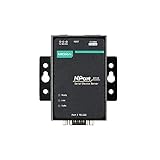
- Small size for easy installation
- Real COM and TTY drivers for Windows, Linux, and macOS
- Standard TCP/IP interface and versatile operation modes
- Easy-to-use Windows utility for configuring multiple device servers
- SNMP MIB-II for network management
How should incident state and retries work?
Define state transitions explicitly so repeated polls do not create a new incident every time the same condition remains true. A policy can use pending, firing, resolved, and unknown/insufficient-data states; the exact transitions and any consecutive-failure requirement should be selected from the service objective and observed telemetry, not copied as a universal threshold.
| State or transition | Decision to persist | Operational implication |
|---|---|---|
| Pending | The rule has not yet met its configured firing policy. | Retain each evaluation so an operator can see which observations counted toward the decision. |
| Firing | The configured failure condition has been met. | Associate continuing evaluations with the same incident key; define whether notifications are sent only on entry or also on updates. |
| Resolved | The configured recovery condition has been met. | Persist the recovery evidence and decide explicitly whether a resolution notification is sent. |
| Unknown or insufficient data | The poll could not establish whether the condition is healthy or failing. | Preserve this separately from both firing and resolved, and define whether it changes an existing incident or raises a telemetry-health signal. |
Notification is a separate operation from evaluation. Design for retries that may repeat an attempt unless the receiver’s documented contract guarantees otherwise. If the receiver supports idempotency, reuse the same key for retries of the same intended transition; do not reuse it for a genuinely new transition. Store each attempt separately so a timeout, rejection, or acknowledgment cannot rewrite what the evaluator decided.
When multiple pollers may update one incident concurrently, use compare-and-set or another atomic persistence mechanism to prevent competing evaluations from overwriting state or generating duplicate transition notifications. Record the state version or equivalent concurrency result so the chosen transition can be explained afterward.
Rank #4

- Smart Plug with Cycle Schedule Functionality – Go beyond standard automation with a unique cycle schedule feature: set specific days and times, repeat intervals, and durations to fit precise usage needs for appliances like fans, pumps, or dehumidifiers.
- Supports Up to 15 Amps for High-Power Devices – Built to handle heavy-duty appliances, the smart plug supports up to 15A, making it suitable for fans, dehumidifiers, pumps, heaters, and other high-load equipment.
- Real-Time Energy Monitoring with Exportable Reports – View live power usage directly in the YoLink app, and export historical energy data to analyze consumption trends and make smarter energy decisions.
- Instant Power Status from the App – Quickly check whether your plug is on or off and see current wattage in real time, making it easier to confirm device status and troubleshoot.
- Plug-and-Play Setup with YoLink LoRa – No wiring required—just plug it in and connect via the YoLink Hub. Enjoy ultra-long-range (up to 2,034 feet open-air) control thanks to YoLink’s industry-leading LoRa technology.
What do existing metrics platforms illustrate?
Platform documentation shows why polling health and alert evidence need their own treatment. These are examples of particular products and are not a common tenant-metrics schema.
| Platform documentation | Documented capability or signal | Design lesson |
|---|---|---|
| Supabase Realtime observability | The observability inventory lists per-tenant poller stops and crashes, query exceptions, preparation exceptions, dispatched rows, and skipped rows. It identifies /tenant-metrics as the per-tenant endpoint. |
Monitor failures in the mechanism that produces or dispatches telemetry, not only the tenant condition being measured. |
| Grafana Tempo polling | Documentation lists tempodb_blocklist_poll_errors_total, tempodb_blocklist_poll_duration_seconds, tempodb_blocklist_length, tempodb_blocklist_tenant_index_errors_total, tempodb_blocklist_tenant_index_builder, and tempodb_blocklist_tenant_index_age_seconds. It notes that poll-driven index state can become stale and that excessive staleness can affect which blocks are queryable. |
Track poll errors and index age alongside the target condition; stale supporting state can undermine the evidence a query sees. |
| Azure Monitor metric alerts | Documentation describes metric criteria and dimensions, static thresholds and aggregation types, dynamic-threshold failing periods, and custom properties that can be added to webhook payloads. The cited REST resource-group listing operation identifies API version 2024-03-01-preview. |
Managed alerting may provide evaluation and payload controls, but compare them with the persistence and replay evidence your control process requires. |
Microsoft Learn defines DynamicThresholdFailingPeriods as “The minimum number of violations required within the selected lookback time window required to raise an alert.” That describes a field in Azure Monitor’s metric-alert schema; it is not a universal reliability rule for custom evaluators.
What’s actually slowing this PC down?
Pick the symptom - the matching free tool is one click away.
When is native alerting enough, and when is a custom poller justified?
There is no universally superior choice. A managed alert feature may already cover the needed criteria and notification payload, while a custom poller can be appropriate when the application must own tenant-aware state and preserve a detailed replay record. Compare the actual documented behavior on these dimensions before choosing:
- Control over query windows, tenant/cohort dimensions, and freshness or no-data semantics.
- Ability to persist the queried input and the evaluator’s decision in a form operators can retrieve later.
- State transitions, suppression, recovery handling, and how repeated evaluations map to one incident.
- Payload context, delivery attempt records, retry behavior, and duplicate handling.
- Concurrency control, API or series limits, operational ownership, and cost at the intended polling frequency.
Confirm those capabilities for the specific platform, edition, and API version in use. Product documentation establishes platform features, not that one architecture will meet every team’s reconstruction or reliability needs.
Quick Recap
Product prices and availability are accurate as of the date/time indicated and are subject to change. Any price and availability information displayed on Amazon at the time of purchase will apply.

