
iTechGuides is reader-supported. When you buy through links on our site, we may earn an affiliate commission. As an Amazon Associate I earn from qualifying purchases. Learn more
There is no single engine RPM that applies to every car at 20 mph. The tachometer reading depends on the gear selected, final-drive ratio and tire rolling circumference; automatic-transmission torque-converter behavior can also affect it. You can estimate the reading if you know your vehicle’s drivetrain specifications, but the result is not a universal target.
Why 20 mph does not correspond to one RPM
Road speed describes how quickly the vehicle travels; engine RPM describes how quickly the engine turns. The transmission gear and final-drive ratio determine how wheel rotation relates to engine rotation. Tire rolling circumference determines how far the car moves with each wheel revolution.
At the same 20 mph, two cars—or the same car in different gears—can therefore show different engine speeds. Without a vehicle’s selected gear, final-drive ratio and tire circumference, a specific RPM figure would be a guess.
Estimate engine RPM from your vehicle’s specifications
Use the tire’s rolling circumference in metres and the ratios for the gear actually in use. The calculation assumes a fully engaged drivetrain and no tire or torque-converter slip.
#1 Best Overall
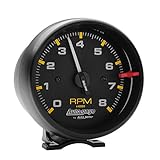
- Traditional incandescent lighting illuminates around the perimeter of the dial
- Compatible with 2 - 4 pulse ignition signals (4-8 cylinder engines) with points, electronic, and most 12V high-performance racing ignitions.
- 12 and 16 volt compatible, well-suited with nearly every street car or race car electrical system
- Find the rolling circumference. Use the actual tire’s rolling circumference in metres. To estimate it under load, mark the tire and roll the vehicle on level ground until the tire completes exactly one full rotation; measure the distance traveled. Use normal tire pressure and, if possible, a typical vehicle load.
- Look up the ratios. Find the transmission ratio for the selected gear and the final-drive ratio in the technical specifications or workshop manual for the correct model year, transmission, engine and configuration.
- Calculate wheel RPM at 20 mph. Divide 20 × 1609.344 by 60 × the tire rolling circumference in metres.
- Calculate engine RPM. Multiply wheel RPM by the selected transmission gear ratio, then by the final-drive ratio.
Combined, the formula is: Engine RPM = (20 × 1609.344 ÷ 60 ÷ tire rolling circumference in metres) × selected gear ratio × final-drive ratio. The 1609.344 factor converts miles to metres. The product of the transmission and final-drive ratios is the overall drivetrain ratio. MotorMath explains the calculation and assumptions in its engine RPM calculator.
Use ratios for your exact vehicle configuration; a value from another trim or drivetrain can lead to a misleading estimate. Do not mix tire diameter with rolling circumference, or metres with inches, in this formula.
Rank #2
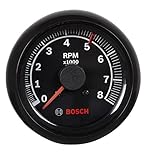
- 2-5/8" black dial face with 250 degree sweep and black bezel with mounting hardware
- 0-8000 RPM range, driven by Air Core motor
- Adjustable redline pointer
- Compatible with 4, 6, and 8 cylinder engines
- Functions with breaker points, electronic, and most aftermarket ignition systems (not magnetos)
Why the tachometer reading may differ
The calculation models a fixed mechanical connection between engine and wheels. A traditional automatic transmission’s torque converter may slip, so engine RPM can differ from the fully engaged estimate. The actual rolling circumference also varies from a static measurement, and tire wear, inflation pressure, speedometer calibration and vehicle control behavior can affect the comparison.
For that reason, treat the formula as an estimate, not a safety or efficiency target. The calculator source describes its output as educational; RPM at a given road speed alone does not establish whether a reading is safe, efficient or evidence of a fault.
Quick Recap
Best Value

- 2-5/8" white dial face with 250 degree sweep and black bezel with mounting hardware
- 0-8000 RPM range, driven by Air Core motor
- Adjustable redline pointer
- Compatible with 4, 6, and 8 cylinder engines
- Functions with breaker points, electronic, and most aftermarket ignition systems (not magnetos)
Rank #4
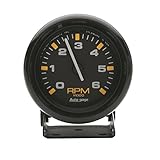
- Traditional incandescent lighting illuminates around the perimeter of the dial
- Compatible with 2 - 4 pulse ignition signals (4-8 cylinder engines) with points, electronic, and most 12V high-performance racing ignitions.
- 12 and 16 volt compatible, well-suited with nearly every street car or race car electrical system
Rank #3

- 【RPM Range】 This tachometer features an RPM range from 0 to 8000 RPM, rpm tachometer providing a comprehensive view of your vehicle's engine speed. Whether your engine is idling or running at high revs, tach gauge accurately tracks and displays the rotational speed.
- 【Adjustable Shift Light Alarm Trigger Value】 Tachometer gauge for car equipped with an adjustable shift alert function, the alarm range is set between 2000 - 8000 RPM. By simply turning the knob on the instrument panel, you can customize the shift alert value of tachometer gauge for car according to your driving preferences. When the engine RPM exceeds the preset alarm range, the shift light of rpm gauge will promptly illuminate, reminding you to shift gears for optimal performance.
- 【Applicable Range】 RPM tachometer is designed to be compatible with 12V, 1 - 8 cylinder gasoline-powered vehicles. By setting the number of cylinders to make the tachometer compatible with your gasoline engine, the rotational speed readings can be accurately displayed.This wide applicability makes rpm tachometer a versatile choice for various gasoline automobiles, (Please make sure that your engine is a gasoline engine with 1 to 8 cylinders before purchasing a tachometer.)
- 【Adjustable Backlight Brightness】 The tachometer for car is equipped with adjustable backlight. The backlight offers 5 levels of brightness adjustment. With a short press of the small button on the instrument panel of rpm gauge, you can easily cycle through the different brightness settings to suit your driving environment, be it bright daylight or dark nights.
- 【Tachometer Setup Instructions】 1. To set the number of cylinders: Long press the small button on the instrument panel of tachometer for 6 seconds to enter the cylinder number setup mode. 2. To adjust the shift alarm value: Rotate the knob on the instrument panel. 3. To toggle the backlight brightness: Briefly press the small button on the instrument panel.
How to check your vehicle-specific result
- Confirm the selected gear and the correct transmission and final-drive ratios in the vehicle’s technical specifications or workshop manual.
- Compare the estimate with the tachometer while driving steadily at 20 mph under the same gear and operating conditions.
- If they differ, account for converter behavior in an automatic and for the difference between measured and actual rolling circumference. Consult the service information for your vehicle when you need authoritative vehicle-specific RPM details.
Product prices and availability are accurate as of the date/time indicated and are subject to change. Any price and availability information displayed on Amazon at the time of purchase will apply.

