
iTechGuides is reader-supported. When you buy through links on our site, we may earn an affiliate commission. As an Amazon Associate I earn from qualifying purchases. Learn more
For an EU-facing restaurant, an AI label and an accurate food presentation are separate responsibilities. From 2 August 2026, Article 50 of the EU AI Act requires deployer disclosure for qualifying deepfake image, audio or video content. The European Commission’s summary does not say that every AI-generated picture of a dish is automatically a deepfake. Separately, EU food-information rules prohibit advertising or pictorial presentation that misleads diners about a food’s nature, identity, composition, quantity or ingredients.
In practice, place a plain-language notice beside a synthetic or materially AI-altered image when the alteration could affect a diner’s understanding, and ensure the picture does not promise ingredients, portions, preparation or an appearance the restaurant does not actually serve. There is no single statutory wording or placement prescribed for every restaurant image.
Start with the two questions that determine your duty
Before publishing a generated image, ask two different questions:
Outdated Drivers Are Slowing You Down
One free scan finds every outdated or missing driver and matches the right update for your exact hardware.Free scan · exact hardware matchPC Slower Than It Used to Be?
A free scan shows the junk files, broken settings and background clutter dragging Windows down - then fixes them in one click.Free scan · Windows 10 & 11- Does the image fall within the EU AI Act’s disclosure rule? Article 50 covers certain AI-generated or manipulated content, including image content that qualifies as a deepfake. The Commission describes a deepfake as content that resembles existing persons, objects, places, entities or events and would falsely appear authentic or truthful. A dish image can involve an object, but the legal test depends on the image and its context; the rule is not written as “label every picture made with AI.”
- Does the picture accurately represent the food being sold? EU food-information rules apply to food advertising and presentation, including pictorial representations. They prohibit misleading consumers about characteristics such as nature, identity, composition and quantity, and specifically address images that suggest an ingredient or food is present when it is substituted or absent.
A disclosure answers the first question only. “AI-generated” does not excuse a picture that materially misrepresents the meal.
#1 Best Overall

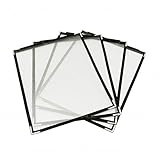
- Open measures 19-1/4" x 12"; Closes measures 9-1/2" x 12"; Fits 8.5 X 11 Inch menus. It's double stitched with matching color thread for enhanced strength and durability.
- Package includes 12 pack menu covers, 2 pages with 4 clear views, made of durable flexible PVC, non-shattering, non-toxic and easy to clean. The slide-in design makes it insert easy.
- Perfect menu cover for restaurant, diner, hotel, cafe, drink shop, catering hall, pub, bar, club, porterhouse, noshery, weddings, graduation ceremonies, etc.
- The menu cover features a black leatherette trim border and gold colored corner protectors. Putting the menu in this cover will make it look more elegant, can attract your customers.
- You can also use it to store and display artwork, report sheet, letter, paintings, photos, drawings, souvenir posters, illustrations, newspaper pages, ect.
What Article 50 means for restaurant images
The date and the role that matters
The European Commission says Article 50 obligations apply from 2 August 2026. For a restaurant publishing an image to customers, the relevant role is generally the deployer: the organization using an AI system or its output in a consumer-facing setting. The Commission’s transparency guidance, updated 6 August 2026, distinguishes deployer disclosure from provider obligations such as marking or detecting generated content. A restaurant should not assume that a tool’s internal watermark, metadata or provider notice automatically satisfies what a diner needs to know.
Deepfake scope is narrower than “made with AI”
The Commission’s summary identifies a disclosure duty for qualifying deepfakes. The content must resemble an existing person, object, place, entity or event and would falsely appear authentic or truthful. That wording leaves room for ordinary illustrative artwork, stylized graphics and some concept images that do not purport to show a real dish. It also means a realistic synthetic photograph presented as an actual menu item deserves closer scrutiny.
Do not make a blanket claim that every generated food image is legally a deepfake. Classify the particular image, the way it is captioned, and the surrounding offer. A clearly labeled illustration of a hypothetical dish and a photorealistic image next to a “order now” button may create different impressions even if the same generator produced both.
The Code of Practice is not the statute
The European Commission’s Code of Practice on Transparency of AI-generated Content, updated 12 October 2026, is voluntary. The underlying Article 50 obligations are legal. Treat the Code as a useful implementation reference, not as a replacement for the regulation or a guarantee that following a voluntary example resolves every food-advertising issue.
Food presentation must remain accurate even when disclosure is optional
Article 7(2) of Regulation (EU) No 1169/2011 is summarized by the European Commission in these words: Food information shall be accurate, clear and easy for the consumer to understand.
The rules cover information supplied through advertising and presentation, not only the text printed on a package.
For a restaurant image, examine whether a reasonable diner could infer a false fact about:
- Nature or identity: a plant-based product shown as meat, or one type of seafood represented as another.
- Composition: a sauce, garnish, cheese, allergen or other ingredient appearing in the picture but omitted from the actual recipe.
- Quantity and size: a sandwich, pizza or dessert shown with a substantially larger filling, topping or portion than the item sold.
- Preparation and condition: a level of browning, melting, freshness or cooking that the restaurant does not normally deliver.
- Substitution or absence: imagery that suggests an ingredient is present when it has been replaced or left out.
These issues exist regardless of whether the picture was generated from scratch, edited from a photograph or produced by a human photographer. A notice can disclose the image’s origin, but it cannot turn a materially false depiction into an accurate one.
A practical classification before you publish
Use the following review for each image rather than applying one label to an entire menu or campaign.
| Image situation | Questions to ask | Practical action | Primary concern |
|---|---|---|---|
| Fully generated, photorealistic dish | Could a diner reasonably believe this is the actual item, and does it match ingredients, portion and appearance? | Use a prominent plain-language notice when the image could be mistaken for a real dish; correct any mismatch before publication. | Deepfake scope and non-misleading presentation |
| Real photograph with limited AI editing | Did editing change a meaningful attribute such as toppings, size, color, texture or preparation? | Disclose the alteration when it could affect understanding; retain an unaltered reference for internal review. | Materiality of the alteration |
| Stylized illustration or concept art | Is it clearly presented as an illustration rather than a photograph of the menu item? | Label it as an illustration if confusion remains; do not place it where the format implies a literal product photo. | Context and likely consumer impression |
| Image beside a menu or order offer | Does the surrounding text say or imply that the pictured food is what the customer will receive? | Make the relationship clear and ensure the image matches the described item; consider a notice beside the image. | Expectation created by placement |
This is a decision aid, not a statutory checklist. The Commission materials establish the transparency and accuracy principles; the categories above help apply them consistently to a restaurant’s own content.
When a disclosure is the prudent choice
Use a notice whenever a synthetic or materially altered image could reasonably be taken as a truthful photograph of the dish, especially when it changes a meaningful attribute. Material changes include adding or removing ingredients, enlarging a portion, changing the apparent size of a product, or showing a preparation result the kitchen does not deliver.
Rank #3
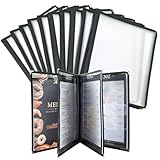
- With slide-in feature,these recipe menu covers can be inserted and changed easily and instantly. The clear laminated surface also make them extremely easy to clean with just cloth. These single page menu sleeves can fit 8.5 x 11 inches papers perfectly.
- The menu covers are made of durable transparent flexible PVC, designed for convenient and stylish menu presentation.
- These 8.5 x 11 menu covers are sturdy and strong,coming with double stitched leather and golden corner protectors,can well protect your menu and elegantly present them.
- Various choices: 1 page 2 view, 2 page 4 view, 3 page 6 view, 4 page 8 view, 5 page 10 view.
- These double stitched menu sleeves can be applied widely, such as high-end restaurants,diner,pubs,bars,cocktail bars,drink shops,cafe,catering hall and so on.
A disclosure is also sensible when the image is not clearly a photograph but appears in a transactional context. A stylized rendering on a brand story page may be understood as decoration; the same rendering in a delivery listing can influence an immediate purchase decision. The closer the image is to the ordering decision, the more important clarity becomes.
Do these 3 things before closing this tab:
1Fix the driver behind crashes, sound loss and screen glitches2Repair Windows errors before they cause bigger problems3Scan for outdated or missing drivers - takes under a minuteThe IAB AI Transparency & Disclosure Framework V2, dated 18 August 2026, recommends a risk-based, materiality-driven approach for consumer-facing marketing, including imagery. It is an industry framework, not law. Its useful practical lesson is to focus on whether AI use could change a consumer’s understanding, rather than treating every minor technical edit as equally significant.
What the notice should say
No universal statutory phrase or position for every restaurant image has been established in the Commission material. Write for ordinary diners, not compliance specialists. The notice should identify the image as synthetic or materially altered and, where needed, warn that the served dish may differ.
- Fully generated illustration: “AI-generated illustration; actual dish may differ.”
- AI-altered real photo: “Image digitally enhanced with AI; ingredients and portion shown may differ from the dish served.”
- Concept image: “Illustrative image, not a photograph of the finished dish.”
These are suggested explanations, not prescribed statutory formulas. Choose wording that is truthful for the particular image. Do not use a vague label such as “enhanced” if the picture was generated from nothing, and do not hide the notice in a terms page when the image itself creates the impression.
Placement and presentation
Put the notice next to, directly below or immediately associated with the image. A diner should encounter it before relying on the picture to choose a meal. Use readable contrast and size on mobile screens, and keep the relationship intact when the image is copied into a menu PDF, delivery listing or social post. If a platform crops captions or removes metadata, include the disclosure in the visible creative or accompanying text instead of relying only on a file property.
What’s actually slowing this PC down?
Pick the symptom - the matching free tool is one click away.
Rank #4
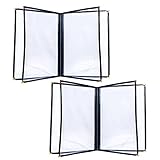
- Standard 8.5x11 Fit & 8 View Layout: Each holder contains 4 double-sided transparent pages, displaying up to 8 distinct views of your daily specials. Sized for standard US letter paper, allowing effortless printing and immediate insertion without trimming
- Crystal Clear PVC Material: Crafted from premium transparent plastic that prevents lighting glare, ensuring your guests can comfortably read the selections. This optical clarity significantly enhances the professional presentation of your dining establishment
- Reinforced Edges for Daily Use: Designed specifically for high-traffic commercial settings. The double-stitched synthetic binding and metal corner protectors prevent fraying, ensuring these books withstand constant handling by customers without falling apart
- Versatile Hospitality Essential: This practical 2-piece set is a menu-presentation solution for diverse venues. Whether operating a bustling pizzeria, a cozy coffee shop, a luxury resort room service, or a neighborhood bar, these durable folders elevate your brand image
- Easy Menu Updates: Quickly swap out pages to reflect seasonal changes, price adjustments, or new offerings without replacing the entire menu cover, saving time and reducing waste in your restaurant operations
How the rule plays out across restaurant channels
Printed and online menus
A menu image is part of the food presentation. If it is a realistic synthetic picture, place the notice in the same visual block as the dish name and description. Check that the listed ingredients and portion description agree with the picture. If the image shows optional toppings, say so rather than allowing the picture to imply they are included.
Delivery and ordering listings
Ordering screens create a strong expectation that the displayed item is what will arrive. Use a visible disclosure for a generated or materially altered image and make the written description authoritative about included ingredients and portion. Do not let a generic “serving suggestion” line obscure a substantial difference in the product being sold.
Paid advertising and social media
Short-form ads often separate an image from its caption when shared. Put the disclosure where the image travels: in the creative, on-screen text or the post itself. A caption that appears only after a “more” expansion may not adequately qualify a photorealistic image used to attract an order.
In-store displays and window posters
People can see these images without opening a link or reading a long explanation. Use a concise notice close to the picture and make sure staff descriptions do not contradict it. If the display is a general illustration rather than a depiction of a specific menu item, label it as such.
Recommended Free Tools
A review workflow restaurants can operate
- Record the image’s origin. Note whether it was fully generated, based on a real photograph, or edited with AI. Keep the original file when an existing photograph was changed.
- List the claims a diner could infer. Identify visible ingredients, portion size, product type, cooking result and serving format. Compare each with the recipe and the item normally delivered.
- Assess the setting. Record whether the image appears on a menu, ordering page, advertisement, social post, signage or a general brand page. Consider the audience and the country in which it is shown.
- Choose the least confusing presentation. Use a real photograph when a synthetic image would create an inaccurate expectation. If the image remains useful, add a clear notice beside it and revise the picture or copy to remove false implications.
- Check the final published version. Review the image and notice on a phone, desktop page, printed menu and any platform where the content is syndicated. Make sure cropping, translation or accessibility treatment has not separated the disclosure.
- Recheck after menu changes. An image that was accurate for one recipe or portion can become misleading after a supplier, ingredient, size or preparation change.
This workflow is an operational safeguard, not a claim that the law mandates a particular internal record. It helps the restaurant demonstrate consistent judgment and catch misleading details before customers see them.
Best Value

- 1.Designed to fit standard U.S. letter-size menus. Ideal for restaurants, cafés, bars, bistros, and hotels using printed menu sheets.
- 2.2 Pages 4 Clear Views for Full Menu Display Includes four transparent sleeves that hold up to eight menu pages—perfect for food menus, drink lists, desserts, or daily specials.
- 3.Waterproof & Easy to Clean Both the faux leather cover and clear inner sleeves are waterproof, protecting menus from spills, stains, and frequent handling.
- 4.Reinforced Gold Corner Protectors Elegant gold metal corners help prevent bending, cracking, and edge wear, making this menu cover suitable for high-traffic use.
- 5.Professional Look for Restaurants, Cafés & Bars A clean black leather-style finish with classic gold accents elevates table presentation in fine dining, coffee shops, lounges, and cocktail bars.
Examples that show why disclosure alone is not enough
Generated burger with an absent garnish
A restaurant uses a photorealistic generated burger showing a thick slice of cheese and fresh herbs, but the sold version has neither. Labeling it “AI-generated” tells customers how the picture was made; it does not correct the implication about composition. Replace the image, change the dish, or make the absence unmistakable in the presentation.
Real pizza photo enlarged by AI
The base photograph is genuine, but editing doubles the apparent topping quantity. Because the alteration affects quantity, a notice may be appropriate, yet the safer solution is to restore a truthful portion depiction and describe any optional extra toppings separately.
Illustration used for a seasonal concept
A restaurant advertises a future menu idea with a visibly stylized drawing and no promise that the pictured plating will be exact. The context may make a deepfake interpretation less likely, but a short “illustrative image” label prevents confusion, particularly if the same artwork later moves to an ordering page.
The Tool Desk
Outbyte Driver Updater FREEFix the driver behind crashes, sound loss and screen glitchesFind Drivers →Outbyte PC Repair FREERepair Windows errors before they cause bigger problemsFix Now →Jurisdiction and enforcement limits
The clearest evidence for the recommendations above concerns the European Union. The Article 50 date, the Commission’s deepfake summary and the food-information principles should not be presented as a worldwide rule. Requirements in the United Kingdom, United States, Canada, Australia or other markets may differ, and this material does not establish country-specific enforcement outcomes or platform-specific labeling behavior.
A restaurant serving several countries should map the audience and publication channel for each campaign, then verify the applicable local law and platform policy before relying on an EU-focused process. If one image is reused internationally, the strictest truthful presentation is usually easier to manage than changing the image’s meaning from market to market, but that operational choice does not replace local legal advice.
Common mistakes to avoid
- “Every AI image must be labeled.” The Commission summary identifies qualifying deepfakes, not an automatic label for every generated dish image.
- “A label makes any image acceptable.” Food presentation still must be accurate and non-misleading.
- “Metadata is enough.” Customers generally need a visible, understandable notice where they see the image.
- “Only fully generated pictures matter.” AI editing can materially change ingredients, quantity, size or preparation appearance.
- “A generic disclaimer covers the menu.” The notice must be understandable in the image’s actual context and remain attached when content is republished.
- “EU guidance applies everywhere.” Confirm the law and platform rules for each jurisdiction and audience.
Bottom line for restaurant teams
For an EU-facing restaurant in 2026, treat a realistic AI-generated or materially altered food image as a transparency decision and an accuracy decision. Determine whether it could qualify as a deepfake under Article 50, disclose its synthetic or altered status in plain language when that possibility or consumer confusion is material, and verify that the picture does not misstate ingredients, quantity, size, preparation or the dish customers will receive. When the image cannot be made truthful through editing and wording, do not publish it.
Quick Recap
Product prices and availability are accurate as of the date/time indicated and are subject to change. Any price and availability information displayed on Amazon at the time of purchase will apply.

