
Outdated Drivers Are Slowing You Down
One free scan finds every outdated or missing driver and matches the right update for your exact hardware.Free scan · exact hardware matchWindows Errors? Fix Them Before They Spread
Repair common Windows errors and clear accumulated junk for a smoother, more stable PC - no reinstall needed.Free scan · no reinstalliTechGuides is reader-supported. When you buy through links on our site, we may earn an affiliate commission. As an Amazon Associate I earn from qualifying purchases. Learn more
Operating system virtualization usually means creating isolated environments that share one operating-system kernel. This approach is also called operating-system-level virtualization or containerization. It is different from a virtual machine (VM), which provides a virtual computer with its own operating system. Because “virtualization” can describe both approaches, the distinction matters.
What does operating system virtualization mean?
In the narrow, commonly used sense, operating-system virtualization creates separate, isolated environments on top of an existing operating-system kernel. Those environments are called containers. They share the host kernel rather than each running a separate guest kernel, as described in Red Hat’s RHEL 7 virtualization guide.
The broader word “virtualization” also covers virtual machines. For clarity, this article uses operating-system virtualization for containerization and system virtualization for virtual machines. Red Hat’s overview of virtualization and its earlier RHEL 5 explanation show why the umbrella term can refer to different ways of creating virtual environments.
The Tool Desk
Outbyte PC Repair FREEClear out junk files and repair common Windows errorsFree Scan →Outbyte Driver Updater FREEScan for outdated or missing drivers - takes under a minuteDriver Scan →How is it different from a virtual machine?
The key difference is whether each isolated environment has its own operating-system kernel. A container shares the host kernel; a VM runs its own operating system in a virtual computer. The VMware virtual machine overview describes a VM as an isolated computing environment with its own operating system and virtual resources.
#1 Best Overall

- Dell T7810 Precision Tower Workstation
- 2x Intel Xeon E5-2690 v4 14-Core/28 Threads 3.1GHz (3.5GHz Turbo)
- 128GB Memory DDR4 – Nvidia Quadro K620 2GB
- Add your own Hard Drives/ SSDs
- Add your own Operating System
| Feature | Operating-system virtualization (containers) | System virtualization (VMs) |
|---|---|---|
| Kernel | Environments share the host operating-system kernel. | Each VM runs its own guest operating system and kernel. |
| Virtual environment | An isolated instance of the host OS. | An isolated virtual computer with virtual resources. |
| Hypervisor | Not what creates the container isolation; containers use the existing OS kernel. | A hypervisor manages VMs and allocates physical resources to them. |
These are architectural differences, not a universal performance or security ranking. The sources cited here do not establish that containers are always faster or safer than VMs, or vice versa.
What does a hypervisor do?
A hypervisor is software that manages virtual machines and distributes physical resources among virtual environments. It is associated with VM-based system virtualization: it presents virtual hardware for guest operating systems to use. Containerization instead relies on the host operating system’s existing kernel to create isolated instances.
Rank #2

- HPE ProLiant ML350 Gen10 4U Tower Server for small business or Enterprise
- Dual (2) Xeon Silver 4110 8-Core 2.10GHz 8MB CPUs
- 256GB DDR4 PC4-25600 3200MHz Unbuffered Memory
- 15.36TB Enterprise 2.5” SATA III 6Gb/s SSDs for Ultra Fast Storage
- Operating System: Server 2019 Standard – Designed primarily for physical or minimally virtualized environments
What are full virtualization and paravirtualization?
Full virtualization and paravirtualization describe ways of virtualizing guest operating systems, not alternatives to the container-versus-VM distinction. In the RHEL 7 guide, full virtualization uses an unmodified guest OS, while paravirtualization uses a modified guest OS that communicates with the hypervisor. Those descriptions are specific to that version of the documentation; they are not current product-support guidance.
Recommended Free Tools
Quick Recap
Best Value

- 【Powerful Processor & Graphics】The MS-02 Ultra Mini Workstation is powered by an Intel Core Ultra 9 Processor 285HX (24C/24T, up to 5.5 GHz) built on a hybrid architecture. It features integrated Intel Graphics with a maximum frequency of up to 2.0 GHz, delivering enhanced graphics acceleration and hardware ray tracing for an elevated user experience. Engineered for next‑generation efficient high‑performance computing, it excels in gaming, 3D rendering, video editing, and remote work.
- 【High‑Speed Multi‑Port Networking】This mini workstation is equipped with dual 25G SFP+ ports, each supporting 25 Gbps transfer speeds and link aggregation—ideal for users requiring ultra‑fast wired connections to high‑speed LANs, network storage, servers, and other high‑bandwidth devices. It also includes one 10G and one 2.5G RJ45 port, supporting high‑speed home and office networking and other scenarios demanding rapid data transfer.
- 【Flexible & High Capacity Expandability】The workstation features four DDR5 slots supporting up to 256GB total capacity with ECC support (XMP overclocking not supported), plus four M.2 2280 PCIe 4.0 SSD slots supporting RAID 0/1/5/10. 2×M.2 2280 NVMe SSD slots (PCIe4.0x4, up to 8TB per slot), 2×M.2 2280 NVMe SSD slots (integrated on the 25GbE NIC; up to 8TB per slot with PCIe 3.0 x4 /4TB per slot with PCIe 4.0 x4). It also provides: 1 × PCIe 5.0 x16 slot (supports bifurcation), 1 × PCIe 4.0 x4 slot, 1 × PCIe 4.0 x16 slot (prepopulated with 25GbE NIC and dual M.2 slots, not available for expansion). This configuration enables effortless storage of movies, videos, photos, and critical files.
- 【Quad Video Output & Multi‑Display Support】The MS-02 Ultra Workstation supports four simultaneous video outputs:1 × HDMI 2.1 (8K@60Hz, 4K@120Hz), 1 × USB4 with DP Alt Mode (8K@60Hz, 4K@120Hz), 2 × USB4 V2 with DP Alt Mode (8K@60Hz, 4K@120Hz). This setup supports multi‑monitor configurations for an expanded field of view and improved productivity.
- 【Enhanced Cooling & Ultra‑Quiet Operation】The MS-02 Ultra features a server‑grade airflow design with dedicated CPU/GPU cooling channels and a server‑style exhaust layout for precise thermal management and long‑term system stability. With six heat pipes and dual fans, it efficiently dissipates up to 140W of turbo power and sustains a 100W TDP load, operating quietly at just 36 dB. A built‑in 350W power supply ensures stable, efficient power delivery for consistent high performance, simplifying deployment and maintenance.
Rank #4
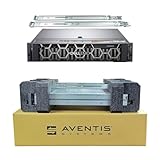
- Dell PowerEdge R740 2U Rack Server with Rail kit for small business or Enterprise
- Dual (2) Xeon Gold 6148 20-Core 2.40 GHz, 27.5MB, Up To 3.70 GHz Turbo
- Memory: 256GB (8 x 32GB) DDR4 PC4-25600 3200MHz Unbuffered Memory
- Storage: 7.68TB (4 x 1.92TB) Enterprise 2.5” Solid State Drive (SSD) for Ultra Fast Storage
- Hard drives & memory upgrades included separately, not installed, installation required.
Rank #3
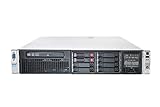
- HP Proliant DL380P G8 8 Bays 2.5 Server
- 2x Intel Xeon E5-2680 2.7GHz 8 Core
- 128GB DDR3 REG MEMORY
- HP P420i 512MB Raid Controller
- 600GB (2x 300GB 10K SAS HDD)
Which term should you use?
- Use containerization or operating-system-level virtualization when isolated environments share a host kernel.
- Use virtual machines or system virtualization when each environment runs its own operating system under a hypervisor.
- If someone says only “virtualization,” ask whether they mean containers or VMs; the broad term can refer to either.
Product prices and availability are accurate as of the date/time indicated and are subject to change. Any price and availability information displayed on Amazon at the time of purchase will apply.

